Journalism in Peril: The Gaza Genocide as a Global Test of Press Freedom
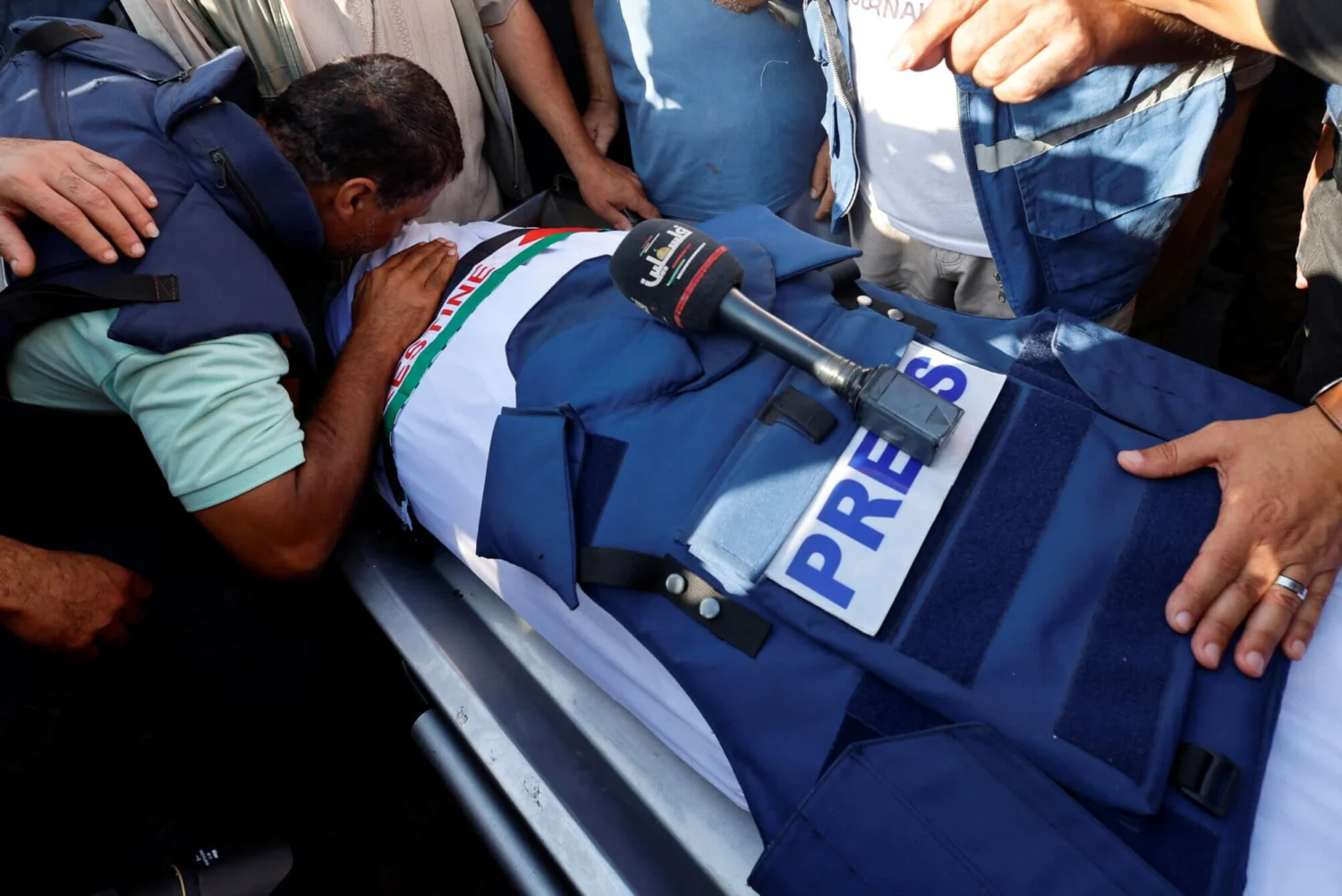
In Gaza, it isn’t only civilians that are being laid to ruin; the freedom to tell the story of its people is being muzzled by successive Israeli strikes targeting and killing Palestinian journalists

The level of violence that journalists in Gaza are facing today is unprecedented in the past 100 years of global conflict; the numbers alone are staggering.
Since October 7, 2023, press freedom groups and journalists’ associations have reported that at least 270 Palestinian journalists have been killed under Israel’s ongoing military campaign.
The fatalities have included, among others, photojournalists, camera operators, stringers, and correspondents working at Arabic-language media, Al Jazeera, Reuters, Associated Press (AP), and Agence France-Presse.
The mounting death toll raises serious questions about the future of press freedom, international law, and even the public’s right to know the facts on the ground from a war zone.
This essay specifically builds on a joint study carried out in 2025 by a team of researchers at the American University in Cairo, the University of Maryland, and Tilburg University. Using 12 interviews with Gazan journalists—some still operating under bombardment—the study documented a complete collapse of protections offered to journalists and how this reconfigured the journalism profession. The conclusions may rely heavily on a record of death, but they also warn that if Gaza becomes the precedent, journalism everywhere faces an untimely demise.
The Size of the Crisis
The death toll of media professionals in Gaza is distinct from other conflicts not only in size but also in speed—journalist fatalities that accumulated over decades elsewhere have been compressed into a few short months. In World War II, 68 journalists were killed. In Vietnam, 1955-1975, 66 journalist fatalities occurred. The death toll for journalists in the former Yugoslavia during the Balkan wars of the 1990s was 36; in Iraq, at least 150 journalists were killed between 2003 and 2011, and in Ukraine, at least 17 journalists have been killed since 2022. However, in the case of Gaza, the death toll since October 2023 has neared the cumulative totals of these conflicts compressed into less than two years.
The Committee to Protect Journalists (CPJ) properly labeled Israel’s genocide in Gaza as the most dangerous context for journalists to work in, calling it “the deadliest and most deliberate effort to kill and silence journalists that CPJ has ever documented” in modern history.
The devastation has not only been measured in terms of loss of life; Gaza has witnessed the systematic destruction of press offices, news bureaus, and storage facilities for equipment. In addition, internet and electricity blackouts have made communication with the outside world nearly impossible. This is a stark reality that journalists are not just being killed in airstrikes but are also being silenced by systemic design targeting and destroying the infrastructure on which journalism operates.
In response, Human Rights Watch issued a call for the International Criminal Court (ICC) to investigate potential war crimes. Likewise, Amnesty International issued a report stating that the deliberate killing of journalists is a violation of the Geneva Conventions. Nevertheless, Israel has not yet been held accountable for its deliberate targeting of journalists.
Institutional Responses
One of the more crushing aspects of the crime of journalists targeted and killed for their coverage is the muted institutional response.
On July 24, Reuters, AFP, AP, and the BBC published a rare joint statement asking Israel to provide safe passage and basic conditions for journalists in Gaza. They noted that local journalists were “the world’s eyes and ears,” working in intolerable conditions. It was an unusual gesture of solidarity from competing organizations, but it served no purpose. The rallying cry for accountability immediately turned into silence.
Just one month later, on August 25, Israeli fighter jets hit Nasser Hospital in Khan Younis, Gaza. The double-tap strike killed at least 20 people, five of whom were journalists: Hussam al-Masri and Moaz Abu Taha (Reuters), Mariam Abu Dagga (Associated Press), Mohammed Salama (freelancer for various outlets), and Ahmed Abu Aziz (Middle East Eye). Photographer Hatem Khaled (Reuters) was seriously wounded. The injured and dead included doctors, patients, and civilians. International organizations reported the facts, but none pushed for an inquiry nor demanded any consequences for the perpetrators.
The double-tap strike came just two weeks after a similar air raid on Al Shifa Hospital in Gaza City killed award-winning Al Jazeera correspondent Anas Al Sharif and four other journalists. Two additional people, including Al Sharif’s nephew, were also killed.
Despite providing no evidence to support its claims, Israel said that Al Sharif was a known Hamas operative planning an attack on Israelis. Several global media outlets parroted the claim.
The official responses to the two attacks, which killed 10 journalists within two weeks, have been limited to carefully crafted expressions of condolences. Reuters confirmed the loss of journalists, AFP described “impossible conditions” for their staff, and AP expressed sentiments of sorrow, but the escalation to either warning or demanding accountability never happened.
The same organizations that acknowledged that they depended on Palestinian freelancers for Gaza coverage were now limiting their responses to expressions of grief. The difference between grievances expressed and apparent anger on the frontline was startling. Some media organizations even distanced themselves from their own journalists after Israel branded them “terrorists.”.
Within days, Reuters photojournalist Valerie Zink resigned with blistering clarity. On her personal page, she shared her resignation statement, writing:
“At this point it’s become impossible for me to maintain a relationship with Reuters given its role in justifying and enabling the systematic assassination of 245 journalists in Gaza. I have valued the work which I brought to Reuters over the past eight years but at this point I can’t conceive of wearing this press pass with anything but deep shame and grief.”
For Gazan journalists, the strike on Nasser Hospital confirmed an even deeper betrayal. As photojournalist Al-Hassan Selmi, working for South Africa’s Media 24, told us in an interview:
“We, as journalists in Gaza, are like orphans; we have nobody, no one to ask after us. Israel bombed a hospital, a sacred, trustworthy place of protection under international law, to eliminate a journalist who is supposed to have protection.”
Selmi’s words not only referenced Nasser Hospital, but also a pattern of many attacks on hospitals; he used “orphanhood” to evoke what other colleagues voiced to us, a sense of abandonment not only by governments but by the very organizations that rely on their work.
The solidarity they anticipated was something that never came, and this fissure between institutional grieving and frontline despair is precisely what our interviews uncovered—a profession being rebuilt in the crossfire.
Research Findings
Our interviews with twelve journalists from Gaza shed light on the reality of reporting in a life-threatening and unprecedented historical moment. The interviewees provided four themes.
1. Breakdown of neutrality
A number of journalists discussed how it was impossible to separate their work from lived experience. Photojournalist Ahmed Al Zard from the Palestinian network Al-Kofiya Channel said that he sometimes feels as if he’s not just a journalist sharing news objectively, but also an activist trying to raise awareness to the voice of suffering.
“I cannot even separate journalism from my humanitarian call to action when I participate in such events and see that my presence might shift the scope of finding the truth.”
To these journalists, neutrality does not mean disconnection; rather, it means survival with a conscience.
2. Multiplicity of roles
Journalists repeatedly expressed the added responsibility of assuming roles significantly beyond journalism.
“The field doesn’t let you remain in one primary mindset… you are a journalist, a bodyguard, a Red Cross worker, a rescuer, a psychologist, and for you, you are also a victim, and you are scared,” says Gazan journalist Sanaa Kamal who works for the Chinese Xinhua News Agency.
Al Arabiya’s Mohamed Awad provided an example of the enormity of that burden.
“During the recent war on the Gaza Strip, I documented more than 3,450 items of content through videos, audio bulletins, photos, and tweets during the war. Perhaps most significantly, we addressed the very issues that people themselves were raising, engaging directly with the prevailing public narrative.”
In Gaza, the journalist is not only someone who reports; they serve as a recorder of collective memory, as a voice in the public debate, and often as a participant in events themselves.
3. Emotional Rationality as Credibility
For many, the demonstration of emotion was not a weakness of the journalist, but rather a way to communicate an essential reality. Youmna El Sayed, who works for Al Jazeera English, explains how her professional and personal roles merged.
“As a journalist I did a number of professional videos for, for example, the Al Jazeera Digital Platform…very professional. But at the same time, social media gave me as a person, a human being or a resident living in Gaza, a vehicle to express my own reality.”
Emotional expression becomes part of the evidence—not the opposite of professionalism, but its extension.
4. Digital Resistance and Censorship
Given Israel’s prohibition and ban on the presence of foreign correspondents in Gaza, the Palestinian journalists there have had to be considerably reliant on digital platforms. Working for China’s CGTN, Noor Harazeen remembers not being very active on social media when the war on Gaza began. However, within a matter of weeks, she decided to create her own accounts on social media as a space to publish her work and the certainty of reaching a larger audience.
“Social media platforms played a very important role during this genocide in Gaza,” she says.
But many media professionals in Gaza also bemoaned the censorship of content they were sending to social media platforms, or the content disappearing altogether. Repressive censorship of content by some social media platforms added to the feeling of erasure.
The testimonies of these media professionals indicate a shift. In Gaza, journalism as it is understood in traditional Western approaches is no longer just the pursuit of truth; it has become the fight against oblivion itself, existing in a state where documenting history is synonymous with existing.
Systemic Failure of Protection
While journalists in Gaza are on the verge of being wiped out by Israel’s attacks, systemic siege and starvation—and many have already perished—every mechanism that was supposed to protect them has failed, from Geneva to The Hague. As a result, there is testimony without protection and truth without legal remedy. Article 79 of Additional Protocol I to the Geneva Conventions guarantees journalists the same protections as civilians. The UN Plan of Action on the Safety of Journalists (2012) further intended for attacks on journalists to be seen as a “red line”. The UN has issued statements of concern but taken no binding action. UNESCO has also condemned the killings, but has no enforcement power.
In the meantime, the ICC has not opened a dedicated investigation into the killings of journalists in Gaza despite repeated requests from press-freedom organizations. And although some Western governments have attached general human-rights conditions to military assistance they currently provide Israel, none have made journalist protection a specific precondition.
“Journalism should never be a target… which is protected by international law…,” says Selmi. “But here in the Gaza Strip Israel did not respect these laws.”
Recommendations: What Must Be Done
The question is no longer if Gaza marks a tipping point for global press freedoms, but whether the world has the will to prevent its collapse—or even the disappearance of journalism itself. Urgent reforms are essential from our research, five clear recommendations emerge.
1. A binding international convention on the protection of journalists
While existing UN and treaty-based protections are weak, the world needs a new binding convention on journalist protection—modeled on the 1997 Ottawa Treaty banning landmines—which created enforceable obligations, sanctions, and mechanisms for accountability where none existed before.
2. Automatic ICC jurisdiction for crimes against journalists
Just as the ICC has automatic jurisdiction for genocide, it should also have jurisdiction for attacks against journalists, thus removing the need for ad hoc referrals that have been blocked by geopolitics, preventing accountability.
3. Conditionality of Aid and Arms Transfers
Governments that fund military operations, not only in Israel, but globally as well, should condition that funding on guarantees of protection for journalists. U.S. and EU military aid packages should explicitly include clauses that any ongoing aid will be suspended if journalists are killed.
4. A Global Journalist Protection Fund
Following in the footsteps of the development of the Green Climate Fund, a proposed Global Journalist Protection Fund would establish a multilateral mechanism with other governments to provide equipment, insurance, relocation arrangements, and legal support for journalists operating in conflict zones.
5. Accountability for digital platforms
Social media companies should be held accountable to preserve war reporting, if for no other reason than the fact that it serves as evidence in the future. Platforms such as Meta, X, and YouTube should be required to archive evidence, particularly documents, rather than censor historical narratives from any conflict zones.
The last word belongs to the journalists themselves. “A silent scream… so the world cannot say it didn’t happen,” said Gaza freelancer Abed Zagout about his and his colleagues’ mission in Gaza.
“We are victims like everyone else,” added Kamal, “but with the burden of telling the story while trying to survive.”
Together, these testimonies are more than a chronicle of Gaza’s journalists; they are a warning. Gaza is not only a Palestinian story but a frontline test of global democracy. If journalism dies here, the right to truth dies everywhere.