The War over Wartime Narratives
Three information ecosystems are interacting to reshape narrative control of global conflicts: states, influencers, and autonomous AI systems.
The media landscape has changed significantly over the past decade. While governments retain powerful advantages through institutional authority, media infrastructure, and legal control, social media influencers are rapidly amplifying and even challenging official narratives through distributed, engagement-driven communication. And now, with the emergence of AI agents, fully autonomous synthetic actors can generate, tailor, and disseminate persuasive narratives at a massive scale while obscuring attribution.
These ecosystems increasingly reinforce one another, creating new forms of propaganda, synthetic consensus, and policy influence that outpace traditional mechanisms of verification and accountability, threatening global security and democracy.
The onus then becomes on how to preserve a democratic marketplace of ideas beyond mere counter-speech. This essay argues that the media landscape now demands transparency around narrative origins, renewed institutional credibility, and regulatory frameworks for AI-generated content so that truthful speech can still be identified, heard, and trusted.
The Persistence of State Control
While the internet has democratized the production and distribution of content, governments retain formidable advantages in controlling narratives during times of war (and beyond). They control the military apparatus itself, determining what information is released, when, and to whom. During active conflicts, states can restrict journalists’ access to battlefield zones, control telecommunications infrastructure, and deploy legal mechanisms to suppress or discredit competing narratives.
In this vein, Russia’s invasion of Ukraine offers a contemporary case study. The Russian government invested heavily in state media outlets like RT (formerly Russia Today) and TASS (formerly Telegraph Agency of the Soviet Union), as well as coordinated disinformation campaigns across social media platforms. The government tightly controls information flows domestically, making alternative narratives difficult to access within Russia.
Beyond overt sponsorship, the state’s narrative advantage persists in other and more subtle ways: A government’s official statements carry legitimacy. When a state’s defense ministry issues a statement, citizens, policymakers, and international observers often grant it consideration precisely because it emanates from an authoritative and official source. This institutional credibility—however fragile it may have become—remains a form of narrative power that others cannot easily replicate.
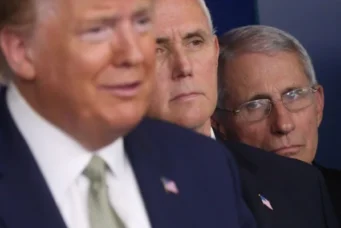
For example, in August 2025 President Donald Trump stated that the United States is the only country that uses mail-in voting. In reality, 34 countries or territories allow mail-in voting. It has been argued that this claim is part of Trump’s attempt to diminish public trust in the integrity of mail-in voting to cast doubts over state and national elections that are trending against him. While nearly a decade of false statements have eroded his credibility in some sectors of the American public, his statements still have real-world consequences. Such claims of election fraud,for example, led to the violent insurrection on January 6, 2021, after Trump lost the national election to Joe Biden.
State media also retains power in regions where citizens have limited access to diverse information sources, or where government control over telecommunications infrastructure is comprehensive. In authoritarian contexts, state narratives can dominate. However, in more open societies with robust media pluralism and internet access, state monopolies on the story of war have become virtually impossible to maintain.
The Rise of Influencers
The second ecosystem consists of individuals with substantial social media followings. This category encompasses journalists and freelancers operating independently of traditional institutional structures, qualified experts and analysts with large audiences, activists with political commitments, and influencers and content creators seeking engagement and monetization.
Individuals possess capabilities that states do not. They can respond with remarkable speed to breaking events, giving them the ability to hijack a narrative before official responses have had a chance to materialize. This distributed, real-time narrative has altered the information environment in ways that challenge state gatekeeping. Individuals are also remarkably heterogeneous and globally distributed, making this ecosystem both more resilient (no single point of failure can silence the conversation) but also more vulnerable to manipulation (bad actors can amplify falsehoods at scale).
As compared to freelance journalists and bona fide experts, influencers and content creators typically operate according to different incentive structures than state media. State media aims (at least ostensibly) to represent the official position of government. Influencers, by contrast, are often motivated by engagement metrics, creating perverse dynamics; speed, sensationalism, and outrage drive engagement far more effectively than careful, nuanced analysis. The algorithmic structures of social media platforms amplify this tendency further, promoting content that generates engagement regardless of accuracy. The growing presence of influencers have challenged the control of state media, but now both are facing a new player: AI.
The Looming Frontier of Autonomous AI Systems
A third ecosystem is quickly emerging in the form of autonomous AI systems (also known as “AI agents”), capable of generating, customizing, and distributing content at unprecedented scale and speed. Unlike states bound by institutional friction and bureaucracies, or influencers constrained by human limitations, AI agents can simultaneously generate thousands of coherent narratives, each tailored to different audiences and platforms, working at machine speed rather than human speed. This introduces both an amplification of existing vulnerabilities and an entirely new set of risks.
During a crisis, AI agents can flood information ecosystems with coordinated or competing narratives faster than fact-checkers and moderators can respond. More troublingly, they introduce the possibility of synthetic plurality—many apparently independent voices, all ultimately controlled by a single operator. A state intelligence service or a single influencer could deploy AI agents to generate thousands of seemingly authentic accounts with unique writing styles, biographies, and posting histories. The appearance of grassroots consensus could be entirely fabricated.
AI agents are also vulnerable to external poisoning. In 2026, curious to see if they could implant false information into an AI system, medical researchers uploaded two fake studies describing Bixonimania, a non-existent eye condition, to an academic preprint server. Within weeks, major AI systems began to describe Bixonimania as if it were a real disease. This experiment exposed a startling vulnerability: AI systems will eagerly ingest and regurgitate false information uploaded to the open internet.
The Interaction Effects
The three ecosystems—state actors, influencers, and AI agents—do not operate in silos. They interact in complex ways, creating dynamics that could not be produced in isolation.
States have already started to amplify their narratives through influencers. Russia, for example, has been documented funding and directing social media influencers across multiple platforms to amplify state messaging while maintaining plausible deniability about state involvement. There is also evidence that bot networks (a simpler version of fully autonomous AI agents) have also been deployed by Russia to manipulate the 2016 U.S. Presidential election.
This interaction is not unidirectional. In December 2025, for example, the right-wing YouTube influencer Nick Shirley posted a video with unsubstantiated claims alleging fraud at Somali-run childcare centers in Minnesota. State officials said that investigations had found no evidence of fraud at the sites Shirley visited. But the U.S. government’s response was sudden and dramatic: The Trump administration dispatched 3,000 federal officers to Minnesota.
The escalation that followed was severe. Operation Metro Surge involved the detention of U.S. citizens and the arrest of over 3,700 people. Federal agents killed two civilian protestors during the operation, Renée Good and Alex Pretti. The influence on policy was also dramatic. After the video was released, the Trump administration announced a funding freeze to five Democratic-run states, pausing nearly $10 billion in funding for families in need and child services.
AI agents represent the logical next step—and perhaps, battleground— in this landscape. A state could deploy AI agents to generate narratives that appear to originate from independent influencers or grassroots movements, without the coordination costs or attribution risks of recruiting actual humans. Russia, China, and the United States have already begun experimenting with AI-generated content in information warfare, including AI-enabled propaganda, social-media manipulation, and synthetic media tactics designed to amplify state narratives and influence foreign audiences.
A troubling example of state deployment of synthetic media came in late January 2026, when the White House posted an AI-altered image of civil rights activist Nekima Levy Armstrong. Homeland Security Secretary Kristi Noem originally posted a photograph of Armstrong’s arrest showing her with a neutral expression, but roughly 30 minutes later, the White House posted an AI-manipulated version appearing to show Armstrong distressed with tears running down her face, captioned calling her “a far-left agitator” (Figure 1).

The consequence of these interaction effects is an escalating cycle as states invest in more sophisticated AI systems to outpace competing narratives. Influencers develop strategies to amplify their own voices against the backdrop of widespread synthetic content. Platforms struggle to detect and remove coordinated inauthentic behavior while not suppressing legitimate speech.
Underlying all of this is a corrosive problem; as the distinction between authentic and synthetic becomes blurred, citizens and policymakers lose confidence in their ability to verify any claim about the information they consume. In this environment, narrative power accrues not to those with the best information or the clearest argument, but to those who can most effectively navigate the interplay between state authority, influencer credibility, and AI-generated plausibility. The winner is not necessarily the most truthful actor, but the most sophisticated operator of all three ecosystems.
A Path Forward
The story of global conflict and events should not be controlled by any single actor, but neither can we permit the information environment to descend into unmanageable chaos. The challenge then is how to preserve the benefits of a pluralistic, distributed information ecosystem while maintaining sufficient integrity that allows citizens, journalists, and policymakers to distinguish truth from falsehood, and fact from propaganda. This requires action on multiple fronts, each targeting a different layer of the problem.
First, we need radical transparency about the origins and funding of narratives. When a state funds an influencer or deploys an AI agent to amplify a particular message, the public must be able to trace that relationship. This means mandatory disclosure of funding sources for content creators, algorithmic transparency from social media platforms to allow researchers to identify coordinated inauthentic behavior, and international agreements that require states to label content they have generated or funded. These are not perfect solutions—bad actors will find ways to obscure their involvement. But they do raise the cost of covert narrative warfare and create at least the possibility of attribution and accountability. Without attribution, we cannot hold anyone responsible for falsehoods that cause real harm.
Second, we need to rebuild institutional credibility around information verification. The influencer ecosystem thrives partly because institutional media has lost authority; citizens no longer automatically trust official sources. But the solution is not to abandon institutions in favor of viral narratives. Rather, we need media organizations—both public and private—that are genuinely independent, well-funded, and insulated from political pressure. We need fact-checking organizations with real resources and international reach. We need academic institutions conducting rigorous research on misinformation and coordinated inauthentic behavior. And we need to protect journalists and researchers from legal harassment and physical threats when they report on uncomfortable truths.
Third, we need regulatory frameworks that apply to AI-generated content specifically. Deepfakes, synthetic media, and AI-generated text should be labeled as such at the point of creation and distribution. Platforms should be required to maintain records of which content is synthetic and make those records available to journalists and researchers. Governments should establish clear legal standards for the deployment of AI agents in information warfare, and violations should carry serious consequences. This is technically difficult and politically contentious, but the alternative is allowing bad actors to flood information ecosystems with low-quality, undetectable synthetic content.
The Marketplace of Ideas
Louis Brandeis, a prominent 20th century lawyer and leading figure in the antitrust movement, argued that the remedy for bad speech is more speech, not enforced silence. This principle has animated liberal approaches to free expression for a century: The answer to propaganda is counter-propaganda, the answer to misinformation is correction, the answer to a lie is the truth told more loudly and more convincingly.
The Brandeis doctrine, however, assumes that in a marketplace of ideas, truth has inherent advantages, and that falsehoods, exposed to scrutiny and contradiction, will eventually lose ground. This assumption may have held some force in an earlier media environment, where distribution was costly and speech-making required resources and reputation. But it collapses in an environment where states, influencers, and AI agents can generate deceptive and manipulative speech at unlimited scale, where attribution is obscured, and where the distinction between authentic and fabricated narratives has become nearly impossible to discern.
The remedy for synthetic speech is not simply more speech. If an AI agent floods an information ecosystem with plausible-sounding narratives, each tailored to exploit existing polarizations and cognitive biases, the antidote is not a counter-narrative that reaches fewer people and faces algorithmic suppression.
Brandeis was right that enforced silence is not the answer. But he was working in a world where speech had friction, where speakers were identifiable, and where truth had at least a fighting chance in open competition. We no longer live in that world.
The challenge ahead is to preserve the Brandeis principle—that open debate and competing narratives are essential to democracy—while acknowledging that this principle only functions when the participants in that debate operate in good faith, when their claims can be verified, and when the audience has reason to trust the sources it is consuming. The solution is not to silence bad speech, but to restore the conditions under which truthful speech can be heard and believed.