The Complexity of Mediating the Libyan Quagmire
Mediators in Libya hoping to create a mechanism to establish an egalitarian and inclusive state often find themselves challenged by factional politics, foreign interventions, and a heritage of repressive authoritarianism.
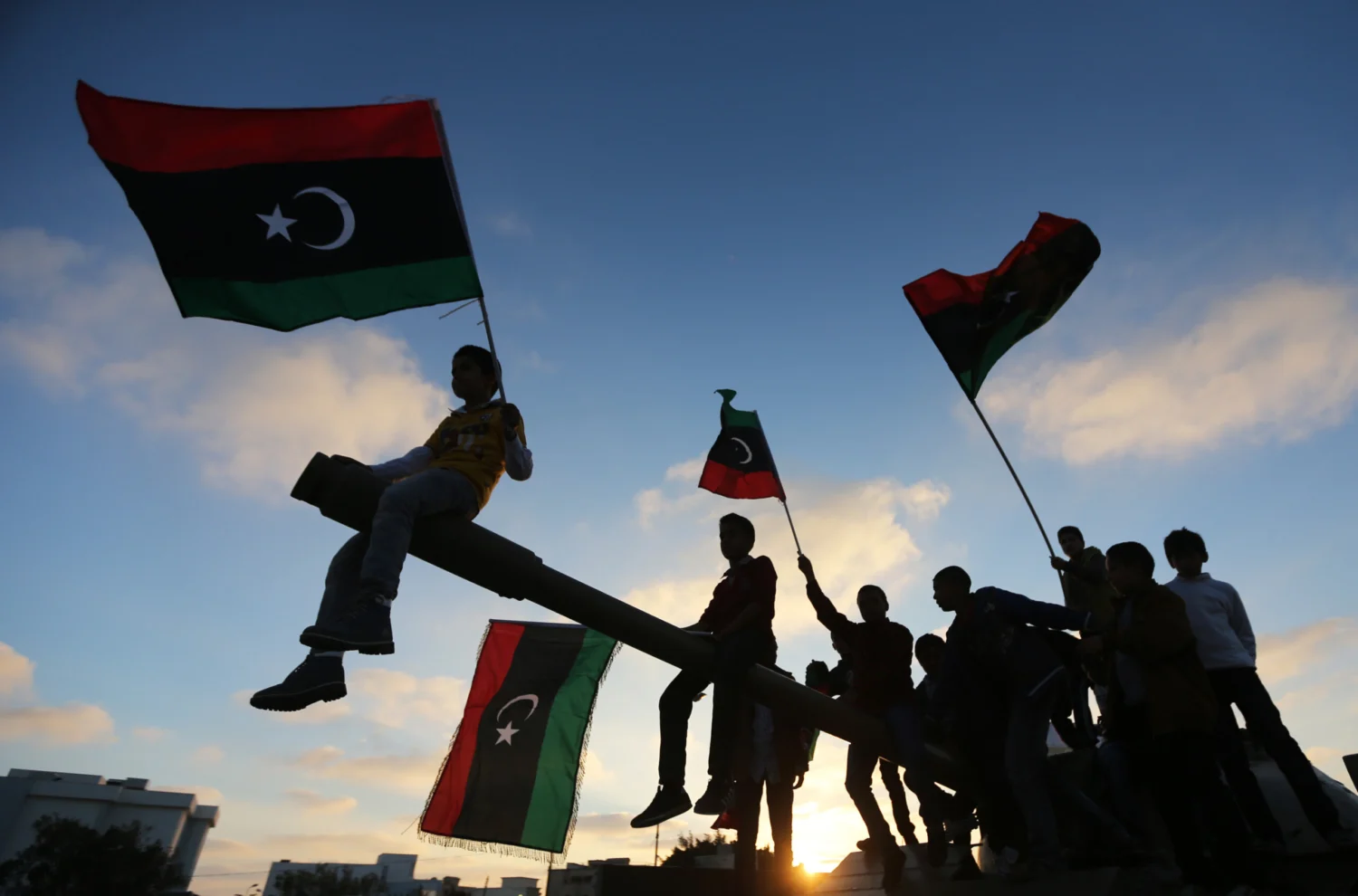
More than forty years of autocratic rule and state policies designed to repress civil, political, and economic rights, have reduced Libya, a resource-rich country, to a nation facing political fragmentation, deep institutional paralysis, and extreme wealth disparity.
Its 21st Century history is a storied, if not troubled, one.
In December 2003, the government of Muammar Qaddafi kicked off the beginning of new programs, projects, and approaches in dealing with the international community. These included reforms to correct the course of the totalitarian state, usher in an era of openness and political rehabilitation, and suspend the country’s weapons of mass destruction programs. The reforms were at the time supervised by his son Saif-Al-Islam.
Most Libyans (and some regional governments) had believed at the time that Libya was turning a corner in its sociopolitical progress. Soon, numerous Western heads of state began to court Qaddafi, flocking to Libya to usher in a new chapter of relations.
But within three years, it all began to unravel. First, Saif al-Islam announced on August 20, 2008, that he was relinquishing any political role in Libya. This was followed by a campaign to shut down his newspapers and television stations, and arrest some of the journalists associated with the reform program. In the meantime, Qaddafi returned to his usual media rhetoric and bluster, inciting against Western countries and their interference in internal affairs. He dismissed and evaded any policy advice and insights that poured in from many within and outside of the country. The country was slipping back into its authoritarian zeal hastened by the increasing competition between Qaddafi’s sons to succeed him. This opened the door to widespread corruption, making internal reform a distant dream.
At the end of November 2010, as he concluded the African-European summit in Tripoli, Qaddafi could not have imagined the turn of events which would soon leave him isolated. In a few months, once stalwart allies who may have come to his aid to ensure his survival—such as Egypt’s Hosni Mubarak and Tunisia’s Zine El Abidine Ben Al—were themselves ousted in a shifting geopolitical series of events that would change North Africa’s history to this day.
Revolution … and Chaos!
In 2011, popular dissatisfaction with the government’s policies quickly catalysized into an armed revolution that ended Qaddafi’s 42-year rule. While this was achieved with the military assistance of the international community, particularly NATO, Libyans soon found themselves left to the task of building a state that promised to be inclusive and uphold civil liberties. The challenge that arose at the time was whether the nation could transition from a totalitarian system to a modern, pluralistic, and democratic one. Reviewing Libya’s recent history—and the factions which rose to power—since 2011 reveals the successes and failures of that transition.
The first attempt to move from armed conflict to state-rebuilding was taken up by the National Transitional Council (NTC), an entity established rather hastily—if not, chaotically—by political, social, academic elites and activists from all over Libya while the fighting still raged.
The most important observation in its composition was the alignment of its members into two blocs, liberal and Islamist. Recognized by the international community as a transitional government after Qaddafi’s death, the NTC pursued constitutional foundation-building to prepare the country for the first general election since the 1960s. From March 2011 to August 2012, the NTC worked furiously to form a government, restore services, and restructure the state’s administrative frameworks
One of its initial successes was to draft the August 2011 Interim Constitutional Declaration. The NTC sought to put in place a legal (and social) framework to create the conditions—which could guarantee Libyans their basic human rights—precursors to general elections.
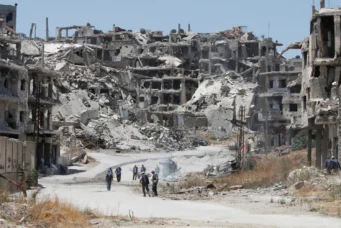
This would prove to be a Herculean task—how to uninstall the former government’s authoritarianism as public services began to fail and increasingly fractitious militia roamed the streets of major Libyan cities.
In January 2012, the NTC proclaimed a law for the election of a new body. On July 7, free and transparent national elections were held for a 200-seat legislative assembly called the General National Congress (GNC). Within weeks, the NTC handed power to the GNC.
Although the GNC was intended to be a constituent assembly, things did not go as planned. Disagreements and squabbling on appointed positions and state influence quickly surfaced, and the GNC gradually deviated from its original purpose of state-building, and devolved into a forum of political contest between Islamists, led by the Justice and Construction Party, and liberals, led by the National Forces Alliance.
What followed were two years of wrangling and competition between these forces, much to the chagrin of the Libyan street who demanded concrete reforms toward democratic rehabilitation and representation. The GNC moved to hold elections to establish a more representative body. On July 25, 2014, under the tutelage of the GNC, the Libyan people elected the House of Representatives (HoR). But subsequent events indicate that the HoR election would prove to divide the country even further.
The GNC refused to cede power to the House of Representatives. Because Tripoli was under the control of armed groups who prevented the handover between the two councils, the HoR was forced to relocate to northeastern Libya, to the city of Tobruk and establish its headquarters there. HoR formed a seat of government 220km west of Tobruk in Al-Bayda and recognized the Libyan National Army (LNA) formed by Field Marshal Khalifa Haftar from remnants of the former Libyan army, volunteers, and some armed revolutionaries.
A war would soon be fought between these two rival government—the GNC, based in Tripoli, and the HoR, based in Tobruk—each backed by complex networks of local militias and competing foreign powers.
Destroying the Islamic State
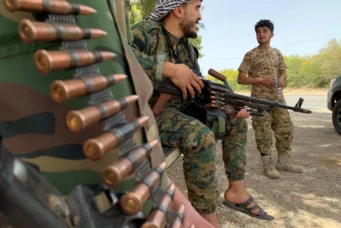
As Libyan authority and governance appeared on the verge of fragmentation, armed groups began to proliferate throughout Libya, filling the security vacuum left by the lack of central military command.
These armed groups, which had emerged during the revolution and fought against the previous regime, had various affiliations, and loyalties. Unfortunately, successive governments granted them official status. In reality, these groups were controlled by their leaders and not the fledgling new state or its institutions.
Each militia group was aligned with various political orientations. Islamists of all stripes aligned with tribal and regional factions.
The most dangerous of these militias were the groups affiliated with the Islamic State in Iraq and the Levant (ISIS) who went on to establish their own caliphates in Derna and Sirte.
The city of Sirte holds special symbolic significance for Libyans. The site of the famous Battle of Qardabiya (also referred to as the Battle of Nations) against the Italian occupation at the beginning of the 20th century, it is also the birthplace of the controversial figure and sole ruler of the country for over four decades, Muammar Qaddafi. It was in Sirte that the final battles in 2011 took place, culminating in Qaddafi’s death ending four decades of oppression.
During the ouster of Qaddafi and his cadres, Libyan volunteers who had fought alongside Al-Qaeda and other Islamist factions against the government in Syria began to eye expansion into Libya.
Mostly loyal to their leaders, who in turn also carried other affiliations including tribal and regional ones, they entrenched themselves in Libya and began implementing their own doctrines, disregarding national state laws.
In 2014, they formed the “Islamic Youth Shura Council” in the eastern city of Derna.
As the conflict between the GNC and HoR intensified, the Libyan ISIS was able to capitalize on the collapsing governance infrastructure and public resentment of the HoR and GNC, and seize Sirte in May 2015.
The Islamic State of Sirte was established—in affiliation with ISIS then based in the Syrian and Iraqi deserts—absorbing local Islamist factions such as Ansar al-Sharia.
The Islamic State would continue to wield control and influence until United Nations mediation brought rival Libyan political factions to the table in December 2015. The United Nations Support Mission in Libya (UNSMIL) had for a few years been trying to bridge the GNC and HoR into a more unified governance structure.
The UN’s efforts culminated in the Skhirat Agreement in December 2015 succeeded to a certain expense because it allowed various armed factions allied with the GNC and HoR to work together to defeat the Islamic State separately in the east and the west of the country.
The beginning of the end for the Islamic State began in the Battle of Derna in 2016, when local Al-Qaeda militia turned on their former masters after bitter infighting and assassinations.
A military campaign was then launched in 2016 under the banner of the newly formed and UN-backed Government of National Accord (GNA) involving various armed groups from Misrata supported by the U.S. Department of Defense’s counterterrorism command operations in Africa (AFRICOM).
U.S. air power in a joint operation dubbed Bunyan Marsous (Solid Structure) would prove a turning point as major F-16 airstrikes in and near Sirte would destroy the ISIS command structure and allow GNA forces to mop up remaining ISIS brigades there.
In the meantime, Haftar’s LNA managed to wipe out ISIS encampments, foreign fighters, and lingering Ansar al-Sharia networks in Benghazi, preventing the group from re-establishing a foothold in the east.
Within six months, most of Libya had been cleansed of any effective Islamic State fighting units and Sirte was declared fully liberated in December 2016.
The Sirte-Jufra Line and Egypt’s Role
While the GNC—now reformed as the GNA by the UN—and the HoR achieved battlefield success, their political rivalry continued and was fought out on the streets of major Libyan cities.
The Skhirat Agreement sought to end the political division and armed conflict in Libya, which had begun in 2014 after the then GNC had refused to hand over power to the HoR.
The international community had hoped that the Skhirat Agreement would fix the political rift and unify the factions, but critics found it to be a top-down foreign-inspired measure which did not adequately address the shifts in power dynamics among Libyan power blocs. The divisions between 2011 and 2014 had become entrenched by the time that the Agreement was reached.
With the Islamic State now gone, the Skhirat Agreement effectively left the country divided into two governments, east and west. The armed groups consolidated into two main forces and the scope and diversity of the armed conflict widened.
The LNA waged war in eastern Libya against armed groups in Benghazi and Derna Another war raged between the forces of Zintan and Misrata in western Libya.
In the meantime, numerous other tribal and regional conflicts erupted, the most dangerous of which was the eighteen-month war between the LNA, led by Haftar and supported by the House of Representatives, and the armed groups led by the internationally recognized Presidential Council, which effectively oversaw the GNA.
These confrontations facilitated unprecedented regional intervention. For the first time, Turkish forces were seen supporting the Presidential Council and its forces in the west, while the LNA received Russian support through Wagner Group mercenaries.
In April 2019, Haftar hoped to end the raging civil war once and for all by seizing the capital Tripoli and returning full control of the country to the HoR. Backed by regional superpower Egypt, the UAE, France and Russia, he besieged the capital. It looked like the fighting would be won when the encircled GNA reached out for help from Turkey who then dispatched thousands of Syrian militia and deployed advanced drones and air defence systems. This proved to dramatically turn the tide of the war in the GNA’s favor—Haftar’s forces were nearly routed.
Egypt’s President Abdel Fattah El Sisi then delivered a speech in which he effectively drew a red line in the sand (which later came to be called the Sirte-Jufra line) and threatened that the Egyptian military would directly intervene if GNA fighters breached that demarcation.
The war then went cold as the fighting between the eastern and western Libyan factions paused and gave space for mediation to take its track.
Here, again, UNSMIL proved pivotal in its efforts to facilitate an inclusive political process, support ceasefire implementation, and advance national reconciliation. These efforts led to the establishment of the Libyan Political Dialogue Forum (LPDF) in 2020 and later to the UN-sponsored 5+5 Joint Military Commission (JMC), which signed a ceasefire agreement.
The JMC included five senior military officers representing the western-based GNA and five senior military officers representing Haftar’s forces in the east. It was the most significant mediation effort since 2011 because it separated the military roles from economic and political roles.
Nationwide Ceasefire and a Unity Government
Mediation efforts in Libya did not end there, however. The LPDF moved to create a government of unity (GNU) sponsored by the UN with Prime Minister Abdul Hamid Dbeibeh at the helm. The issue here was that neither the GNU nor the prime minister had been elected by the people of Libya. Instead, the UN had brought 75 senior pundits including political figures, tribal leaders, activists, and representatives from various regional factions across Libya’s three historical regions (Tripolitania in the west, Cyrenaica in the east, and Fezzan in the south) to Geneva to hammer out a government.
A parliamentary vote of confidence was held soon after with the HoR acknowledging and accepting the new political formation. The once splintered east and west of the country willingly ceded control to the nascent GNU in March 2021. With the country appearing to be united behind the GNU, this new body could now work on the singular yet difficult task of preparing Libya for nationwide presidential and parliamentary elections.
But the curse of the past decade lingered. The elections scheduled for December 2021 remained in limbo as political squabbles, issues of legitimacy, and opposition to certain candidates soon gained a foothold in GNU and elsewhere.
In less than a year, the HoR withdrew its confidence and formed another government that has not yet gained international recognition.
The larger conflict between the HoR (Libya east) and the High Council of State—the official advisory and legislative counterpart in the west—continues to divide the country without coordination or joint action.
Mediation Nonetheless and Lessons Learned
I live in Libya and work for the Martti Ahtisaari Peace Foundation (Crisis Management Initiative—CMI) as a mediator; we cooperate with the UNSMIL behind the scenes on a number of issues between parties in the conflict, and provide space for Libyan forces to listen to one another.
My endeavor was always to mediate in non-armed conflicts where the parties committed to sitting together at the negotiating table to find joint mechanisms that support reconciliation and reach practical outcomes that consolidate peace and coexistence. This also includes trying to bridge the gap in the larger conflict between the HoR government and the High Council of State government, which are supposed to be on the same side with a common goal of ending the political division and aligning with the UN roadmap requiring reform of the electoral law.
As part of the CMI team, I work on shifting the mediation focus from elite power-sharing deals to grassroots reconciliation and structural inclusivity. The task remains difficult as any mediation effort must move the parties—the GNU in the west and the HoR in the east—from distrust and suspicion to trust-building initiatives.
Throughout the past decade, there have been lessons learned. One such lesson involves the concept of too many cooks spoiling the broth. NATO’s intervention in decisively helping Libyan rebels bring down the regime in 2011 marked the beginning of a long period of foreign involvement, both international and regional. This role has intensified and become more deeply entrenched in Libya to an unprecedented degree. Many foreign states have military forces in Libya—for example, Italy has units stationed in Misrata, while the Russians are stationed in Jufra. These covert and overt military presences—particularly from permanent members of the UN Security Council—has exacerbated the crisis of fragmentation and hindered attempts to reach political solutions that foment national unity.
Nevertheless, in some cases, foreign interests in Libya may ultimately lead to a more robust push for national unity and reconciliation. The strong relations between the authorities in eastern Libya and Egypt, as well as between the authorities in western Libya and Turkey, has enabled the two countries to pressure the rival factions to work harder to reach an agreement.
The rapprochement between Egypt and Turkey in recent years has been a positive factor in reconciliation between the Libyan factions and has helped to curb violence in many instances. Furthermore, it has encouraged Libyan factions to focus on reconstruction and providing more services to citizens, leading to a more relaxed atmosphere that we hope will facilitate a final agreement leading to state-building and the unification of its institutions.
Furthermore, the United Nations may opt for a new dialogue forum to perform the functions of both the GNU and the HoR, which may explain why we now see them striving for rapprochement and working together.
For example, the High State Council and the eastern HoR found a way to work outside of their executive branches to successfully negotiate and approve Libya’s first unified national budget since 2013—a major milestone for a country that is oil-rich and, theoretically, can fund its own reconstruction and rehabilitation.
A Trusted Mediator
And, yet, it is difficult to begin mediation in a country like Libya without considering three main requirements: a deep understanding of the roots of the crisis and its complexities; a conducive relationship founded on mutual trust with all parties involved—allowing for effective communication and exchange in the conflict without prejudice or categorization; and, third, the capacity to broach with extreme caution and sensitivity topics that may once have been considered red lines.
This is particularly difficult given the intense local and international criticism directed at most mediators, even humanitarian service providers such as the International Committee for the Red Cross. Accordingly the successful mediator needs to carefully and gradually prepare the ground and build trust.
Amidst these constraints and requirements, my involvement as a mediator in the constitutionalizing of natural resources began with a meeting between Libyan figures from all levels and the head of the Natural Resources Committee of the Constitutional Drafting Assembly. Those of us setting up the process were keen to include figures who were not on the same page at the time, such as the Misrata Municipality, the Tawergha Local Council, the Justice and Construction Party, the National Forces Alliance, and representatives from the south, east, and west. We concluded our work by formulating general recommendations on the constitutionalizing of natural resources, which were sent to the Assembly in Bayda and largely incorporated into the draft constitution.
However, our work did not end there; it opened avenues for communication with participants in other files we had worked on for over ten years. For example, we successfully concluded our work on some files that were subsequently closed, such as the Misrata-Tawergha conflict. The cities of Misrata and Tawergha were embroiled in armed conflict since Tawergha supported Qaddafi’s regime while Misrata supported the February 2011 Revolution. The conflict had resulted in the expulsion of the residents of Tawergha, leaving the city deserted in 2011. They only returned after a peace agreement was signed between the two cities, guaranteeing their safety under the auspices of a UN mission. For three years, our work focused on building trust and providing a space for dialogue between different social groups from both cities. This facilitated the achievement of that historic agreement.
When it came to bridging the political divide between parties, we concentrated our efforts on supporting a joint framework that led to the development of a charter outlining collaborative work and formulating general principles to guide Libyan parties in building a democratic state in the future.
We also continued our efforts to provide a space for dialogue between political parties and to formulate a joint action plan for the southern elite—a group of academics and civil society activists in the once fragmented southwestern Fezzan region.
We worked in partnership with the Fezzan Working Group, maintaining ongoing cooperation to develop a vision and establish principles shared by the marginalized residents of the south, who had suffered under the Qaddafi regime’s neglect of the south. This neglect increased after the February revolution; for example, fuel supplies at stations decreased. The partnership we built with the people of Fezzan aimed to empower local actors to participate politically, focus on economic development, and receive improved services long awaited by the inhabitants of the south.
In my estimation, the best hope for Libyans to build a future vision is to form state and local governance that prioritizes the fair distribution of wealth; these are the foundations and deciding factors in the importance of mediation.
Conclusion: The Future of Libya
The United Nations is currently leading the peace process and has developed a roadmap based on a dialogue called the Structured Dialogue. This dialogue consists of four committees: one for governance, another for the economic file, a committee for reconciliation, and finally, a committee for the security file. It is expected to conclude its work before the end of June 2027 by submitting recommendations that will be implemented according to a mechanism that is still unclear, with the ultimate goal of leading the country to parliamentary and presidential elections.
This coincides with informal talks mediated by Paul Massad, an advisor to U.S. President Donald Trump dispatched to bridge the differences between the Dbeibah government and the National Army.
There is hope for these mediation efforts to lead to a complete unification of institutions under one government.
It is not unlikely that the two initiatives above will be merged into one that seeks to establish long-awaited stability on Libyan soil. The facts, events, and conflict in Libya have proven that the re-establishment of an oligarchic state is unlikely. The urgent need for a pluralistic system of governance is paramount, especially given the existence of a cohesive social fabric that has remained neutral in the conflict, acting as a peacemaker and frequently striving to extinguish the flames of conflict, content with this role and unable to play a larger part.
Geopolitical factors, mineral wealth (particularly in the energy sector), a small population, and the interests of regional and international actors, coupled with the context of the current war in Iran, have highlighted the critical need for African energy resources to supply markets.
This aligns with the Libyan people’s aspirations to emerge from the prolonged crisis and build a state where citizens can enjoy a dignified life, free from war and conflict. This will have repercussions for the region surrounding Libya and within its sphere of influence.