Between Ambition and Abandonment: Lessons from Mediating the Syria Conflict
The ruins of failed negotiations, committees, and conferences on the Syrian issue can offer guidance to future peacemakers.
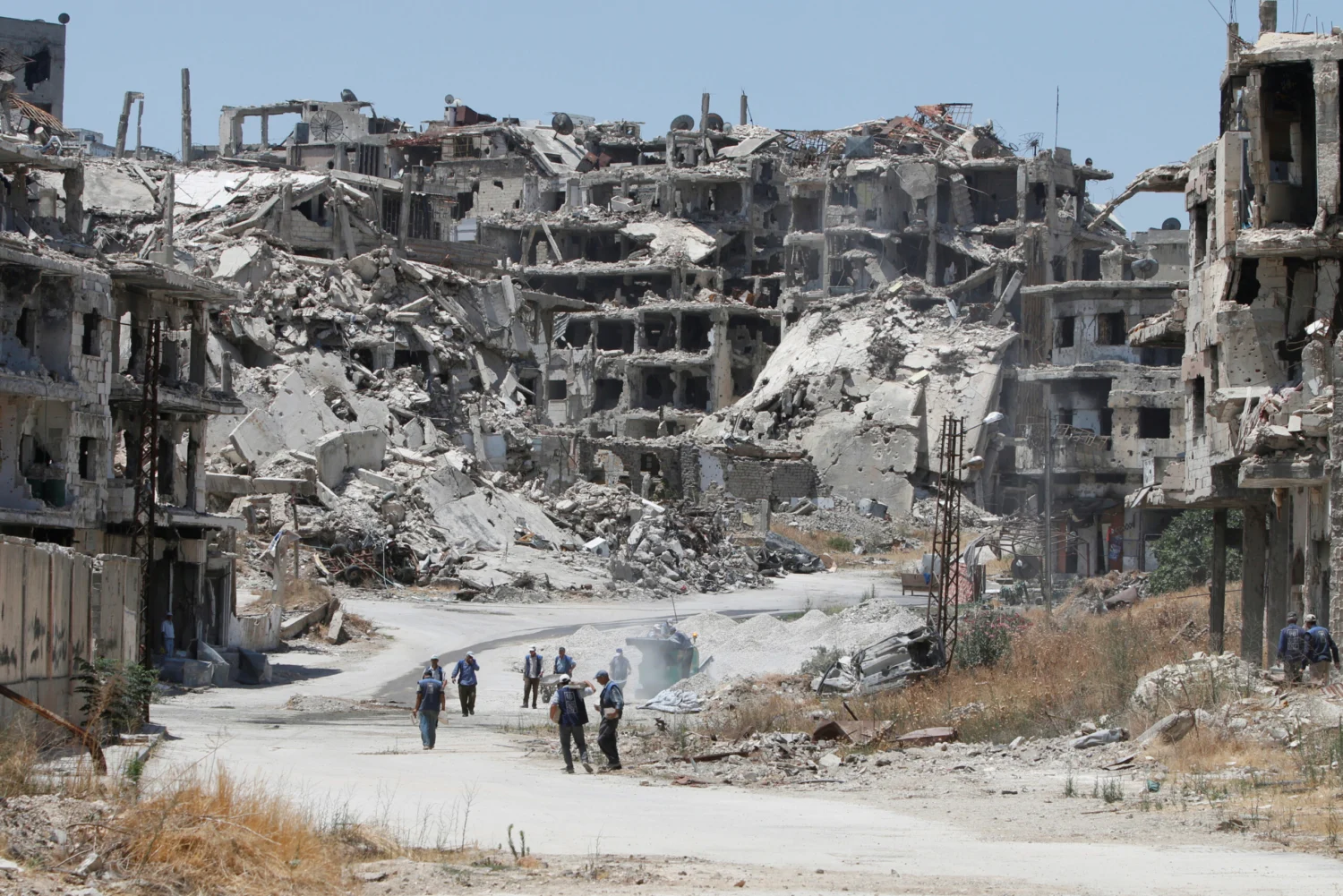
There is a particular kind of exhaustion that comes not from physical fatigue but from the accumulated weight of failed opportunity—the exhaustion of watching a political solution slip through one’s fingers, not because it was impossible, but because the structural conditions to sustain it were never honestly built. That is the exhaustion I carry from years of engagement with the Syrian conflict: first as an Egyptian diplomat and, subsequently, as UN Deputy Special Envoy for Syria. Syria was not merely a diplomatic challenge. It was a civilisational rupture that exposed, with brutal clarity, the fractures in the regional and international order within which all mediation must operate.
What follows is an attempt to extract from the debris of stalled negotiations, violated ceasefires, and squandered diplomatic openings a set of lessons that may serve the next generation of mediators—whether in Syria, where the political landscape shifted dramatically after late 2024, or across the wider arc of Arab conflicts that continue to bleed. These lessons were learned in rooms where the stakes were human lives, in corridors where geopolitical rivalry overrode humanitarian imperative, and in the quiet despair of a mediator who knows that the tools available are not equal to the scale of the crisis.
I. Syria as a Mirror: When the Internal Becomes External
When the Syrian crisis erupted in March 2011, Syria was performing well on most human development indicators. The desire of the Syrian people for a better life—for freedom, dignity, and accountable governance—was legitimate, widely shared, and initially expressed through peaceful protest. What happened next is a cautionary tale that transcends Syria’s borders: a domestic grievance was progressively colonized by external interests until the internal and external dimensions of the conflict became indistinguishable.
Russia, Iran, and Hezbollah intervened to sustain the Assad regime when it could no longer sustain itself. Turkey and Gulf states backed opposition factions with divergent and often irreconcilable political programmes. Western powers oscillated between engagement and disengagement with a consistency that itself became a structural factor in the conflict’s prolongation.
The United States declared early that Assad had lost legitimacy, then declined to act on that declaration with any instrument capable of making it real. President Obama drew a red line on chemical weapons in August 2012, only to step back when it was crossed at Ghouta a year later—a reversal read across the region as a signal that Western commitments were negotiable. When the Islamic State emerged in 2014, Washington pivoted to counter-terrorism, marginalising the political track and inadvertently reinforcing Assad’s core argument that the choice was between his regime and jihadist chaos.
France was equally contradictory. President Hollande recognised the Syrian National Coalition as the legitimate Syrian representative in 2012 and had aircraft positioned and ready to strike after Ghouta—only to stand down when Washington reversed course. When President Macron succeeded him, French policy shifted: regime change was quietly dropped as a precondition, a pragmatic recalibration that arrived without a diplomatic framework to make it consequential.
Britain’s oscillation was the most publicly dramatic. In August 2013, Prime Minister Cameron sought parliamentary authorisation for military strikes and lost—a historic defeat that removed Britain from the immediate military equation and directly influenced Obama’s own hesitation. London pivoted to generous humanitarian funding and active Security Council engagement, co-sponsoring successive resolutions that were vetoed. When the 2018 Douma attack occurred, Britain joined limited strikes on Syrian chemical facilities—bounded enough to demonstrate will without altering the conflict’s trajectory.
The cumulative effect was deeply corrosive to mediation. Western policy told conflict parties that declared red lines were provisional, that the cost of intransigence was low, and that time—rather than compromise—remained the more reliable instrument for those determined to outlast international attention.
The result was a theatre in which foreign powers competed at the expense of Syrian lives and Syrian statehood. As I argued in the Cairo Review of Global Affairs as early as 2021, the Syrian conflict did not just happen: it was waiting to happen. The best framework for understanding it remains the one I borrowed from Churchill’s description of the Soviet Union—popular grievances wrapped in regional rivalries inside big power competition. Remove the regime and the wrapping changes; the content does not.
The domestic foundations of Syria’s vulnerability were decades in the making. A political system caught in a time warp, dominated by a single party for more than fifty years, had stifled every channel through which legitimate grievances could be expressed. Denied a political voice, the population retreated into communal identities—ethnic, religious, tribal—steadily eroding the multi-dimensional national cohesion that had been Syria’s defining social asset across centuries. The regime’s response to this retreat was to deepen it: dividing the population into the trustworthy and the expert, emphasising loyalty over competence in an oversized public sector, and systematically advancing the Alawite community as a pillar of political control in ways that sharpened sectarian fault lines rather than bridging them.
Economic mismanagement compounded political rigidity. Syria before 2011 was a case of uneven development: high growth rates pursued without the transparency, distributional mechanisms, or political reforms required to sustain them. The result was corruption, the rise of crony capitalists who exploited liberal economic policies for narrow private gain, and a widening gap between a wealthy urban elite and an increasingly resentful rural poor. A prolonged drought from 2007 to 2010 accelerated migration into already overcrowded cities, intensifying social tensions that the sclerotic system was constitutionally incapable of addressing. When the regime chose to divert attention through performative anti-Western and anti-Israeli posturing—brandishing its revolutionary credentials in lieu of delivering reform—it was buying time with a currency that was rapidly depreciating.
The fall of Assad in December 2024 removed the figure at the apex of this system. It did not dismantle the system itself, nor did it address the three underlying questions I identified in the Cairo Review as the true determinants of any settlement: what specific political reforms are required, and how are they to be linked to reconstruction; what “political transition” means in a context where simple regime change was never a viable endpoint; and how the web of foreign military interventions—Iranian, Turkish, Israeli, Russian, American—is to be addressed.
None of these questions were answered by the military collapse. On the contrary, the sudden nature of the collapse foreclosed the possibility of an orderly, negotiated transition in which all Syrians would participate in designing their country’s future. The state’s institutions, already hollowed out by years of war and sanctions, were not handed over—they dissolved.
The armed groups that filled the vacuum had their own agendas, their own external backers, and their own conceptions of what Syria should become. The population remained below the poverty line, the infrastructure remained shattered, and the reconstruction funding that I had argued since 2019 must be linked to concrete political reform—used as a positive incentive to shape the behaviour of whoever governed Damascus—remained entirely undeployed as a strategic instrument. The collapse, in other words, changed the names at the top without changing the structural conditions at the bottom. Syria remained, as Churchill might have said, popular grievances wrapped in regional rivalries inside big power competition—with a new cast and an unwritten script.
This dynamic contains the first and most structurally decisive lesson of the entire experience: domestic grievances and external interventions cannot be addressed sequentially. They are fundamentally intertwined, and the mediator who treats them as separable problems—who believes the internal political track can be advanced while setting aside the question of foreign forces—is working at the periphery of the real conflict rather than at its centre.
II. The Indivisibility of the Internal and the External
A political settlement, however carefully designed, cannot survive in a theatre saturated with competing foreign militaries, proxy armed groups, and overlapping spheres of geopolitical interest. Equally, external actors—whether regional powers with security concerns along their borders or great powers projecting strategic influence—will not withdraw unless the internal dynamics of the conflict create conditions that incentivise their departure. The two dimensions are locked in a dynamic relationship that must be navigated in parallel, not in sequence.
In practical terms, this meant that any negotiating framework which ignored the Iranian military presence, the Russian strategic calculus, the Turkish security concerns, or the Gulf states’ interest in shaping Syria’s post-conflict political order was doomed before the first session convened. Mediators who confined discussions to constitutional committees, transitional governance mechanisms, and electoral roadmaps—however earnest—were working at the edges of a conflict whose real negotiations were taking place elsewhere, among external patrons whose convergence or divergence determined the space available for internal political progress.
The corrective is a mandate issue. Any future mediator in a conflict of this complexity must have explicit authority—and, crucially, the political backing of key external actors—to engage those actors as parties to the process, not merely as patrons of it. Without such a mandate, the mediator manages the optics of negotiation while the substance is decided in bilateral channels that bypass the process entirely.
III. The Illusion of International Support
The Syria experience was saturated with what might be called performative multilateralism: joint communiqués that spoke eloquently of a political solution, Security Council resolutions passed after months of agonised negotiation only to be immediately circumvented.
The Geneva Communiqué of June 2012, co-chaired by Kofi Annan and attended by all five permanent members, called for a transitional governing body with full executive powers. Within days, Washington and Moscow were offering irreconcilable interpretations of the same text—each citing it to justify the position it had held before negotiations began. Resolution 2254, adopted unanimously in December 2015, endorsed a comprehensive political roadmap, ceasefire, and UN-supervised elections. It was the first time the Council had agreed on a full political framework for Syria. The resolution was cited in every subsequent diplomatic exchange, but conditions were never created to allow for its implementation.
The humanitarian track fared no better. Resolution 2165, adopted in 2014, authorised cross-border aid access without Syrian government consent—a hard-won procedural achievement. Within weeks it was being systematically circumvented, convoys denied passage or stripped of supplies at checkpoints. The Council passed successive renewals, each slightly weakened by the threat of veto, each violated as routinely as its predecessor. Meanwhile the Astana Process, launched in 2017 by Russia, Turkey, and Iran, produced four agreed de-escalation zones. Within months, two had been subjected to major military offensives.
The cumulative message of this record was not lost on the conflict parties. They understood with precision what the mediator had to work with—and they negotiated accordingly.
Vague verbal endorsements do not constitute genuine support. They allowed one permanent member to publicly back a political process while simultaneously bombing civilian infrastructure. Meanwhile, they allowed another member to preach a Syrian-led solution while arming warring factions, including groups blacklisted as terrorists by the UN Security Council.
They are diplomatic camouflage for inaction. When the Security Council is paralysed—when the veto is deployed not to protect genuine national security interests but as a tool of geopolitical leverage—the mediator is stripped of the enforcement backstop that gives negotiations their credibility. The parties to the conflict read this accurately. They understood when external patrons were protecting them, and they negotiated accordingly, which is to say they did not negotiate in good faith at all.
The broader problem was the absence of what the region has long lacked: a functional security architecture that provides an agreed framework for managing conflicts before they metastasize. As I have argued elsewhere, when the major external powers—Russia, the United States—worked together on the Middle East, regional stability measurably improved; when they worked at cross purposes, the consequences fell on civilian populations. The challenge was, and remains, to design mechanisms that can sustain their cooperation beyond the episodic and the transactional. But in the absence of such mechanisms, the mediator must work within the political space created by great-power competition, and that space was, in Syria, consistently narrower than the crisis required.
The lesson is not merely descriptive but prescriptive: the international community—and specifically the permanent members of the Security Council—must provide genuinely unified, substantive, and directive support for mediation processes. Agreement on the existence of a process is not sufficient; there must be agreement on its specific parameters, its timelines, and the consequences of non-compliance. Without this architecture of accountability, mediation remains aspirational.
IV. The Strategic Value of Incrementalism
In environments characterised by profound mutual mistrust—and Syria was among the most mistrustful political environments I have encountered in more than four decades of diplomacy—the temptation is to hold out for a comprehensive grand bargain, a settlement that resolves all outstanding issues simultaneously. This temptation must be actively resisted. In deeply divided conflicts, the comprehensive solution frequently becomes the enemy of the possible, and the possible is always limited.
Local ceasefires, humanitarian access agreements, detainee exchanges, confidence-building measures at the community level: these were not compromises of principle but investments in possibility. Each local agreement that held, even temporarily, created a constituency—among ordinary Syrians, local commanders, and community leaders—for the proposition that negotiated accommodation was achievable. Each detainee exchange reminded families that diplomacy could deliver what military pressure could not. These incremental gains were fragile and frequently reversed, but they were real, and they preserved the possibility of wider progress in ways that a rigid insistence on comprehensive solutions would have foreclosed.
Incrementalism also generates information. In the early stages of a deeply mistrustful process, confidence-building measures reveal which parties are capable of compliance, which are genuinely interested in a political path, and where the real obstacles lie. This knowledge is not costless—it is purchased through the slow, patient, and often unglamorous work of local-level engagement that rarely attracts diplomatic attention. But it is essential groundwork for any broader negotiating effort.
V. Dialogue as Necessity, Not Endorsement
No lesson from the Syria mediation is more easily misunderstood—or more politically inconvenient—than the one concerning engagement with controversial actors. In Syria, those actors were numerous and each carried their own distinct form of political toxicity. Engaging the Syrian government was deeply uncomfortable for many member states—an administration whose security forces had used barrel bombs, whose detention facilities had become synonymous with torture, and whose conduct had been documented as involving crimes against humanity.
Yet without that engagement there was no humanitarian access, no local ceasefire, no prisoner release. Hayat Tahrir al-Sham, designated a terrorist organisation by the United States, the EU, and the United Nations, controlled Idlib and the millions of civilians living there. Declining to engage it did not make it disappear; it simply made humanitarian operations more dangerous and less effective. The Kurdish-led Syrian Democratic Forces were an indispensable Western counter-terrorism partner yet regarded by Turkey as a terrorist organisation—making their inclusion in any process politically explosive for Ankara. Even Iran had to be engaged, however indirectly, on de-escalation in areas where its proxies exercised control. In each case the calculation was identical: dialogue was not endorsement. It was the only available route to protecting civilians.
Humanitarian access to besieged populations, de-escalation of military operations in populated areas, the prevention of forced displacement, the return of detainees: all of these outcomes depended on maintaining working relationships with parties that exercised real control on the ground, regardless of their political or ideological character. The alternative—refusal to engage, driven by entirely understandable moral revulsion or by domestic political calculations in external capitals—did not punish the actors in question. It punished the civilians caught between them.
Future mediators must have the political cover to maintain such channels without the perpetual threat of diplomatic scandal at home. This requires two things. First, a clear public articulation of the distinction between dialogue and legitimation—a distinction that is genuine, not merely rhetorical, and that is visible in the structure of the engagement itself. Second, institutional backing from the mediator’s political principals that is robust enough to withstand the inevitable accusations of appeasement that sustained dialogue with armed actors will attract. Absent these conditions, mediators will be forced to choose between their effectiveness and their political survival, and the civilians in besieged areas will bear the consequences of that choice.
VI. Economic Architecture as a Tool for Peace
Another lesson, consistently underappreciated in analyses of the Syria process, concerns the strategic deployment of economic incentives. Military pressure and sanctions—the default instruments of external coercion—have a demonstrable record of failure in conflicts of this type. They impose costs, sometimes severe ones, but they do not alter the fundamental calculations of parties whose continued control depends on the perpetuation rather than the resolution of conflict.
Reconstruction offers a different logic. Linking the prospect of reconstruction funding to genuine political reform—to the dismantling of instruments of repression, to the return of displaced populations, to the creation of accountable governance structures—creates constituencies for peace among actors who would otherwise have no incentive to support a political settlement. Structuring economic relationships in ways that generate dependencies on a stable, unified state rather than on fragmented patronage networks transforms the cost-benefit calculation of key actors over time. This is not idealism. It is a recognition that durable peace requires that the actors who control military and political resources perceive their interests as better served by stability than by continued conflict.
This insight was consistently marginalised in the Syria process, where reconstruction was treated as a reward to be delivered after a political settlement rather than as an instrument to be deployed in its pursuit. Reversing this logic—integrating economic architecture into mediation frameworks from the outset, not as an afterthought—is one of the most actionable reforms available to future mediators.
VII. The Arab Dimension: Fragmentation as the Original Sin
One cannot analyse the failures of Syrian mediation honestly without confronting a structural reality that extends far beyond Syria: the chronic inability of Arab states to develop and sustain collective political will in response to conflicts within their own region. Competing national agendas among Arab states have repeatedly undermined peace processes. We have not witnessed a single conflict in which all influential Arab actors united behind a single roadmap and leveraged their combined political, economic, and diplomatic weight to implement it. This absence of collective will is, in my judgement, the original sin from which all subsequent mediation failures descend.
The sub-regional model—illustrated by the GCC-led initiative in Yemen—has shown severe inherent limitations. While sub-regional groupings can mobilise resources and apply pressure, they are inevitably perceived as party to the conflict rather than as neutral arbiters. Their mediation agenda reflects the interests of dominant member states, eroding legitimacy among key conflict parties and complicating implementation.
The GCC Initiative produced legible institutional outputs—a signed transfer of power, a single-candidate election, a National Dialogue Conference—that satisfied the formal requirements of a transition without disturbing the structural conditions underneath it. Yemen’s former president Ali Abdullah Saleh left office but kept everything that made him dangerous: his financial networks, tribal patronage, and crucially, military units loyal to his son Ahmed Ali. The decree ordering armed forces restructuring existed on paper; the actual chain of command did not change. Abdrabbuh Mansour Hadi inherited the presidency with international recognition but no political base, no loyal military, and no independent patronage networks—authority as an institutional shell.
The Houthis received seats at the National Dialogue Conference (NDC) without any obligation to demobilize. They used the transitional period to expand territorially while formally participating in dialogue. Southern representatives attended the conference but rejected its federal map as a deliberate carve-up of their oil regions, hardening separatism rather than containing it. A transitional justice framework was drafted and never activated, leaving grievances from the Sa’ada wars and southern crackdowns as live political fuel.
The initiative gave each unresolved dynamic a formal address—a clause, a commission, a decree—which made the conflicts harder to see coming precisely because they appeared, on paper, to have already been handled.
The neighbouring-states model presents a distinct but related dilemma. Neighbouring states have undeniable leverage and high stakes. They also have national security priorities—concerns about borders, political alignment, rival influence—that can distort the mediation agenda, tilting it toward arrangements that serve their security interests rather than the conflict’s root causes. The question is not whether to involve neighbouring states, whose engagement is unavoidable, but how to channel that involvement through frameworks that prevent their national interests from overwhelming the requirements of an internally driven settlement.
The events in Syria after late 2024 provided a stark demonstration of the costs of diplomatic abandonment. The cautious momentum built around regional gatherings dissipated rapidly, leaving a vacuum that was filled not by a renewed collective mechanism but by disjointed, ad-hoc national initiatives. Momentum, once lost in a mediation process, is extraordinarily difficult to rebuild. When structured mediation collapses, it does not pause—it regresses: to zero-sum power politics, to humanitarian crisis management, to the consolidation of facts on the ground that make future political solutions progressively more distant.
VIII. Proposals for the Future of Arab Mediation
Diagnosis without prescription is a luxury the region can no longer afford. Drawing on the lessons outlined above, five structural imperatives present themselves.
The first is the shift from the unattainable ideal of full Arab consensus to the realistic target of minimal consensus among key stakeholders—agreement on core principles: ending foreign military interference, prioritising the rebuilding of civil state institutions, and channelling resources through a unified political track. A dedicated high-level Arab contact group with a genuinely unified mandate, rather than a rotating chairmanship of disagreement, could provide the institutional expression of this minimal consensus.
The second is the institutionalisation of mediation capacity within the Arab League. The League has operated too long as a vehicle for declaratory diplomacy. What is needed is a permanent, professionally staffed, and well-resourced mediation unit within the Secretariat—populated by individuals of genuine regional stature and empowered to maintain continuous engagement with all conflict parties, not only during crises but in the quieter periods between them, when the foundational work of trust-building actually takes place.
The third is a clear definition of the role of neighbouring and regional powers. Their proper function is to underwrite and guarantee agreements reached by the conflict parties themselves—to provide the security and economic assurances that make settlements credible—not to dictate their terms. A formal firewall between states’ national security interests and the mediation process is essential. Without it, every mediation risks becoming a proxy negotiation over regional geopolitics, with the conflict parties reduced to secondary actors in a drama conducted at their expense.
The fourth is the abandonment of what might be called the summit-and-neglect model of conflict engagement. The pattern—intense multilateral attention around a high-profile gathering, followed by protracted periods of diplomatic neglect—has produced consistent failure and is visible across three cases where high-profile diplomatic moments substituted for sustained engagement.
The Oslo Accords generated a White House lawn signing of maximum symbolic intensity. What followed were intervals of neglect—settlement expansion, security deterioration, institutional erosion—punctuated by further summits convened to rescue a process that had been abandoned between them. Camp David 2000 inherited the unresolved residue of everything that had not been addressed since 1993. Each summit reset the clock without changing the underlying arithmetic.
In Libya, NATO intervention and Gaddafi’s fall produced intense multilateral attention followed by rapid international withdrawal. No serious disarmament process, no sustained institutional support. The Skhirat Agreement (2015) was another concentrated moment of diplomatic attention, producing a government that never controlled the territory it nominally governed. External actors filled the vacuum between summits with competing proxy support.
Syria’s Geneva process ran through multiple rounds from 2012 onward, each receiving considerable diplomatic attention and none producing any mechanism for implementation. The deeper problem was structural: between sessions, the military landscape changed beyond recognition—Russian intervention, Hezbollah’s armed involvement, the rise of ISIS, the entrenchment of opposition armed factions with support from regional and international actors, and Iran’s growing consolidation on the ground—yet diplomats returned to each new round carrying assumptions formed at the last one. Astana shared the mediation space with Geneva not by accident but by logic: the parties had concluded that summits without follow-through carried no enforceable consequences, and so sought a forum that at least reflected the facts on the ground.
Successful mediation requires sustained, patient, and relentless engagement insulated from daily political fluctuations. This demands envoys with genuinely long-term mandates, deep contextual expertise, and direct access to the leaders whose decisions determine outcomes.
The fifth is accepting inclusivity as a non-negotiable principle rather than an aspirational preference. The history of failed mediation is, in significant measure, a history of exclusion: of attempts to engineer settlements without the engagement of actors who control territory, armed groups, or popular constituencies essential to any agreement’s implementation. The political discomfort of engaging such actors is real. But the alternative—mediation processes that exclude significant parties, only to find agreements undermined by those excluded—is consistently worse. Future processes must develop frameworks for engaging all actors with significant constituencies, or accept that they are designing instruments of conflict management rather than conflict resolution.
IX. The Overarching Lesson
The lessons distilled from the Syria mediation experience do not exist in isolation. They form part of a larger, deeply troubling pattern visible across the four major Arab conflicts of our era: Syria, Yemen, Libya, and Sudan. In each case, the absence of a unified Arab framework has been filled by fragmented, often counterproductive initiatives driven by competing national interests. In each case, the political cost has been borne overwhelmingly by civilian populations. In each case, the opportunities for a negotiated solution have narrowed with each year of continued violence.
The Syrian conflict, at its deepest level, is a mirror. It reflects with unsparing clarity the consequences of a divided Arab world attempting to navigate civilisational crises with instruments designed for a different era. From the constitutional committee sessions that produced no constitution, to the ceasefires that held for days rather than decades, to the diplomatic openings that closed before they could be walked through—the lesson is not that peace was impossible. It is that peace requires conditions, and conditions require sustained collective political will.
Arab conflicts require Arab-led solutions. But Arab-led solutions cannot emerge from a divided Arab world. The hard, unglamorous, and often thankless work of rebuilding a minimal collective framework—for mediation, for diplomatic coordination, for the channeling of economic and political resources toward settlement rather than perpetuation—is therefore not optional. It is the precondition for everything else. Until it is done, mediation in the Arab world will remain what it too often has been in Syria: a dignified gesture in the direction of peace, insufficiently backed by the political architecture to make peace real. What is required is a sustained, principled, and collectively supported process that the Arab world has the capacity to provide and has, until now, consistently failed to deliver.