Israel and Iran: Major Threats to Middle East Stability
Both states have violated international law and instigated regional chaos
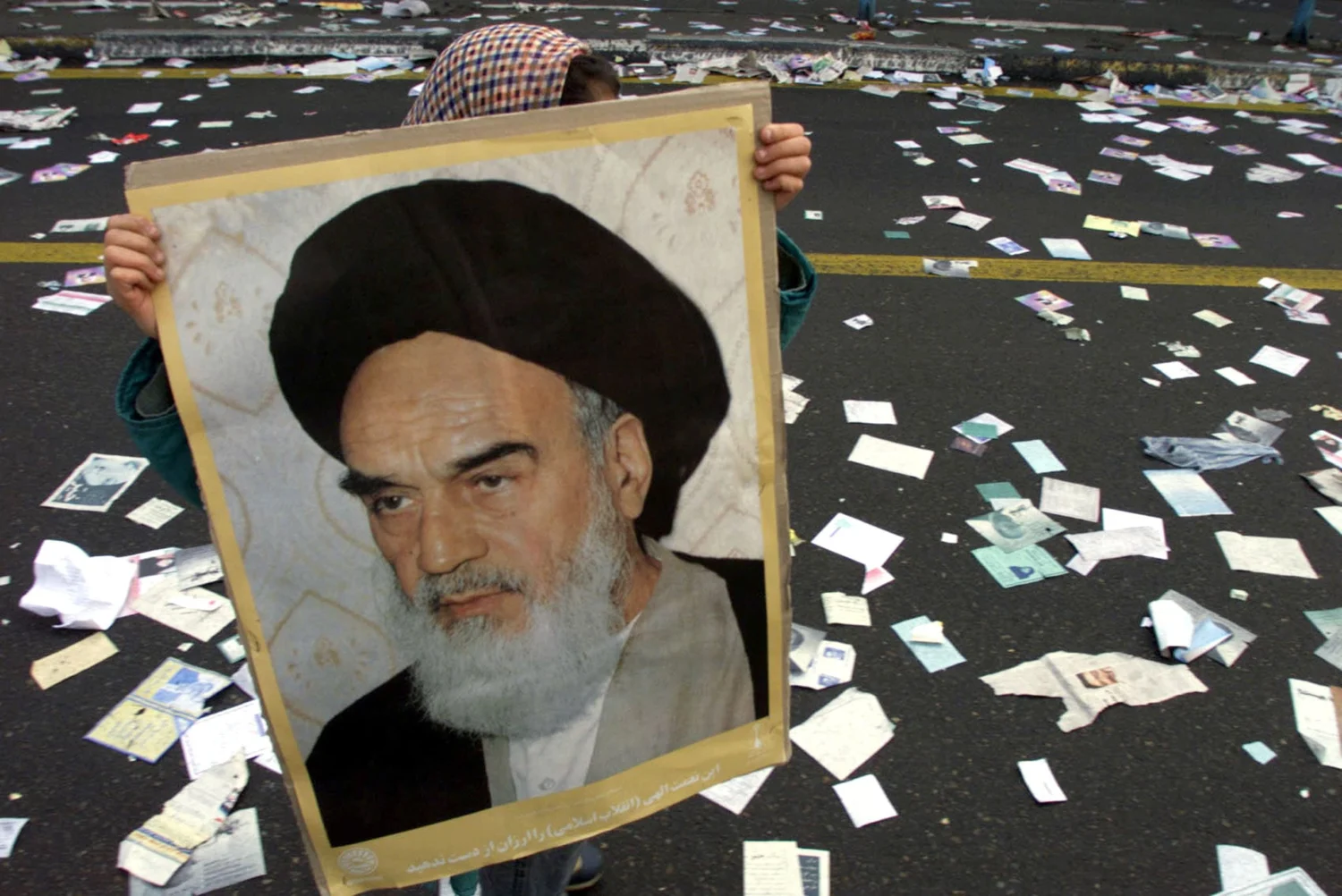
For years, Iran has been accused of being the primary source of instability in the Middle East by much of the West, Israel, and a number of Arab states. One point of conflagration is that it maintains a network of armed groups across the region (the “Axis of Resistance”) which it deploys to attack other states in the area, such as Israel, the United Arab Emirates, and Saudi Arabia. The second is that it continues to develop an increasingly sophisticated ballistic missile arsenal, which was brought to bear against the Kurdish areas of Iraq, Pakistan and Israel earlier this year. Iran is also criticized for supporting the regime of former Syrian President Bashar al-Assad (until December 2024). Furthermore, Western and Arab countries believe that Iran has violated article III of the Non-Proliferation Treaty (NPT) by enriching uranium beyond the 20% threshold for civilian use.
However, perceptions of Tehran as the main agent of regional instability have shifted in the Middle East and beyond during the past 22 months. A growing number of experts and organizations say Israel is committing more and more war crimes in Gaza, including genocide, and launching an unprecedented series of military campaigns.
And in recent months, Israel has ignored several orders from the International Court of Justice (ICJ) demanding that it take measures to prevent acts of genocide in Gaza. It also disregarded an advisory opinion of the same court requesting that it dismantle its unlawful occupation of the Palestinian Territories. Israel has also killed hundreds of UN staff in Gaza, attacked United Nations Interim Force peacekeepers in Lebanon, revoked UNRWA’s license to operate in Israel, and declared UN Secretary General Antonio Guterres persona non grata. In addition to destroying Gaza, Israel launched aggressive military campaigns against the Houthis in Yemen, Hezbollah, Iran and the new government in Syria. Most recently, Israel even bombed the Qatari capital in a bid to eliminate the Hamas ‘terrorist’ team, with whom it also happened to be negotiating a cease-fire for Gaza. Israel has justified its violence as an existential fight against terrorism in the case of Hamas and Hezbollah, a necessary pre-emptive strike in the case of Iran, and as self-defense in Syria. Western politicians like U.S. President Donald Trump have largely subscribed to this frame.
However, in times of war one needs to look beyond rhetoric and examine military actions as objectively as possible to ask the question: Has Israel joined Iran as a major threat to regional stability through a naked power play disguised as a proclaimed fight for survival? The response to this query should inform how the international community relates to Israel, just as it does with regard to Iran. Sketching an answer demands an examination of the recent military objectives and actions of both countries, as well as a rough comparison of the gravity of their actions from the perspective of the international (legal) order and regional stability.
Iranian Military Objectives and Actions before October 7
Dating back to the Iran-Iraq war that ended in 1988, Iran’s military strategy has focused on the concept of “forward defense”. It aims to keep conflict away from Iranian soil based on the costly experience and destruction of the Iran-Iraq war (1980-1988), the threat posed by the U.S. invasion of Afghanistan (2001) and Iraq (2003), and Former President George Bush labelling Iran as part of the “Axis of Evil”. The concept of forward defense has three main components: (1) a ballistic missile and drone program, (2) a network of armed groups across the region (e.g. Hezbollah, the Badr Corps, and Hamas), and (3) a naval program that employs asymmetric combat tactics in a bid to establish dominance over the waters of the Persian Gulf in case of conflict with U.S. forces.
Iran had two primary military objectives prior to October 7, 2023. First, to deter Israel and the United States from launching a direct attack against it. Second, to maintain significant influence in the domestic politics of Lebanon, Syria, and Iraq so that these countries could serve as launchpads for limited military action on its behalf when such was considered useful to its foreign and security objectives. Hezbollah was Tehran’s deterrent-in-chief against Israel while several Iran-linked armed groups in Iraq fulfilled a similar, but weaker role against the United States. Hamas has been a convenient tool for Iran to harass Israel and contest the occupation through violence at a low-cost to itself. This has enabled Tehran to frame itself as an ardent supporter of the oppressed, and as the unrelenting enemy-in-chief of the ‘Zionist regime’.
In this context, most of Iran’s military actions before October 7 sought to extend the boundaries of its influence through coercive diplomacy underpinned by grey zone tactics (such as limited and deniable military action) while avoiding full-scale regional conflict. The strikes attributed to Iran against Abqaiq (Saudi Arabia) in 2019 via the Houthis and against Abu Dhabi in 2022 via Iraq-based armed groups were instances of such coercive diplomacy. They intended to deter the UAE and Saudi Arabia from band wagoning with Israel and the United States. Similar strikes on the Kurdistan Region of Iraq (KRI) intended to curtail relations between the Kurdistan Democratic Party and Israel, as well as limit activities by Iranian Kurdish armed groups operating out of Iraq’s north. In Syria, Tehran expanded its influence after 2011 by deploying foreign armed groups, transferring advanced missile knowledge via Hezbollah, and creating new military infrastructures with the aim of opening another front against Israel.
Iran’s nuclear program is often viewed by the West as part of its forward defense concept, but this is technically speaking incorrect. While there is ambiguity about the program, Tehran has always framed it as a civilian undertaking to which it is entitled under the Non-Proliferation Treaty (NPT). Moreover, Iran has not engaged in weaponizing its nuclear capacity as of June 13, 2025, when Israel struck the country. Iran’s decision to increase its enrichment of uranium up to 60% between April 2021 and June 2025 was essentially a negotiation tactic to regain leverage after the United States withdrew from the JCPOA in May 2018 when neither the EU, Russia, nor China did much to salvage it. Additionally, Iran notified the IAEA of its intent to increase enrichment, indicating it was not attempting a covert weaponization effort.
Despite not including it within its official security doctrine, Iran’s nuclear program has been seen in the West—by the United States and Israel, in particular—as a military hedging strategy to develop latent nuclear weapons capability by means of achieving nuclear threshold status. Beginning in 2015, Iran temporarily rolled back its nuclear program, as monitored by the IAEA, in accordance with the JCPOA framework that it implemented. It maintained this approach—even after America’s 2018 exit from the treaty—until May 2019.
Iranian Military Objectives and Actions after October 7
After October 7, 2023, Iran combined its expressed solidarity for Hamas with limited military action, which was calibrated to avoid full-scale war with Israel or the United States. Hezbollah, for example, broadly followed a tit-for-tat logic in its skirmishes with Israel between October 2023 and Israel’s offensive against it in September 2024. As long as Israel only targeted Hezbollah’s military facilities, Hezbollah would retaliate by only targeting Israeli military facilities, and so on. Tehran also demonstrated caution in its response to Israel’s unlawful strike on the Iranian embassy in Damascus on April 1, 2024, launching a limited retaliation that was broadcast well in advance. Iran did initiate a more substantial attack in response to Israel’s assassination of Hamas leader Ismael Haniyeh on Iranian soil in July 2024, however.
All things considered, Iran brought gradual and limited pressure to bear on Israel after October 7 to agree to a ceasefire in Gaza via the “unity of the fronts” strategy of its armed groups network. The aim was to create psychological pressure on Israel from different sides (‘fronts’) while causing limited—but sufficient—damage. Iran’s caution ultimately proved to be costly as it enabled Israel to go all-in once it managed to concentrate the required military resources—first against Hezbollah, and then against Iran.
Under the duress of renewed U.S. sanctions enforcement and threats, and Israel’s weakening of the Axis of Resistance, Iran entered nuclear negotiations with the United States once again in April 2025, with Tehran indicating a willingness to reach another deal. Instead, Iran ended up on the receiving end of Israeli airstrikes during the second half of June; Israel and the United States justified their attack by stating their unilaterally imposed 60-day-limit to reach a deal had been exceeded, despite Iran’s continued negotiation efforts.
Israeli Military Objectives and Actions before October 7
Since its foundation, Israel has claimed a right and a need to act militarily in a preventive manner to avoid being “annihilated”. Israel justifies this approach with reference to its small size and being surrounded by security risks of a supposedly ‘terrorist’ nature, such as Hamas, Hezbollah, and Iran. Indeed, there is sufficient rhetoric by Hamas and Iranian leaders that promise to wipe Israel off the map. It stands to reason that Israel’s political leadership takes such threats seriously. The problem is that Israel’s narrative of self-defense and terrorism is selective on several counts and has created new threats that would not be present otherwise.
Hamas. Hamas is largely a product of Israel’s occupation of the Palestinian Territories since 1967. Without occupation, there would be no Hamas as it exists today. While the organization grew due to support from Hezbollah, Iran, Qatar, and Prime Minister Netanyahu himself, it is a local organization, not a foreign implant. Additionally, the right to self-defense as enshrined in the UN Charter applies to interstate war, not to the conditions of occupation that Israel has created for itself.
Hezbollah. In a similar vein, Hezbollah’s rise to prominence is linked to Israel’s 1982 invasion of Lebanon, especially Israel’s occupation of southern Lebanon (until 2000) and the Shebaa farms (until today). Israel also continues to occupy several additional parts of Lebanon at the moment in contravention of its November 26, 2024 ceasefire agreement with Hezbollah. It is unlikely Hezbollah could have flourished as it did without sustained Iranian support, but Israel itself also provided key conditions necessary for this development. Israel’s presence in and regular attacks on Lebanon over the past decades have enabled Hezbollah to brand itself as a more effective defender of Lebanese soil than the official government, which has proven incapable to act effectively against the threat that Israel poses.
Iran. In contrast to Hamas or Hezbollah, Iran poses a real threat to Israel that is not the result of previous Israeli policies or actions. However, some elements of this threat are exaggerated. For instance, Iran’s ballistic missile program is hardly different from any other sovereign nation’s standard armed forces and does not compare to the strength or functionality of the Israeli airforce. On the other hand, Iran’s ties with Hezbollah and its military architecture in Syria (before the fall of Assad) are matters of serious concern for Israel. Iran’s nuclear program sits between these extremes: it does pose a risk, but the risk is latent. This is because there is no immediate threat without weaponization. Moreover, Tehran signed and implemented the 2015 nuclear deal, indicating a willingness to engage diplomatically on the matter with the United States, E3 (Germany, UK and France), Russia and China. A final consideration is that the main aim of nuclear weapons is deterrence, not conducting wars of aggression. Nevertheless, safeguard issues from the past remain unresolved. For example, it is unclear whether Iran violated particular NPT provisions in its civilian nuclear program in the late 1990s and early 2000s. Furthermore, Iran has enriched uranium post-JCPOA to levels unnecessary for civilian use since 2021.
If Israel’s objectives are not based solely on ‘preventive’ self-defense, as argued above, then it must have other goals. As to its direct neighborhood, Moshe Dayan’s funeral oration for Roi Rotberg (1956) and the permanence of Israeli occupation of the Palestinian territories indicate the true nature of Israel’s military strategy: to resettle the land, using force as necessary. Regionally, Israeli military objectives can be discerned by analysis of the Begin Doctrine (1981) about Israel’s nuclear weapons; the Dahiye doctrine (2006), an official military strategy to target civilian infrastructure; and the concept of Qualitative Military Edge (QME). Together, they point to Israel’s desire to dominate through superior firepower, including the breaking of an adversary’s will to fight by mass targeting civilians and civilian infrastructure as necessary. Israeli military strategy essentially manifests what the U.S. political establishment calls ‘peace through strength’. The problem of this approach is that it generates its own threats by applying too much force in an indiscriminate manner without diplomatic follow-up; grievances then multiply while more durable peace remains absent.
In this context, Israel’s main military actions before October 7, 2023, sought to maintain the status quo by gradually annexing the West Bank and East Jerusalem, keeping Hamas in check in Gaza, and conducting a war of attrition against Hezbollah in Lebanon, and against both Hezbollah and Iran in Syria.
Israel after October 7
After October 7, Israel’s military actions underwent a fundamental shift from status quo management to threat elimination by any means necessary. To begin with, the Israeli military turned Gaza into a wasteland to destroy Hamas and kill Palestinian civilians in genocidal fashion. In the West Bank, meanwhile, Israel has destroyed the refugee camps of Jenin and Tulkarem and imposed a full lockdown that included countless violations of human rights and international law against Palestinian civilians as annexation accelerates.
In Lebanon, Israeli forces dealt Hezbollah severe blows while simultaneously targeting civilian infrastructure and Lebanese society at large. Today, Israel does not abide by the terms of its November 2024 ceasefire with Hezbollah. Instead, its forces maintain control of five additional strategic areas of southern Lebanon. The Israeli air force also continues to conduct regular airstrikes in Lebanon despite the ceasefire, which have killed dozens of civilians at the time of writing.
In Syria, Israel initiated an extended bombing campaign after the fall of Assad despite assurances from interim President Ahmed al-Shaara on behalf of Hayat Tahrir al-Sham (HTS) that the group would continue to abide by the 1974 Disengagement Agreement between Syria and Israel. Al-Shaara insists that HTS is focused on national stability and recovery, and will not allow foreign forces to use Syria for attacks on Israel. There is no evidence that Damascus has violated any of its assurances. Neither does the group possess the military capabilities to do so, incidentally, given the antiquated state of the remaining equipment of the Syrian Arab Army and the departure of Iranian forces after December 2024.
Finally, the recent Israeli-U.S. attack against Iran’s nuclear sites can only be considered as an act of aggression on the basis of international law since it cannot be justified with reference to the right of self-defense. The UN Charter only allows a country to attack in self-defense after being attacked; international customary law allows it but requires the presence of an immediate and overwhelming threat against which only military recourse offers protection. But in the absence of weaponization and ongoing diplomatic negotiations, there was no overwhelming or immediate Iranian military threat to Israel. Israel’s and America’s official justification of their attack—a proclaimed need for self-defense based on Iran exceeding the sixty days to agree a diplomatic resolution of the nuclear issue that the U.S. had imposed unilaterally—suffers fatally from the fact that negotiations were ongoing and Iran had not actually started to weaponize its nuclear program at the time of attack.
Israel’s strike on Doha can now be added to this growing list of aggressive military action. Its bid to eliminate the Hamas negotiating team staying in the city is not justifiable as self-defense under international law—just like Syria and Iran—because there was no overwhelming or immediate threat to Israel. In fact, Qatar is a major non-NATO ally of the same United States that is also Israel’s chief international supporter. This attack further illustrates Israel’s disregard for international law, its runaway militarism, and U.S. duplicity, given that it had just put a proposal to Hamas about a Gaza ceasefire days prior to the strike.
Comparing Iranian and Israeli Military Actions
Israeli and Iranian military actions can be compared on two dimensions to establish the extent to which they represent a threat to stability in the Middle East. These dimensions are: 1) their level of compliance with the international legal order and, 2) their contribution to regional (in)stability from a geopolitical perspective.
With regard to the international legal order, there are four primary markers that can be used to compare Israeli and Iranian military action. These include the UN Charter, in particular the right of a country to defend itself after it has been attacked as enshrined in article 51; international customary law with regards to the right of self-defense; the Geneva conventions that regulate warfare and stipulate rules pertaining to occupation; and the Non-Proliferation Treaty that regulates how nuclear power can be harnessed for civilian purposes while preventing its militarization.
On the basis of the 1837 Caroline Affair and the 1842 Webster-Ashburton agreement, international customary law established three principles for legitimate pre-emptive self-defense that complement the UN Charter: imminence, necessity, and proportionality. In brief, the foreign attack needs to be anticipated in the very near future, it must be overwhelming in nature, and that it cannot be averted by other means than a military response. The response must also be commensurate to the scale and type of the anticipated attack.
The fourth Geneva convention specifically regulates occupation, among other things. For example, it prohibits forced population transfers, the destruction of property (unless essential to military operations), and it obliges the occupier to facilitate humanitarian relief schemes as necessary as well as to promulgate and maintain a clear set of enforceable rights for the occupied population to enjoy.
In addition, there are two important secondary markers relevant to any comparison of Iranian with Israeli military action. The interim orders of the International Court of Justice of January 26, 2024, March 28, 2024, April 5, 2024, May 24, 2024 and April 14, 2025 in the context of the case that South African initiated against Israel, stipulated that all signatories must do what they can to prevent genocide from happening. Furthermore, the advisory opinion of the same court of July 2024 that established Israel’s entire occupation of the Palestinian territories as unlawful.
Applying the aforementioned legal markers suggests that most of Iran’s military actions over the past few years have substantially contravened its international legal obligations. Its missile strikes against Saudi Arabia (2019) and the United Arab Emirates (2022) violated the principle of non-aggression enshrined in the UN Charter. Even though these attacks were claimed by the Houthis and Iraq-based armed groups respectively, they were viewed by the United States, Israel, and others as instigated and enabled by Iran through its Axis of Resistance linkages. Iran’s missile attacks on the Kurdistan region of Iraq in 2018, 2022, and 2024 were an even clearer violation of the UN Charter as they were executed directly by Iranian forces.
Iran’s relations with various groups of the Axis of Resistance—especially Hezbollah, the Houthis, and Iraq-based armed groups—offer further violations of articles 1 and 2 of the UN Charter, especially regarding their elements on state sovereignty. It is clear that these groups prevent the governments of their respective countries from exercising their sovereign rights even when they have become part of them; foreign support for such groups thus manifests unwarranted interference. Hamas is an exception, however, since the Geneva conventions stipulate that occupation is a temporary situation that does not create valid sovereignty claims on the part of the occupier. Iran building a new military architecture in Syria pre-December 2024 did not necessarily contravene international law either since it took place by formal request of the Syrian government. Finally, Iran’s nuclear program, while not a military action in itself, partially violated the NPT after 2021 when Tehran commenced higher-grade uranium enrichment. But it bears reminding that this was only after the United States walked away from the 2015 JCPOA agreement in 2018, and the EU failed to deliver its part. There also remain unresolved NPT safeguard issues dating back to the late 1990s and early 2000s with regard to Iran’s nuclear program.
Applying the aforementioned legal markers indicates that most of Israel’s military actions also contravened its international obligations. Israel’s quest to eliminate Hamas conflicts with the five successive interim orders of the International Court of Justice because its genocidal methods ensure the obliteration of Gaza in the process by means of the destruction of civilian infrastructure (including hospitals), mass civilian killings, large-scale displacement and starvation. In addition, Israel’s military operations in the West Bank that protect its settler communities and facilitate annexation directly contravene the advisory opinion of the International Court of Justice of July 2024, as well as the fourth Geneva convention.
Israel’s bombing campaigns in Syria after December 2024, and in Iran in mid-June 2025, also violated the UN Charter as it was not attacked prior to its military action and there was no imminent threat. Moreover, Israel bombarded several civilian facilities in Iran, including a hospital and a broadcast station, killing over 200 Iranian civilians. Israel’s September 2024 assault against Hezbollah offers more of a mixed picture. Lebanon is a sovereign state that Israel in principle has no right to attack, but Lebanon also needs to prevent groups on its territory, like Hezbollah, from posing a threat to Israel. Israel’s indiscriminate targeting of Lebanese civilians and civilian infrastructure is, however, clearly illegal under the Geneva conventions.
Threats to Regional Stability
Assessing how Israeli and Iranian military campaigns contributed to regional instability requires consideration of the extent to which their actions risked crises and violence beyond the immediate warring parties.
About half of Iran’s military actions, namely its strikes against Saudi Arabia, the UAE, and the Kurdistan region of Iraq, carried no such risk. This is because these strikes were one-offs, limited in both scope and objectives. However, Iran’s strengthening of the different groups engaged in the Axis of Resistance did create risks to regional stability because they threatened neighboring countries, attacked Israel, and interfered with the business of their respective domestic governments (at times even becoming part of them). Iran’s development of new military infrastructure in Syria also threatened neighboring countries, particularly Israel. Tehran’s nuclear program did not directly contribute to regional instability in the absence of weaponization, but high-grade uranium enrichment in a context of deep regional tensions did make it a concern to other states.
Turning to Israel, the assessment suggests that all of its recent military actions, except one, contributed to regional instability. Its campaign of destruction in Gaza has placed significant pressure on Egypt and inflamed public opinion across the region with ancillary risks of domestic instability. It may also, at some point, force regimes in the region to counteract Israeli actions. The same holds for Israel’s military operations on the West Bank with respect to Jordan. Moreover, Israeli bombing campaigns in Syria after December 2024 weakened its new government at a pivotal moment, which increased the possibility of a new round of internationalized civil war while also risking direct conflict with Turkey. In the same vein, Israel’s aerial campaign against Iran violated both Syrian and Iraqi airspace, and risked regional conflagration, which was highlighted by Iran’s attack against U.S. military assets in Qatar. The single exception was Israel’s offensive against Hezbollah that was largely limited to Lebanon and did not affect other countries much, except for a large number of Lebanese fleeing to Syria.
Between a Rock and a Hard(er) Place
A few initial conclusions can be drawn from the preceding analysis. First, Iran and Israel are in good company with regard to the frequency with which they violate international law. Israel’s justification of doing so in self-defense only properly stands with respect to Hezbollah and Iranian military activity in pre-HTS Syria. Its attacks against Hamas, on the West Bank, in Syria after December 2024, and against Iran cannot be labelled as self-defense when considering the legal markers mentioned in the previous sections of this essay.
Second, Israeli violations of international law—its war crimes in Gaza and its human rights violations in the Palestinian Territories at large—are far more serious in their gravity than Iran’s.
Third, it appears that Israeli military action produces greater regional instability than Iran’s. This is in large part because most of Tehran’s military actions are limited in nature and use coercion in mafia-style fashion to achieve its diplomatic and security objectives. In contrast, Israeli military action pursues surrender and/or defeat via large-scale military and civilian destruction. The ensuing ceasefire deals are more likely to produce a desire for revenge than encourage amicable future relations.
Fourth, Israeli military action has killed far more civilians in the past two years than Iran’s coercive diplomacy has killed in decades.
It is clear that Israel and Iran are both major threats to Middle East stability. Due to recent events—and if we were to use a scale measuring threats to regional stability—Iran is down and Israel is up. However, many Western political elites view Israel as engaged in either self-defense or an existential fight against terrorism, even though much of this argument does not stand up to scrutiny and ignores Israel’s aggressive expansionary politics. Israel has given clear demonstrations of how ‘might makes right’ in Gaza, Syria, and Iran, with thanks to the United States and a few European countries for their support. Anyone that Israel labels as a security threat in the future knows what to expect.