Fascism in Football: How the Beautiful Game Turned Ugly
Far-right politics have found mainstream attention among Italian football fans

December 26, 2018 was supposed to be an exciting day for Italian football fans: it was the first time matches of the top national league, Serie A, were scheduled during the Christmas holidays, to add some sports fun to the festive season. The big match of the day was Inter Milan vs Napoli, a classic face-off between two of the most prominent teams in Italy. The post-match TV coverage, however, did not dwell on scored goals or athletic feats, but rather on the violent riots among Inter and Napoli fans that left one man dead.
During the riots, Daniele Belardinelli, a supporter of the Italian team Varese, was mowed down by an SUV driven by a Napoli fan. Belardinelli was an ultrà, a slang term used to identify hardcore football fans, in Italy and across Europe. Ultras are a fixture of Italian football, well known for expressing their diehard fandom through colorful, sometimes scurrilous chants and highly choreographic banners. Unfortunately, they are also notorious for their racist and violent behavior and, increasingly, engagement in political extremism and illegal activities.
While some ultras groups subscribe to progressive or leftist ideology, the great majority lean to the far-right. Often, groups supporting different teams form bonds along ideological lines. Ultras of Varese and Inter are both far-right oriented and have a long history of political alignment and mutual support. Belardinelli had joined fans of Inter Milan in an ambush against a busload of Napoli fans. Despite the attack’s careful planning—which managed to defy the police intervention—he was caught off guard by the car that rammed into the crowd of Inter fans and took his life.
The Growing Presence of Fascism in Football Fans
This was not the first time that an ultra had died in clashes among rival supporters, a history of violence dating back to the late 1970s that has left a trail of victims (23 deaths over the last four decades). But the death of Belardinelli—who was a key member of a neo-nazi group of Varese supporters called Blood and Honor—put a spotlight on the recent infiltration of neo-fascist and neo-nazi groups among Italian football fans, as well as on their networks of affiliates across Italy and Europe.
The fans of Inter and Varese—with further support of another group of extremists hailing from Nice, France—had launched the attack against the Napolitaneans not simply because of a football rivalry, but to advance their racist and far-right political agenda. Napoli are a team from Southern Italy, traditionally a target of racist attacks by northern Italian ultras, and one of their star players at the time was Kalidou Koulibaly, a Senegalese defender who had often been at the receiving end of racist taunts and insults for his skin color by ultras groups across Italy.
Blood and Honor are part of a galaxy of neo-nazi groups active in northern Italy, originally emanating from the UK and with a strong presence in Germany. While small in number, they have cast an outsized shadow among Varese fans for years. Blood and Honor—a name that is an explicit reference to a motto used by the infamous paramilitary group SS in Nazi Germany—had waged a campaign against the team signing players of color, vandalized the team stadium, engaged in criminal activities, and clashed with the police on various occasions.
As extreme as they might appear, the far-right ultras from Varese are not an exception. Veneto Fronte Skinheads, the largest and best organized xenophobic and anti-semitic group in Italy, has been part of the ultras group of Verona Football Club since the late 1980s. When Verona acquired its first player of African descent in the mid 1990s , far-right ultras staged a protest donning Ku Klux Klan style attire while holding a dark-skinned puppet hanging from a noose. Members of the Veneto Fronte Skinheads have also staged attacks and protests against charity or progressive organizations in Verona assisting migrants and refugees.
Fans of the Lazio team—the second most popular team in Rome—are also notorious for their fascist sympathies and have strong ties with the far-right organization Forza Nuova. In 2013 and 2017, Lazio fans distributed stickers and posters throughout Rome carrying a doctored image of the well-known known Holocaust victim and writer Anne Frank, pictured wearing a jersey of AS Roma, Lazio’s main rival. The image was meant to taunt Roma fans through an obvious anti-semitic message. Anti-semitic tropes are part and parcel of Lazio ultras’ lore, many of whom never renounced their allegiance to the legacy of Italian fascism and its involvement with the Holocaust during World War II. On a recent occasion in 2024, Lazio supporters in Germany sang fascist songs at the Hofbrauhaus am Platzl, the pub where Adolf Hitler announced the founding of the Nazi Party.

While other teams—including major ones such as Inter, Juventus and AC Milan—have more moderate right-wing supporters than Verona or Lazio, far-right politics have made significant inroads into their fan groups in the past decades. Inter fans have increasingly drifted towards more radical positions, while also interacting with powerful organized crime cartels, such as Ndrangheta from the Calabria region. As a result, most ultras in Italy have displayed openly racist or bigoted behavior during football matches since the early 2000s: booing or mocking players of African descent, displaying anti-semitic and Islamophobic messages, expressing transphobic or anti-LGBTQ messages, or even parading symbols reminiscent of the Nazi or Fascist era, such as the Swastika or the Celtic Cross.
How Far-Right Politics Found a Foothold in Italy (Again)
Until a decade ago, the impact and influence of far right ultras on the broader Italian culture and politics was limited. Openly racist comments or displaying controversial symbols such as the fascist salute were generally frowned upon and in some cases even sanctioned or prosecuted. Paolo Di Canio—a Lazio player unapologetic about his fascist sympathies—received strong backlash for his frequent use of the fascist salute and his endorsement of far right politics during his professional career in the early 2000s, both in Italy and in England.
Throughout the second half of the 20th century, the Italian political establishment and public opinion firmly rejected the radical messaging and agenda of far-right movements, parties, and personalities, who were de-facto ostracized. The trauma brought on by two decades of totalitarian fascist rule and by War World II left deep scars in the collective psyche of the country, and laws were enacted to prevent the reestablishment of fascist parties and the display of fascist symbols.
However, after the 1992 Tangentopoli corruption scandal and the following collapse of the party system that ruled post-war Italy, far-right and neo-fascist parties exploited the political vacuum to reenter the political sphere. Furthermore, in Italy as in other countries in Europe, unexpected cultural shifts triggered by globalization at the turn of the millennium brought on a return of political and cultural conservatism and nationalism, creating a hospitable climate for the resurfacing of far-right politics. Nostalgic or positive views on the fascist era—once considered taboo—gradually crept back into the public sphere and were met with less backlash, or even openly espoused.
As a result, since the beginning of the 21st century, far-right politicians and movements have made significant gains in local and national elections. This trend has become especially visible since the late 2010s, culminating with the appointment of Giorgia Meloni as Prime Minister in 2022, member of the far right party Fratelli d’Italia (a national-conservative and right-wing populist party). Meloni, who in her youth belonged to neo-fascist and far-right organizations, has never completely condemned fascism.
Ultras groups have also become involved in far-right politics. Activists belonging to Inter Milan ultras have campaigned for Fratelli d’Italia politician Carlo Fidanza—recently involved in a corruption scandal—in the 2019 European elections. Following the mainstreaming of previously fringe political ideas in Italian society, far-right ultras have seen their influence increase, expanding their power in the organization of club fan bases and engaging in a plurality of business activities adjacent to football matches, such as the illegal or unregulated sale of tickets, fast food, or merchandise outside of the stadium.
The Politicization of Sport in Italy
Italy is not completely unprepared for an overlap between politics and football. Such an interpenetration of the two spheres has already happened, and has taken many forms. For instance, the use of football to advance a far-right political agenda in the country can actually be traced back to Italian fascist dictator Benito Mussolini, who turned the 1934 World Cup into a propaganda tool to promote his National Fascist Party. In this sense, far-right politics and football in Italy go a long way back. The final match of the 1934 World Cup—won by Italy—was played in a stadium in Rome dedicated to the National Fascist Party.

More recently, the late Silvio Berlusconi was for many years both the Italian prime minister and the president of AC Milan, one of Italy’s most successful football clubs. Berlusconi was a football and media tycoon-cum-politician that brought many significant innovations to Italian politics. He was able to create an unprecedented synergy among his media, football, and political enterprises, turning his successful persona into a broader ‘brand’ that allowed his football fans to merge with his voters, and vice versa. The very name of his political party, Forza Italia, was inspired by chants by fans of the Italian national football team.

While a center-right conservative, Berlusconi was a shrewd politician who was responsible for the re-legitimization of far-right parties. On multiple occasions, he created political coalitions with far-right parties such as Alleanza Nazionale, Lega Nord and Fratelli d’Italia, gradually allowing them to gain more national exposure and legitimacy. Meanwhile, Berlusconi actively contributed to the politicization of football by frequently using expressions and metaphors from the sport (famously, his political debut in 1994 was framed as an ‘entrance into the football arena’), and boasting about his AC Milan’s victories during political debates.
While the Berlusconi era of ‘football politics’ effectively ended in 2013 with the electoral defeat of his party and the later sale of AC Milan club, his broader legacy can still be felt in Italy. His anti-socialist views, patriarchal attitude, and nationalist outlook have left an imprint on Italian society and culture, which over the past decade has drifted to the right.
The growing clout of far-right fans in the broader community of football lovers in Italy has also begun to creep into the supporters of the Italian national team. Aside from its use as a tool for propaganda in the fascist era, the national team has traditionally been associated with a very mainstream and moderate type of football fandom. Matches of the national team—Azzurri, meaning ‘the blue ones’, from the color of the jersey—were occasions for the whole country to join together and overcome social or political fissures. The World Cup victory in 1982 is still remembered as a joyous moment of celebration that helped the country heal from the political troubles and ideological divisions of the 1970s.
Recently, however, a group of supporters of the national team calling itself Ultras Italia has made headlines for displaying the fascist salute, donning coordinated black shirts—reminiscent of the black shirts worn by armed militias during the fascist era—and criticizing players of mixed African-Italian heritage. Hailing primarily from the South of Italy and well-connected with groups of supporters residing abroad, the rising profile of Ultras Italia shows that a far-right leaning is not just a feature of ultras of individual clubs, but has also reached the fan base of the national team.
Fascism Grows in Football Across Europe
While far-right politics have been a trait of the football fandom in Italy for several decades, it is only recently that the radical agenda and discourse of ultras has found a more receptive public opinion and political leaders who represent and amplify their views and rhetoric to a wider audience. A similar alignment between far-right football fans and politicians can be also seen in the UK, another country with a long and troubled history of football hooliganism.
A case in point is Reform UK, the far-right party expected to be the main challenger to the incumbent Labour Party at the next general election. Led by controversial politician Nigel Farage—a fervent supporter of Donald Trump and a key figure behind the Brexit referendum—Reform UK has gained traction because of its strong anti-immigration rhetoric. As Reform UK has risen in the polls, British flags carrying the phrase ‘Stop the Boats’ (referencing a UK government policy to decrease boat crossings by asylum seekers) have started to appear at matches of the England national team, while fans distributed stickers bearing the motto “On the charge with Nigel Farage”.
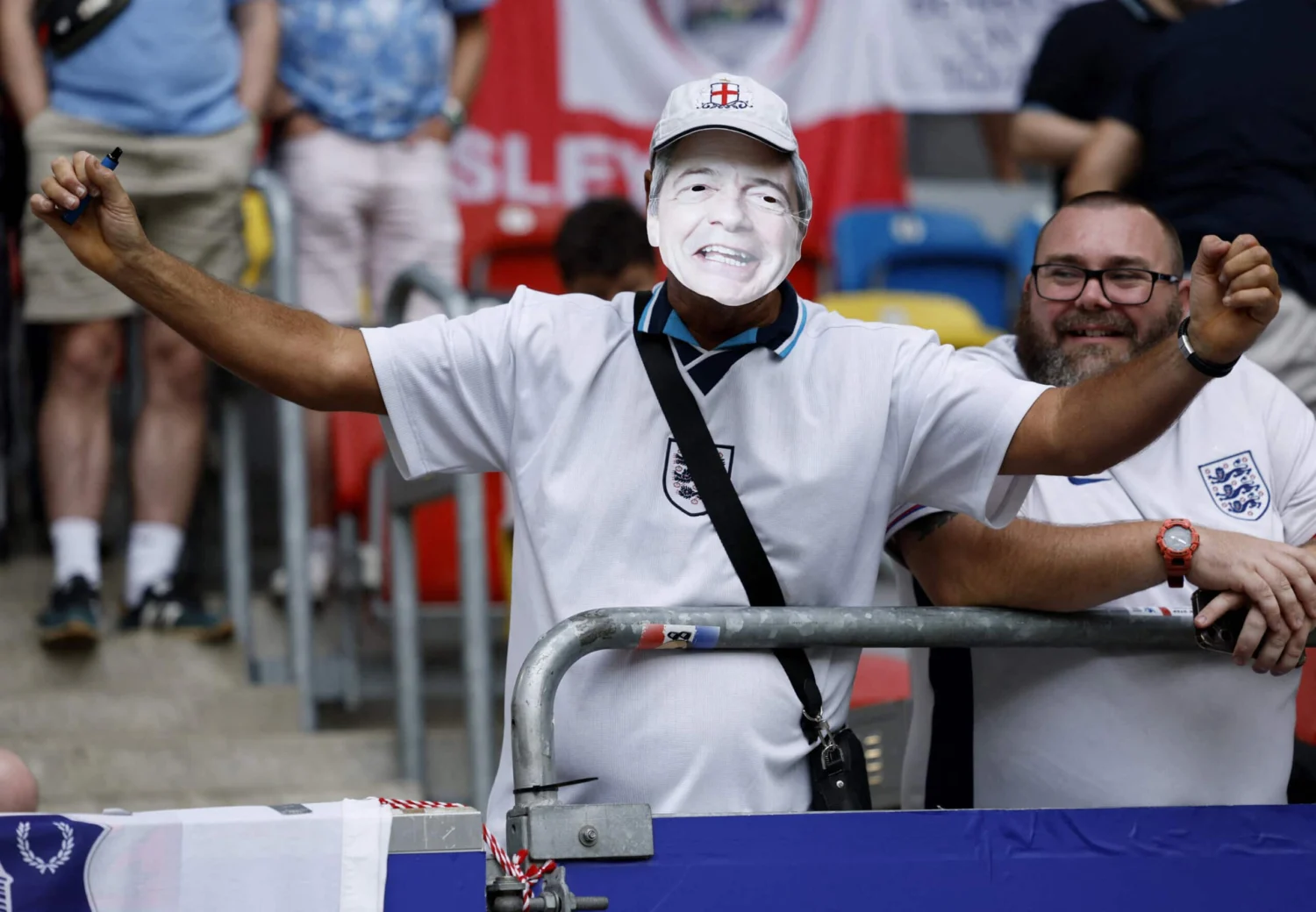
The last and most troublesome aspect of the overlap between football fans and far right extremists is that football stands are becoming grounds—in Italy and elsewhere in Europe—where young people are groomed and recruited to join far right organizations and militias. Taking advantage of the excitement and passion that the youth has for their favourite teams, extremists with neo-fascist and neo-nazi agendas can exploit vulnerable people and entice them to join their ranks.
By dangerously embracing far-right politics, football fans are allowing into the arena racism, bigotry, and even violence, turning the beautiful game into an ugly spectacle. If this trend continues, it will be a loss for everyone who loves football and a threat for society at large.