Caught in the Crossfire: Jordan’s Balancing Act in the Iran-Israel Conflict
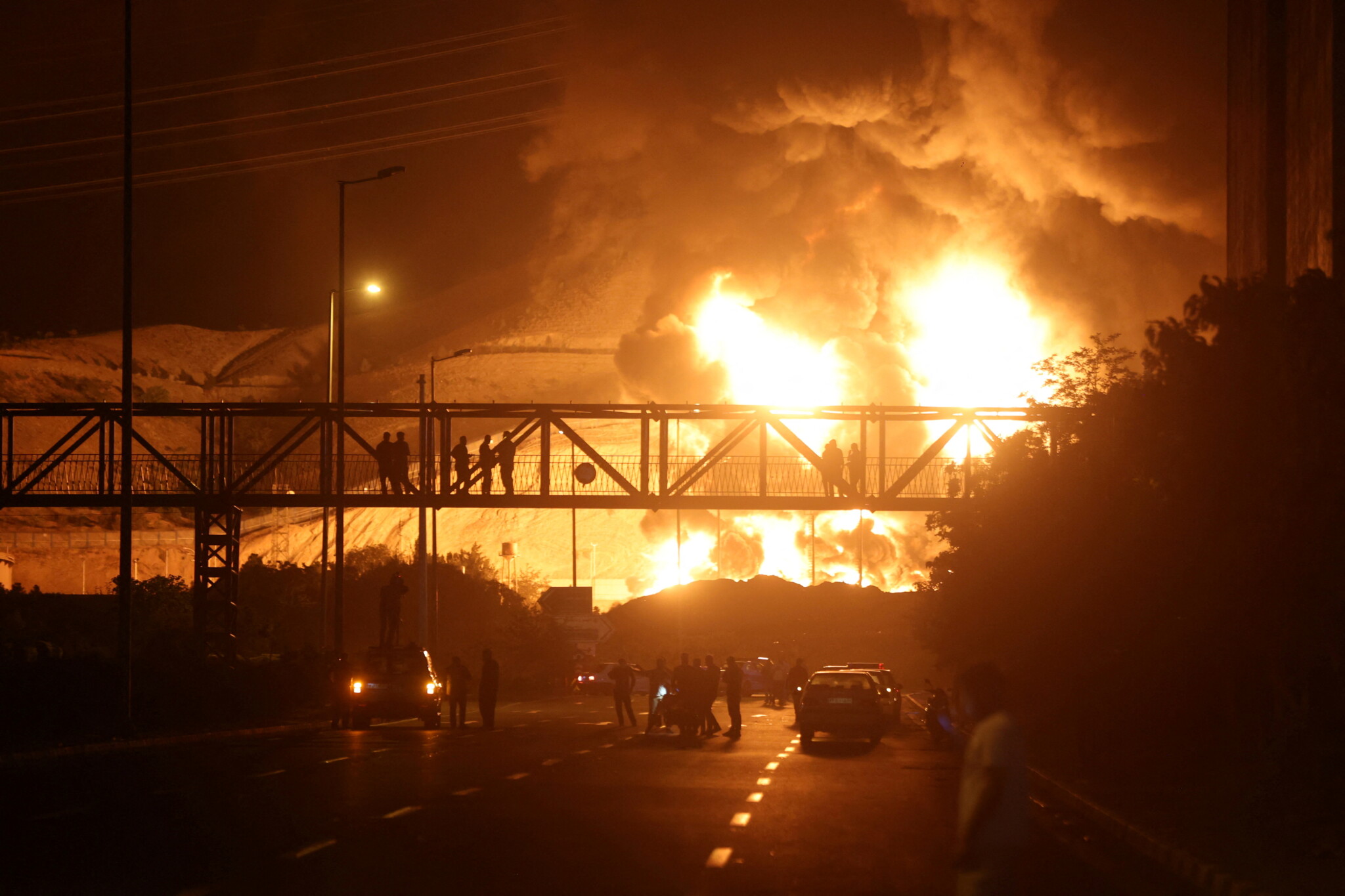
Jordan’s defensive action to intercept Iran’s retaliatory drones and missiles, slashing through its skies in mid-June, has drawn both approval and criticism, underscoring the kingdom’s struggles to balance strategic alliances with public opinion
As the Middle East continues to deal with the aftershocks of the regional crisis sparked by Israel’s June 13 surprise attacks on Iran, leading to a 12-day war, Jordan finds itself navigating high-stakes challenges. The Hashemite Kingdom has had to juggle a wide spectrum of geopolitical considerations during and after the war, including the delicacy of its relations with Israel that have been seriously tested with the exacerbation of the humanitarian catastrophe in Gaza, and its standing in the Arab world. Still, the fierce debate ensuing from its neutralization of Iran’s volleys served as a barometer of the growing pressure the kingdom has been shouldering.
After Tehran fired the first salvo of projectiles at Israel, the Jordanian military confirmed the interception of at least 30 Iranian drones and numerous missile fragments. Jordan insisted that it had only acted to protect its sovereignty, but its air defense posture, bolstered by the U.S.-supplied Patriot systems and NATO-assisted intelligence, immediately became a hot-button political issue.
The impact wasn’t only felt in Jordan’s airspace. Jordanian media reported that on the first night of the war, five people were injured when flying objects, reportedly originating from Iran, fell on their house in the city of Irbid, nearly destroying the property. Other city residents also shared social media photos of undetonated Iranian explosives recovered from empty lots.
The kingdom’s collective position on the war was unambiguous. Foreign Minister Ayman Safadi condemned Israel’s attacks as “an assault on Iran’s sovereignty” and King Abdullah II subsequently bemoaned it as unacceptable. Yet, just as it did during Iran’s April and October 2024 attacks on Israel, Amman downed projectiles originating from Iran heading to Israeli territory, and the armed forces emphasized that the violation of Jordan’s airspace by either party wouldn’t be tolerated.
Still, the optics proved divisive. Many Jordanians questioned the decision to engage Iranian drones not aimed at Jordan, accusing the government of implicitly siding with Israel, risking civilian lives in defense of a foreign power. A senior official, speaking anonymously on June 14, warned the move was “dragging Jordan into the war”.
Hardliners in Tehran who continue to resent any attempt at coexistence with the region’s Arab states lashed out at the kingdom, pillorying it for allegedly joining Israel in its aggression against Iran. Former Mossad counterterrorism chief Oded Ailam called Jordan a “strategic asset for Israel”, recounting a January 2023 anecdote when King Abdullah II, who, according to Aliam, told an Israeli security delegation, “I walk with you among the flames, barefoot, but you must understand that every step burns my feet here at home.”
A Colonial Legacy
Jordan’s crisis diplomacy is inseparable from its colonial origins. Created in 1921 as a British protectorate, the Hashemite monarchy emerged from arrangements like the Sykes-Picot Agreement of 1916 and the Balfour Declaration of 1917. Unlike Egypt or Iraq, Jordan’s formation was not driven by a popular nationalist movement, but by British efforts to compensate the Hashemites after their setbacks following the 1916 Arab Revolt and the French takeover of Greater Syria.
Transjordan, as it was called then, remained under British control until gaining independence in 1946 as the Hashemite Kingdom of Jordan. This legacy of external sponsorship continues to shape Amman’s overseas agenda today, explaining its tendency to preserve stability through intimate Western ties, reinforced by the 1994 peace treaty with Israel, which it has been upholding staunchly.
This orientation comes at a cost that appears to be increasing over time, including Jordan’s input being dismissed in decision-making processes and diplomatic forums where it should have a say.
“We see a decrease in Jordanian strategic importance from the American perspective,” said Oraib Al-Rantawi, director general of the Al-Quds Center for Political Studies in Amman. “More focus has been given to the new regional powers emerging in the Middle East, especially the three Arab capitals in the Gulf: Riyadh, Abu Dhabi and Doha… Israel is another story. It’s their own baby.”
Jordan’s 1994 peace treaty with Israel made it the second Arab nation to formalize ties with Tel Aviv after Egypt, earning it favor and economic incentives from the United States and the European Union. But it also fueled backlash, especially among Jordanians of Palestinian origin, currently making up an estimated 70% of the population. Subsequent agreements, such as the $10 billion Israel-Jordan gas deal signed in 2016 and the water-for-energy swap deal in 2021, have stirred outrage, with critics framing them as a betrayal of the Palestinian cause.
This frustration has found broader resonances outside the Palestinian community, too. More Jordanians now view Israel as a serious threat and fear the “alternative homeland” narratives that may endanger Jordan’s national identity. These fears were redoubled after U.S. President Donald Trump suggested on January 25 that Washington should “clean out” Gaza and relocate its population to Jordan and Egypt, among other places, sparking an international reckoning over the odds of an ethnic cleansing project being in the making.
Leadership and Marginalization
One of Jordan’s most significant global contributions is its custodianship of Jerusalem’s Muslim and Christian holy sites, a responsibility formalized in 1924, and one which is viewed as central to the Hashemite monarchy’s legitimacy. King Abdullah II, whose lineage traces back to Prophet Muhammad, fulfills this role as both a religious commitment and an emblem of Jordan’s regional influence.
Successive Israeli governments have sought to erode this arrangement. Although the 1994 peace treaty includes vague references to “respect” for Jordan’s role in Jerusalem, Israel has refrained from recognizing its custodianship and is now openly challenging it. Earlier in August, Israel’s far-right Minister of National Security Itamar Ben-Gvir led prayers at the Al-Aqsa Mosque and made an announcement about it, violating the ‘status quo’ agreement overseen by the Jordanian foundation in charge of administering the religious compound.
One dilemma ahead of Jordan is to maintain its traditional function as a steward of moderation engaged in building trust with regional actors at the same time as shielding its own agency, which remains vulnerable to great power competition, especially given the stark realities of the kingdom’s economy.
Despite robust trade with the United States and NATO powers, poverty in Jordan is still an unaddressed fault line. With a GDP (PPP) of just $109 billion and the lingering burden of post-COVID recovery, the nation faces deep, structural challenges when it comes to welfare and employment.
As of July 2025, over 560,000 refugees living in Jordan are registered with the UN refugee agency, one of the highest per capita rates globally, although unofficial estimates put the figures at over one million. Jordan’s culture of hospitality has often been acclaimed on the world stage, but the refugee population it hosts is also stretching public services, triggering social discontent sporadically.
Aside from its strained ties with Israel, other factors can potentially undermine Jordan’s global footprint, as well. Critical U.S. decisions such as the first Trump administration’s relocation of the U.S. embassy to Jerusalem, and its proposal that Jordan and Egypt must accept displaced Gazans, have signaled a shift in Washington’s priorities coming at the expense of Jordan’s interests.
There are indications that with Trump’s new Middle East vision, America is recalibrating its approach to the Palestinian issue by accentuating the role of Persian Gulf states like Saudi Arabia, the UAE, and Qatar, sidelining traditional players like Jordan and Egypt.
This shift was on full display when King Abdullah II visited the White House in February 2025. Then, despite his expression of admiration for the king and gratitude to the people of Jordan, Trump essentially handed the royal a laundry list of actions regarding the ongoing crisis in Gaza that he should take after flying back to Amman.
In response to these involuntary role reversals, the king has sought to reassert Jordan’s leadership from a humanitarian position. In an address to the European Parliament on June 17, lauded by MEPs and external observers alike, he lamented the world’s “moral collapse” in the face of unchecked Israeli aggression in Gaza, warning that the global community risked being complicit in a rewriting of the basic human values.
“Because if Israeli bulldozers continue to illegally demolish Palestinian homes, olive groves, and infrastructure, so too will they flatten the guardrails that define moral conduct,” he said. “And now with Israel’s expansion of its offensive to include Iran, there is no telling where the borders of this battleground will end.”
Still, this principles-based rhetoric doesn’t harmonize with the specter of Jordan losing its clout, especially among allies, and this is something critics have warned against as one of the multi-pronged complexities the kingdom must confront head-on. If trade and military ties with the United States, NATO, and Israel are in full swing, these partnerships aren’t uncontroversial, and they cannot be taken for granted.
For many Jordanians, especially with the ongoing devastation in Gaza, this disconnect between the statements of solidarity with Palestinians and cordial partnerships with major powers and Israel spotlights an uncomfortable duality: the Kingdom is caught between principle and realpolitik, alienating significant segments of its population in the process.
Jordan’s ruling elite clearly sees the perpetuation of its NATO, European bonds as a catalyst for its sustainability. While some voices within the country advocate for a diversified foreign policy, including closer engagement with powers like Russia, China, and even Iran, the leadership is still invested in more beneficial Western coalitions.
The capital, Amman, is the city where NATO will open its first Middle East office soon, further cementing Jordan’s role as a local hub for security cooperation. The development is a testimony to the Atlantic alliance’s recognition of the kingdom’s strategic utility in furthering counterterrorism and regional stability.
The royal family itself symbolizes Jordan’s pro-Western proclivity. Apart from Queen Rania, who studied at the American University in Cairo, key Hashemite royals have been educated at elite British and American institutions.
The Iran Question
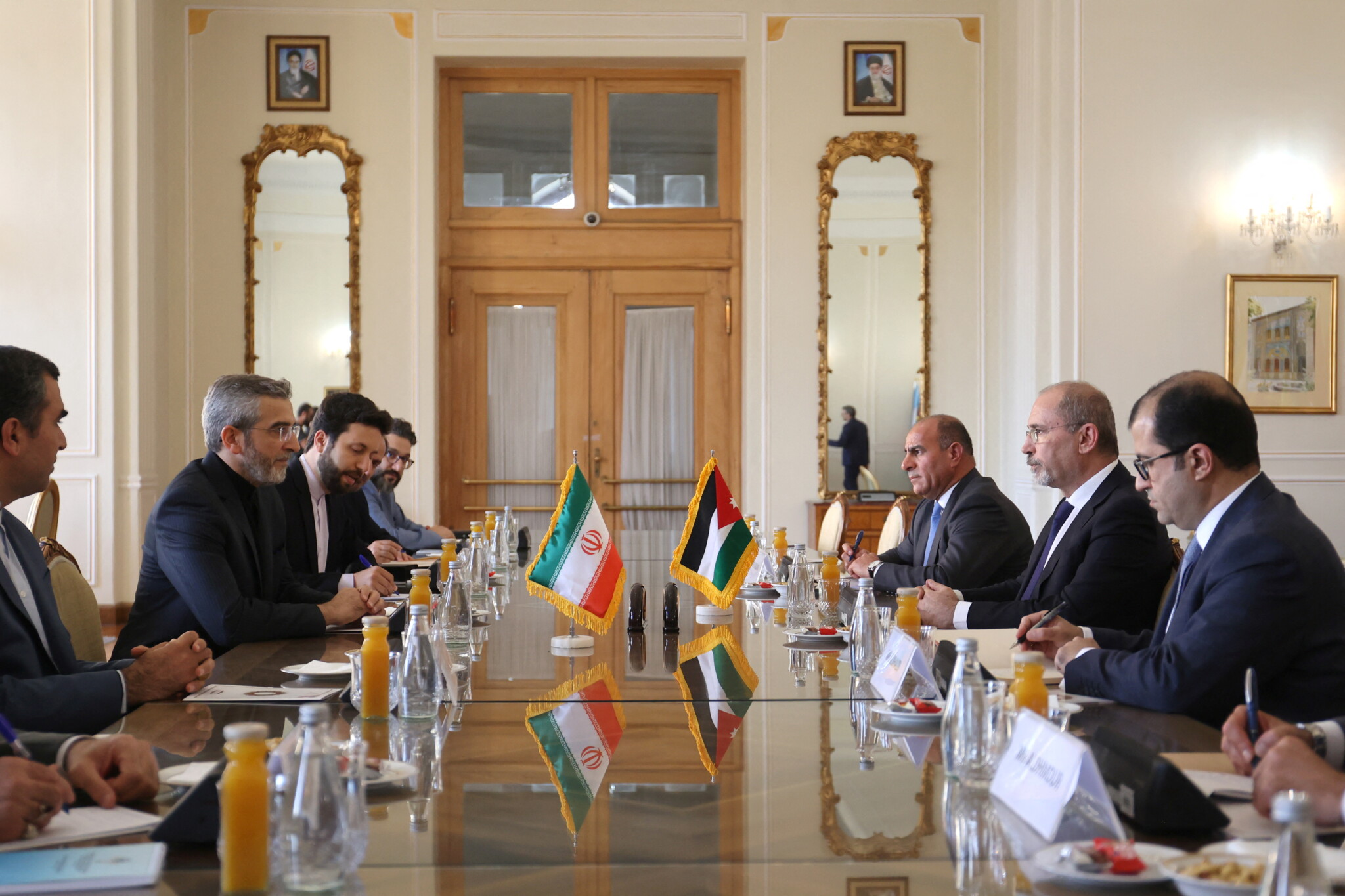
Ensnared in the fracas between Israel and Iran, Jordan is trying to regain its balancing act while staving off the security threats emanating from this simmering crisis, which the Trump administration has now turned into a potential front for one of the “forever wars” he had campaigned on ending. In recent years, Amman has engaged in high-level contacts with Tehran, hoping to defuse tensions and complement the parallel rapprochement efforts underway in the Persian Gulf.
Yet, progress remains lackluster. Jordan doesn’t have an ambassador in Tehran yet, and security concerns shared by the two nations—particularly drug and weapons smuggling from southern Syria—persist. The ultra-conservative Iranian MPs and hardline media conglomerates are unwilling to abandon their derisive rhetoric about Jordan and its royal family, the same way they’ve sought to disrupt the pace of Tehran-Riyadh ties, often successfully.
Iran-Jordan ties never recovered fully since the 1979 Iranian revolution, when Tehran found fault with Arab states that had either normalized their relations with Israel or were reconsidering their policy in the Israeli-Palestinian conflict. Iran’s relations with Jordan, like other Arab states, have often been characterized by occasional bitterness stemming from the Iranian government’s interference in the affairs of its regional countries.
Responding to an invitation by former Iranian President Mohammad Khatami, King Abdullah II traveled to Tehran in 2003 for the first time, promising what could be a new chapter in bilateral relations. The thaw was short-lived as Khatami stepped down two years later, replaced by an ultra-conservative president.
When it comes to its alignment in the ongoing Iran-Israel tug of war, Jordan remains bound by defense agreements that make neutrality in conflicts like this a daunting task, especially with U.S. and NATO bases on its soil.
That reality feeds disgruntlement at home. “Even when defending airspace,” says Al-Rantawi, “people still see Israel as the real threat. Many believe we shouldn’t get involved, even if that means upsetting the Americans or NATO.”
Jordan’s imperative arbitration role has never been more crucial and contested. As the monarchy reconciles the different requirements of its role as a stabilizing mediator and moral leader, it must also confront growing expectations from its constituents demanding a foreign policy that better reflects national interest and popular sentiment. How Jordan responds to this moment will shape not only its credibility at home, but its relevance in an acutely fractured Middle East.