
Beyond Automation: Managing the Integration of AI into Human Civilization
As AI transforms education, law, and global policy, how can we integrate it wisely—balancing innovation with ethics, equity, and human agency in everyday life?
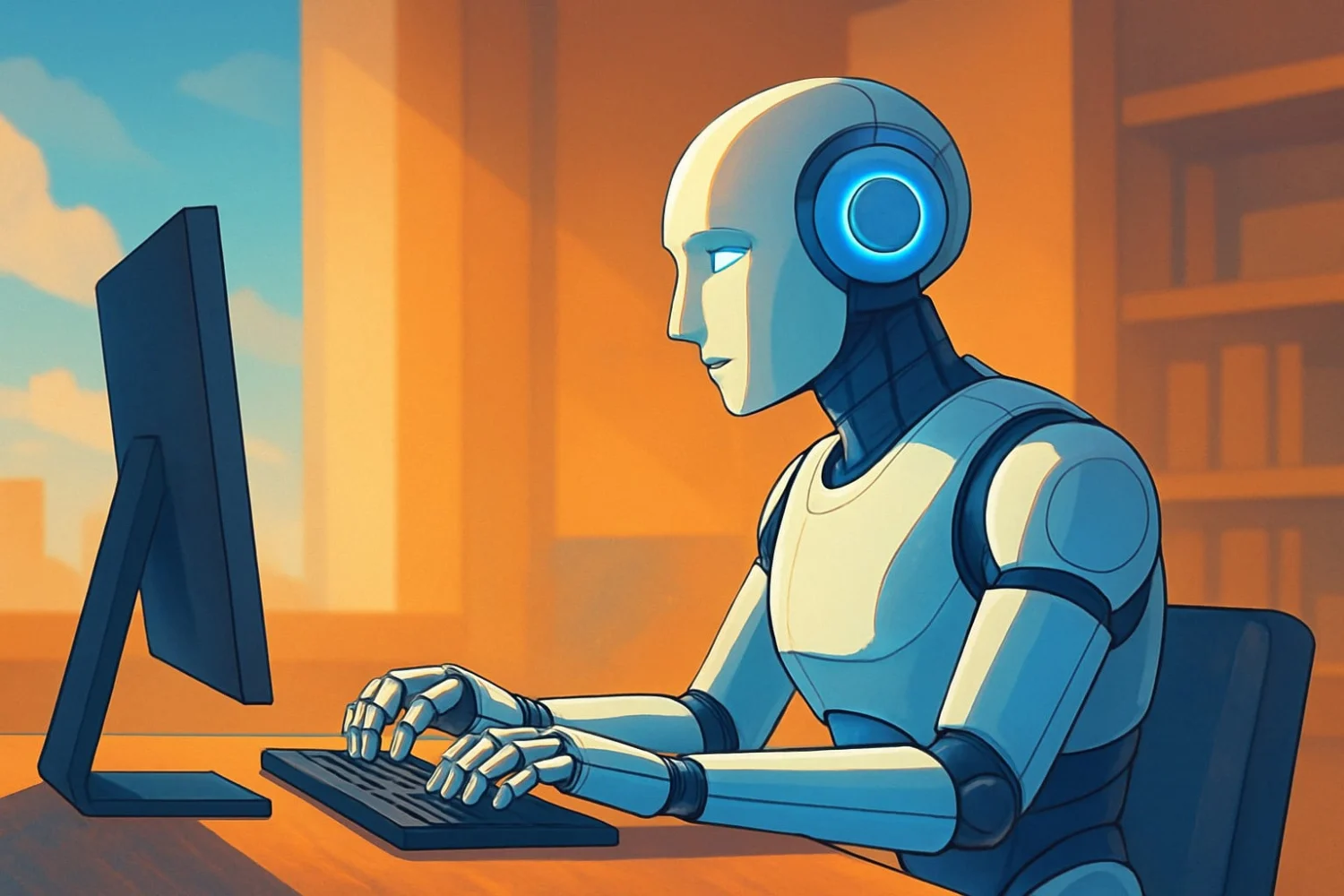
Artificial Intelligence (AI) has swiftly emerged as one of the most transformative forces of the 21st century. Once confined to science fiction, AI is now interwoven with daily human processes, from automated language translation to algorithmic decision-making in healthcare, education, and public policy. As with past revolutionary technologies, integrating AI into society presents profound opportunities—and equally profound risks. Understanding how to manage this integration involves examining historical precedents, assessing current uses, recognizing limitations, and preparing for a future that may include artificial general intelligence (AGI).
This essay explores how AI is being incorporated into human systems like education, scientific research, and international governance, while drawing comparisons with other historic technologies that greatly impacted human processes. It will analyze both the benefits and drawbacks of widespread AI integration, with a particular focus on overdependence in education and social interactions, and explore strategies to mitigate such risks. Finally, it will consider the current technical limitations of AI and the potential societal consequences of more advanced iterations.
Comparing AI to Past Technological Revolutions
Two major technological developments that AI can be compared to is the invention of the Gutenberg press in the 15th century and the steam engine in the 18th century. The Gutenberg press revolutionized communication and education by making printed materials widely available. It dramatically accelerated the spread of knowledge, broke the monopoly of elites on information, and laid the foundation for widespread literacy and the Reformation. In this sense, the press democratized access to human knowledge and reshaped institutions.
Likewise, the steam engine catalyzed the Industrial Revolution in the 18th and 19th centuries. It mechanized labor, increased productivity, and transformed economies from agrarian to industrial. While it brought progress, it also exacerbated social dislocation, child labor, and environmental degradation.
In the same way that these technologies revolutionized the societies of their time, AI has also become the most impactful technology of its time. AI is unique in certain ways, however, including:
- Pace of Development: It took several centuries for the Gutenberg Press to transform into the modern, digitized printing press we use today and for the steam engine to transition into our modern railways. AI, meanwhile, evolves at an unprecedented speed due to exponential increases in computing power and data availability.
- Scope: Unlike the printing press or steam engine, which affected specific industries or sectors, AI pervades virtually every domain—from logistics to diplomacy to psychological well-being.
- Intelligence Component: Previous technologies augmented physical or mechanical processes; AI mimics or replaces aspects of human cognition, raising ethical and philosophical questions about autonomy and control.
In essence, while AI follows the pattern of historically disruptive technology in some ways, its unique attributes make it difficult to use history to predict how AI will shape the future.
Integrating AI into Human Processes
The use of AI is spreading through every facet of human productivity, offering transformative impacts.
Education. AI is increasingly used in personalized learning platforms like Duolingo and Khan Academy’s AI Tutor, adapting content to individual learners’ paces and styles. It can identify gaps in understanding and automate assessments, thereby enhancing efficiency and scalability. It is also being used in traditional schools; one project in Nigeria has successfully implemented AI instruction alongside human teachers and significantly increased students’ test scores compared to their projected progress without AI assistance. When used responsibly and with an understanding of local needs, resources, and limitations, AI has a great potential to improve learning across the globe.
Scientific Research. In research, AI accelerates discovery by analyzing massive datasets, modeling protein structures (as demonstrated by DeepMind’s AlphaFold), and automating literature reviews. It shortens the time from hypothesis to result, allowing scientists to focus on innovation.
Social and Economic Development. AI-driven analytics support economic planning by identifying trends, consumer behaviors, and infrastructure needs. Tools like satellite imagery analyzed by AI help track urbanization or agricultural productivity in real time.
International Trade. AI enhances global trade logistics by optimizing shipping routes, predicting supply chain disruptions, and automating customs processing. Platforms like TradeLens, powered by IBM and Maersk, exemplify AI’s role in reducing trade friction.
Debt Relief. Debt sustainability analysis, once manual, is now augmented with AI models that simulate economic trajectories and debt distress scenarios. This helps multilateral institutions design more informed and responsive debt-relief programs.
Humanitarian Aid. AI can predict natural disasters, optimize relief logistics, and manage refugee registration using biometric and geospatial tools. For example, the UN World Food Programme uses AI to forecast food insecurity and allocate resources efficiently.
International Law. AI supports legal analysis by scanning international treaties, case law, and legislation to assist policymakers and legal practitioners. Tools like ROSS Intelligence help in identifying relevant case precedents, streamlining international legal research.
Environmental Policy. AI plays a crucial role in climate modeling, emissions tracking, and designing efficient energy grids. Google’s AI-powered Project Sunroof helps homeowners assess solar potential, while IBM’s Green Horizon project forecasts pollution levels.
Benefits of AI
The integration of AI offers a multitude of benefits across sectors:
- Efficiency and Scalability: AI automates routine tasks, freeing human effort for higher-order thinking.
- Personalization: In education and healthcare, AI tailors interventions to individual needs.
- Predictive Power: In science, economics, and disaster response, AI identifies trends and patterns far beyond human cognitive capacity.
- Data-Driven Governance: Governments can make better decisions using real-time data analytics powered by AI.
- Equity and Access: In some cases, AI can extend services (e.g., education, legal aid) to remote or underserved populations through automated platforms.
These advantages demonstrate how AI can serve as a powerful partner in tackling complex global challenges when thoughtfully designed and deployed.
Cons of AI and the Dangers of Overdependence
Despite its promise, AI integration comes with significant risks:
- Bias and Inequality: AI systems can perpetuate or amplify existing biases in data, leading to unfair outcomes in education, hiring, policing, lending, and others.
- Surveillance and Privacy: Governments and corporations may misuse AI for intrusive monitoring, undermining civil liberties (see Amnesty International’s concerns on facial recognition).
- Job Displacement: Automation threatens a wide range of jobs, particularly in logistics, customer service, and manufacturing.
- Overdependence in Education and Social Interaction: AI’s growing role in education, especially during the COVID-19 pandemic, has raised concerns about excessive reliance on algorithmic instruction. Students may become passive consumers of pre-packaged content rather than active critical thinkers. Human teachers offer empathy, moral judgment, and mentorship—qualities AI cannot replicate. In social contexts, overreliance on AI-driven platforms (e.g., social media algorithms, AI chat companions) may hinder interpersonal skills, reduce meaningful dialogue, and foster echo chambers. The proliferation of AI-generated content risks blurring the line between genuine human expression and synthetic communication, potentially eroding trust.
Mitigating Overdependence on AI
Managing AI integration responsibly requires a multi-pronged approach:
- Human-in-the-Loop Systems: Maintain human oversight in high-stakes domains like education, healthcare, and criminal justice to ensure ethical judgment and accountability.
- Ethical Design: Incorporate fairness, explainability, and transparency in AI systems. Initiatives like the EU’s AI Act aim to regulate high-risk AI applications.
- Digital Literacy: Equip individuals, especially students, with the skills to critically assess AI tools. Education should emphasize ethics, critical thinking, and human creativity.
- Public Policy and Regulation: Governments must create adaptive policies that balance innovation with protection. Independent audits and regulatory sandboxes can help test AI systems before wide deployment.
- Promoting Human-Centric AI: Encourage development of AI systems that augment rather than replace human capabilities, preserving human dignity and purpose.
Current Limitations of AI
Today’s AI systems are powerful but fundamentally limited:
- Narrow Intelligence: Current AI excels at specific tasks but lacks general reasoning abilities.
- Data Dependence: AI is only as good as the data it’s trained on. Poor data leads to flawed outputs.
- Lack of Common Sense: AI struggles with context, nuance, and ambiguity.
- Black Box Problem: Many AI models, particularly deep learning networks, are opaque, making it difficult to understand how they arrive at decisions.
- Physical Limitations: While virtual AIs are widespread, embodied AI (like robotics) still struggles with dexterity, perception, and adaptability in real-world settings.
These limitations mean that AI, while powerful, cannot yet serve as a substitute for human reasoning or judgment in complex, unpredictable environments.
Future Developments and the Road to AGI
Artificial General Intelligence (AGI)—machines with human-level cognitive abilities—remains theoretical but increasingly plausible. Should AGI be realized, the implications for human processes would be immense:
- Education: AGI could serve as a near-perfect tutor, adapting not just to cognitive needs but emotional states. However, it may also centralize control over knowledge, raising questions about epistemic authority.
- Employment: AGI could replace high-level cognitive jobs, not just manual labor, leading to potential mass unemployment or necessitating a universal basic income.
- Governance: AGI could help simulate policy outcomes with incredible precision, but may also challenge democratic deliberation if it becomes a de facto decision-maker.
- Law and Ethics: Who would be liable for decisions made by AGI? Should AGIs have rights? These questions indicate a need for entirely new legal and moral frameworks.
- International Power Dynamics: Nations that lead in AGI development may gain disproportionate power, potentially destabilizing global relations and increasing the risk of AI-driven arms races.
Ultimately, while AGI could solve many global problems, it could also magnify risks unless governed with unprecedented international cooperation and philosophical foresight.
Pathways Forward
Integrating AI into daily human processes is not merely a technical challenge—it is a societal transformation. Like the printing press and steam engine, AI has the potential to expand human capabilities and democratize access to knowledge and services. However, its cognitive nature and omnipresence make it uniquely capable of reshaping human behavior, institutions, and values.
To manage this integration responsibly, we must recognize both the opportunities and the dangers. We must design systems that are ethical, inclusive, and transparent; invest in education and policy to mitigate overdependence; and prepare for future developments with humility and global solidarity. AI should serve humanity, not the other way around. With care, we can ensure that this technology becomes a tool for empowerment, not alienation.