The Digital Silk Road and Africa’s Connectivity Future
Africa is a continent still waiting to not only have access to the internet but to the knowledge, tools, and institutional capacity to shape its own technological future.
There is something quietly remarkable about Africa’s digital situation. Mobile technologies generated $220 billion in economic value across the continent in 2024—nearly 8 percent of Africa’s entire GDP, according to the GSMA’s Mobile Economy Africa 2025 report. And yet 960 million people, almost two-thirds of the population, remain offline not because networks do not reach them but because getting online is simply unaffordable. In the continent’s poorest households, a basic internet-enabled handset (entry-level as well as smart feature phones) costs the equivalent of an entire month’s income. In Sub-Saharan Africa, mobile broadband penetration sits at 27 percent, compared to 75 percent in Arab states and 88 percent across the Asia-Pacific region. The scale of investment required is vast. A 2023 IMF study estimates that connecting all of the world’s unconnected populations would cost some $418 billion — and the heaviest burden, relative to national income, falls on Sub-Saharan Africa, where the additional spending needed reaches 4.49 percent of regional GDP, the largest share of any world region.
The scale of this digital exclusion matters beyond economics. Access to the internet in the twenty-first century is the infrastructure through which education, financial services, health information, market access, and political participation increasingly flow. A population that is two-thirds offline is excluded from the systems through which modern economic and civic life is now organized. That exclusion has compounding effects: it reproduces educational gaps, limits economic diversification, constrains government capacity to deliver services efficiently, and reduces the ability of citizens and institutions to engage with the global economy on their own terms.
That funding gap explains almost everything that follows. When a continent needs this level of infrastructure investment and cannot generate it domestically, it becomes dependent on whoever is willing to provide it. For the past decade, that entity has primarily been China. This is not a story about technology being superior or inferior, but rather one about how different models of digital development operate in practice, what they offer, what they require, and what they ultimately produce for African states and citizens navigating a rapidly changing technological landscape.
The Digital Silk Road: A New Model of Technological Engagement
China’s Belt and Road Initiative (BRI), launched in 2013, was initially focused on developing physical infrastructure—ports, highways, railways, and energy pipelines—to connect Asia, Africa, and Europe. Less visible but increasingly consequential was the parallel development of what became known as the Digital Silk Road (DSR)—an initiative extending Belt and Road logic into the technological domain.
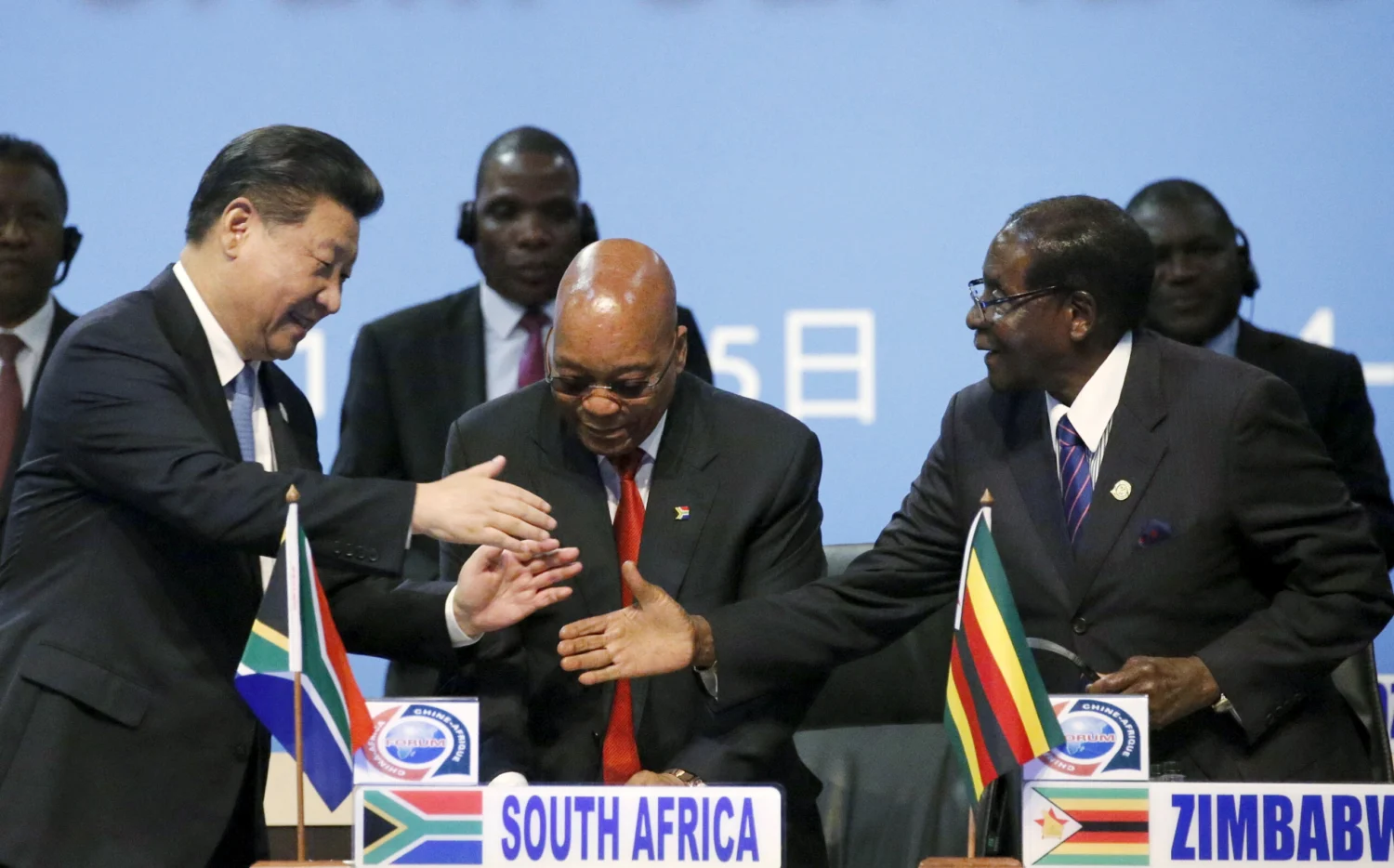
The DSR is not a single program but a strategic orientation implemented through Chinese state banks, technology companies, diplomatic frameworks, and bilateral agreements. It supports Chinese firms in building telecommunications networks, data centers, submarine and terrestrial cables, cloud computing platforms, artificial intelligence systems, mobile payment infrastructure, smart city technologies, and related digital services in partner countries. It operates through the triennial Forum on China-Africa Cooperation (FOCAC) summits, BRI forums, concessional loan agreements, and memoranda of understanding negotiated at the highest diplomatic levels.
FOCAC, established in 2000, is the principal multilateral platform coordinating China’s political and economic engagement with the continent, convening ministerial and heads-of-state summits every three years that alternate between China and an African host. Its membership now spans 53 African states and the African Union Commission.
As of August 2024, 52 African countries and the African Union (AU) had signed BRI agreements with China, and the latter’s enterprises have signed engineering contracts in Africa totaling more than $700 billion over the past decade. The Johns Hopkins China-Africa Research Initiative documented 1,141 Chinese loan commitments to African governments worth $153 billion between 2000 and 2019, with the technology sector’s share growing consistently since. In just the first half of 2025, Chinese technology sector engagement in Africa grew by $9.9 billion compared to the same period the previous year.
What makes the DSR analytically significant is that it represents something genuinely new in Africa’s experience of external technological engagement. Unlike previous models—colonial-era infrastructure built to serve extraction, or post-independence Western development aid conditioned on specific political and economic arrangements—Chinese digital engagement does not explicitly attach governance conditionality. It operates through commercial and diplomatic relationships that treat African governments as sovereign partners making their own development choices. This has made it attractive across the continent’s diverse political landscapes, from democratic governments to more centralized systems, without requiring ideological alignment.
At the same time, all infrastructure embeds particular logics about how systems are organized, who maintains them, how they evolve, and what dependencies they create. Understanding what the DSR carries with it, in terms of technical standards, operational relationships, and long-term implications, is important not as a basis for judgment but as a basis for informed policy. African states are better served by clarity about what different partnerships involve than by accepting any model uncritically—Chinese, Western, or otherwise.
How Chinese Technology Became Africa’s Infrastructure
The story of how Chinese companies became the dominant providers of Africa’s digital infrastructure is instructive because it reveals the concrete mechanisms through which technological models spread, and what it actually takes to compete for a continent’s digital future.
Huawei, founded in 1987 and headquartered in Shenzhen, is a privately held Chinese firm that has grown into the world’s largest manufacturer of telecommunications equipment, supplying network infrastructure alongside its well-known consumer smartphone business. Today, it has built approximately 70 percent of Africa’s 4G network infrastructure, displacing Sweden’s Ericsson as the continent’s leading telecoms supplier over the course of the 2010s. In Nigeria, Africa’s largest telecoms market, Huawei and ZTE together supply around 90 percent of network infrastructure. ZTE, established in 1985 and also based in Shenzhen, is a partially state-owned Chinese telecommunications-equipment maker and one of Huawei’s principal domestic peers in supplying network hardware across African markets. Huawei has become the leading provider across the Middle East and North Africa, having systematically outcompeted European incumbents that had operated in the region for decades. In South Africa in 2022, the country’s three largest carriers—Vodacom, MTN, and the partly state-owned Telkom—selected Huawei to lead their 5G rollouts, even as some European governments were revising their own relationships with the company. The decision reflected a straightforward assessment of what was available, affordable, and operationally proven.
The financial architecture underpinning this expansion has been a decisive factor. Chinese state banks, such as primarily the China Development Bank and China Export-Import Bank, provided financing to Huawei’s African customers through concessional loans at below-market rates, extended repayment periods, and bundled equipment-and-service packages. The Johns Hopkins SAIS-CARI database identified more than seventy such loan-backed Huawei contracts in Africa between 2000 and 2019. For many African governments and operators, the choice was not between equally available alternatives — it was between Chinese financing and a connectivity gap that could not otherwise be closed.
But financing alone does not explain the full picture. Chinese companies have also demonstrated a capacity to understand and adapt to African market conditions that distinguishes their approach from previous models of external technological engagement. The clearest example is Transsion, the Chinese mobile phone company that captured approximately 60 percent of Africa’s handset market. Transsion did not succeed by exporting a product designed for global flagship markets. It succeeded by engineering specifically for African realities: longer battery life for areas with unreliable electricity, camera technology calibrated for darker skin tones, price points accessible to low-income rural buyers, and distribution networks that reached well beyond major cities. This is a form of market attention and product adaptation that African consumers had not previously received from external technology providers at scale.
The DSR has also delivered genuine infrastructure that African economies needed and could not have built alone within any realistic timeframe. At least 38 African countries have worked with Chinese companies to develop fiber-optic networks, data centers, or advanced technological capacity. These are not negligible contributions. In a continent where the digital gap has real consequences for development, education, and economic participation, the construction of functioning infrastructure has tangible value for millions of people who now have connectivity they did not previously have.
The picture is not without complexity, however. Once networks are built around a particular provider’s equipment and standards, transitions to different systems involve significant technical and financial costs. African states that have built their digital infrastructure through these partnerships have created long-term operational relationships with Chinese providers that shape future choices. This is not unique to Chinese infrastructure—any large-scale infrastructure investment creates dependencies—but it is part of the reality that African policymakers are navigating as digital systems expand.
The AI Layer: Intelligence Follows Infrastructure
If the first phase of China’s Digital Silk Road in Africa was about physical infrastructure—cables, towers, data centers, and backbone networks—its second and now accelerating phase is about machine intelligence. The data centers constructed by Chinese companies across the continent now serve as the foundational layer for an expanding ecosystem of AI services, cloud computing, and machine learning applications.
DeepSeek, the Chinese AI company whose open-source models attracted global attention in early 2025, is being adopted in Africa at rates two to four times higher than in any other global region, according to Microsoft’s AI Economy Institute. The reasons are structural. DeepSeek’s models cost substantially less to deploy than alternatives from American providers, making them proportionally more accessible in markets where computational costs are a genuine constraint. They also run naturally on the Chinese-built data center infrastructure already distributed across the continent. Infrastructure and intelligence are reinforcing each other; the physical layer creates conditions favorable to Chinese AI services, and the adoption of those services deepens engagement with the infrastructure layer.
Since the mid-2010s, AI has been explicitly embedded in China’s digital engagement in Africa as a strategic priority. Chinese firms have built data centers across sub-Saharan and North Africa that serve as backbones for both commercial and government systems. In July 2024, China signed digital and AI cooperation agreements with 26 African countries through the FOCAC framework, institutionalizing partnerships that had previously been managed on an ad hoc bilateral basis. Researchers at Peking University’s Institute of New Structural Economics have described Africa as functioning as a primary international demonstration environment for Chinese digital systems, where their scalability and adaptability are being shown at continental scale.
The implications for African states are worth examining from multiple angles. On one side, access to AI capabilities that would otherwise be financially out of reach creates genuine opportunities in sectors including healthcare, agriculture, financial services, and education. The economic potential is significant: credible projections suggest AI could add $2.9 trillion to Africa’s economy by 2030. Chinese AI models that are accessible and affordable represent a real pathway toward those gains for economies that cannot afford the premium pricing of the most advanced Western alternatives.
On the other hand, the AI models available through Chinese platforms reflect the priorities and design choices of their creators. The data generated by African users of Chinese AI systems flows through those systems and contributes to their development. Government services built on Chinese cloud infrastructure create operational dependencies that have implications for institutional autonomy. These are considerations that African policymakers, technologists, and civil societies are beginning to examine, not as reasons to reject engagement, but as dimensions of it that require deliberate attention.
Africa currently represents only 2.5 percent of the global AI market, and the continent is not yet in a position to set the terms of global AI development. But it is nevertheless in a position to make choices about which systems it deploys, on what contractual basis, and with what requirements for local capacity development. These are choices that will accumulate over time into something that either moves toward or away from genuine technological agency.
Two Models, One Continent, and the Question of African Agency
Stepping back from the specific mechanics of Chinese digital engagement, a broader pattern becomes visible. Africa has, across different historical periods, been the site on which externally designed technological and development models have been deployed. These models were built around the priorities, capabilities, and interests of their originators, with African needs addressed to the extent that they aligned with those priorities.
The Western model of technological engagement with Africa has its own history in this regard. Western technology companies and governments, for much of the past two decades, treated Africa as a secondary market, significant for extractive industries, but not a serious arena for the technology investment that was reshaping the global economy. The connectivity gap widened during this period not because the resources to close it did not exist globally, but because Africa was not where the resources were being directed. When the strategic significance of who was building Africa’s digital infrastructure became apparent, the response was initially more focused on articulating concerns about alternatives than on presenting competitive ones.
Chinese engagement has followed a different logic, one characterized by systematic investment, market adaptation, and state-backed financing at a scale that no previous external actor had committed to African digital development. The results are visible: infrastructure that exists and functions, handsets that work for African users, AI tools that are financially accessible. These are real gains. Neither model, however, was designed with African technological sovereignty as its organizing principle.
The question of who controls the innovation, who sets the standards, who owns the data, and who benefits most durably from the digital economy being built on the continent remains open. Training programs that produce technicians capable of operating imported systems are valuable, but they are different from educational and research investments that produce engineers and innovators capable of developing systems from the ground up. Technology transfer that enables use is different from technology transfer that enables independent development.
The optimal model for Africa is not a version of either the Western or Chinese approach. It is one built by African institutions, researchers, engineers, and policymakers around African developmental priorities. It is one that engages with international technology partnerships selectively, extracts maximum benefit from them, and directs that benefit toward building indigenous capacity for innovation, research, and technological self-determination. Both current models can contribute inputs toward that goal. Neither is a substitute for it.
Navigating the Digital Silk Road: Toward Strategic Engagement
African states are not passive recipients of externally designed digital futures. They are governments making real choices, under real constraints, about how to close a connectivity gap that has concrete consequences for their populations. The challenge is to make those choices with the greatest possible strategic clarity — understanding what different partnerships offer, what they require, and how to structure them to serve long-term development interests rather than simply immediate infrastructure needs.
Beyond infrastructure, there is a generational dimension that receives insufficient attention in most analyses of this subject. The engineers being trained today on Chinese systems, the university students whose technical formation is being partially shaped by Chinese company partnerships, and the government officials building experience with Chinese platforms are the people who will be making Africa’s technology policy decisions in ten and twenty years. The accumulated experience, institutional familiarity, and network relationships built through Chinese digital engagement will shape African policy cultures in ways that outlast any individual contract or infrastructure project. This is not a reason for alarm, but it is a reason for deliberate investment in building parallel technical expertise—rooted in African research institutions, African universities, and African policy frameworks—so that the next generation of decision-makers inherits genuine options rather than path dependencies.
Several African institutions have begun moving in this direction. The AU’s 2022 Data Policy Framework establishes continental principles asserting regulatory sovereignty over data flows, including those managed by foreign technology providers. Ongoing negotiations over the AU’s Protocol on Digital Trade represent an opportunity to institutionalize those principles into binding continental frameworks before digital dependencies deepen further. These processes deserve significantly more political attention and technical investment than they currently receive.
The current multipolar international environment creates genuine options. The competition between Chinese, American, and European technology powers gives African states leverage that they can deploy deliberately to extract better terms from all partners. The question is not which external model to align with, but how to use multiple competing models to advance African interests, which include requiring genuine technology transfer in contracts, investing in domestic technical education, building regulatory capacity, and participating actively in international AI governance processes where African voices are currently underrepresented.
Türkiye’s example is instructive in this regard. President Recep Tayyip Erdoğan recently unveiled a new national AI action plan at the Türkiye Artificial Intelligence Summit in Istanbul, built around four pillars: awareness, use, production, and governance. Crucially, Erdoğan framed digital sovereignty not as a technological ambition but as a political one arguing that national power in the twenty-first century cannot be separated from control over data, AI infrastructure, and cyber resilience. Turkey is neither aligning with the Chinese model nor simply adopting Western frameworks; it is building its own national strategy from the ground up. This is precisely the kind of approach that African states, individually and collectively through the African Union, need to develop; not choosing between competing external models, but defining the terms of their own digital future.
There is also a dimension of this story that concerns the continent’s relationship to knowledge production. The AI systems being deployed across Africa—whether Chinese, American, or from other sources—are trained primarily on data that does not reflect African languages, cultural contexts, agricultural conditions, healthcare realities, or governance systems at anything close to adequate representation. The practical consequence is AI tools that work less well for African users than for those in the environments where the training data was concentrated. Addressing this gap requires African investment in data collection, annotation, and AI development that reflects African realities: this would have to be a long-term project that neither current external model is structured to deliver because it requires African institutions to take the lead.
The multipolar character of the current international order also means that the terms of digital engagement are more negotiable than they have been at any previous moment in Africa’s postcolonial history. During the Cold War, technological partnerships came with explicit ideological conditions. In the immediate post-Cold War era, they came with structural adjustment requirements and governance conditionality attached to Western development institutions. Today, the existence of genuinely competing powers seeking African partnerships for their own strategic reasons creates space for African governments to negotiate more actively, to set conditions, to play partners against each other, and to use the leverage that comes from being a continent that multiple powerful actors want to engage with. This leverage is not unlimited, and it has not always been used effectively. But it exists, and it is growing as the strategic significance of Africa’s digital market and data environment becomes clearer to all external actors involved.
The question of digital standards deserves particular attention in this context. The technical standards that govern telecommunications networks, data formats, AI systems, and digital platforms are not neutral specifications but rather governance choices that determine interoperability, security, innovation pathways, and long-term technological independence. African states that adopt Chinese technical standards across critical infrastructure become more integrated into Chinese technology ecosystems; those that adopt Western standards become more integrated into Western ones. A deliberate continental approach to standards—one developed through African institutions like the AU and articulated in negotiations with all external partners—would give African states greater ability to shape their own technological trajectory rather than inheriting the trajectory of whichever external partner arrived first and built the deepest infrastructure.
Africa’s connectivity needs are urgent and real. The infrastructure being built through Chinese partnerships, and whatever partnerships follow, serves those needs. But infrastructure is a means, not an end. The end itself is a digitally capable continent whose populations have access not only to the internet but to the knowledge, tools, and institutional capacity to shape their own technological future. The Digital Silk Road is one part of the path toward that future—a significant and consequential part, but not the destination itself.
This is equally true in the domain of AI governance, where the international conversation is still in early stages. The frameworks being developed now about data rights, algorithmic accountability, AI safety, and the governance of autonomous systems will shape how AI develops globally for decades. Africa has a direct interest in how these frameworks are designed: AI systems that perform poorly on African languages and contexts, that embed assumptions about governance and social organization derived from other settings, or that concentrate economic benefits in the hands of external platform owners rather than African users represent real costs to African development.
Active participation in international AI governance—in UN processes, in multilateral standards bodies, in bilateral negotiations with technology partners—is not a luxury that can wait until Africa has resolved its immediate connectivity challenges. It is an urgent priority, because the governance frameworks being set now will be much harder to revise once they are entrenched.