The Dynamics of War, Politics, and Peace in the Middle East
The justifications, enactments, and conclusions of the various conflicts that arose in the aftermath of October 7 remain murky, but historical and modern theories of war light a path toward future stability.
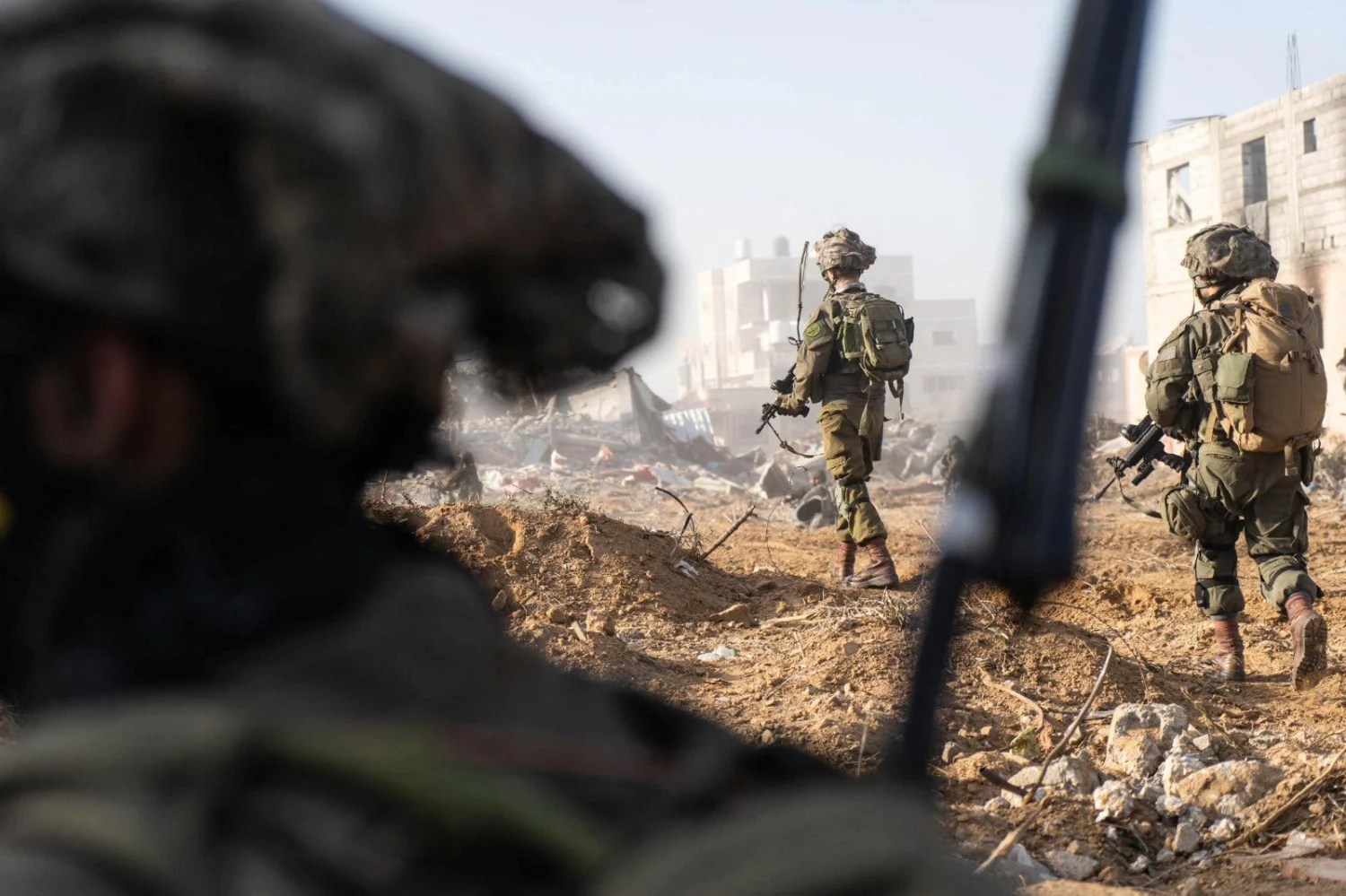
To gain a better understanding of the current bout of conflict in the Middle East, turning to the various theorists of war can help explain the rhythms of politics, peace, and violence. This essay draws on a handful of thinkers on war and politics to glean insights that might help us better understand the forces shaping the Middle East. It does not offer a comprehensive study of any of these thinkers or their philosophies; rather, it uses them as sounding boards—as intellectual companions—to reflect on the present dynamics of war, politics, and peace in our region. From Clausewitz to Arendt, from Foucault to Thucydides and Ibn Khaldun, these thinkers provide us with key questions to pose when examining the dynamics of our turbulent region and insights on how to build a more peaceful future.
Clausewitz: The Trinity of Passion, Chance, and Policy
The Prussian theorist and practitioner of war, Carl von Clausewitz, famously described war as consisting of a “remarkable trinity”—a dynamic interplay between passion, chance, and policy. Passion lies in the realm of the populace and denotes the hostilities, enmities, and willingness to kill and be killed that is necessary for prosecuting any war. Chance lies in the realm of the war commanders and denotes elements such as the fog of war, the surprises and reversals of battle, and the skill of commanders to navigate this chaotic terrain. Policy refers to the realm of reason, and Clausewitz argues that policy (decided by the political leader or government) should guide and shape the conduct of war in pursuit of a rational goal. Clausewitz asserts that this rational goal should be the determinant element over the unruly dynamics of passion and chance.
Seen through this lens, the wars that have convulsed the Middle East since October 7, 2023—from Gaza to Lebanon, Syria, Yemen, and Iran—are a vivid laboratory of the Clausewitzian trinity.
Passion: The Fire That Transformed the Battlefield
Hamas and its allies in the so-called Axis of Resistance appear to have misread the passion component of the trinity. They believed Israeli society had grown complacent—divided, cynical, and unwilling to bear the costs of major war. The October 7 attacks were thus designed not only to inflict tactical damage but to reveal Israeli weakness and demoralization. Instead, they triggered the opposite effect—a surge of collective fury and unity that reignited the Israeli public’s willingness to fight. What Hamas thought would expose exhaustion instead rekindled a national passion that legitimized a vast and prolonged military campaign.
At the same time, Hamas deliberately sought to re-erect walls of passion and enmity—to restore clear lines of hostility, not only between Israelis and Palestinians, but also between Israel and much of the Arab and Muslim world. In this purpose, they have generally succeeded: a new emotional landscape of mutual rage and fear has reshaped regional politics and frozen the space for dialogue or compromise.
Iran and its regional allies also misjudged the emotional equation. They assumed Israeli fatigue and underestimated the mobilizing effect of existential threat. While Israel has shown high tolerance for prolonged fighting, it remains unclear whether the leadership of the Islamic Republic, aware of their narrow base of support and facing multiple political and socio-economic challenges as well as largescale opposition, can rely on a sustained national passion for more open-ended conflict.
Chance: The Realm of Surprise and Miscalculation
The second element of the trinity, chance, refers to the unpredictability of war—the “play of probability”, as Clausewitz called it. Hamas’s October 7 attack was, at its core, a masterstroke of surprise. It exploited Israeli overconfidence and intelligence failure. The breach of Gaza’s border defenses, and the extensive underground networks Hamas had prepared for a long campaign, gave it an early tactical advantage.
But the element of chance soon turned against Hamas. The scale of Israel’s response, and the rapid adaptation of Israeli technology and intelligence (including AI-driven targeting and real-time battlefield awareness), shifted the balance dramatically. Chance worked against Iran and its allies too. They found themselves fighting the last war—unprepared for Israel’s evolving tactics and its capacity to integrate cyber, intelligence, and airpower on a new level.
For Israel, October 7 was also a lesson in chance—and complacency. The Israeli military establishment was blindsided, its assumptions about deterrence shattered. Yet, this very failure galvanized a level of audacity and improvisation that turned the various battlefields around.
Policy: The Elusive Third Leg of the Trinity
Clausewitz warned that war must always remain subordinate to policy—to a coherent political purpose. Without that compass, war becomes a destructive drift of passion and chance with no clear path toward a cessation of fighting. In the current conflict, political purpose has been the murkiest element of all.
For Hamas, the policy dimension of the October 7 attacks was only partially clear. If the aim was to derail the progress of the Abraham Accords (especially a Saudi-Israeli deal) and return the Palestinian question to the center of global attention, that has been achieved—but at catastrophic cost to Gaza’s people and Hamas’s own command structure, and without a clear political end game in sight.
For Iran, the Axis of Resistance has proven an unwieldy policy instrument. Tehran’s degree of foreknowledge of the October attacks remains uncertain, suggesting limited control over the network it helped build with Hamas. Hezbollah has always had close strategic relations with Iran, but many decisions are left to the group itself, especially when the prominent Seyed Hassan Nasrallah was at the helm. In Iraq, Iran has faced political headwinds in trying to get the allied Hashd militias to always do its bidding. And after it has become clear that Iran’s previous “forward defense” strategy was no longer working—it can no longer serve to deter attacks against Iran, or defend against them—we have not seen a new policy approach from Tehran. It would seem that although the old strategy has collapsed from a policy-purpose perspective, it lives on out of inertia and an absence of clear policy deliberation and decision making.
Which also brings us to the murkiness of the policy decision-making process in the Islamic Republic. Overall policy is decided by the supreme leader but many of the battlefield decisions are made by the Islamic Revolutionary Guard Corps, or by the proxy groups themselves; the president and government of Iran have no say on these critical matters of Iranian foreign and security policy. In other words, in the last two years of wars that one of its proxies (Hamas) triggered, it is not clear that Iran and its Axis of Resistance have managed the ensuing conflicts with clear political and policy priorities in service of a clear set of policy goals.
On the Israeli side, the policy dimension of the conduct of the war has also been contentious and uncertain. While early phases of the Gaza war enjoyed wide domestic support, the absence of a clear political end-state—and Prime Minister Netanyahu’s evident intertwining of personal survival with strategic decisions—blurred the line between national and personal purpose.
Clausewitz’s dictum that war must serve a rational political goal has, at times, been inverted: the continuation of war has served the interests of the politician, rather than well-defined national goals. Former French Prime Minister Georges Clemenceau’s famous dictum is that “war is too important to be left to the generals”; in this case, one might say this war was too important to be left to the politician. Indeed, many generals in the Israeli military advocated early on for a more judicious policy goal, and in the end it took an intervention from U.S. President Donald Trump to kick some policy purpose into what seemed like an endless war.
At the broader regional level, Israel’s military dominance—striking across Lebanon, Syria, Yemen, and even Iran—has shifted the balance of power, but without a clear policy framework to consolidate it. The strategic policy opportunity to translate battlefield superiority into regional integration—particularly through normalization with Saudi Arabia and beyond—remains hostage to domestic Israeli politics and the refusal to engage seriously on the Palestinian question. While the war might be made to serve this broader policy purpose, narrow domestic political considerations for Netanyahu and his extreme right wing allies are preventing this policy goal from being moved forward.
In short, the Clausewitzian trinity of passion, chance, and policy remain in constant tension—but the balance has tilted heavily toward the first two, with rational policy often the weakest element. The region’s conflicts reveal not only the enduring relevance of Clausewitz but also the fragility of his ideal that war should be guided by reason.
From Clausewitz to Arendt: When Politics Itself Disappears
If Clausewitz emphasizes that politics and policy should prevail over blind battle in the conduct of war, German American historian and philosopher Hannah Arendt warns that war often destroys the very realm in which policy—and politics—can exist. For Arendt, politics is not merely another means of conflict; it is the space of dialogue, plurality, and mutual recognition. War, by contrast, is its annihilation. Where Clausewitz offers a framework for understanding war’s internal dynamics, Arendt offers a warning about its external consequences: once unleashed, war devours the capacity for politics itself.
Arendt argues that war and politics are opposites. Politics is the domain of engagement, interchange, and negotiation to arrive at some form of agreement or understanding; it leans on trust and is built on consent. War is the opposite of politics: based on dehumanization rather than engagement, employing force to harm or obliterate the other, and aiming for an imposed outcome. For Arendt, war—whether interstate or civil war—arises either where politics has collapsed completely, or where politics really did not exist in the first place. Furthermore, war does not lead to or end with a ‘return’ to politics, but rather it undermines or often prevents the possibility of engaging in ‘politics’ after war has done its damage.
This is very clear in the case of failed states in the Middle East where the collapse of the central authority of the state led to the collapse of normal ‘politics’ and created the conditions for the eruption of civil war. In these cases, the armed conflict was not a continuation of politics, but a form of interaction that emerged either when actual politics did not exist in the first place (e.g. Assad’s Syria, Qaddafi’s Libya, or Saddam’s Iraq), or where it failed and collapsed (Lebanon in the mid-1970s, Yemen after 2014, Sudan more recently). More ominously, these civil wars are not a temporary aberration that will segue back into normal politics, but rather cast a much longer shadow: Lebanon since the end of its 15-year civil war in 1990, entered a period of what can be described as a continuation of (civil) war but through political means; post-Saddam and post-Assad Syria are in different stages of trying to build national politics that are not simply a sublimation of sectarian and/or ethnic armed conflict.
Regionally as well, war has served to destroy or degrade the possibility of regional politics or regional diplomacy, rather than just be a temporary departure from it. America’s wars in Iraq and Afghanistan, while purportedly aiming to build new politics in both countries, tipped the balance in the opposite direction, igniting long civil wars in both. The Hamas-Israel armed conflict since October 2023 has made the possibility of any return to ‘politics’ all but unimaginable at this point. The wars between Israel and Iran have also hardened the passions of existential enmity and largely eliminated the possibility of political engagement between the two.
Furthermore, wars are often launched or prolonged to block or prevent politics. Hamas’s attacks of October 7 were largely to block the ‘politics’ that was emerging between Israel and a broader set of Arab states. Iran threw its weight behind the ensuing set of wars because the Islamic Republic also had an interest in blocking the emerging path of politics that was integrating Israel and several Arab states against its interests. Netanyahu and right wing elements of his government insisted on prolonging the war, and still fear its ending, because the end of war might lead to pressure for him to engage in a ‘political process’ with the Palestinian Authority or a similar Palestinian entity. In these cases, war is pursued to block the path of politics.
Arendt’s point is that war is harmful not only because of its obvious human, material, and psychic costs on those communities dragged into it, but also that war is a negation and obliteration of politics that has a far deeper and longer negative effect on populations caught up in it.
Foucault’s Insight: Politics Masks Conflict and War
The French philosopher Michel Foucault’s insights are of a different nature, however. He looked at politics and described states and the political and socio-economic orders they impose as masking the underlying conflicts and ‘wars’ that every society—in which there are always winners and losers—has. Every state structure empowers certain classes and groups in society, and disempowers or subjugates others; every regional or international ‘order’, is created by and favors certain states and marginalizes others.
This insight can be borrowed to understand elements of international politics. The Pax Romana, or Pax Americana, or Pax Iranica, or what Israel might want to impose as a Pax Israelica, are largely built on the realities of raw power, include winners or losers, and are ‘orders’ that mask frozen or simmering conflicts of many kinds. The philosophies of Marx, Mao, and Gramsci would not disagree with Foucault on this point. Israel’s imposed order on the Palestinians in the West Bank and Gaza; Iran imposing its armed militias on various Arab countries; and the United States imposing its will previously on Iraq and Afghanistan are all examples of this reality.
From Foucault’s perspective, stability comes through inclusion, engagement, and building accommodating orders, not imposing them by force. Until this shift is achieved, armed conflict is a feature of the system, not a glitch.
Thucydides’s Timeless Warning: Power and Hubris
In his examination of the Peloponnesian War, Athenian historian Thucydides was clear that in times of conflict the powerful do what they can, and the weak submit to what they must. In that sense he was clear-eyed in understanding that in war, power is the only currency, and justice falls by the wayside. This, of course, has become common parlance in our contemporary examination of war.
But what Thucydides warned about, and what is often overlooked, is that once one party obtains the upper hand in terms of power, they will be tempted to press that advantage as much as possible. But that ‘hubris’, as he calls it, leads them to mistake a temporary military advantage as a long-term ability to sustain an expanded domain.
This has already been said repeatedly of America’s overreach in the Middle East after 9/11. Iran similarly has overreached into several Arab capitals, which has led to a complete reversal recently in Syria and setbacks with Hezbollah in Lebanon. It can also be said of Israel’s current approach, where it is pressing its military advantage to reshape regional power dynamics in its favor, but simultaneously inviting the potential for more turbulence, rather than stability, in the future.
‘Asabiyyah and ‘Adl: Ibn Khaldūn’s Lens on Conflict and Order
Before concluding, it is worth turning to a thinker from the region itself, Ibn Khaldūn, the 14th-century North African historian and philosopher, whose Muqaddimah remains one of the most profound analyses of power, conflict, and social cohesion. Long before Clausewitz or Arendt, Ibn Khaldūn sought to understand why states rise and fall, why war recurs, and what conditions sustain peace and stability. Two of his central concepts—ʿasabiyyah (social solidarity or collective cohesion) and ʿadl (justice)—remain strikingly relevant to the Middle East today.
ʿAsabiyyah: The Bonds that Build—and Unravel—Power
For Ibn Khaldūn, ʿasabiyyah was the invisible glue that held communities and states together—the shared sense of belonging, loyalty, and purpose that enables collective action. Dynasties, he argued, rise when their ʿasabiyyah is strong and inclusive, and decline when it decays into factionalism, luxury, or corruption. Conflict, in his view, is rarely just about resources or ideology; it is a symptom of the weakening or collision of solidarities.
In today’s Middle East, this Khaldūnian lens is illuminating. The Israeli–Palestinian conflict is, at its core, a struggle between two powerful and competing ʿasabiyyahs. Each community—Israeli and Palestinian—possesses its own deep, emotionally charged solidarity, shaped by trauma, identity, and historical memory. Neither has been able to accommodate the other within a shared political framework. The result is not simply a clash of policies or interests, but of collective solidarities that define themselves in opposition to one another. Hamas’s recent resort to violence, and Israel’s massive mobilization in response, both draw from and reinforce these opposing ʿasabiyyahs. Each act of war hardens the emotional and moral boundaries that make coexistence harder to imagine.
Across the Arab world, the Arab nationalist ‘asabiyah that animated multiple Arab-Israeli wars between 1948 and 1973 has ebbed as a driver of Arab interstate action. In addition, the nation state-based solidarities that animated the independence and nationalist eras of the mid-20th century (e.g. Syrian, Iraqi, Libyan, Yemeni, etc) weakened, as regimes (or ‘dynasties’ as Ibn Khaldun would describe them), turned corrupt and repressive.
Into this vacuum stepped non-state actors, drawing on narrower forms of solidarity: sectarian, tribal, or ideological. Hezbollah in Lebanon, the Houthis in Yemen, and militias in Iraq and Syria all embody narrower ʿasabiyyahs that have filled the void left by failing nation-state ‘assabiyyahs. The power of these non-state actors is not merely military; it is social and emotional. They command loyalty because they offer belonging where the state has faltered.
Ibn Khaldūn’s cyclical vision of history is sobering. In many ways, the region’s wars reflect a continuous ebb and flow of different ʿasabiyyahs and the recurring contestation among various contending groups. It is also a pessimistic, if maybe realistic, view of regional politics in which recurring wars will be an unavoidable feature.
The realistic task, then, would be trying to prevent as many wars as possible from erupting, managing and containing those that do occur, and creating conditions that reduce their frequency and ferocity—prioritizing a policy of constant vigilance and conflict management, rather than expecting permanent peace.
ʿAdl: Justice as the Foundation of Stability
But Ibn Khaldun might not be as pessimistic as described above. He also argues that if ʿasabiyyah explains why states emerge, the presence or absence of ʿadl (justice), explains how a state can be made to endure longer or collapse quicker. Ibn Khaldūn saw justice not as an abstract virtue but as the foundation of order. Injustice (ẓulm), he wrote, is the true cause of a state’s ruin: it destroys trust, paralyzes economic life, and corrodes the moral bond between ruler and ruled. Oppression and corruption will hasten a state’s demise; ‘adl, or good governance, will prolong its tenure.
In the Israeli–Palestinian arena, this insight could not be more relevant. A durable peace cannot be built on domination or exclusion. Military dominance may impose temporary calm; but without justice—without a framework that restores dignity and equality to both peoples—every pause will be provisional. The absence of ʿadl ensures the recurrence of revolt. In this sense, Ibn Khaldūn’s warning is stark: order without justice is self-defeating. It creates the illusion of stability while sowing the seeds of future conflict.
The same principle applies region-wide. From a Khaldūnian perspective, the road to stability in the Middle East does not lie in military dominance, or deterrence and a mere balance of power, but in the establishment of some measure of justice and legitimacy. Peace, he would argue, is not just the absence of war; it is the presence of a just order that commands voluntary loyalty.
Toward a Politics Beyond War
Taken together, the aforementioned perspectives warn us that the Middle East is in many ways locked in a dynamic in which war is often not the exception but the norm, and in which the path of politics is not an inevitable outcome but one we have to work very hard to enable.
The Clausewitzian lens has shown us that passion and chance have often outstripped rational policy in the conduct of the region’s wars. Arendt adds urgency to the problem by warning that war and politics are not neighbors, but dangerous opposites. To move from one to the other is not achieved by a ceasefire but requires a profound and transformative effort. Foucault exposes how imposed orders perpetuate latent forms of violence beneath a veneer of stability, and only kick the dangerous can down the road. Thucydides warns us of the hubris of power, in which victory becomes indistinguishable from overreach and sowing the seeds of future conflict. Finally, Ibn Khaldun reminds us both of the recurring nature of war, but also the realistic need to pursue stability through the foundation of justice.
If these insights map the traps into which the region repeatedly falls, they also point toward the path out. To move toward a politics beyond war requires deliberately addressing the passions of enmity, exclusion, and domination. It means investing not in the multiplication of enemies, but in the slow and deliberate building of trust, institutions, and processes that allow states, nations, and communities to engage without annihilating one another. It means confronting the fears and identities that fuel permanent hostility, and creating inclusive frameworks in which politics, including regional politics, can be plural, negotiated, and ongoing.
The alternative is already well known: cycles of violence that undermine the very possibility of shared futures. But if politics in its truest sense is about coexistence, bargaining, and collective problem-solving, then reclaiming politics from the demon of war is both urgent and possible. The challenge for the coming decades is to bend the arc of the region toward a politics beyond war—one that does not deny conflict, but insists it be worked through by persuasion and compromise, and within a foundation of justice and mutual respect, rather than by force.