Iran at a Strategic Breaking Point
The war in June and recent nationwide protests could shape not only Iran’s future but also broader debates on sovereignty, intervention, nuclear proliferation, and the prospects for fundamental political change
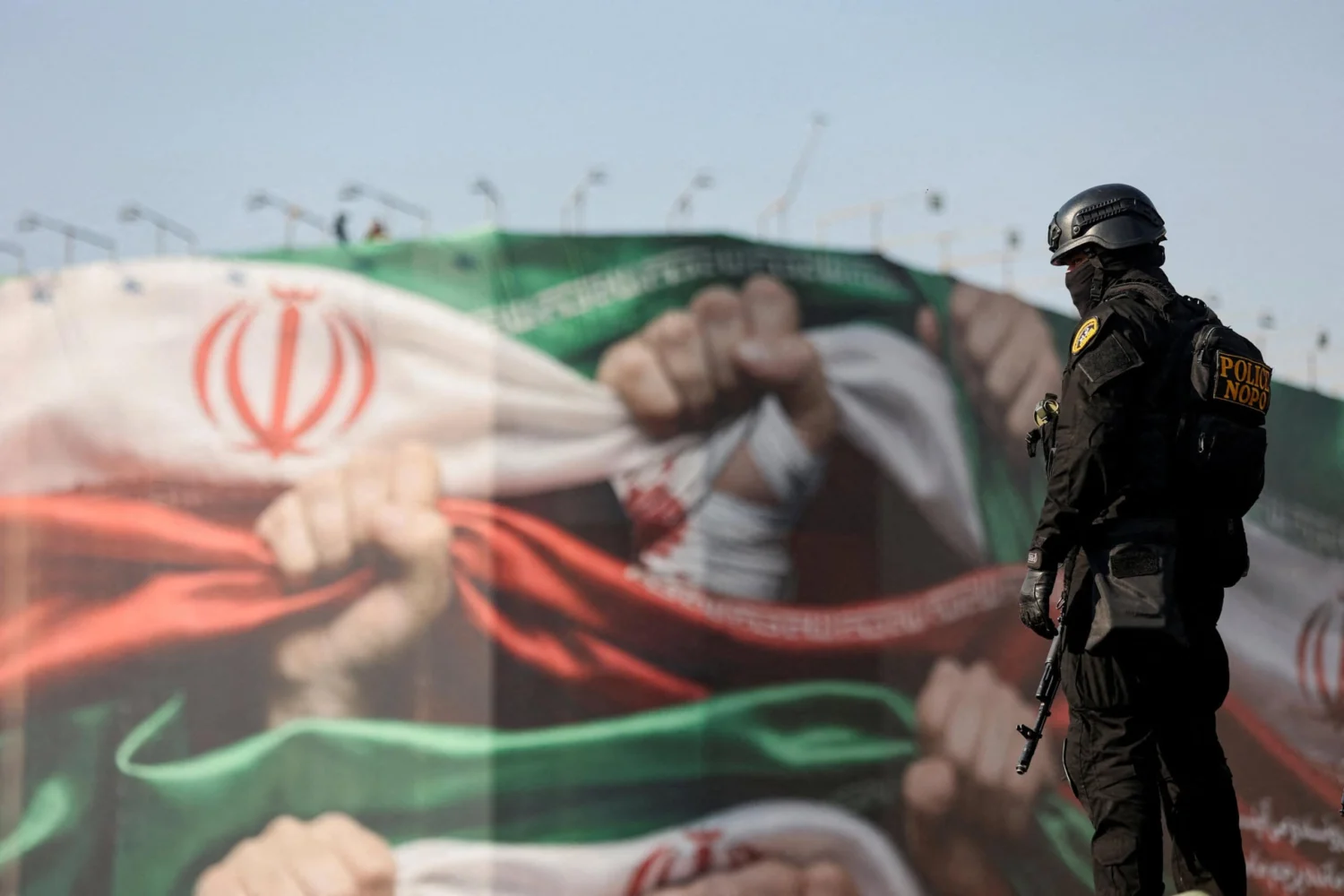
The protests that erupted across Iran in late December 2025 represent far more than another cycle of public discontent. For the first time since the 1979 Islamic Revolution, the regime confronts a perfect storm: a devastated military infrastructure, a shattered regional alliance network, and a domestic uprising that refuses to fade. This convergence of crises—military, strategic, and political—has pushed the Islamic Republic to what may prove its most precarious moment.
What sets this uprising apart from previous protests is its context. These demonstrations did not stem from isolated grievances but from the ruins of a major military setback and a progressively weakened economy. The June 2025 strikes on Iran’s nuclear facilities—killing hundreds and obliterating decades of investment—produced a paradoxical response: citizens rallied around the state—as distinct from the regime—in defiance of foreign aggression, even as they openly questioned the regime’s competence and priorities.
For Iran’s post-revolutionary generation—where 67 percent are under forty—the June strikes revealed a government that had prioritized regional adventurism over economic stability, military prestige over public welfare, and revolutionary ideology over pragmatic governance. Economic conditions that were dire before the bombing became catastrophic afterward. The currency collapsed, inflation spiraled beyond control, and young Iranians watched their government’s multi-billion-dollar military investments destroyed in days while it failed to provide basic security or services. The result is not just protest but a fundamental questioning of theocratic rule itself.
The June 2025 War: When Deterrence Failed
For years, American and Israeli officials threatened military action against Iran’s nuclear program. In June 2025, those threats materialized with devastating precision.
Israel struck first. On June 13, Operation Red Wedding deployed over 200 fighter jets supported by Mossad sabotage operations to attack roughly 100 Iranian targets. The strikes hit nuclear facilities, missile sites, air defenses, and regime infrastructure with surgical accuracy. Thirty generals died alongside nine nuclear scientists. The Natanz and Isfahan facilities suffered severe damage. Iran’s carefully constructed air defense network—including Russian-supplied S-300 systems—was largely destroyed.
Nine days later, the United States escalated dramatically. Operation Midnight Hammer employed B-2 bombers and submarines to deliver fourteen GBU-57 bunker-busting bombs against Iran’s most hardened facilities, including the deeply buried Fordow enrichment site, which sits roughly 60 miles southwest of Tehran. The massive ordnance—each bomb weighing 30,000 pounds and capable of penetrating 200 feet of concrete—represented capabilities Israel did not have and Iran could not defend against.
Iran retaliated with missile strikes on Israel and Al Udeid Air Base in Qatar, but the response revealed more about Iranian weakness than strength. The attacks caused limited damage (but probably more than Israel is prepared to admit) and triggered no broader proxy escalation. Most significantly, Hezbollah—long considered Iran’s most capable deterrent—announced it would not retaliate, exposing both reduced capability and unwillingness to sacrifice remaining assets for Iranian interests.
A U.S.-brokered ceasefire on June 24—reportedly at the behest of Israel to avoid further exposure to Iranian missile attacks—ended twelve days of conflict. Over 1,000 Iranians died. Iran’s nuclear program suffered years of setbacks, though not complete destruction. Israeli losses remained unclear, but the asymmetry of damage was undeniable. More importantly, the war shattered the fundamental premise of Iran’s security architecture:—that its regional proxy network would deter major strikes through credible threats of multi-front retaliation. When the moment came, deterrence failed completely. At the same time, Israel’s vulnerability was exposed. The doctrine of strategic autonomy was punctured: Israel’s almost total military dependency on the United States became all the more obvious.
Trump’s Threats and American Hesitation
The most significant evolution in American policy emerged in January 2026 as protests erupted across all 31 Iranian provinces. President Trump, having already demonstrated willingness to strike Iran militarily, added something fundamentally new—protecting Iranian civilians from their own government.
Beginning January 2, Trump declared that if Iran “kills peaceful protesters, which is their custom, the United States of America will come to their rescue. We are locked and loaded and ready to go”. This represented an unprecedented expansion of intervention doctrine—no longer limited to nuclear non-proliferation but explicitly including humanitarian protection of Iranian civilians against state violence. As the protest death toll climbed, Trump reinforced the message repeatedly, telling demonstrators that “help is on its way.” A few days later, Trump asserted that Iran had stopped executing protestors and the United States would not launch an attack, but did not rule out future military action.
Despite the rhetoric, the prospect of immediate military action remains uncertain. The recent U.S. buildup in the Arabian Sea and Mediterranean reflects readiness, not necessarily intent—maintaining the capacity to strike on short notice without signaling an imminent attack. At the same time, a range of political, operational, and strategic factors constrain American willingness to act at this stage.
First, Iranian operations would dwarf the complexity and risks of the recent Venezuelan intervention that successfully captured President Maduro. Unlike Venezuela’s degraded military, Iran possesses sophisticated retaliatory capabilities: thousands of ballistic missiles, advanced drones, formidable cyber weapons, and proxy forces throughout the Middle East capable of creating widespread instability. Iranian forces could strike American military installations in Qatar, Bahrain, Kuwait, and Iraq, potentially inflicting significant casualties.
Second, regional and global economic consequences would be severe. The Strait of Hormuz—through which roughly 21 percent of global petroleum passes—represents a critical chokepoint. Its sustained closure would spike energy prices worldwide, potentially triggering economic recession.
Third, unlike the swift Venezuelan raid that lasted hours, Iranian operations would require sustained air campaigns over extended periods. That means accepting casualties and costs that American domestic politics may not support, particularly as the 2026 midterm elections approach.
Fourth, any American strikes—even framed as humanitarian intervention—would almost certainly kill Iranian civilians, potentially including the protesters they aim to protect. This creates a stark moral and practical contradiction that undermines the humanitarian rationale. At the same time, Trump’s justification has been erratic, shifting from nuclear threats to missile programs, from rescuing protesters to pursuing regime change, often reversing course without warning.
Fifth, international responses pose complications. While U.S. policy toward Venezuela encountered resistance from some Latin American and European actors, it did not risk direct confrontation with major powers. Iran’s case involves higher Russian and Chinese stakes in a more militarized and fragile regional system.
Sixth—and certainly not least—the Iranian people’s patriotic ethos and pragmatic political instincts, shaped by decades of sanctions and isolation, have sustained Iranian society and state survival in a persistently hostile regional and international environment.
By mid-January, Trump appeared to moderate his position, citing information that killings had ceased and planned executions had been halted. The administration nonetheless continues to weigh military and diplomatic options, maintaining maximum pressure while keeping its threats deliberately ambiguous. Immediate intervention now seems less likely than the initial rhetoric implied. Still, the U.S. military buildup closer to Iran preserves the capacity for a short, decisive strike of the kind Trump reportedly favors. A naval blockade remains another option, one that could further squeeze an already fragile Iranian economy.
Israel’s Calculations: Success and Reluctance
Having executed the devastating June strikes against Iran’s nuclear infrastructure, Israel is now satisfied that it has degraded its primary adversary’s military assets, and yet still concerned that Tehran will reconstitute destroyed capabilities.
Israeli intelligence assessments indicate Iran is working systematically to restore what the war destroyed. Most concerning is evidence of expanded ballistic missile production to replace stockpiles damaged in earlier strikes. Reports suggest Iran is attempting to repair crippled air defense systems and reconstitute nuclear enrichment capabilities at bombed sites.
Despite this intelligence and Israel’s ultimate objective of regime change, several factors contribute to apparent reluctance to strike at this particular moment. First, Israeli military resources remain stretched across multiple theaters, including ongoing Gaza operations and security concerns along its borders.
Additionally, Israeli public opinion remains focused on other priorities, including Gaza and normalization possibilities with Saudi Arabia and other Arab states. While Iranian airspace remains essentially undefended after the destruction of the S-300 missile system—making operations militarily feasible—political timing may not align with operational opportunity.
Finally, Israeli planners clearly prefer coordinated operations leveraging American capabilities, particularly the massive bunker-penetrating weapons Israel cannot deploy against the deepest, most hardened Iranian facilities. Without clear American commitment to participate, unilateral Israeli strikes would achieve less comprehensive results.
Nevertheless, Israeli strategic culture emphasizes acting decisively against existential threats. If Iranian reconstruction approaches critical thresholds, strikes could occur with or without American participation. The regime change objective remains a constant. Only timing and method remain uncertain as Israel balances military opportunity against political constraints.
The Axis of Resistance: Dismembered
Perhaps the most dramatic transformation in Iran’s strategic environment is the complete collapse of its regional alliance network. For four decades, Iran cultivated an “Axis of Resistance” providing strategic depth and deterrence through proxies. Recent developments have shattered this architecture precisely when Tehran faces its gravest threats.
Syria represented the cornerstone of Iranian regional strategy—the critical land bridge connecting Iran to Lebanese Hezbollah. In December 2024, the Assad government collapsed with stunning rapidity as Russia’s distraction in Ukraine reduced Syrian support. For Iran, this represented catastrophic strategic loss. The Syrian corridor for arms transfers to Lebanon has been severed. Iranian military installations in Syria are no longer sustainable. The land bridge to the Mediterranean has effectively disappeared.
Hezbollah in Lebanon suffered even more devastating degradation through direct Israeli military action. Israeli operations in 2024 systematically dismantled the organization’s deterrent architecture: assassinating leader Hassan Nasrallah and numerous senior commanders, destroying massive weapons stockpiles accumulated over decades, and degrading command and control infrastructure. By the November 2024 ceasefire, Hezbollah had suffered losses requiring years to rebuild—assuming such rebuilding remains possible given Syria’s collapse eliminating the resupply corridor. An organization that once threatened sustained barrages on Israeli cities now struggles to maintain basic deterrence.
Hamas in Gaza suffered similarly catastrophic losses from Israel’s military operations. Israeli forces killed thousands of Hamas fighters, eliminated much of the organization’s leadership, and physically destroyed Gaza’s infrastructure to a degree making rapid militant capability reconstruction nearly impossible. While Hamas survives as an ideology, its capacity to conduct major military operations or meaningfully support Iranian strategic goals has been virtually eliminated.
These proxy losses compound beyond simple capability degradation. The Axis of Resistance provided Iran deterrence through credible threats that military action would trigger simultaneous retaliation by proxies across multiple fronts. The June 2025 strikes demonstrated how completely this deterrent architecture had collapsed. Israel struck Iran with relative impunity, facing only modest retaliation from degraded Iranian forces rather than coordinated proxy responses.
This weakened position creates severe vulnerabilities as Iran faces potential renewed strikes. Reduced deterrence makes military action more attractive to adversaries. Limited regional allies means Iran fights essentially alone, unable to distribute conflict costs across multiple theaters. Strategic isolation reduces international support, as even traditional partners recognize Iran’s diminished regional position.
International Responses: Calculated Distance
Arab states view Iran’s dramatic weakening as broadly advantageous, yet recognize that a wounded, weakened Iran may prove more dangerous and unpredictable than a stable one, particularly if domestic instability combines with regime desperation.
Regarding potential renewed strikes, Arab states—principally Egypt and members of the Gulf Cooperation Council—appear cautious. These governments have privately urged restraint when Trump threatened humanitarian intervention. Arab countries face a delicate balance: Iran’s weakness serves their interests, but complete Iranian collapse could create power vacuums filled by unpredictable actors. More importantly, it could embolden Israel to achieve regional hegemony—a prospect that concerns Arab governments despite their opposition to Iranian influence.
Russia and China stand out as Iran’s most consequential potential allies, yet the June war laid bare the limits of their commitment. Russia, for its part, combined fiery rhetoric with careful inaction, constrained by the enormous toll of the Ukraine conflict. At the same time, Moscow is unlikely to allow Iran to collapse unchecked. It will almost certainly maneuver diplomatically—and, if necessary, operationally—to prevent a regional vacuum that could undermine its interests.
China’s response was almost entirely rhetorical. Beijing condemned the action diplomatically but imposed no economic retaliation, provided no military assistance, and took no actions risking Chinese economic interests with Western powers.
Looking toward potential renewed strikes, both powers signal similar positions: diplomatic opposition combined with practical acquiescence. Neither will likely intervene militarily or sacrifice significant national interests to protect Iran from American-Israeli military pressure. This great power restraint fundamentally shapes Iran’s strategic options. Tehran cannot rely on Russian or Chinese military intervention to deter or respond to strikes.
Iran’s Retaliatory Options: Constrained but Dangerous
Iran emerged from June 2025 with significantly degraded military capabilities, yet retains multiple retaliation options should Israeli and/U.S. strikes resume.
If Israel, with or without U.S. support, strikes Iranian nuclear or missile infrastructure, Tehran would almost certainly feel compelled to retaliate in ways that restore deterrence and domestic legitimacy. Analysis suggests Iran possesses several thousand ballistic missiles; however, perhaps only around a thousand are immediately usable for large-scale salvos, forcing Tehran to choose between a few massive attacks or sustained, smaller waves.
The April 2024 “Operation True Promise”—a coordinated missile and drone strike on Israel in retaliation for an attack on the Iranian embassy in Damascus—demonstrated Iran’s capacity for complex, multi-vector operations and the resilience of Israel’s layered defenses, bolstered by U.S., European, and regional support. Iran’s response during the 12-day war shows it has expanded its options for striking Israel. Leaders in Tehran now claim they are better prepared than last June, with an enhanced ability to threaten both Israeli and U.S. military assets in the region, raising the stakes for future confrontations.
Iran’s retaliatory toolbox includes five main categories: direct missile and drone attacks, proxy operations, cyberattacks, targeted killings, and maritime disruption.
Missile and drone strikes could target Israeli population centers and U.S. bases throughout the region. While air defenses would mitigate damage, even a few successful hits on critical infrastructure would have significant psychological and political impact.
Proxy escalation remains possible through Iran’s relationships with militias in Iraq, remnants of Hezbollah in Lebanon, and the Houthis in Yemen. These actors could conduct rocket attacks, cross-border raids, or sabotage campaigns, providing deniability while widening the battlefield—though their degraded capabilities limit effectiveness.
Cyber operations represent a cost-effective theater for signaling and retaliation. Iranian cyber units have demonstrated an ability to disrupt government networks, energy infrastructure, and financial systems in rival states.
Maritime threats pose perhaps Iran’s most potent structural lever. The capacity to threaten commercial shipping in the Gulf and Strait of Hormuz through mine-laying, harassment of tankers, and missile or drone strikes on vessels could spike global energy prices and draw in external powers seeking to protect freedom of navigation.
Targeted killings against senior officials, intelligence personnel, or symbolic targets abroad raise the specter of a more diffuse and unpredictable conflict.
Each of the above options, however, risks escalation spirals. Severe attacks on Israeli or U.S. assets would likely trigger further strikes on Iranian territory, while Gulf states would come under pressure to align more openly with Washington. The result could be a multi-front conflict stretching from the Eastern Mediterranean to the Gulf of Aden with devastating humanitarian and economic consequences.
Iran’s strategic calculations are a high-stakes balancing act. Officials believe the United States ultimately seeks regime change, yet they know that an overly forceful response could trigger a sustained American military campaign, hastening that very goal. Conversely, showing restraint risks projecting weakness and encouraging further attacks, leaving Tehran trapped between escalation and vulnerability.
One critical factor distinguishes Iran’s position in January 2026 from June 2025: the regime now faces simultaneous external military threats and internal popular uprising, significantly constraining retaliation options.
The Six Forces Eroding Theocratic Order
The current crisis must be understood against deeper structural forces that have been eroding the Islamic Republic’s foundations for years. Six interlocking dynamics threaten the regime’s long-term viability (read more in my 2023 article “Is Theocratic Rule in Iran Coming to an End?”) .
First, cracks are appearing within the clerical establishment itself. Debates in Qom, the international center of Shiite scholarship, have intensified, directly challenging Velayat-e Faqih—the doctrine of the Islamic jurist that legitimizes clerical rule. Once the theological foundation is contested, the regime’s political legitimacy is inevitably weakened, leaving it increasingly vulnerable to both internal dissent and external pressure.
Second, succession uncertainty looms over the aging Supreme Leader Ali Khamenei, now 86. No clear heir means no guaranteed continuity. Whether the system produces a weak successor or collective leadership, the authority inherent in Velayat-e Faqih will likely be weakened, potentially opening the door to the end of clerical rule.
Third, the Revolutionary Guard’s weakening competence threatens one of the regime’s most critical pillars. Israeli and U.S. operations—including cyberattacks, targeted assassinations, and overt strikes—have punctured the IRGC’s carefully constructed image of invulnerability. Each successful strike exposes intelligence failures and deepens internal mistrust. Purges and reorganizations may restore discipline, but they also reinforce a siege mentality—intensified by these attacks—that increasingly limits strategic thinking and operational flexibility.
The Guard’s dominance has become a double-edged sword. Internally, it is split between pragmatic commanders, focused on regime survival and economic interests, and ideological hardliners, who see confrontation with Israel and the United States as both inevitable and existential. Sanctions, domestic unrest, and sustained foreign pressure have sharpened these divisions, yet for political expediency the Guard projects a veneer of unity, masking deep internal fault lines that constrain decision-making.
Fourth, cracks surface within the conservative base as loyalists grow disillusioned by costly regional adventures and domestic stagnation. When even regime supporters question priorities, the foundation of political support narrows dangerously.
Fifth, ethnic minorities—Kurds, Baluchis, Azeris—have found new unity in dissent, amplifying Tehran’s vulnerability from its peripheries. These groups, historically marginalized, increasingly coordinate opposition and challenge central authority.
Sixth, a profound generational and societal shift is quietly reshaping Iran. With 67 percent of the population under forty, many young Iranians are disconnected from revolutionary ideals, seeking dignity and freedom without weaponizing faith or embracing martyrdom. Widespread economic hardship, corruption, and unfulfilled promises of social justice have compounded discontent. Educated and globally connected, this generation rejects the notion that authority from 1979 justifies authoritarian control in 2026. Beneath the state’s rigid surface, theological, political, and moral fatigue is mounting. The revolution that once promised purification is eroding from within, sharply at odds with a society that has modernized, embraced contemporary ideals, and demands governance aligned with its aspirations.
Uncertain Trajectories
Yet, predicting Iran’s trajectory remains perilous. The regime has survived extraordinary challenges since 1979, demonstrating resilience that should caution against confident predictions of failure.
The most likely near-term outcome may be a managed crisis: the regime maintains control through its security apparatus (IRGC and its paramilitary volunteer militia, the Baseej) while engaging in tactical diplomacy seeking to prevent renewed strikes, protests continue at lower intensity, and international pressure persists without producing either breakthrough or breakdown.
However, rupture remains distinctly possible. Leadership transitions as Khamenei faces succession could produce factional conflict that regime opponents exploit. Sudden protest escalation beyond security forces’ control could trigger regime collapse. External shocks—renewed strikes, economic catastrophe, further regional setbacks—might prove the final stress that fractured structures cannot bear.
The Islamic Republic stands at history’s crossroads—between authoritarian resilience and systemic collapse, between accommodation and confrontation, between survival and revolutionary transformation. Moderates and civil society actors—including many now imprisoned—have long proposed reforms to reshape Iran’s institutions, yet their calls have gone largely unheeded. The country now faces a profound test: the national trauma from recent uprisings and violence, which many consider deeper than the shock of the Israeli–U.S. war, may finally force change from within—or confirm the regime’s enduring rigidity.
The next war may not be inevitable despite the threats. The next revolution may already be unstoppable. Or perhaps both outcomes remain fluid if leaders choose wisdom over force, compromise over victory, and futures defined by peace rather than the rubble of the past.