Confederative Futures and the Burden of Leadership in Israel/Palestine
The pathway to recognition of Palestinian Statehood does not require the world’s approval through the raising of 192 flags; rather, it requires convincing “one state only—the state of Israel”
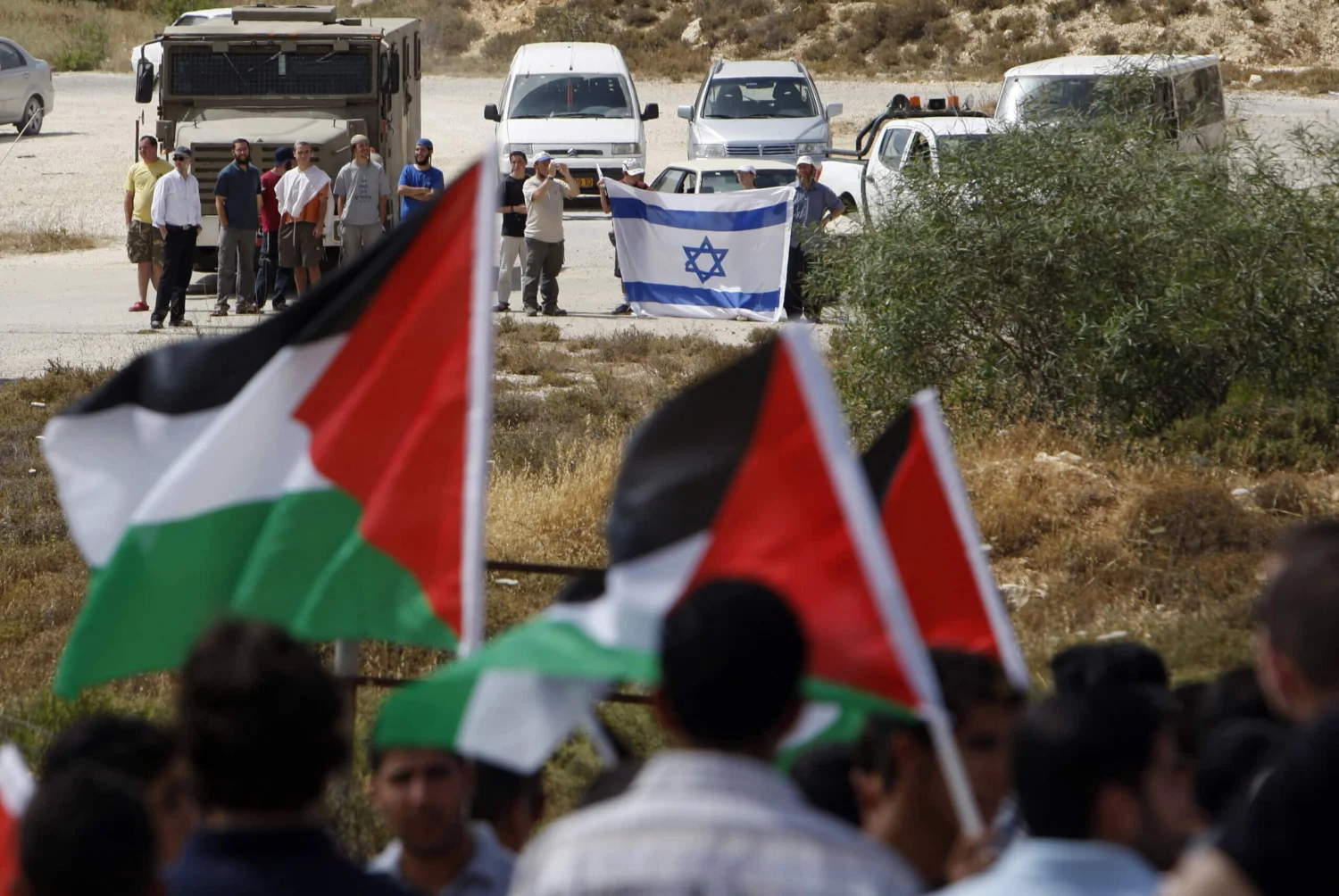
A peaceful resolution to the Israeli occupation of Palestinian territory and the creation of security and stability between Israelis and Palestinians has been defined for decades by the flickering hope—and repeated frustration—of the so-called Two State solution.
Despite recurring international initiatives and diplomatic alliances, such as the “International Alliance for the Two-State Solution” formed by ninety-three countries in 2024, mistrust, leadership crises, and the realities on the ground have rendered the concept of Middle East peace nearly unattainable in practice. This impasse, compounded by the regional and internal shifts since October 7, 2023, thrusts forward the imperative to consider new models of governance, such as confederation or federative arrangements, or the One-State solution as some have suggested, and to interrogate deeper political and legal paradoxes about recognition and rights. In an era of maximalist Israeli governments and fragmented Palestinian leadership, the question lingers: what kind of institutional transformation could facilitate progress?
Since 2022, Israeli governments have become the most right-wing and maximalist in the country’s history, openly rejecting Palestinian statehood and advancing policies of settlement expansion, annexation, and consolidation of Jewish sovereignty over all contested territory. Key far-right ministers now wield significant power, mainstreaming exclusionary ideologies and blocking even limited autonomy for Palestinians. Parallel to this, Palestinian leadership is deeply fragmented between the Palestinian Authority, ruled autocratically by Mahmoud Abbas in the West Bank, and Hamas in Gaza, which has suffered both military collapse and international isolation. Mahmoud Abbas’s reluctance to hold elections and the PA’s internal corruption have further eroded public trust and institutional legitimacy, creating a political vacuum. Multiple failed unity attempts and the existence of rival factions have undermined prospects for a unified Palestinian strategy or credible negotiating partner. Externally, regional Arab states and international actors have shown increasing frustration with the paralysis and regularly call for leadership renewal and unity. These dynamics of maximalism and fragmentation contribute to persistent deadlock, violence, and the absence of substantive negotiations on conflict resolution.
Must the Palestinians conjure a Ben Gurion or Mandela-like figure to gain international legitimacy, or ought their rights as a people suffice within the parameters set by International Human Rights Law and broader international legal instruments?
The observation voiced by Palestinian activist and politician Samer Sinijlawi, in a recent extended interview, clarifies a core frustration: the gap between institutional credibility and actual representation. Sinijlawi derides the current Palestinian Authority (PA) leadership, noting that “around 75–80% of Palestinians in recent polling consistently demand that President Abbas resign and leave political life, and laments that “at least 90% of the Palestinian people [are not] represented” within prominent international frameworks for peace. This crisis of legitimacy, he says, echoes throughout Palestinian civil society and diaspora, as well as among political scientists who have tracked the decline of public trust in Palestinian leadership since the mid-2010s. Sinijlawi’s reflections, steeped in decades of activism, prison experience, and direct negotiation with Israeli civic society, push the conversation beyond the focus on personalities and into institutional transformation.
For Sinijlawi, leadership is not merely about appearing “moderate” or “reconciling” but about demonstrating sovereignty in practice—controlling armed factions, building transparent institutions, and enacting the rule of law. Sinijlawi’s conception of sovereignty is not unique; every autonomous state enjoys these rights as the basis for their existence. This approach explicitly references David Ben Gurion’s consolidation of Israeli statehood and monopoly over force, contrasting sharply with repeated calls for a “Palestinian Mandela”, which echo South African reconciliatory motifs. Sinijlawi argues compellingly that Palestinians need a leader who can enforce a monopoly on the legitimate use of arms, and who can openly declare “I am the sovereign and I will not allow any angry Palestinian or any ideological Palestinian who carries a gun to declare war on behalf of the Palestinian people”.
Sinijlawi’s call for a narrative transformation—the “recognition of historical rights of Jews in Islam”—integrates an oft-ignored prescription from Edward Said, namely, an acknowledgment that Jews have belonged to the land alongside others, laying the groundwork for mutuality rather than exclusive claims. Said himself argued that there was “no reason to deny the Jewish historical presence in the land, but we must remind the world that they have not been alone”. This joining of historical recognition to political pragmatism signals a more strategic approach to negotiation, one that does not rely on miracles or mythologies of leadership, but on the hard work of institutional change.
Relinquishing Control
Recognizing that Jewish communities have—along with Palestinians—been part of the land, alongside others, provides a logical basis for reimagining not just coexistence, but new structures of shared governance. Such acknowledgment supports a pragmatic shift toward confederal models, where both peoples maintain autonomy while collaborating on areas of mutual interest. The confederal approach to governance, discussed increasingly in academic and diplomatic circles, pursues precisely this blend of flexibility and shared sovereignty. Confederations, distinct from federations or traditional single-state models, allow for two distinct entities to maintain sovereign authority over certain matters while mutually sharing other institutions—economic zones, security forces, infrastructure—across borders.
In practice, a successful confederation would require both sides to relinquish maximalist control over territory, security, and symbols, in exchange for stable access and mutual recognition.
For a confederation to work, both parties would need to move away from these zero-sum ambitions and instead accept shared responsibility, flexible borders, and the existence of parallel sovereignties, making space for genuine cooperation and mutual acknowledgment.
Models from the European Union’s Schengen zone or Bosnia-Herzegovina’s complex shared presidency—in their limitations as well as their strengths—are routinely cited as precedents for these forms of governance. However, the Israeli–Palestinian context complicates such comparisons, given the perpetual asymmetry of power, which is the ongoing and pronounced imbalance between Israel and the Palestinians in nearly every sphere: military, economic, technological, legal, and diplomatic. Israel is a recognized, sovereign state with one of the world’s most advanced armies and nuclear capabilities, robust international alliances (especially with the United States and Europe), and control over borders, airspace, and resources throughout the territory between the Mediterranean and the Jordan River. In contrast, Palestinians lack a sovereign state, exercise only limited self-administration in fragmented areas, possess no standing army, face severe restrictions on movement and trade, and are deeply dependent on foreign aid. This disparity means that, in negotiations or daily realities, Israel wields overwhelming leverage and can unilaterally shape outcomes, while Palestinians have little capacity to enforce rights, alter the status quo, or pursue independent development—making “mutual” arrangements inherently unequal in practice.
Then there is the status of Jerusalem, and the persistence of occupation. Israeli governments, ever more dominated by right-wing coalitions, have repeatedly rejected even the basic premise of equality as the foundation for negotiation.
Confederation is not a panacea. Recent policy papers warn that asymmetric power, security dilemmas, and the risks of “creeping annexation”—whereby one party, Israel, gradually absorbs the territory and institutions of the other—could undermine the experiment swiftly. Critics also argue that confederation could enable further fragmentation of Palestinian governance, creating a patchwork quilt of disconnected zones, and allowing Israel to maintain ultimate control over borders and security while eschewing responsibility for Palestinian wellbeing. Nonetheless, the emerging consensus acknowledges that stalemate, violence, and cycles of reprisal cannot be resolved by the current architectures of leadership—nor indeed by international interventions which exclude the real stakeholders. Realist scholars such as Rashid Khalidi stress that “prior efforts have failed not for lack of vision, or leadership, but due to the refusal of powerful actors to allow Palestinian self-determination or equality”.
Inalienable Palestinian Rights
Sinijlawi’s political experience—including under incarceration—bridges the divide between theory and lived reality. He reflects that the conflict “brought us to a level of violence, of extreme ideas on both sides that maybe we should start thinking about how we can defeat ourselves?… Not the other side”. He further insists that reconciliation is the necessary precursor to building a political horizon; in Israel–Palestine opposing models such as Ireland or South Africa—in which compromise comes first, then reconciliation—are inverted. For Sinijlawi, reconciliation must precede compromise.
This is supported by research in conflict transformation conducted by academics Daniel Bar-Tal and Gabriel Solomon which argues that cycles of trauma and reciprocal fear in protracted conflicts inhibit the implementation of any formal accord unless accompanied by grassroots and elite-level reconciliation initiatives.
The language of “human dignity” for Palestinians and “security” for Israelis, deeply rooted in the parties’ respective narratives, can only be unlocked through mutual prioritization: Palestinians declaring Israeli security as a “national interest,” and Israelis enshrining Palestinian dignity and freedom absent paternalism or charity.
As the discussion moves from the realm of leadership to the register of rights, a profound contradiction comes into relief. International Human Rights Law (IHRL) and the United Nations Charter establish, unequivocally, the right of all peoples to self-determination, including the formation of a state. The International Court of Justice, in its 2004 advisory opinion, declared the right of the Palestinian people to self-determination and stressed that occupation cannot nullify this right. The International Covenant on Civil and Political Rights, as well as numerous General Assembly resolutions, affirm this entitlement to equal citizenship, democratic participation, and—critically—freedom from collective punishment or discriminatory exclusion.
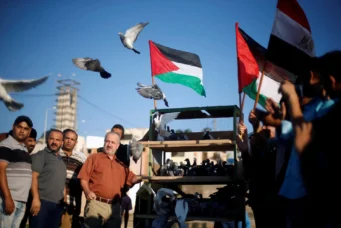
The practice, however, falls short: Palestinians are routinely required to “produce a dove,” demonstrating exceptional moderation, as a precondition for statehood or recognition. Israeli governments, by contrast, are not required to moderate their hawkish stances, or provide a symbolic Mandela. This is visible at the very heart of Jerusalem, where—as Sinijlawi recounts—some 370,000 Palestinian residents are denied citizenship and political participation in national politics, while municipal power remains dominated by Israeli leadership. In contrast, newly arrived Israeli immigrants often occupy the very institutions and budgets that govern the city. As Sinijlawi phrases it: “the most basic right for any individual in this world is to be a citizen of at least one state … we are still looking for our first citizenship.”
This paradox is not accidental. The perceived demand for Palestinian moderation, political performance, or virtuous leadership is a reflection of a broader power asymmetry—one which has been documented and analyzed extensively in the literature on colonial and occupation practices. Legal scholars and human rights advocates have repeatedly underlined the fundamental inequity of conditioning rights on exemplary behavior, rather than on the universality enshrined in law. Moreover, leading political scientists note that the insistence on Palestinian “performance” as a precondition for statehood—an idea reinforced by the logic of the Oslo Accords and by donor conditionality—fuels frustration, cynicism, and resistance among Palestinian communities themselves. Sinijlawi’s account on the necessity for changed strategy is therefore not just pragmatic, but a rebellion against a system in which the victim must meet impossible standards while the powerful state is left to define the terms of engagement.
Sinijlawi outlines five central steps for Palestinians, which serve as a roadmap for institutional, not personal, transformation. Firstly, “changing the narrative”—not merely in terms of slogans, but as recognition of the “historical rights of Jews in Islam”. Secondly, ending incitement and hatred, particularly within Palestinian discourse. Thirdly, assuming statehood “by practice, not by slogans,” through institution-building and the development of credible agencies for governance. Fourthly, adapting strategies towards Israel: moving from pressure and violence, or international diplomatic lobbying, to persuasiveness and articulation of mutual interests. Finally, “reform our political system,” making it accountable and transparent, empowering dignity and rights for Palestinian individuals. To repeat, it is noteworthy that Sinijlawi demands a sovereign who declares and enforces limits to armed struggle and personal rule. In this, he breaks with the mythos of reconciliation through charisma, suggesting that the maturation of national institutions and the rule of law—not the emergence of a lone savior—will create opportunities for lasting peace.
Decades of Decay?
Sinijlawi’s critique of Abbas’s legacy is stinging. Citing twenty years of stagnation, alleged corruption, and the erosion of parliament, the judiciary, and executive branches, he chronicles the transformation of Fatah—the dominant Palestinian political party and historical leading faction of the Palestinian national movement—into an instrument of patronage and repression.
Security coordination with Israel is described as stemming from “self-survival,” not genuine political calculation. In practice, Sinijlawi observes, “the security agencies are not serving the best interests of Palestinians, or the security of Palestinians, nor the Israelis”. This assessment is echoed in recent analyses by Nathan Brown, who is a distinguished American political scientist and professor at George Washington University, recognized for his expertise on Palestinian politics, Arab law, and constitutionalism. This is also shared by Yezid Sayigh, whose work highlights the structural impediments to accountability and the decoupling of security functions from popular legitimacy in occupied Palestine. The impact of these failings is vivid: civilian suffering, unaccountable violence, and the collapse of the dream of statehood into a technical arrangement serving only elites.
The answer to the dilemma may ultimately rest less on personalities and more on institutions and norms. If Palestinians reform their institutions—prioritizing democracy, rights, and the rule of law, and reject the legacies of personalist rule—there is a potential not only to reclaim agency, but to reshape the terms of engagement with Israel and with the wider international community. As Sinijlawi argues, the pathway to recognition does not require the world’s approval through the raising of 192 flags; rather, it requires convincing “one state only—the state of Israel”. This approach, rooted in pragmatic calculation and mutual interest, does not negate the salience of international law, but seeks to align political strategy with the realities of power, negotiation, and self-representation. The risk, as ever, is the persistence of maximalist leadership on one or both sides, or external actors who subvert reform through self-interest or inertia.
In the short and medium term, Sinijlawi’s forecasts are cautiously optimistic. He points to a letter by President Abbas to President Macron, promising reforms, elections, and the restriction of Hamas within Palestinian party law. If this is implemented, followed by credible elections and the defeat of Hamas at the ballot box, he is hopeful that a new cadre of leaders may emerge—committed to responsible language and internal reform. This, he suggests, could trigger a parallel dynamic within Israeli politics, leading eventually to an environment receptive to confederation, equality, and even regional integration. It is a vision in which the shores of Gaza and hotels in Beirut become places for Israeli–Palestinian friendship rather than checkpoints and conflict.
Still, the challenges remain formidable. The obstacles to transformative change are not simply the absence of charismatic leadership, but the obduracy of entrenched interests, the structural violence of occupation, the manipulation of narratives, and the inertia of international actors. But if there is anything to take from Sinijlawi’s vision, and the lessons of history, it is that the assertion of human dignity, equal citizenship, and pragmatic institutional reform offer far more durable paths to justice than the search for singular saviors.
For the Palestinians, the right to statehood is inalienable, and should not depend on the emergence of a “dove” to placate the world, just as for Israelis, security and legitimacy can best be achieved through equality rather than exclusion. Confederation or federal arrangements may yet offer mechanisms for coexistence and shared futures, but only if built on the premise that the rights of all must finally, and unconditionally, be affirmed.