
Abdel Hamid Mamdouh serves as senior counsel at King & Spalding LLP and was former director of the Trade in Services and Investment Division of the WTO. Prior to that he was a senior counsellor in the Services Division and was the Secretary of the WTO Council for Trade in Services since the establishment of the WTO in 1995. During that time, he was also responsible for legal affairs in the area of Trade in Services. During the Uruguay Round negotiations his responsibilities included legal matters relating to the negotiation and the drafting of the General Agreement on Trade in Services (GATS). His previous positions in the GATT include: Assistant to the Deputy Director-General of the GATT and legal advisor on GATT dispute settlement. Before that, he was a trade negotiator with the diplomatic service of Egypt.
The Race for the World Trade Organization
African Societies Plan for a Post-Pandemic Economic Recovery
There is no “one size fits all” approach when it comes to examining economic recovery plans for the 54 African countries, but a common theme seems to be infrastructure spending and a boost from intra-African trade, as the African Continental Free Trade Agreement (AfCFTA) comes into effect next year.
The inaugural Intra-Africa Trade Fair (IATF) was held in Cairo, Egypt in December 2018 and attracted 42 African country pavilions. There were more than 1,100 exhibitors, and agreements worth $32.6 billion were signed.
The second IATF was due to be held in Kigali, Rwanda in September 2020, after the AfCFTA came into effect in July 2020, but due to the disruption caused by the COVID-19 pandemic, these have been postponed to 2021.
Tara O’Connor, an Executive Director at Africa Risk Consulting, said recovery will be needed in all spheres from political, economic, and social to technological to deal with what the pandemic’s aftermath. The COVID-19 crisis has undone 25 years of consistently positive pan-African growth and seen trade slump by up to 30% and intra-African trade all but cease.
“We have seen an accelerated global polarisation. The trade war between the US and China has suddenly globalized. It will mean foreign powers will pay for influence – in debt relief, loans, etc. which is good. But we could see proxy wars, proxy political puppetry of the Cold War resume, which is negative for the economies of Africa,” O’Connor warned.
But she acknowledged that there is a business upside: already US firms that have traditionally had operations in countries in Asia – like the Philippines – are looking to relocate to Africa to get out of China’s sphere of influence or to counterbalance the risk.
O’Connor pointed out that Africa is not a country, but a continent of 54 countries, so recovery will vary from country to country and region to region. Countries that are already reform-minded and that have coherent systems in place will recover soonest. Rwanda, Uganda, Kenya all responded immediately with practical World Health Organisation (WHO) led responses to COVID-19 and are all well placed to lead the recovery. Countries that will recover less well will be those that have failed to address the virus in any meaningful way and pose a risk to their neighbors.
“The virus has intensified acute domestic problems from the economy to healthcare systems, but has also forced reluctant governments to take action. In Nigeria, the IMF’s $3.4-billion package, for instance, comes with a single string attached – to get rid of the artificial exchange rate system,” she concluded.
More Resilience
It is to build on the expected rebound in Africa that the Germany-Africa Business Forum (GABF) will be organizing an exclusive webinar in August. The forum noted that while COVID-19 has hit world markets very hard, African economies are showing more resilience than others.
“Out of the 37 countries escaping recession this year, 22 are African, according to the International Monetary Fund’s latest forecasts. Post COVID-19, Africa will remain the fastest growing region in the world, and one where a new world also means new deals. German companies have increasingly made successful business in Africa over the recent past, and opportunities for German businesses and public sector companies will only grow as Africa builds sustainability and cleaner energy mixes in a post COVID-19 world,” the forum said.
Shawn Duthie, the managing director of Inyani Intelligence, an Africa-focused corporate intelligence firm, said that relative to other continents, countries in Africa have been somewhat spared from the devastating effects of COVID-19.
“Infection rates are low and death rates are even lower, but one area in which Africa has not been spared has been the economy. A lot of African governments reacted quickly, locking down major cities, if not the whole country, to prevent a massive surge in COVID-19 cases. This has appeared to work as infections are low, but it does seem like governments were quick to implement lockdowns similar to European countries without fully taking into account the detrimental effect to the economy,” he said.
He noted that an economic hit was inevitable, even without lockdowns, as most African economies are reliant on exports to countries in the European Union and Asia, and the impact of COVID-19 on these countries would affect imports from Africa. But the lockdowns appear to have unintentionally impacted domestic low-skilled jobs, such as kitchen staff at restaurants or cleaning staff at hotels, which is causing a massive spike in unemployment rates around the continent.
“African economies work despite government interference and are based around the entrepreneurial efforts of their populations, and the lockdowns basically stopped this from happening. For African economies to rebound, the markets need space to function efficiently and that is why there is a focus on infrastructure spending and intra-African trade, as global supply chains have been disrupted,” Duthie added.
This legacy of getting things done despite governments is also evident in the numerous civil society responses to the pandemic. In South Africa, for instance, the civil society response covers the Solidarity Fund which provides personal protection equipment for health care workers, Volkswagen’s conversion of a warehouse into a field hospital, the South African Future Trust (SAFT), which was started with an R1 billion ($60.3 million) donation by the Oppenheimer families and was aimed at supporting employees of small businesses, and the Kisby Small Enterprise Fund that would provide capital to small businesses.
Serial entrepreneur Kojo Parris has initiated #PhilaKahle, which is a collaboration with the Department of Social Development to support the adoption of healthier life by lower income citizens. This would improve key biomedical indicators for individuals and so reduce the overall public health burden. He said this can be replicated in all African countries.
The post-COVID recovery plans put forward by the African National Congress and Business for SA (B4SA) have infrastructure development as the central spur for recovery, but neither adequately addresses the lack of capacity in the public sector and the resulting failure of implementation.
COVID-19 Heightens Stakes for Migrants in the Mediterranean
When one thinks of a symbol of the Mediterranean, one may think of olives, or, perhaps, Dalida. Indeed, the Franco-Italian singer born and raised in Egypt made waves on both shores, singing in several languages including French, Italian, Spanish, and Arabic. However, the experiences of those who cross the pond have not always been as favorable. A bloody history between France and Algeria led to the alienation of certain groups, such as the Pied-Noirs (French living in Algeria before independence) and the Harkis (Muslims fighting for the French army) in both countries – while similar sentiments accompany today’s migrants from the Maghreb. These struggles are a representation of a larger trend of North African migration to Europe, where the socioeconomic dynamics of the former colonizer and colonized still play a defining role.
For various reasons, one of which is colonization, there is more wealth in Europe. Naturally, there are significant migratory movements from south to north, but such movements face great difficulties during the journey and after the arrival. Furthermore, not all migration is the same. While there are difficulties in any sort of migration, the experiences of migration for economic purposes may be different from those of refugees fleeing war. As such, migration in the Euro-Mediterranean space is a multi-layered issue whose dynamics vary by country of origin, journey, and country of destination.
With the shock of Covid-19 dominating the news cycle and shaking the very foundations of our healthcare and economic systems, it’s easy to forget that fighting is still ongoing in Libya and Syria. More so, it is easy to forget that there are people who still wish to cross the Mediterranean and migrate. Covid-19 has left every state looking inwards to the point where the only individuals moving outwards, those who are fleeing conflict or seeking better opportunities notwithstanding the pandemic, are met with ‘unsafe’ harbors and closed borders. Even many of those who have already migrated were left stranded, unable to return home, and with little information.
To look into the question of migration across the Mediterranean, the Center for Migration and Refugee Studies (CMRS) at the American University in Cairo hosted a webinar on July 15th entitled “Impacts of Covid-19 on Migration in the Euro-Mediterranean Space” which brought together experts in the field of migration to debate the issue. The webinar, chaired by Ibrahim Awad, director of CMRS, brought to the fore questions of the short term impact of the pandemic on migratory movements, policy and conduct of transit and destination countries, and the struggles of already-present migrants who wish to return, as well as the long term impacts that Covid-19 may bring on migration in the Euro-Mediterranean space.
What’s happened in the last few months?
According to Maurice Stierl, a Leverhulme Early Career Fellow at the University of Warwick who has done extensive research on migration and border governance, Covid-19 represents a sort of accelerated continuity rather than a “sudden rupture.” In other words, the pandemic did not reverse the ways in which European governments deal with their borders, but simply accelerated the already present patterns of “securitization of borders and criminalization of migration.” Stierl brings to our attention the fact that since 2015, Europe has invested in its “external dimension,” creating policy instruments and deterrence operations that further tightens its controls on its borders, as well as ‘supporting’ countries of transit and origin in order to ensure that migrants can disembark safely and be sent back. Indeed, 6000 people have been intercepted and returned to Libya just this year.
Stierl claims that Europe has used the pandemic as a way to systematize human rights and maritime law violations, consistently denying and obstructing various NGOs involved in the migration process with claims that they are helping smugglers, thus eliminating documentation of human rights violations. Stierl emphasizes that this latter aspect was accelerated during Covid-19, he singles out Malta in particular as having used the pandemic in this way, as it declared its ports “unsafe” in early April due to health reasons and left 150 migrants stranded at sea. The migrants were only taken in several weeks later in early June, with their numbers at sea swelling to 425 stranded before reaching land.
Those who were already residents of their destination countries also faced uncertainty during the lockdown phase of the pandemic. According to Aurelia Segatti, a Labor Migration Expert at the International Labor Organization, the repatriation experiences varied from country to country, with Tunisia repatriating its citizens early on in the pandemic but Morocco waiting until June to do so. To add to the uncertainty from a policy-making perspective, Segatti points out the fact that there is no regional-level, consolidated data on citizens of North African countries affected by the crisis, emphasizing the lack of unified data collection and formalization mechanisms in the region.
From an Egyptian perspective, there are still challenges. However, Ayman Zohry, founding president of the Egyptian Society for Migration Studies, states that the difficulties faced by Egyptians during Covid-19 are greater for those working in the Middle East, as most Egyptians in Europe hold European citizenship.
In the Gulf, which is the main source of remittances to Egypt, the story is different. 6500 Egyptians in Kuwait were facing a precarious situation with no legal residency, having been put in immigration shelters for weeks before being repatriated. Many more will face an equally precarious future, with decreased oil prices and, according to Zohry, an expected increase in the nationalization of labor in the Gulf.
Scenarios for the long-term
We have not yet reached the stage where we can see exactly how the post-Covid-19 world will function. However, there are some predictions being made based on previous patterns and evidence, and as such there are some possible scenarios related to migration in the long term. A UNODC report related to the impacts of Covid-19 on smuggling and migration predicts the following:
“The widespread nature of this current economic crisis, together with increased control at borders due to COVID-19, are likely to reduce irregular migratory movement and related migrant smuggling in the short term. But in the medium to long term, an unequal economic recovery will increase labour migration, and without increased possibilities for regular migration this is likely to increase smuggling of migrants towards the countries that have a faster recovery.”
Unfortunately, it seems that the post-Covid-19 world will be even harsher towards migrants, feeling the effects of an asymmetric economic downturn and recovery and, going back to Maurice Stierl’s insights, an increased securitization of borders. Stierl is vocal not only of European countries’ own securitization, but also of the continued “hegemonic dimension” of European border reinforcement within Africa through pressure in international alliances like the International Organization of Migration (IOM).
In the future, Europe may find itself dealing with an influx of Egyptian migration as well. According to Ayman Zohry, because of the move to nationalize jobs in the Gulf coupled with the desire of migrants to go somewhere where they can naturalize, Egyptian labor migrants who would have worked in the Gulf are likely to turn towards Europe as an alternative.
The dissonance between the long term view of the countries in the Euro-Mediterranean space and the parallel continued and likely increasing migration is cause for alarm. Aurelia Segatti, while cautious, sees a window of opportunity and provides a balanced view of the future. There is still hope for labor and for a better future for migrants, but only if there is a clear vision and swift action taken towards achieving this goal. Segatti sees the situation over the long term as a “double edged sword.” On one hand, the crisis and its migration-related issues (lack of good databases, weak emergency mechanisms) can serve as a wake up call for North African countries to build more robust information systems and to enhance safety nets for their workers abroad. She determines that the window to renegotiate bilateral labor agreements is in the upcoming few months. Certainly, it is the cusp between international systems separated by the pandemic.
This all depends on the swiftness and agility of North African governments. If the narrow window is missed, Segatti warns that “the situation could exacerbate the precarity of migrant workers.” She reminds us that it is our responsibility as academics and policy-makers to push towards the right direction, “otherwise it’s very likely that we’ll see dire consequences for labor.”
Society 5.0 and the Future Economies
In 2015, the Japanese government began to explore how science, technology, and innovation (STI) can work together to help develop a new model of sustainable development. The plan they put together for human development around the world came to be called Society 5.0.
Society 5.0 envisions a human-centered community that balances economic advancement and the resolution of social problems. With every innovation, the world moves toward this society: one that is sustainable, inclusive, and super-smart. Society 5.0 will build upon the innovations of Societies 1.0 (hunter-gatherer), 2.0 (agricultural), 3.0 (industrialized), and 4.0 (information), yet draw upon modern technologies like big data analytics, artificial intelligence (AI), the Internet of Things (IoT), and robotics as its driving forces.
This future will live within the fabric of the cyber-physical system, in which cyberspace and the physical space are tightly integrated, and form a pervasive technological mode supporting Society 5.0. Even today, the gap between the cyber and physical realities is closing, as most people live online-to-offline and back again, or “O2O”.
Solving existing social problems—which have become increasingly complex—can kick-start the full potential of economic development in Society 5.0. The reduction of greenhouse gas emissions, increased production and reduced loss of foodstuffs, mitigation of costs associated with an aging society, support of sustainable industrialization, redistribution of wealth, and correction of regional inequality all present opportunities for problem-solving, though thus far maintaining economic development and sound social policy at the same time has proven to be difficult.
But, the relationship works both ways; new value created through the innovation prized by Society 5.0 will eliminate regional, age, gender, and language gaps and enable the provision of products and services finely tailored to diverse individual needs. In this manner of reciprocity, it will be possible to achieve a society that can both promote economic development and find solutions to social problems.
For many countries, science, technology, and innovation (STI) policy has already become a mainstream political agenda. In Japan, the Ministry of Education, Culture, Sports, Science and Technology and the Ministry of Economy, Trade and Industry are leading the Society 5.0 progression agenda. They craft their STI policy to support the United Nations Sustainable Development Goals (SDGs), and have made the SDGs the theme of World Expo 2025—“Designing Future Society for Our Lives”—which will be held in Osaka.
Japan has also established industry–government committees for next-generation mobility, smart public services, next-generation infrastructure, financial technology, and next-generation healthcare.
The Drivers of Society 5.0
Worldwide, both governments and businesses believe that increasing urbanization and technological changes, aging populations, and globalization will continue to stimulate Society 5.0.
This dramatic shift to the digital age is happening ten times faster and three hundred times the scale of the societal shift of the Industrial Revolution—meaning that we will feel roughly three thousand times the impact. Just as waves amplify each other, these trends are gaining strength, magnitude, and influence as they feed upon one another.
The age of urbanization
Emerging markets are going through simultaneous industrial and urban revolutions that have shifted the center of world economy east and south at a speed never witnessed before. Today, 95 percent of the Fortune Global 500 companies—Airbus, IBM, Nestle, Shell, and The Coca Cola Company, to name a few—were headquartered in developed economies. But, by 2025, it will not be surprising to see nearly 50 percent of the world’s large companies (those with revenues of $1 billion or more) headquartered in emerging markets. According to Euromonitor International, as of 2018 twenty megalopolises—sets of roughly adjacent city agglomerations forming continuous urban regions known for their sheer economic size and their massive contribution to the global economy—have been identified across the world. Nine of these are in North America, seven in the Asia–Pacific, three in Europe, and one in Latin America. As these megalopolises generate roughly $30 trillion in gross domestic product each year—equivalent to 35 percent of the world economic output—and house 9 percent of the world’s population, they are fertile ground for large companies traditionally headquartered in the West.
Greater Global Connections: Trade, People, Finance and Data
Clearly, the world is becoming much more connected through movements in capital, people, and information. Trade and finance have long been part of the globalization story—but, in recent decades, they have significantly expanded. Instead of a series of lines connecting major trading hubs in Europe and North America, the global trading system has exploded into an intricate, sprawling web. Asia is becoming the world’s largest trading region. “South–South” flows between emerging markets have doubled their share of global trade over the past decade; the volume of trade between China and Africa, for example, soared from $9 billion in 2000 to $215 billion in 2014.
Accelerating technological change
Likewise, the scope, scale, and economic impact of technology have been rapidly expanding. Technology has always been a major force in overturning the status quo, from the printing press to the steam engine to the Internet. However, the pervasiveness of technology in our lives now is unparalleled, and the speed by which new technologies are developed has increased. For instance, it took almost four decades for the radio to attract 50 million listeners—but, Facebook managed to attract 50 million users in two years, and Instagram did it in one and a half years. As fast as innovation has multiplied and spread in recent years, it is poised to change and grow exponentially, at a speed beyond the power of human intuition to anticipate.
Aging Population
Yet, there is one other trend that is mushrooming across the globe: aging. The human population is getting older. Fertility is falling, and the world’s population is graying dramatically. While aging has been evident in developed economies for some time—Russia and Japan have seen their populations decline over the past few years—the demographic deficit is now spreading to China, and will soon reach Latin America.
For the first time in human history, aging could mean that the planet’s population will plateau in most of the world. Thirty years ago, only a small share of the global population lived in the few countries with fertility rates substantially below that needed to replace each generation: 2.1 children per woman. But, by 2013, the number had expanded to about 60 percent. This is a sea change. The European Commission expects that, by 2060, Germany’s population will have shrunk by one-fifth, and the number of people of working age will fall to 36 million as opposed to 54 million in 2010.
The Future Economies
These four disruptive forces have not only influenced the development of Society 5.0, but are paving the way for the emergence of new types of economies within it. In the coming years, emerging “digital”, “experience”, “sharing”, “gig”, “circular”, and “purpose” economies will all dominate how businesses will create value.
In so doing, those new economies will alter our understanding of the political economy. The future economies are expected to have a profound effect on the generation and distribution of wealth and power, the intersection of which are at the core of the concept of political economy. As the future economies evolve, societies, enterprises, and governments will find themselves in new roles when it comes to the use or control of wealth and power, each as an instrument to influence the other.
For over four decades, conventional wisdom among policymakers, academics, and journalists has lauded the neoliberal policies that have governed the global economy. We have been assured that the costs of global deregulation of capital, labor, and commodity markets are “transitional”, and more than compensated for by overall economic growth, rising standards of living, and a narrowing of the income gap between rich and poor. Yet, there is no convincing proof that this “Washington Consensus” has delivered on its promises. Most of the claims in its favor are based on anecdotal evidence, and typically focus on only the benefits while ignoring the costs. There is, however, a strong prima facie case that the net impact of neoliberalism has been negative.
The new realities that are being shaped by Society 5.0 put this phenomenon of blind acceptance up for questioning. Consumers expect that the future economies will address their mounting concerns about the stagnant wages, rising debt, and lack of creditor-friendly low inflation levels that have existed under the neoliberal status quo. This is surely shaping a new agenda for the future political economy, and is even driving voters to reject mainstream political parties.
Digital Economy
The digital economy lies at the center of this change; it acts as the enabler and influencer of the rest of the economies in one or more ways. It is changing the world view on value creation; it will not only transform the way we convert our resources into economic value-added outcomes, but it will redefine our views on how to utilize available resources to address existing economic and social challenges.
The digital economy develops in three layers. The foundational layer includes core issues such as infrastructure, regulations and policies, digital skills, finance, and governance. The second layer is the true ecosystem of innovation and includes the different technologies that fuel the digital economy: big data analytics, AI, 3-D printing, social networks, new digital media, and cloud computing are just a few. They enable economic sectors, which exist in the third layer, to go “smart” to form the digital economy. The final product includes many sectors, such as e-health, e-government, precision agriculture, smart manufacturing, smart cities, and smart mobility. Because of its multi-layer makeup, the digital economy is able to create benefits for multiple levels of society. For example, digitization allows for the automation of business operations, resulting in operational efficiencies (like the reduction of transaction costs) which ultimately heighten productivity. Furthermore, it offers new business opportunities, thus affecting employment and entrepreneurship. It also enhances the provision of public services, such as health and education, and improves interactions between citizens and their governments by facilitating communication and social inclusion. With all of these benefits, the development of a digital economy will ultimately lead to a society that has more inclusion, affordability, and accessibility to support the achievement of social and economic development goals.
Experience Economy
The emergence of another economy—the experience economy—has fundamentally changed how companies go to market, influence their buyers, and engage people throughout the customer journey. Brands have realized that experience is king: consumers’ loyalty and dollars go not to products, but to the experience that they have when shopping with a company.
Brands consider many touchpoints in crafting a customer’s experience; its product, service, employees, and market messaging across multiple channels are continually cultivated over the duration of the customer-brand relationship. However, in order to improve and deliver a memorable customer experience—and see optimal business outcomes—companies need to move from touchpoints to journeys.
I propose a three-step approach to making this transition. First, companies must observe. Seeing the world as their customers do helps leading companies better organize and mobilize their employees around customer needs. Then, the customer experience must be shaped around these observations. Designing the customer experience requires digitizing processes, reorienting company cultures, and nimbly refining new approaches in the field.
The last step in this process—the performance—can take two to four years. Rewiring a company is a journey in itself, and requires high engagement from company leaders and frontline workers alike.
Some companies have created superior customer experiences and left lasting impressions in the minds of consumers by adopting this approach. Apple, Workday, and Amazon have excelled in the technology sector; Southwest and Virgin Atlantic in air travel; and Starbucks, Nordstrom, and Zappos.com in retail. Because of the interest in customer experience shown by brands like these, spending on the experience economy is projected to skyrocket to $8 trillion by 2030.
Sharing Economy
However, around the world, a new wave of peer-to-peer, access-driven companies are shaking up the established businesses. The sharing economy has allowed individuals and groups to make money from under-used assets. Trust, convenience, and sense of community have given consumers a greater appetite for sharing-based rather than corporate opportunities, whether they’re looking to borrow goods, rent homes, or use someone’s micro skills in exchange for money.
Numbers of people are switching from traditional hotels to Airbnb and Couchsurfing. Uber, Lyft, Side.car, and Getaround have become more popular than taxis, and it is common for individuals to buy and sell retail and consumer goods from Poshmark, Tradesy, and NeighborGoods. And, of course, who among us hasn’t used Wix, Spotify, Earbits, or Soundcloud for media and entertainment?
The impact created by this emergent ecosystem is upending mature business models across the globe. To put the scale of disruption caused by the sharing economy into perspective, Airbnb averages 425,000 guests per night: 22 percent more than Hilton worldwide. Uber, an archetypal disruptive business, has played havoc with the taxi industry in over six hundred cities in sixty-five countries.
The sharing economy is too big of an opportunity to miss, but too big of a risk (for traditional businesses) not to mitigate. Therefore, it is increasingly important for traditional businesses to recognize both the opportunities and disruption risks they are confronted with in order to remain effective in the sharing economy. This can be achieved in seven steps: create a marketplace that involves high fixed costs and low marginal costs with underutilization; develop mitigation strategies by acquiring new entrants or partnering with them; engage in sharing won asset bases; effectively tap talent; share in shaping regulatory and policy frameworks; expand the brand; and finally, never settle—and continue evolving.
Gig Economy
Although they seem similar, separate from the sharing economy is the gig economy—rather, the “skills sharing economy”. Also called the “freelance economy”, the gig economy refers to the use of digital platforms by independent freelancers to connect with individuals or businesses for short-term services.
Since the majority of the gig economy’s gross volume is generated from platforms that are relatively new to the market, the outlook for continued industry expansion is positive. Gig platforms are projected to continue extending their operations regionally and offer a greater diversity of services to customers, thus enabling the industry to expand and mature.
Freelancers are increasingly offering their services to gig platforms, partly because evolving social attitudes about peer-to-peer sharing of personal items now accept, and even encourage, sharing underutilized assets for profit. Moreover, digitization has become more accessible through rapid smartphone adoption and increasing Internet access in underserved regions. A cultural shift toward embracing a “flexible” work–life balance has also changed the working population’s expectations of a typical nine-to-five workday, and rising costs of living and a shrinking middle class compel the employed lower-to-middle class to seek additional part-time income through gig work.
Circular Economy
The circular economy is a $4.5 trillion business opportunity with the potential to transform the production and consumption processes that have operated since the Industrial Revolution. Often defined as a “new way of looking at relationships between markets, customers, and natural resources”, the concept of the circular economy is widely misunderstood by businesses. Capitalizing on its opportunity will remain a challenge until or unless more business leaders adopt a circular mindset, as executives from Danone, Solvay, International Flavours & Fragrances Inc., and Unilever have.
The circular economy moves away from the orthodox “take-make-dispose” economic model towards one that is regenerative by design. The origins of the linear economy, the excessive consumerism-driven economic model that we see today, date back to the period after the Second World War when the global economy was in disrepair and growth through constant buying and disposing of products was promoted. Today, we need an economic model that reflects the new generation’s social values and benefits the planet: one that reduces waste, focuses on repairing things instead of throwing them away, and designs and builds products that are more reliable, live longer, and use less packaging.
The benefits of such a model abound. The circular economy has already created five hundred thousand additional jobs in France, and could offer a 37 percent reduction in energy consumption in the European Union. It also reduces greenhouse gas emissions—in India, implementing circular solutions presents the opportunity to reduce emissions by about 40 percent—and is particularly important in light of resource scarcity. In fact, applying circular economy principles to water management can greatly reduce conflict over water resources. Lastly, the circular economy drives innovation; the potential revenue that can be generated by circular business models for automotive companies, for example, could grow to $400–600 billion in 2030.
Purpose Economy
The conscious mindset that underlies the circular economy takes a second form in the purpose-driven economy, which finds its roots in social entrepreneurship. Social entrepreneurs are popping up everywhere, demonstrating through innovative approaches that profit-making and social benefit can go hand-in-hand. The Egyptian brand Okhtein, for example, is one of the country’s hottest exports. They have taken a philanthropic approach to incorporating handmade embroidery and straw into their leatherwork by collaborating with several local nongovernmental organizations that provide assistance to skilled female workers from economically unstable backgrounds in the country.
Vava Coffee is another example. Launched in Kenya, Vava Coffee buys and exports some of the finest Kenyan coffee beans from smallholder farmers who have traditionally lacked access to fair markets, ensuring that they receive equitable prices.
Tapping into a rising consciousness among customers, employees, and other stakeholders, many organizations and businesses are stepping up to enable positive innovation to tackle societal and economic challenges while promoting business growth.
The success of businesses like Vava and Okhtein shows that for consumers, purpose has become personal, and the new generation—empowered by technology, high connectivity, and social media—has more power than ever to help solve the world’s economic and societal challenges.
The Optimal Path to Society 5.0
Movement toward Society 5.0 and the future economies is unstoppable; but, the world as a whole still needs to work to ensure that we get the most that we can out of this evolution. In order for Society 5.0 to operate at its full potential, we must confront serious deficiencies in the status quo, which take the form of five societal “walls”.
First to be confronted must be the wall of the ministries and agencies. This necessitates, as the Japan Business Federation states, “formulation of national strategies and integration of government promotion system”. This includes expanding the system of “Internet of Things” to the “Internet of Every Thing”, engineering a bureaucratic “think-tank function”.
Whereby laws need to be developed to implement new economic models, innovative regulatory reforms and a push of administrative digitization are also necessary to bring down the wall of the legal system. For example, Japan is promoting the expansion of World Trade Organization rules beyond goods and services to encompass trade in data
To combat barriers in technology, we need to form a “knowledge foundation”. Actionable data plays a foundational role here, as do all technologies and areas that protect and leverage it, from cybersecurity to robotics to nano, bio, and systems technology. This requires a serious commitment to research and development on various levels.
Educational reform, information technology literacy, and a greater number of individuals with specializations in advanced digital skills are crucial to removing the wall of human resources. This should also include the promotion of women’s participation to discover potential talents.
Lastly, we need to break down the wall of social acceptance: educate the public, address privacy concerns, and continuously examine ethical, legal, and social implications for all stakeholders. This examination must cover everything from the relationship between humans and machines (AI and robots) to philosophical issues, such as the definition of individual happiness and humanity.
Forced Returns: COVID-19 Puts International Labor Migrants at Risk
As the coronavirus continues to spread across the globe, many people are experiencing extreme interruptions to daily livelihood, and particularly to access to goods, services, and trade as global supply chains and labor markets are disrupted. That puts in limbo the fates of the millions of migrant workers spread across the world on whom markets rely on to operate.
For example, an estimated 20 million people holding Indian passports live and work outside their home country, ten million of which currently work in Gulf Cooperation Council (GCC) states. It is estimated that nearly 10-15 percent of all Indian migrant workers in the Gulf will be forced to return home.
“They are forced to return because of the COVID-19 pandemic; meanwhile, they have not made money and they have not even made the money to pay their recruitment costs—what they spent to go to the Gulf,” Irudaya Rajan, a professor at the Centre for Development Studies in Kerala, India, one of the speakers at a webinar held by the Center for Migration and Refugee Studies in the School of Global Affairs and Public Policy at the American University in Cairo.
The webinar examined what international labor migrants are experiencing during the coronavirus crisis, as well as what lies ahead for international labor migrants, particularly to and within the Middle East, in a post COVID-19 world. Forced return migration will have grave consequences for labor migrants who remain financially unstable and dependent on their international work contracts. Many migrants might even try not to leave, he added.
Rajan described migration to the Gulf as the “lifeline for the Keralan economy,” as labor migrants from that state in southwestern India make up 2.5 million workers in the Gulf. Those forced returned migrants will require the most support because they likely have not completed their work contracts, still have debt from visa payments, and/or did not receive full compensation of wages before leaving. “When you go to the Gulf you only get the labor card, so you have to come back. So, there have been [return] migrants who have been coming back for so many years. We don’t need to worry about them because they are coming with some money. [Forced return migrants] I think these people will be in deep trouble,” said Rajan.
Other countries, such as Egypt, are also experiencing difficulties as a result of the return migration of international workers due to COVID-19. Dina Abdel Fattah, an AUC assistant professor of economics, estimates that Egyptian returnees in the wake of COVID-19 will number around one million. The implications of these returnees will be a shock to an already distressed national labor market system, which will somehow need to absorb these new job seekers. “The Egyptian labor market by itself is facing its own demand shock, so we are seeing a problem with the demand for labor within the current situation of the economy, and now we are facing another kind of supply shock where Egyptians are returning from the Gulf and adding to the strains on the labor market,” said Abdel Fattah. With the added supply of labor, unemployment rate estimates are expected to rise between 11-16 percent in the remaining months of this year.
Remittances, which are vital to Egypt’s economy and reached $26.8 billion in 2019, the highest in Africa that year, are largely used for consumption at the household level. As a result, the reduction in remittances flowing into the country by migrants abroad will decrease with their return, leading to less household consumption and further economic setbacks. “To an already slowing down economy, this is going to hurt not only at the macro level and the foreign currencies, but at the household recipients of the remittances themselves,” Abdel Fattah explained.
Some strategies to effectively manage returnees include labor market reintegration, or investment in education and skills preparation for re-migration. “For the first time the ministry [Ministry of Manpower and Immigration] is working through a committee on trying to know and record the Egyptians who are coming back and trying to understand what skills they have. It is preparing them [return migrants] either to integrate back into the Egyptian economy, or to be at the forefront whenever the Gulf economies start operating again,” said Abdel Fattah.
There are also opportunities for Egypt to look to alternative and emerging new demands for labor, such as agriculture or care work, in European countries where the need has increased during the pandemic. At the national level, Abdel Fattah called for designing skills-matching initiatives and addressing the largely young and educated unemployed population by prioritizing migration policy which seeks to fill labor demand gaps in international markets.
Combating Labor Abuse
The situation for many labor migrants, especially domestic workers, in the Middle East and North Africa region has been clouded with uncertainty, violence, and labor rights abuses. Senior Global Advisor for the UN Women Jean D’Cunha said that 44 percent of all domestic workers in the GCC are women, and 62 percent of all female migrant workers in GCC states are domestic workers, not including the many undocumented migrants. D’Cunha emphasized that the situation resulting from the spread of the global pandemic has exposed the deep global neglect for labor migrants, especially domestic workers and those in the care sector.
“In the context of the COVID-related panic, we are seeing heightened xenophobia and abuse of domestic workers, particularly part-time live-out workers, who are being terminated from service because they are construed as transmitters of the virus or unhygienic,” D’Cunha said. Examples of increased xenophobia, loss of employment, housing and protection, and lack of access to medical care resources has left migrant workers in precarious situations. Domestic workers are particularly at risk as domestic care work is often not considered formal employment by host governments, and therefore workers remain unprotected. “Their undocumented status leaves them with no incomes, so they have no access to food or rent. They are thrown out of their homes, stranded, borders are shut, and they have no access to COVID information, hygiene products or services,” explained D’Cunha.
Crowding in detention centers and informal housing situations puts labor migrants at further risk of infection. Both D’Cunha, and Rsyzard Cholewinski of the ILO Regional Office for Arab States, commented on the infamous kafala sponsorship system which dictates labor migrant work conditions and ties employment contracts to employers in many of the countries in the Gulf and MENA regions. Cholewinski stated that the sponsorship system, low wages, limited social protections, and the lack of focus on migrant workers’ voices are structural issues which go beyond the global health crisis, but which are exacerbated as a majority of Covid-19 infections have been among migrant workers. “This crisis has effectively magnified many challenges to labor migration governance that were already there in the region,” he said.
The ILO has issued guidelines for countries to follow to provide the most protections for international migrant workers. While that comprises the inclusion of all workers regardless of legal standing to access medical care in the destination country, Cholewinski recognized this may not be happening in practice, nor does it relieve fear of deportation for those workers without documentation in the event that they present themselves at medical centers. The ILO is conducting advocacy work with destination countries to ensure migrant workers are included in COVID-19 responses and to support migrants who are stranded in destination countries to not forgo their international labor rights and entitlements. Cholewinski spoke of the rapid assessments which the ILO is performing in destination countries like Lebanon to better understand their circumstances and experiences of labor rights abuses. Cholewinski said that a number of workers had their passports confiscated by their employers and were not receiving their full wages, while others were entitled under labor laws to sick leave and were not sure if the employer would pay for that.
The panelists agreed that migration-oriented policy must be at the forefront of labor migration, in both country of origin and country of destination. Cholewinski and D’Cunha called for national policy reforms in GCC states, particularly around kafala, to no longer allow employers to monopolize the awarding of work permits and determining the immigration status of their employees—a current process which limits the legal mobility of migrant workers to travel or change employment—and to include domestic workers in labor protections laws. Gender-specific policies for women return migrants are needed to support job access, post-migration psychological services, and legal aid to obtain any lost wages or benefits. Cholewinksi added that during this crisis, the loss of remittances coupled with, “unpaid wages and end of service benefits that they [labor migrants] are entitled to according to their contracts runs into essentially billions of dollars.”
While the ILO operates on minimum standards for labor migrants, the virus has illuminated the gaps and lack of protections in international and national labor laws which are intended to afford migrant workers their due protection and rights. “The COVID-19 crisis has really been a crisis of humanity so to speak,” said D’Cunha. “It has laid bare the flaws in our societal fabric and ethics, which largely lives off discrimination based on age, nationality, race, immigration and economic status, and gender.”
COVID-19: America, China and the Conspiracy War
As COVID-19 rampages across the world, it is quickly becoming a new tool of exploitation and intimidation in the U.S.-China power struggle. With conspiracy theories about the coronavirus generating and multiplying on both sides of the Pacific and elsewhere, both the Chinese Communist Party (CCP) and the U.S. government are competing to control the narrative and use it for their own gains. With their war of words escalating, COVID-19 brings a two-year trade dispute between the world’s two largest economies—which was just resolved in January—to a new low, with nationalistic rhetoric running high in both countries.
But it wasn’t always that way.
As China was grappling with a high infection rate in January and February, Trump appeared supportive of the Beijing leadership. On January 24, he tweeted:
China has been working very hard to contain the Coronavirus. The United States greatly appreciates their efforts and transparency. It will all work out well. In particular, on behalf of the American People, I want to thank President Xi!
— Donald J. Trump (@realDonaldTrump) January 24, 2020
In a Fox Business interview on February 10, Trump continued to praise China’s handling of the virus.
“I think China is very, you know, professionally run in the sense that they have everything under control,” Trump said.
Within weeks, however, this position began to change.
On February 25, U.S. Secretary of State Mike Pompeo used a press conference to accuse China of censoring information, and blamed it for the world’s lack of preparedness to deal with the coronavirus spread.
“Had China permitted its own and foreign journalists and medical personnel to speak and investigate freely, Chinese officials and other nations would have been far better prepared to address the [COVID-19] challenge,” he said.
This effectively signaled an end to Trump’s praising of China, just as domestic criticism of his administration’s ability to handle the virus ramped up and the reelection campaign neared. In March, Trump and his Republican supporters began to take a very different attitude toward China.
“I wish [China] could have told us earlier about what was going on inside… but I wish they could have told us earlier about it because we could have come up with a solution,” Trump said during a White House briefing on March 21. He added that China “was very secretive and that’s unfortunate”.
On April 27, the U.S. president fired a volley of attacks against Beijing, hinting that he would launch an investigation into China’s alleged role in spreading the virus. In response to a question regarding a German newspaper editorial demanding that China pay Germany $165 billion in coronavirus-related damages, Trump implied that the United States would do the same in attempts to hold China accountable for the spread of the pandemic.
“Germany is looking at things, we are looking at things… We are talking about a lot more money than Germany’s talking about,” he said.
Three days later, when asked by a reporter at the White House about COVID-19 allegedly originating from the Wuhan Institute of Virology (WIV), Trump implied that the World Health Organization (WHO) was being paid by China to cover up for them. “I think that the World Health Organization should be ashamed of themselves, because they’re like the public relations for China,” Trump said.
On May 3, in an interview with ABC’s This Week, Pompeo fell in line, saying that there was a significant amount of evidence that COVID-19 came from “that laboratory in Wuhan”.
While the U.S. administration continues to criticize and blame China for the global spread of the virus, China has at times had a more weathered response: critical of the American rhetoric, but also urging multilateral cooperation. Xi has been seen urging international cooperation to combat COVID-19 on multiple occasions.
One such occasion took place on February 3, when Xi gave a speech at the Standing Committee of the Central Political Bureau of the Communist Party’s Central Committee in response to the pandemic.
“We have to liaise and communicate with other countries and regions to share information about the outbreak and containment strategies to win international understanding and support,” he said.
However, like the United States, the Chinese approach also slowly began to change. On April 28, Deputy Director of the Foreign Ministry Information Department Geng Shuang said, “American politicians ‘spit the pot’ to China, which will not wipe out the anti-epidemic achievements of the Chinese people through hard work”.
Two days later, state-run news agency Xinhua posted a video mocking the U.S. response to the pandemic. It seemed that the war of words was increasing in vitriol.
Manipulating Crises and Conspiracies
During the 1918 flu pandemic, which is estimated to have killed at least fifty million people worldwide, conspiracy theories surfaced as people struggled to make sense of the deaths. Some believed it was a weapon of war from a German ship, other accounts claimed Germans carried it in vials filled with germs, and others yet believed in a big pharma conspiracy theory that the pandemic was the invention of the German pharmaceutical firm Bayer, which had in 1899 originally patented aspirin, which was found to be the “wonder drug” that could cure it.
More than one hundred years later, and since the first COVID-19 infections were reported in December 2019, social media similarly exploded with conspiracy theories to explain the virus and its global reach and impact.
Among the first theories to emerge was that the coronavirus was a hoax, perpetuated either by the Americans or the Chinese to destroy the world economy. This—with the Chinese in the headlights—was a favorite of Trump supporters; on February 28, at a campaign rally in South Carolina, Trump said, “the Democrats are politicizing the coronavirus… this is their new hoax”.
In the Middle East, one popular theory was that the Americans had designed COVID-19 in a lab to destroy both China and Iran; in the early days of the spread, Tehran was overwhelmed with infections and deaths.
Various conspiracy theories related to COVID-19 began in fringe media outlets in Europe, including the belief that 5G mobile networks spread the virus by lowering the immune system, or that radiation from 5G towers transmits the virus.
Then there was the one about a worldwide conspiracy to create a new world order through biochip vaccines, all designed by one famous computer machine founder.
Several of these theories moved from fringe right-wing conspiracy theorists to mainstream media. The “Bill Gates” conspiracy, which quickly made its way to Fox News through host Laura Ingraham, is one such example. The conspiracy theory claims that Gates’ warning of a future worldwide pandemic during his Ted Talk in 2015 is proof enough that the Microsoft founder is behind COVID-19.
Anti-vaccine conspiracy theorists, likely the ones already warning against the measles and polio vaccines, warn that any future COVID-19 vaccine will be a ruse from the “new world order” to control populations, or that the vaccine fits into an overall master plan for mass enslavement and surveillance.
Furthermore, in a repeat of 1918, a “big pharma” conspiracy theory about COVID-19 has been spread by media pundits like Alex Jones, who points to pharmaceutical giants and face mask manufacturers enjoying a huge surge in stocks and prices.
These conspiracy theories have larger societal implications. The “5G” conspiracy theory has led to arson attacks in the United Kingdom, with communication masts being set on fire. Far-right activists have exploited the 5G conspiracy theories to their own aims of promoting anti-Semitic sentiment. Anti-vaccination sentiments hold potential dangers in hindering the process of battling the virus once a vaccine has been found.
Conspiracy theories usually thrive when they provide some a sense of control and comfort in times of chaos, having sparse elements of the truth. Once conspiracy theories have found an audience and become widespread, and their authors appear on mainstream networks or YouTube, the discourse is no longer about proving or disproving the theories themselves, but convincing and seizing the narrative in a warf against misconceptions, misinformation, and myths.
There has been a global push to blame China for the situation we face today. Sky News Australia contributor Mike Jeffreys says he “wouldn’t trust anything coming out of” China, while another Sky News affiliate, Rowan Dean, has said that “China willfully inflicted” the virus upon the world, going further to say “this is an inevitable consequence of communism and totalitarianism”.
Similarly, as cases rose in Iran, the ruling clerics joined the information battlefield, claiming that COVID-19 was a U.S. biological weapon targeting Iran and/or benefitting its big pharma industry. Hossein Salami, the commander of the Revolutionary Guard, said the virus may be an “American biological invasion”.
Yet, there has been no evidence to support any of these theories.
“There is no evidence that this is a conspiracy that the Chinese somehow invented the virus and spread it to the rest of the world,” says Steve Tsang, director of the SOAS China Institute (SCI).
Nevertheless, both American and Chinese pundits began exchanging blame for the origins of the COVID-19 crisis via mainstreamed conspiracy theory.
For example, outspoken Chinese Deputy Director of the Foreign Ministry Information Department, Zhao Lijian, tweeted on March 12: “…It might be the U.S. Army who brought the epidemic to Wuhan. Be transparent! Make public your data! The United States owes us an explanation!”
On April 30, the U.S. Office of the Director of National Intelligence issued a statement that the virus “was not man-made or genetically modified,” but conspiracy theorists still insist that COVID-19 was manufactured in a lab.
Trump himself fuels the conspiracy theory of the virus having originated from the WIV. When asked by a reporter on April 30 if he had seen evidence linking the virus to the WIV, Trump said, “Yes, I have.”
“Both U.S. and Chinese leaders for the moment are just interested in scoring points—from the Chinese Spokesman who said the virus originated with the U.S. Army to the Americans trying to convince the G7 to call it the Wuhan Virus,” says Richard Boucher, Senior Fellow in International and Public Affairs at Brown University.
Nis Grünberg, an analyst at the Mercator Institute for China Studies, says that politicians in leading positions have the responsibility to make decisions beneficial for the public interest.
“Nobody, but especially not politicians, should pick up conspiracy theories that have no evidence to them,” he told The Cairo Review.
“Some might argue politicians often are representatives of particular interests, but a nation’s political leadership has a broader responsibility to its people,” Grünberg added.
A Lost Opportunity
In the midst of trading barbs and fueling conspiracy theories—whether intentional or as a byproduct of their recent trade rivalry—most experts agree that both countries have sacrificed the opportunity to push for multilateralism and international cooperation at the altar of nationalism and domestic consumption.
In the battle for control of the narratives surrounding COVID-19, Professor Olivia Cheung from SCI believes Beijing has strategically framed COVID-19 in “U.S. versus China” terms,” which has been “instrumental in galvanizing nationalism and bolstering the Party’s image as the defender of the Chinese nation—which was urgently needed to redeem the damage COVID-19 did to its legitimacy and, in particular, Xi’s personal authority”.
Tsang says that Beijing squandered an enormous opportunity to proclaim and consolidate its soft power. “If they [China] had behaved like a normal, responsible, great power, and had turned their attention to producing all the PPEs [protective personal equipment] and exported them at the prices of pre-COVID-19 level, with a transparent framework … and given these, for free, to countries in Africa and Central Asia and the Middle East which cannot afford to pay for them, how much appreciation would they have gained from countries that cannot afford to pay for them?”
China not only had the opportunity to assert and extend its soft power during the rise of the pandemic, but had the “institutional memory” from past pandemics, such as 2003’s Severe Acute Respiratory Syndrome (SARS), to respond effectively and quickly to the virus in Wuhan as it first began to spread.
The first misstep in a bid to protect its global prestige came on January 23, when the lockdown began in Wuhan. Although the Chinese government knew already that five million of the eleven million people had already left the city ahead of the New Year, it still requested countries around the world not to deny entry to Chinese travelers.
This was quickly followed by the government reprimand of Chinese doctor Li Wenliang, who first alerted the world about the COVID-19 coronavirus. Beijing accused him of spreading “false information” and he was investigated. His death on February 7, reportedly from the virus, spawned trending hashtags on Twitter calling for justice and freedom of speech. These hashtags were systematically censored, but nevertheless Li quickly became revered as a fallen hero; his death became the most read topic on Weibo, a Chinese Twitter-like networking site.
BBC News’ China correspondent reported at the time that how he was treated and his eventual death was an “epic political disaster”.
China’s Propaganda Campaign
In the meantime, China’s propaganda campaign has been “focusing on ‘telling positive stories in its fight against the epidemic’ and the CCP’s indispensable role leading the fight”, says Grünberg.
General Wang Ning, who is currently the commander of the People’s Armed Police, posted an article on February 10 on the Ministry of Defense of the People’s Republic of China (PRC) website with the beginning, “good stories attract people, move people, inspire people”. An impassioned call to action to the citizens of China, to “impress the masses with truth” in an era of “self-media where ‘everyone has a microphone’”.
Shortly after, Vice Premier of the PRC Sun Chunlan published an article in Qiushi, the CCP’s main theoretical outlet, stating: “China’s response to the epidemic clearly illustrates the political advantage of the CCP, and the institutional advantage of socialism with Chinese characteristics”.
The utility of telling positive stories here plays into China’s victimization narrative. CCTV’s page “Wuhan, China” displays a first-person narrative of Wuhan personified and of its suffering during the lockdown. The text is rich in victimization and themes of solidarity: “I am Wuhan. Though under lockdown, I don’t feel alone.”
Sinophobia—or anti-Chinese sentiment, which has witnessed a global rise as a consequence of COVID-19 having originated in Wuhan—redefines the lens of “us-versus-them” to now read the “outside world” as the transgressor and China as the victim.
Historians have traced China’s victimization narrative as far back to the first opium war between the Qing Dynasty and Western forces from 1839–1842, including the second Sino-Japanese War from 1937–1945, although this theme has become most potent since the Chinese Communist Revolution in 1949.
Anthony Saich, Professor of International Affairs at Harvard University, believes this narrative is one “of national humiliation and the CCP’s revolution that brought independence”. This has “been a key component of the legitimizing story that the Party tells”, Saich says.
Public opinion about government handling of the virus began to turn once considerable international criticism grew,” Saich added, almost as though only the people and citizens of China may criticize the CCP, while outsiders may not.
The Chinese propaganda campaign included allegations that the United States had started the virus and transported it to China via the U.S. Army, that the virus started in Italy, or that China is giving away large amounts of PPEs to other countries when, in actuality, most were being sold.
On May 4, the hundredth anniversary of the 1919 May Fourth Movement in Beijing to counter Western imperialism in China, Xi delivered a speech urging the country’s youth to “work hard for the realization of the Chinese dream for national rejuvenation.” Using the movement to strengthen patriotism, Xi said, “In the new era, China’s youth must listen to the Party, follow the Party, care for the country and people, devote themselves, and strive for patriotism”.
America Mirrors China?
In a similar vein, the “United States versus China” framework is an essential component of the current U.S. administration’s political rhetoric targeted at American voters. A focus on U.S. competition with China and China-bashing is at the center of Trump’s election campaign. The uncertainty and upheaval of COVID-19 has come at a prime time with the upcoming November 2020 presidential election, feeding into the “United States versus China” political rhetoric.
Furthermore, the U.S. leadership scapegoated Chinese people by repeatedly referring to COVID-19 as the “Chinese Virus” and “Wuhan Virus”, including a White House official who referred to it as “Kung Flu”. Pompeo’s allegation that China has destroyed COVID-19 samples, alongside his constant referral to COVID-19 as the “Wuhan Virus”, has further escalated the diplomatic spat between the two most powerful countries in the world.
The administration’s position blaming China shifts attention away from its own lack of decisive measures against the virus, including the rather ineffective travel ban on flights coming from China and the dismissal of the Centers for Disease Control and Prevention’s (CDC) advice for the use of face masks early on in the crisis.
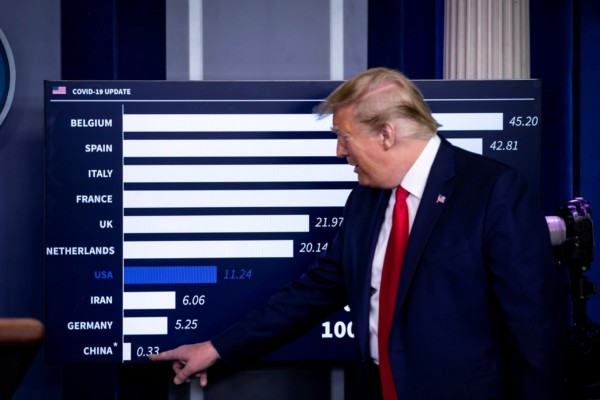
In the United States today, there are more than 132,000 reported deaths, among 2.9 million confirmed COVID-19 cases. Employment has reached staggering levels with 30 million out of their jobs, doubling the total number of jobs lost during the Great Recession.
Meanwhile, the media criticism has been merciless. Republicans and Trump supporters have fired back by pinning the blame on China for the spread of the virus; in an attempt to win the reelection campaign, they have exploited preexisting animosities like trade tensions and rivalry over the South China Sea toward Beijing.
“President Trump is reacting to his leadership failures on the coronavirus in the same way that he always does—by looking for someone else to blame. China fits the bill,” Jeff Colgan, Professor of International Affairs at Brown University, told The Cairo Review.
The shortcomings of the current U.S administration and the criticism it faces places it on par with China’s inability to capitalize on opportunity. The current administration’s isolationist tendencies will have long-lasting consequences in the global fight against the virus, but also on the world’s view of the United States.
The inability of the United States to lead during a time of global crisis has come under glaring scrutiny. “The Trump administration was clearly not prepared for the COVID-19 crisis, says Brown University Senior Fellow and diplomat Brian Atwood.
He says there is clear evidence that the White House ignored guidelines prepared by the previous administration, including ignoring the Obama administration’s efforts to cooperate directly with China.
Atwood believes that had the current administration continued its predecessor’s approach, China may not have been able to cover up the seriousness of the virus in the beginning.
The consequence of this “is costing lives at a time when international cooperation and U.S. leadership is badly needed,” he says.
In the Long Run
In the long run, despite the CCP initially censoring alarm bells by suppressing people like Li Wenliang, China’s efficiency and strict top-down response arguably helped control an outbreak more successfully than many other countries, including developed first world countries in Europe.
Wuhan’s initial complete lockdown drew the criticisms of policymakers and experts as “draconian” and doomed to fail, only to later be seen as the best way to flatten the curve of transmission and infection. Aggressive restrictions and policing took place in China, including, in some cases, officials going door to door for health checks, and residential compounds no longer allowing anyone but the residents inside.
Meanwhile, “you have a world that was ready, and has been ready for the last seventy years or so, to look to America for leadership, in a moment of crisis,” Tsang said. The United States has been noticeably absent in picking up the reigns during this global pandemic, with Trump quietly asking South Korea to send test kits.
In contrast, China’s “mask diplomacy” exists as an attempt to claim global health leadership, albeit a floundering attempt. China claimed to have given two million masks to Italy as well as having provided Spain with medical aid and advisors using the “Health Silk Road”, a metaphorical extension of China’s One Belt One Road Initiative (BRI). On March 21, 110,000 medical masks and 776 protective suits arrived in Spain.
However, the quality of goods sent and exported from China have been reported to be faulty, resulting in fifty thousand testing kits that were sent to Spain being discarded, and other issues were found with defective testing kits and face masks in Turkey, and the Netherlands as well. This inevitably backfired on China’s grasp for global health leadership.
But is it too little too late for China to redeem itself in the eyes of the rest of the world? The unforeseen consequences of an aggressive propaganda campaign created a lot of anger, Tsang told The Cairo Review, and “will ultimately backfire on China.”
Tsang further warned that the world might see more industries and manufacturing of essential goods shift away from China in a move towards economic decoupling, as China has proved when “the ships are down” to be an “unreliable source of manufacturing for essential and medical supplies.”
This would solidify Trump’s strategy toward China, which he began advocating in August 2019 by implementing tariffs, including the 15 percent taxes that were applied to approximately $112 billion Chinese imports.
In late August, Trump tweeted about his “Buy American” campaign:
Our Country has lost, stupidly, Trillions of Dollars with China over many years. They have stolen our Intellectual Property at a rate of Hundreds of Billions of Dollars a year, & they want to continue. I won’t let that happen! We don’t need China and, frankly, would be far….
— Donald J. Trump (@realDonaldTrump) August 23, 2019
This is part of a larger trend of countries “pushing back on China’s economic policies, trade practices, ‘made in China 2025’, BRI investments, etc, and more aggressive moves in the waters in the South,” Saich says.
Several Chinese spokesmen and officials are pushing to leave the blame game behind and to focus on cooperation together in battling COVID-19, sharing resources, medical information and scientific discoveries as they relate to battling the virus.
Both Foreign Ministry Information Department Deputy Minister Geng Shuang and Cui TianKai, Chinese ambassador to the United States, have condemned those spreading conspiracy theories.
On March 18, Geng said: “We hope that those on the U.S. side will respect facts, science, and international consensus, stop attacking and blaming China for nothing, stop making irresponsible remarks, and focus instead on fighting the epidemic at home and promoting international cooperation.”
On April 22, Cui drove home that point when he said “It’s clear if our two countries can cooperate with each other, both will benefit. If we have confrontation, both will lose.”
Experts from all over the world agree that cooperation is of utmost importance. As Boucher said, “both sides should understand, especially from this pandemic, how we can’t separate, we can’t ‘decouple’, and alone each of us ends up worse off”; the solution is to “find a more stable way to cooperate and to handle our economic relations”.
Furthermore, U.S. and Chinese tensions over COVID-19 “could harm cooperation on much more important long term issues, especially climate change,” said Grünberg, as the pandemic is occurring among a variety of other global issues which also call for cooperation.
Life Under Lockdown on a Small Island: a Personal Perspective
As a frequent traveler to China, having been to several cities there in November and to Hong Kong in January, I nervously tracked news of the outbreak of a new viral disease in Wuhan as it emerged.
With the number of cases of COVID-19 infection growing in the United Kingdom (UK), I was surprised by the complacency of the British government as we watched images on television reflecting the explosion of cases—and deaths—in Italy and then Spain. I looked online to see what the government of the Isle of Man, where I live, was doing. As a dependency of the British Crown as opposed to a constituent part of the UK, and having its own (much older) parliament apart from that in Westminster, the Island sets its own policies. The messages from the Isle of Man government were refreshingly concise and clear.
However, on ferry and air journeys to the Island at the end of February, I was surprised by the absence of warnings about COVID-19 and actions to be taken by potentially infected travellers. It seemed to be a no-brainer that a place that could easily limit entry of the virus to the community should be proactive in doing so. Evidently, there were notices posted in the airport and on the ferry, but few people noticed them; I couldn’t understand why there was not a card on every seat on every flight and on every ferry crossing telling travellers what to do and asking them from where their journeys had originated.
It was almost four weeks later that the Isle of Man introduced firm measures to limit the spread of the virus, including closing its borders to all but returning residents (who had then to be quarantined). So, like most other countries, including the UK, the government here was slow off the mark; but, once it had announced the first firm and practical actions, it has proved to be a model for other small countries.
People over seventy years of age were required to completely isolate, except for one exercise outing per day and to buy food once a week; restaurants, pubs, hotels, and nonessential retail businesses had to close. Strict social distancing was introduced for supermarkets and pharmacies, and a forty miles per hour maximum speed limit was imposed on the entire island. This was intended to free up police from responding to accidents so that they could enforce the isolation rules and to ease pressure on medical services that needed to prioritize responding to COVID-19.
As an over-seventy aged person, I took advantage of the daily exercise dispensation to ride my bike for fifteen to twenty miles each day or take a long brisk walk when the wind was too strong for cycling. This was a great boon for someone who spends most of his life on airplanes—I could still be greeted by an “other worldly” atmosphere.
My favorite walk hugs the coast alongside a golf course, with sweeping views across a bay to the island’s airport and hills rising beyond. No golfers, no airplanes apart from an occasional medical flight, and few dog walkers are in sight. On the bike, I travel through gorgeous countryside with hardly any cars sharing the roads with me. In late April and early May, the ubiquitous bright yellow gorse, a trademark of the Isle of Man, offered a beautiful contrast to the green of the new leaves on trees and grass in fields.
The color red is also in evidence across the land, being the primary color of the Island’s Manx flag: three armored gold and silver legs on a red background. The Island’s motto, associated with the three legs, is “Quocunque Jeceris Stabit” (“whithersoever you throw it, it will stand”), and the current profusion of flags being flown in the Isle of Man is a defiant symbol of the population’s determination not to be cowed by the virus.
Sadly, though, some of the flags are flying at half-mast, a reminder that the Island has not escaped unscathed. I ride past a graveyard where I glimpse more red: poppies that symbolize the battlefields of Flanders and Picardy in the First World War, another reminder of the battle we all face with COVID-19. Just two miles away from the graveyard is a nursing home where seventeen of the twenty-three fatalities in the Isle of Man lost their battle against the virus.
The fact that only six deaths have been recorded outside that one nursing home is a measure of how successful the Isle of Man government’s containment measures have been. The testing program here has been exemplary, as rapidly establishing a strong testing capacity on the Island itself has avoided the delays that sending tests to the UK would have created. The total number of people tested currently stands at over four thousand, with 332 confirmed cases and twenty hospital admissions. Hardly any new cases have been recorded in recent weeks, although around thirty people are still awaiting results.
Two significant factors have made us successful in flattening the curve.
The first is the transparency and clarity of messaging from the government. Every day the Chief Minister and other relevant ministers and medical experts conduct a media briefing, complemented by a constantly updated website. On the day that the first death on the Island was announced, the Governor, the Queen’s representative here, joined the Chief Minister with his own message of condolence. Reinforcing the importance of social distancing, the police have arrested violators, imposed large fines, and passed prison sentences of up to six weeks on the worst offenders.
The second key contributor is the strong sense of community that is possible in a place with a population little larger than California’s Napa or Newport Beach. Awareness that breaking the rules could lead to the illness or death of someone you know, or someone your friends know, is a strong incentive for compliance. More positively, younger neighbors who are periodically visiting grocery stores are constantly offering to shop for us. Their help comes in addition to the many farms, butchers, and other food retailers which have quickly developed delivery services.
Recently, the government lifted most restrictions as there have been no new infections or deaths on the Isle of Man for six weeks.
The transport links to the UK remain curtailed, but returning residents are now allowed to quarantine themselves at home rather than in dedicated housing controlled by the government. Retail businesses have been allowed to resume trading, and pubs and restaurants have also reopened. Construction and other outdoor trades have been able to return to work, provided that they observe social distancing while doing so.
Driving anywhere on the island is permitted, and the forty miles per hour speed limit has been raised to sixty, and recreational activities like walking and fishing have also opened up. Outdoor meetings between family members are now possible, but as with all these activities, two meters of separation continue to be recommended, but no longer enforced.
Despite this carefully phased easing of restrictions, it’s still hard to say where we will be three to six months from now; but, it is reassuring that the government has made clear that opening measures will be instantly reversed if there is any sign of a resurgence in infections.
As with everywhere else in the world, the Isle of Man waits anxiously for news of a vaccine.
Tim Cullen MBE is an Associate Fellow of the Saïd Business School at the University of Oxford and a visiting professor at Peking University. He was the founder of the Small Countries Financial Management Centre and is Chairman of the international negotiation teaching and consultancy firm, TCA Ltd. He is the former Chief Spokesman and Director of Information of the World Bank.
This article was written as part of the Addressing Global Crisis Project (AGC), which is run by the University of Central Florida’s Office of Global Perspectives & International Initiatives (GPII). AGC examines how governments, individually and collectively, deal with pandemics, natural disasters, ecological challenges, and climate change. AGC is organized around five primary pillars: (1) delivery of services and infrastructure; (2) water-energy-food security; (2) governance and politics; (4) economic development; and, (5) national security. Through its global network, AGC facilitates expert discussion and features articles, publications and online content.
The views and opinions expressed in this article are those of the author and do not necessarily reflect the official policy or position of The Small Countries Financial Management Centre.