Lebanon: Political Imagination, Accountability, and a New Roadmap for Regional Stability
Independent media, some syndicates, civil society organizations, student movements, reform-minded entrepreneurs, and the diaspora continue to carve out spaces of accountability, even as national institutions flounder

Perched on the fault lines of the Middle East, Lebanon is rarely the main battlefield yet remains central to the region’s wars and peace processes. Its crises, often sparked by external shocks, inevitably reverberate beyond its borders, making the country both a mirror of regional conflict and a testing ground for fragile peace.
Today, Lebanon again stands at such a juncture. The war in Gaza has reshaped regional dynamics, leaving Lebanon hovering between the risks of renewed escalation and the faint promise of political reordering. The election of a president after over two years of vacancy, and the formation of a government with a more reformist profile than its predecessors, has revived a sense that a new political era may be emerging. The mere return of functioning institutions after prolonged paralysis carries symbolic weight, even if their capacity is limited.
Yet, this opening remains constrained. Externally, by the confrontation between Hezbollah and Israel, Iran’s role, and the fatigue of international partners. Internally, by elites who resist economic reform and by a culture of impunity stretching from financial crimes to political assassinations. Without addressing both dimensions, new leadership will remain symbolic rather than transformative.
Lebanon and the Gaza War Contagion
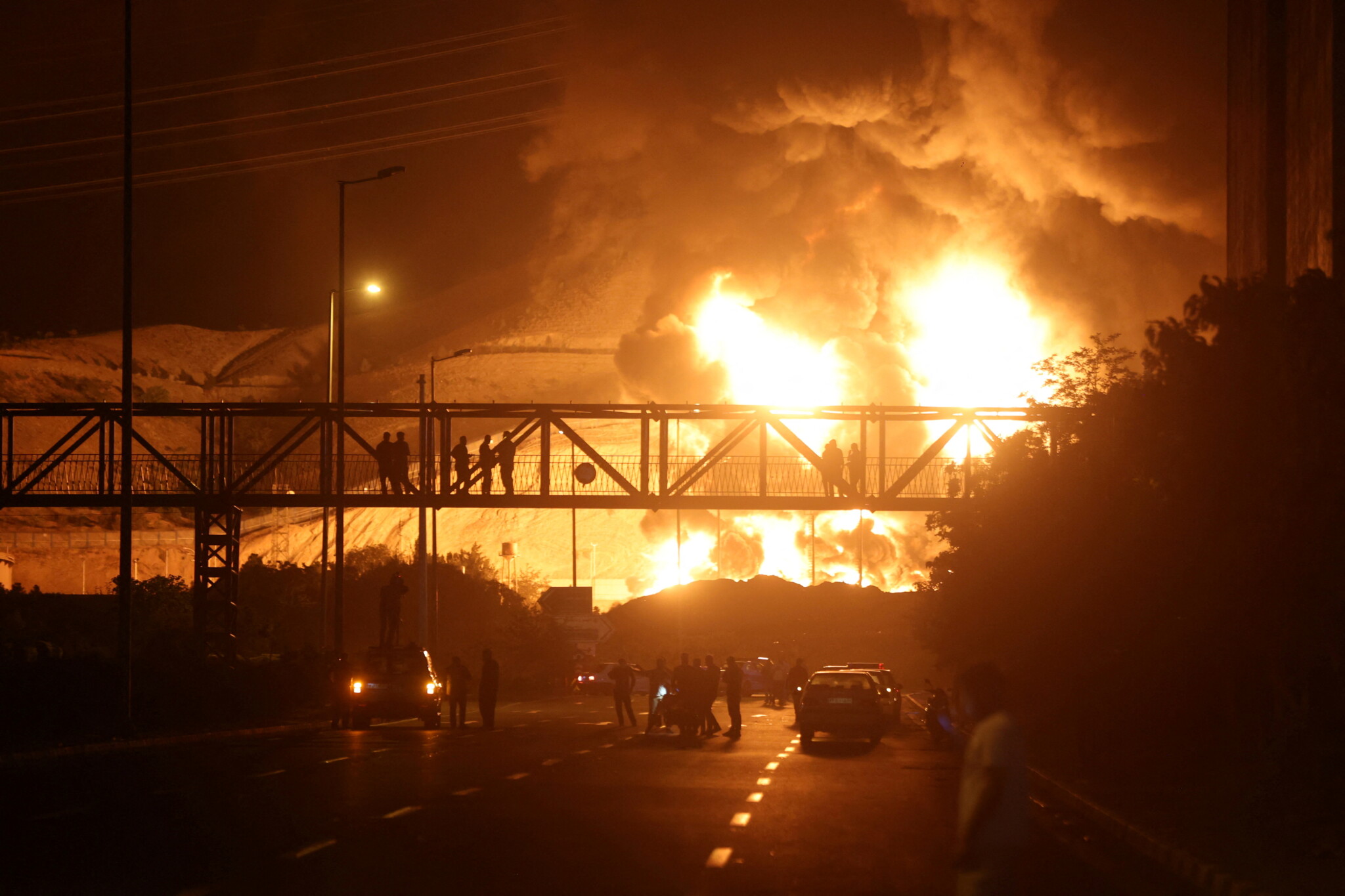
Since October 2023, Lebanon has been drawn into the Gaza war in ways both predictable and unprecedented. Israel’s campaign has extended well beyond the border, reaching deep into Lebanese territory through sustained airstrikes on Hezbollah’s positions, the systematic targeting of senior commanders, and the revelation of extensive military networks that the organization had long claimed were concealed from surveillance.
The events of the past two years have profoundly undermined Hezbollah’s doctrine of “deterrence”. Its long-standing claim—that the group’s arsenal could prevent Israel from attacking Lebanon—has been discredited by Israel’s ability to strike with precision and continuity. Hezbollah has replied with limited rocket and drone attacks that have displaced residents in northern Israel but failed to restore the image of deterrence it once projected.
For civilians in southern Lebanon and beyond, the confrontation has become a grinding war of attrition. Since October 2024, entire communities have lived under the constant threat of Israeli bombardment. The displacement of more than one million Lebanese, coupled with widespread destruction of infrastructure and the collapse of already fragile livelihoods, has deepened the humanitarian crisis.
A turning point came with the cessation-of-hostilities agreement of November 2024, followed by the U.S. plan endorsed by the Lebanese cabinet on August 5 and 7, 2025. For the first time in years, the cabinet’s endorsement of such a plan signaled that the Lebanese state, rather than Hezbollah alone, was formally involved in decisions about war and peace. The framework envisions security guarantees along the border, a phased redeployment of the Lebanese Army, Hezbollah’s disarmament, and renewed international monitoring. If implemented, the plan could either consolidate stability or expose Lebanon to fresh internal tensions, depending on how Hezbollah and its allies respond.
Lebanon’s state and military institutions, however, remain chronically underfunded and constrained by political fragmentation. The Lebanese Armed Forces struggle to maintain operational readiness and autonomy amid competing partisan pressures, while civilian oversight remains weak. Diplomacy, likewise, is divided among rival power centers and burdened by the absence of a coherent national strategy. UNIFIL, the UN peacekeeping force deployed since 1978, functions primarily as a stabilizing buffer aimed at preventing escalation rather than as an instrument for lasting peace. These limitations leave Lebanon on the threshold of consequential scenarios it does not fully control—a fragile equilibrium shaped as much by external actors as by the country’s own unresolved contradictions.
A New Political Era
Against this backdrop, the election of a president and the formation of a new government mark more than a procedural milestone. After years of institutional vacuum and caretaker arrangements, the restoration of functioning authorities represents a symbolic break with paralysis.
President Joseph Aoun, who commanded the Lebanese Armed Forces from March 2017 to his election in January 2025, is less entangled in the sectarian bargaining that constrained several predecessors. His public signals have stressed the primacy of institutions and procedural regularity, even within severe resource limits. Prime Minister Nawaf Salam’s cabinet, while not revolutionary, brings profiles associated with competence and pragmatism rather than overt clientelism.
Lebanon has not overcome its entrenched dysfunction, but the new political era still matters. Internationally, a functioning presidency and government restore diplomatic credibility by giving partners an interlocutor after years of vacuum. Domestically, they rekindle cautious faith that state institutions can still act—however imperfectly—in the public interest.
Still, the promise of this new era cannot be measured in symbols alone. Its durability depends on whether the leadership is willing and able to confront the structural patterns of impunity that have long undermined the Lebanese state.
The Weight of Impunity: From Banking Elites to Political Assassinations
The most visible expression of Lebanon’s crisis of accountability lies in the economic collapse that began in 2019. The destruction of the national currency, evaporation of savings, and erosion of the middle class produced one of the most severe financial implosions in modern history. The burden fell almost entirely on ordinary citizens, while political and financial elites shielded themselves from responsibility by transferring funds abroad before capital controls were imposed, obstructing any audit of the banking sector, and ensuring that the costs of the collapse were borne through inflation rather than through losses to their own wealth.
Efforts to secure an agreement with the International Monetary Fund have collapsed. Not for lack of solutions, but because Lebanon’s powerful banking elite rejected any reform that would force them to absorb losses. Proposals for capital controls, debt restructuring, and equitable loss-sharing were systematically blocked. The same actors who profited from Lebanon’s financial model became the gatekeepers preventing its repair.
This resistance is not a clash of economic viewpoints; it is a systemic failure of accountability that extends far beyond finance. The obstruction of reform follows the same logic that has long undermined justice in cases of political violence. Investigations into the August 2020 Beirut port explosion were repeatedly suspended through the replacement of judges and the filing of politically motivated lawsuits, while the assassinations of political figures and intellectuals, over the past two decades, remain unresolved. For years, such crimes lay beyond judicial reach, as Hezbollah and its allies were able to exert influence over the courts and discourage those pursuing accountability.
Today, a fragile opening has emerged. The weakening of Hezbollah after its setback in the September-November 2024 war has reduced its ability to dictate political outcomes. The group, widely suspected of involvement in several assassinations and in the port explosion, now faces diminished capacity to obstruct judicial and institutional processes. The election of Aoun, the cabinet’s policy statement, and its endorsement of the U.S. plan would have been unthinkable under Hezbollah’s former dominance. In a further sign of this shift, the Minister of Justice’s October 2025 decision to appoint judges to reopen and investigate a long-dormant series of political assassination cases marked the first official move toward accountability in years. For the first time, this concept has moved from aspiration to faint possibility.
Accountability as the Missing Link
For Lebanon’s new leadership, this is the crux of the challenge. No amount of external balancing or diplomatic engagement will matter if internal impunity remains unbroken. True sovereignty requires not only secure borders and a state monopoly over weapons, but institutions capable of holding domestic actors accountable.
The Taif Agreement of 1989 ended Lebanon’s civil war, but it embedded sectarian power-sharing without creating mechanisms of responsibility. Corruption flourished, militias morphed into political actors, and impunity became systemic. The state became sovereign in name, but hollow in practice.
Today, the danger is in repeating the same pattern. A focus on external sovereignty—calibrating Hezbollah’s role, negotiating with donors, restoring foreign aid—is fundamental and unavoidable. However, if this leads to leaving financial and political impunity intact, it will reproduce the same fragile order. Conversely, even modest steps toward accountability could restore trust between citizens and institutions. Whether in the judiciary, financial regulation, or the investigation of political crimes, visible consequences for those who wield power with impunity would mark a break from decades of erosion.
Accountability is not a cure-all, however. External risks remain high, and regional dynamics are volatile. But without accountability, every reform is destined to collapse under the weight of corruption and mistrust.
Lebanon as a Laboratory of Futures
Lebanon is thus more than a victim of its geography; it has long functioned as a laboratory for political and civic experimentation in the Middle East. The collapse of Assad’s regime in Syria, the recalibration of Gulf-Iran relations, and the renewed U.S. engagement all frame Lebanon’s options and expose it to overlapping regional realignments. Yet, what makes Lebanon distinctive is the persistence of social and civic forces that refuse to vanish even when institutions collapse.
Independent media, some syndicates, civil society organizations, student movements, reform-minded entrepreneurs, and the diaspora continue to carve out spaces of accountability, even as national institutions flounder. These resources are fragile, but they suggest that political imagination has not been extinguished. If the new presidency, government, and emerging political forces can link state institutions with these civic energies, they may begin to build a political order grounded in responsibility and competence.
The stakes go beyond Lebanon. In a region where authoritarian regimes present themselves as guarantors of stability while crushing dissent, Lebanon offers a different question: can accountability, however fragile, be the foundation of peace and nation-building?
Two Futures
Lebanon today is suspended between two futures. One is escalation: a deeper war with Israel, continued financial collapse, and the entrenchment of impunity. The other is reordering: fragile, incomplete, but rooted in the possibility that a new political era can begin to challenge patterns of corruption and violence that have long gone unpunished.
Lebanon cannot fully detach its future from the broader postwar order that will emerge around Gaza. Israel’s security posture, Iran’s recalibrations, and the shifting legitimacy of armed movements across the region will influence Lebanon’s internal balance. Yet, these dynamics only reinforce the urgency for Lebanon to consolidate a state capable of surviving regional turbulence rather than absorbing it.
The new political leadership in the country provides a symbolic opening, but symbolism will not suffice. This leadership will be judged by whether it can extend state sovereignty across the territory, confront the entrenched banking sector, allow judicial processes to proceed, and create consequences for political crimes.
Whether this opening becomes the seed of renewal or another missed opportunity will depend on the courage of Lebanon’s own institutions to finally confront the culture of impunity.