Three Years Later
Building a future that gives the Palestinians their right to self-determination is difficult, but absolutely necessary.
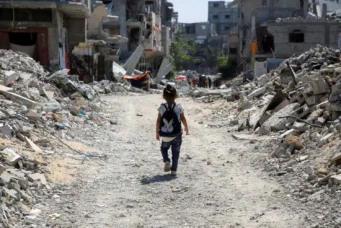
The Israeli response to the brutal Hamas attack on October 7, 2023 was unique in its own savagery, its length, and its impact on both the region and the world. While Gaza has been under siege since 2006, and Palestine under occupation since at least 1948, the level of violence and destruction seen from 2023 until now has been staggering.
After three years of death livestreamed from the Strip, experts, policymakers, and activists continue to have a difficult job convincing people across the world to pay attention and to do more to help end the conflict between the Israelis and the Palestinians.
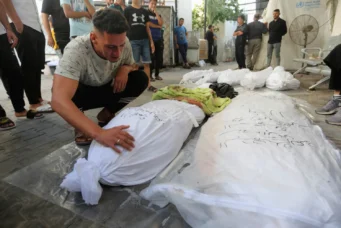
For some, that means collecting data, tallying the death toll, cataloging war crimes, and compiling the evidence. For others, that means translating the genocide into a way an individual halfway across the world can understand: putting out articles, podcasts, videos, or photos, trying to bring the emotional reality of a people being destroyed to an international audience that has become numb to their death.
Over the past three years, our contributors at The Cairo Review have sought to both warn the world of the implications of Israel’s war on Gaza and to chart a course through it, as difficult and impossible as it may seem.
In our Winter 2024 issue, titled simply “Gaza”, Palestinian researcher Nadia Naser-Najjab reminded us that Israel’s intention to depopulate the Gaza Strip is not a new phenomenon. “One must not consider Israel’s current actions as a particularly egregious ‘excess’ or an abrupt departure from established Zionist practice,” she writes. “[T]he current practices of population ‘transfer’ and depopulation [are] synonymous with pre-existing Zionist theory and state practice.” Her warning continues to ring true, as Israeli Defense Minister Israel Katz said only last month that there was “no real solution for Gaza in the end without this migration”.
Israel’s attacks on Gaza have been systematically destructive, targeting both critical infrastructure and critical workers, including journalists. Jodie Ginsberg, CEO of the Committee to Protect Journalists, argues that the practice of targeting journalists was established well before October 7. “Israel’s method of avoiding accountability is not a new development. The pattern is consistent. First, Israeli forces target and kill a journalist. Next, they immediately deny any involvement. Eventually, they admit responsibility but claim the killed journalists were engaged in terrorism,” she writes. Throughout the war, hundreds of journalists have been killed, in what Ginsberg says “appears to be part of a broader pattern in which Israel deliberately attempts to silence the media.”
Journalist and former Palestinian Authority spokesperson Nour Odeh asks us not to forget the rest of the Occupied Palestinian Territories, as well. The devastation in Gaza, she argues, has provided cover for Israel to speed up its illegal takeover of the West Bank. “A closer look at the terror inflicted on communities in the West Bank further demonstrates its deliberate and systematic nature, designed to ethnically cleanse entire communities and clear more Palestinian land for Israeli grab,” she writes. At the time of writing in 2024, she called for severe economic and political sanctions to restrain Israel. In September 2026, 11 European countries and Canada announced a boycott of goods produced in Israeli settlements in the West Bank.
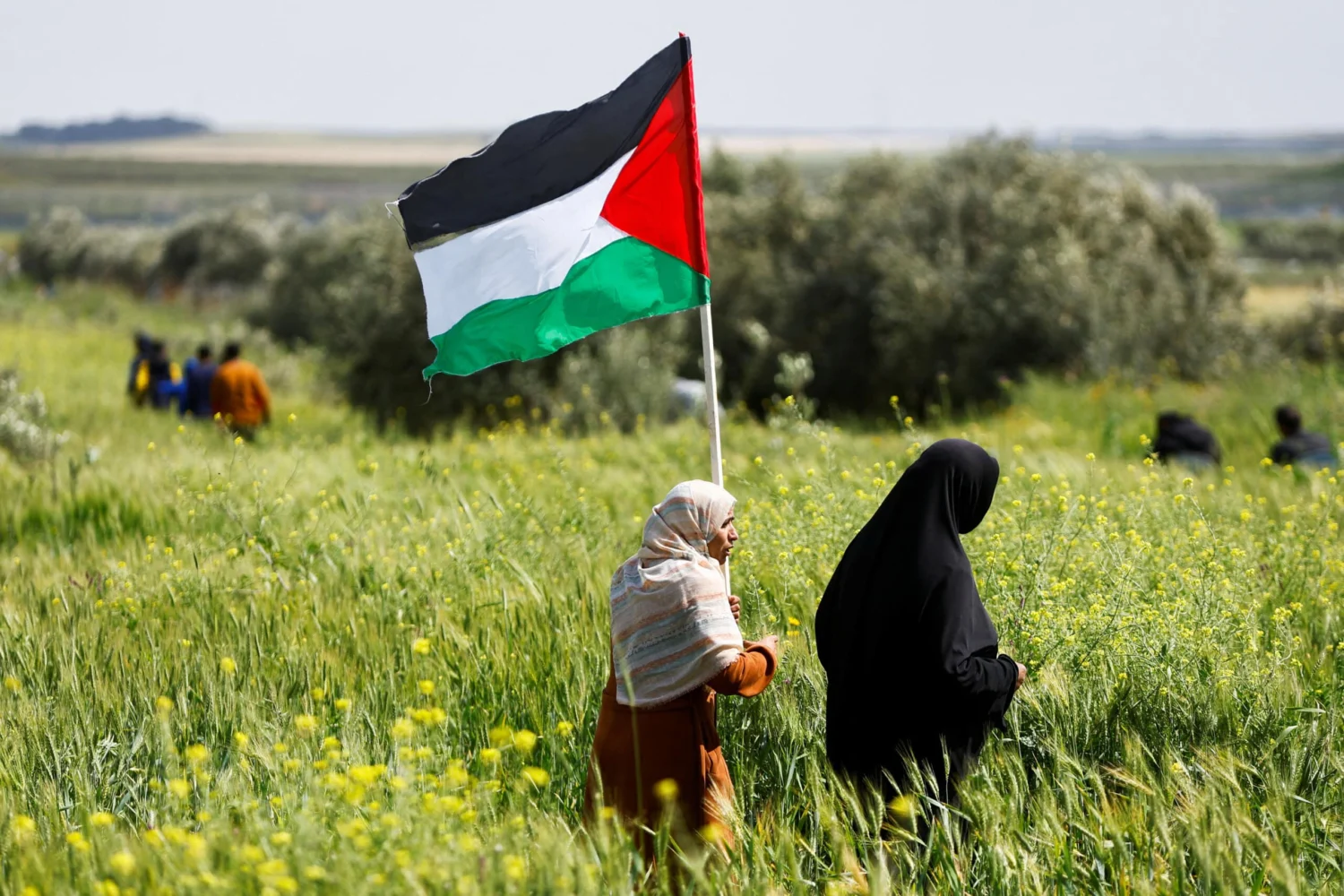
Two years into the genocide, a growing list of European governments began recognizing Palestine as a state. Ramzy Baroud, journalist, author, and the editor of The Palestine Chronicle, writes cautions against writing these recognitions off as purely symbolic. “Gaza is not holding its collective breath for British and French recognition. A people enduring famine and genocide will not shed tears of joy over these symbolic gestures. However, one must acknowledge, even hesitantly, that if these recognitions are a victory, it is a victory for the Palestinian people themselves,” he argues.
Yet, recognition of statehood has not given the Palestinians a right to sovereignty in practice, even as many tout the “two-state solution” as a potential framework for peace. Sean Lee, assistant professor of political science at The American University in Cairo, argues that existing versions of the two-state solution still subjugate the hypothetical Palestinian state to Israeli military and political will. “A lack of Palestinian sovereignty… would require Palestinians to be at the mercy of Israel’s military might,” he writes. “This is the same military that has killed tens of thousands of Palestinians in Gaza…that defends settlers carrying out pogroms in the West Bank, whose soldiers film themselves mocking killed or displaced Palestinian women by dressing in their underwear, and force Palestinian civilians to serve as human shields in military operations.”
And yet even with state recognition, the genocide continues. The international apathy toward Gaza, writes Palestinian social and political scientist Abdalhadi Alijla, will create ripple effects extending far beyond the Strip. “The outcome of this genocide remains uncertain, but one thing is clear: the rules-based order, originally conceived as a mechanism for conflict resolution, global security, and the protection of human rights, is not enough and requires reinforcement,” he argues. His prediction has proven true, as the U.S.-Israel war with Iran is widely regarded as a blatant violation of international law that has had devastating consequences for the region as a whole.
Professor and Chair of Politics at the University of Hull Raphael Cohen-Almagor argues that a solution is possible, but requires unprecedented cooperation between both the Israelis and the Palestinians. “Israel has a responsibility, both moral and strategic, to ensure Gazans do not see militancy as their only future,” he writes. “We should not fall into the fallacy of thinking that the future is bound to be similar to the present situation, and whatever situation we are in is here to stay. Peace will not come quickly, but its potential rewards—security, prosperity, and justice for both peoples—justify the immense effort required.”
Three years in, the path forward seems no more clear than it did when the genocide began. The war has spread, and now international attention seems more focused on debating the ins and outs of American policy in the war with Iran than prioritizing the needs of the Palestinians who are still suffering in Gaza and across the West Bank.