Sudan’s Water Crisis Worsened by War, But There is Hope
As Sudan continues to face numerous obstacles, including a lack of multilateral governance for hydrological stability, water remains a potential entry point for cooperation domestically, regionally, and internationally.
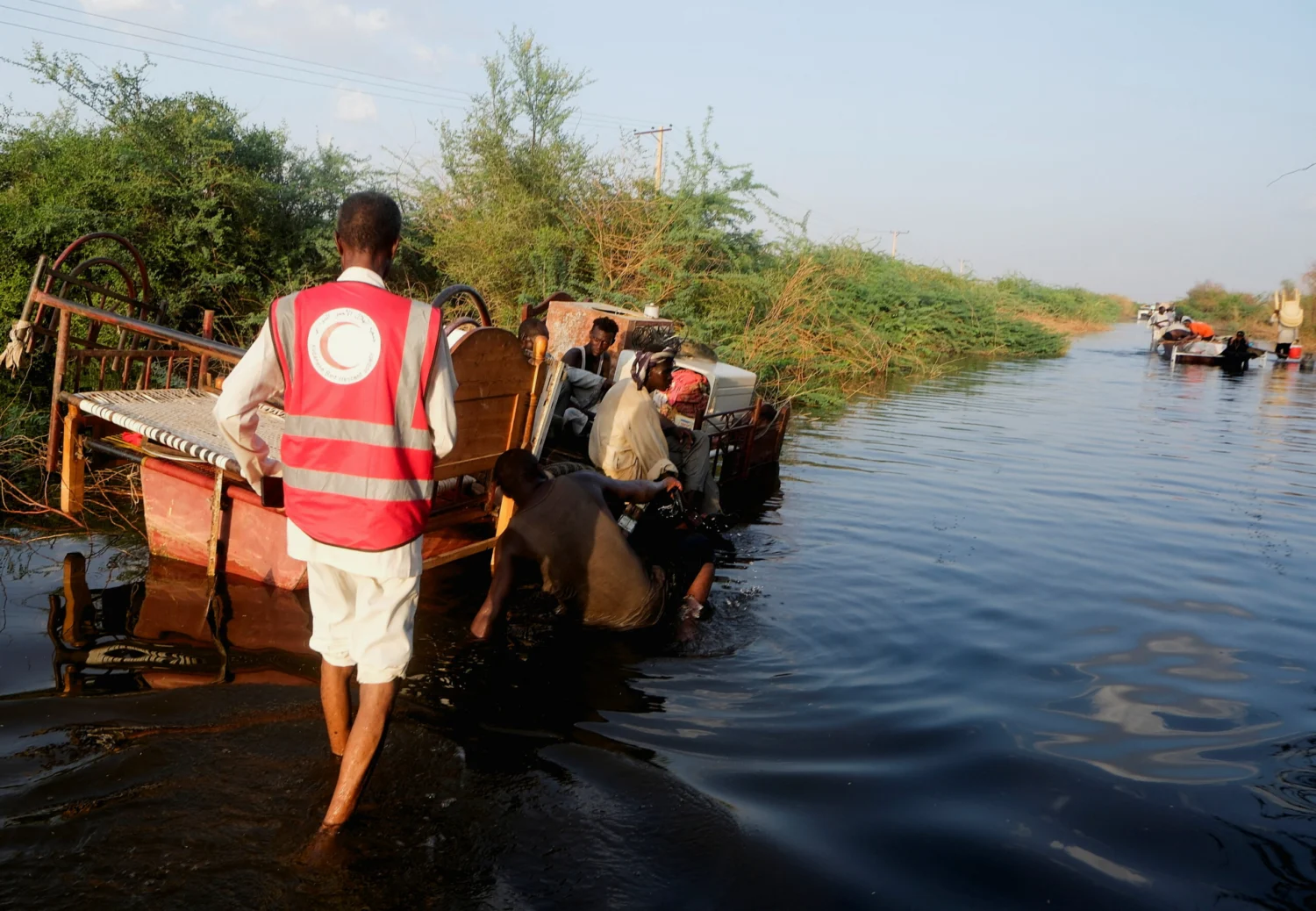
Water has always been an integral component of governance in Sudan, given the country’s location along the Nile and its role as both a downstream and midstream state in one of the world’s most politically sensitive river basins. Its importance has grown significantly since the outbreak of a power struggle and eventual civil war in April 2023 when water management became inseparable from violent conflict in the country. The war fractured state institutions responsible for irrigation, flood control, and dam safety, while displacement and infrastructure destruction have severely constrained adaptive capacities.
At the same time, climate change has intensified hydrological volatility across Sudan, increasing both flooding and drought risks. These pressures intersect with regional disputes over Ethiopia’s Grand Ethiopian Renaissance Dam (GERD), declining global commitment to multilateral environmental and water governance, and expanding foreign land acquisitions in Sudan’s most water-rich regions. Together, these factors have transformed water from a strategic development asset into a major driver of vulnerability and instability.
This article examines water management in Sudan under conflict through four interlinked dimensions: a) climate change impacts; b) impacts of the launch of GERD and flooding risks for Sudan; c) the decline of multilateralism and its consequences for regional environmental agreements; and d) mediation and conflict resolution as pathways forward.
Climate Change as a Conflict Multiplier
Sudan is among the most climate-vulnerable countries in Africa. Recent assessments show that mean annual temperatures have increased by approximately 0.3°C per decade since the 1960s, with accelerating warming observed after 2000. By the early 2020s, Sudan was already experiencing more frequent heat extremes, longer dry spells, and heightened rainfall variability, conditions that climate models project to intensify by 2050 under all emissions scenarios.
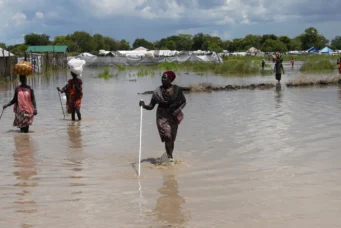
Against the backdrop of war between 2024 and 2025, Sudan recorded some of the most destructive flood seasons in decades. According to the UN Office for the Coordination of Humanitarian Affairs (OCHA), heavy rains in 2024 affected over 490,000 people across 15 states, destroyed more than 35,000 homes, and triggered widespread outbreaks of cholera linked to stagnant floodwaters. Satellite imagery from the UN Satellite Center (UNOSAT) in January 2025 detected that flooding had affected roughly 145 km² in Khartoum and surrounding areas, exposing approximately 63,000 people to flood risk.
Seasonal forecasts in 2025 issued by Sudan’s Meteorological Authority indicated a high probability of above-average rainfall in central and northern states, including Blue Nile region, Kassala, Gedaref, and parts of Darfur, raising significant concerns over flood management capacity during wartime conditions. Empirical modeling of Nile Basin flows suggests that under high emissions scenarios, extreme flood events that historically occurred once per century may happen every decade by the late twenty-first century. The forecasts for 2026 indicate much lower rainfall in Sudan by up to 60% in comparison to 2025, particularly during the rainy season of June-September. However, the major problem lies not only in the seasonal flooding from rainfall that may occur on the Nile, but by intentional discharging of dams along the Nile that can create human-induced flooding events. These exacerbate the difficulties of dealing with floods caused by climate change.
These climatic stresses interact directly with conflict dynamics. Armed violence has disrupted irrigation maintenance, damaged pumping stations, and halted hydrological monitoring across large parts of the country, including Darfur, Blue Nile, and South Kordofan. Rural displacement has increased pressure on fragile water points around urban and peri-urban areas, intensifying local competition. Pastoral and agro-pastoral communities in Darfur, Blue Nile, and Kordofan face simultaneous exposure to drought, conflict, and land dispossession, eroding adaptive capacity and increasing the risk of local clashes.
Moreover, climate impacts intersect with foreign-controlled agricultural schemes that extract large volumes of water for export-oriented crops. These schemes are largely operated by investors from Gulf Cooperation Council (GCC) countries, particularly Saudi Arabia, the United Arab Emirates, Qatar, and Kuwait, as well as other Middle Eastern partners such as Egypt and Jordan, which have acquired extensive land concessions in Sudan. Over 760,000 hectares of Sudanese land have been acquired by foreign investors, primarily for irrigated export agriculture. These projects intensify pressure on Nile water resources while contributing to extractive enclaves that dissociate local communities from land and water access.
These investments are primarily export-oriented because many of these countries face severe domestic water scarcity and limited arable land. As a result, they outsource food production to Sudan to secure stable supply chains for their own populations and reduce reliance on volatile global markets. Under such arrangements, agricultural production is geared toward external food security strategies rather than local consumption, with crops, fodder, and livestock often destined for export markets.
Spatially, these schemes are not evenly distributed across Sudan but are concentrated in specific high-potential zones, particularly along the Nile and in irrigated regions such as Khartoum State, River Nile, Northern State, and parts of central Sudan (e.g., Gezira and Kordofan), where access to water and infrastructure supports large-scale farming. In these areas, foreign-controlled projects frequently coexist with or displace local smallholder systems. Under rising climate variability, such arrangements often externalize environmental risks, especially water depletion and land degradation, while offering limited benefits to local water users, ultimately undermining climate resilience and contributing to localized social tensions.
GERD: Infrastructure Safety and Flooding Risks
Sudan’s position (currently being led by the Sudanese Armed Forces (SAF)), regarding GERD was initially deeply ambivalent. While Sudan has recognized potential benefits from regulated river flows, reduced sedimentation, and the possibility of flood mitigation, these benefits are conditional on coordination, transparency, and joint management by Ethiopia with downstream states of Sudan and Egypt. In the absence of binding operational rules, GERD has introduced new layers of risk rather than stability. There has been no agreement with Ethiopia and its downstream neighbors on the management and operation of the dam.
Sudan’s most immediate concern relates to the safety of downstream hydraulic infrastructure, particularly the Roseires Dam on the Blue Nile. Scientific studies indicate that GERD’s large reservoir will trap the vast majority of sediment flowing downstream, which may extend the operational lifespan of Sudanese dams. However, this same storage capacity enables Ethiopia to control the timing and volume of releases at a scale unprecedented in the basin, creating downstream vulnerability in the absence of real time data sharing from Ethiopia to downstream states.
Since the initial filling stages, and especially after GERD began partial operation, Sudan has experienced repeated flood events that Sudanese officials and hydrological experts have linked to uncoordinated upstream releases. In October 2025, after the launching event of GERD by Ethiopia, water was discharged from the GERD without prior notification to Sudanese or Egyptian authorities downstream. These unannounced releases contributed to sudden surges in the Blue Nile river in Sudan (as well as Egypt), overwhelming embankments, damaging irrigation canals, and inundating large areas of agricultural land and settlements in Blue Nile, Sennar, and Gezira states. Egyptian and Sudanese experts warned that high discharge rates from GERD had overwhelmed Roseires and downstream barrages, endangering millions and putting them at risk. These continued unilateral releases by Ethiopia could generate sudden surges that Sudan’s weakened flood control systems cannot manage.
The absence of advance notice has severely limited Sudan’s ability to operate its own dams and barrages safely. Roseires in particular, located approximately 100 kilometers from GERD, depends on careful, timely regulation of incoming flows. Without early warning, dam operators could not adjust reservoir levels or downstream releases, increasing the risk of infrastructure stress and uncontrolled flooding. For a country already coping with war induced institutional collapse, these hydrological shocks were particularly destabilizing, displacing communities, destroying crops, and exacerbating food insecurity. Some initiatives have shown the water engineers of the Roseires dam in Sudan working on their own time through Whatsapp groups and citizen science to try to maintain the dams during wartime to prevent dam failure and compounded effects to the population.
Sudan occupies the most precarious position in the GERD dispute. Unlike Egypt, which frames the dam as an existential threat, Sudan has expressed mixed reactions, recognizing potential benefits while raising serious safety and governance concerns. Regulated Blue Nile flows could theoretically reduce extreme floods and improve irrigation planning, especially for large schemes such as Gezira. These benefits, however, depend entirely on coordination with upstream Ethiopia.
Politically, the experiences of 2025 however have hardened Sudan’s stance towards GERD. Khartoum increasingly has aligned with Egypt in demanding a binding legal agreement on GERD’s filling and operation and has called for joint technical management and data sharing mechanisms. Yet Sudan’s fragmented governance due to the ongoing war has undermined its ability to negotiate effectively, leaving it vulnerable to upstream decisions taken without enforceable constraints.
Faltering Multilateral Agreements
Sudan’s water insecurity unfolds within a broader crisis of multilateral environmental governance. International norms governing transboundary rivers emphasize equitable use, prevention of significant harm, and cooperative management, as codified in the 1997 UN Watercourses Convention. Yet in practice, Nile Basin governance remains fragmented and weakly institutionalized
While international water law emphasizes equitable use and prevention of significant harm, these principles lack enforcement in the Nile Basin. The Nile Basin Initiative, a transboundary river basin initiative established in 1999 between all Nile River Basin countries, remains consultative rather than regulatory, and attempts to institutionalize binding frameworks such as the Cooperative Framework Agreement remain politically contested. The GERD dispute exemplifies the limitations of local multilateralism, as repeated mediation efforts by the African Union and international actors failed to produce binding outcomes.
Within the Arab world, GERD has exposed fractures in regional solidarity. While Egypt and Sudan have sought collective diplomatic backing, Gulf states have adopted divergent positions aligned with strategic investments rather than basin-wide stability. Countries such as the United Arab Emirates and Qatar maintain significant economic interests in Ethiopia, including energy and agricultural investments tied indirectly to GERD power generation. At the same time, massive Gulf funded land acquisitions in Sudan have restructured Nile hydropolitics through market power rather than treaties.
Water Offers Opportunity, not just Liability
The problems associated with water management under conditions of conflict in Sudan illustrate how climate change, geopolitics, and institutional fragility can interact to produce cascading risks. Intensifying floods and droughts, driven by rising temperatures and rainfall variability, have overwhelmed already weakened water governance systems. The launch and operation of the GERD has further exposed Sudan’s vulnerability as a midstream state, particularly through uncoordinated and unannounced water discharges that exacerbate flooding, damage infrastructure, and deepen humanitarian crises. These impacts have unfolded in a regional context marked by declining multilateralism, where the absence of binding agreements and enforceable norms has allowed hydropolitics to be shaped by unilateral action, market power, and foreign investment rather than collective governance.
Despite deep tensions, water remains a potential entry point for cooperation both domestically, regionally, and internationally. Domestically, rehabilitating water infrastructure and ensuring equitable access are essential to rebuilding Sudan’s water sector, which will be essential for post-conflict recovery, food security, and social stability. Additionally, community-based water governance, protection of customary water rights, and inclusion of displaced populations become critical to reducing conflict drivers.
Regionally, Sudan could serve as a bridging actor between Ethiopia and Egypt once internal stability improves. This would translate into technical cooperation on dam operations, data exchange, climate adaptation, sediment management, and establishing early warning systems on flood forecasting to reduce flood risk and rebuild trust even in the absence of a political settlement and a comprehensive treaty.
Ultimately, durable solutions will require re-embedding water governance within broader peace processes, and revitalizing regional institutions and multilateral engagement, which would allow Sudan to move beyond crisis management toward long term resilience. Gulf states could play a constructive role by conditioning agricultural and energy investments on local water rights, ensuring that climate adaptation, foreign investment, and infrastructure development are aligned with principles of equity, transparency, and environmental sustainability.
In a basin increasingly strained by climate change and geopolitical competition, Sudan’s experience underscores the urgent need to treat shared waters not as instruments of power, but as foundations for collective security and resilience.