On World Refugee Day, the World Must Help Correct the Historic Injustice Against Palestinian Refugees
Since 1948, the international community has offered little more than hand-wringing and humanitarian aid when it comes to the plight of Palestinian refugees. The global community must recognize that return is not a threat to peace, but a precondition for it

Each year on June 20, the world commemorates World Refugee Day with declarations about dignity, protection, and durable solutions for displaced people. Yet, amid the well-meaning campaigns and humanitarian appeals, one of the most protracted and politically silenced refugee crises—the displacement of the Palestinian people—continues to be sidelined.
It has now been over 76 years since the Nakba—the 1948 catastrophe in which more than 750,000 Palestinians were forcibly expelled or fled from their homes during the creation of the State of Israel. Their villages were razed, their properties confiscated, and their right to return denied. Today, more than 5.9 million registered Palestinian refugees live in exile, not only across the Middle East—in Jordan, Lebanon, Syria, the West Bank, and Gaza—but also in growing diasporas in Europe, North America, Latin America, and beyond. An estimated two million remain stateless, lacking even the most basic legal protections in the countries where they reside. Whether trapped in overcrowded camps or scattered across continents, the exile is not only physical—it is political, generational, and unresolved.
Yet, the Nakba was not merely an episode of wartime displacement. It was the beginning of a systemic effort to erase a people’s presence, history, and future from their land. Over 400 Palestinian villages were depopulated and destroyed, their names removed from maps, their stones reused in Israeli construction. The erasure was both physical and symbolic—an attempt to extinguish not only Palestinian claims but Palestinian identity itself. And while the international community recognized the State of Israel within months, the refugees who had been expelled received no pathway to justice, no reparations, and no accountability for the crimes that led to their exile.
The result has been not only political impunity but the normalization of exclusion. Successive Israeli governments have built policies on the foundational premise that Palestinian refugees will never return. This has shaped every facet of Israel’s laws and institutions, from the 1950 Absentee Property Law—which legally confiscated refugee lands—to the denial of family reunification for Palestinians under occupation. Meanwhile, the refugees themselves have been treated as an inconvenient truth—marginalized in peace talks, ignored in media narratives, and rendered invisible by diplomatic euphemisms.
Palestinians are the only refugee population in the world whose status is passed from one generation to the next—a reflection not of their exceptionality, but of the international system’s failure to uphold their rights. For over seven decades, they have remained in limbo, trapped between empty rhetoric and political expedience. On World Refugee Day, a day meant to affirm universal principles, the world must confront this enduring injustice — and take concrete steps to help Palestinians reclaim what is rightfully theirs: their right of return.
This right is not symbolic, nor negotiable. It is enshrined in international law, affirmed by UN General Assembly Resolution 194 (1948), the Universal Declaration of Human Rights (Article 13/2), the International Covenant on Civil and Political Rights (Article 12/4), and the foundational principles of refugee law. The right to return home after forced displacement is a core entitlement for all refugees—not an exception for Palestinians, but an obligation long deferred.
And yet, despite these obstacles, the Palestinian refugee identity endures. Across generations, refugees have preserved the keys to their homes, the deeds to their land, and the oral histories of their displacement. In exile, they have built schools, organized unions, and cultivated a culture of resistance that refuses to forget. Memory, in this context, is not nostalgia—it is a form of survival. The commitment to return is not a fantasy; it is a political demand rooted in international norms and in the lived experience of injustice. The global community must recognize that return is not a threat to peace, but its precondition.
The contradiction is glaring. Ukrainian refugees are rightly told that return must be part of the solution. Yet when it comes to Palestinians, return is cast as “unrealistic,” “dangerous,” or “an obstacle to peace.” This is not a legal argument—it is a political excuse. It exposes the double standards that continue to undermine the global refugee regime and deny Palestinians their full humanity.
This year, the urgency of action is impossible to ignore. Israel’s war on Gaza has internally displaced more than 1.9 million Palestinians—nearly 85% of the Strip’s population, according to the UN Office for the Coordination of Humanitarian Affairs (OCHA). Many of those forced to flee are already refugees from 1948, now uprooted again in what many fear could amount to a second Nakba.
But even before October 2023, Palestinian refugees in the Gaza Strip were already living under a suffocating blockade imposed by Israel. For more than 17 years, this blockade has severely restricted the movement of people and goods, crippled the economy, and undermined access to essential services including electricity, clean water, and medical care. International observers have long described Gaza as an “open-air prison,” where over two-thirds of the population are refugees already confined to overcrowded camps. This prolonged siege turned displacement into captivity, and exile into a humanitarian catastrophe—long before the current war began.
With each new displacement, Palestinian refugees become even more vulnerable—not only because they are repeatedly uprooted, but because the international and regional systems meant to protect them continue to fail. Families already dispossessed in 1948 were displaced again in 1967, and now, generations later, they are being displaced once more. This cyclical trauma deepens their precarity, rendering them the most at-risk refugee population in the region. Each layer of exile strips away another layer of rights, protections, and hope.
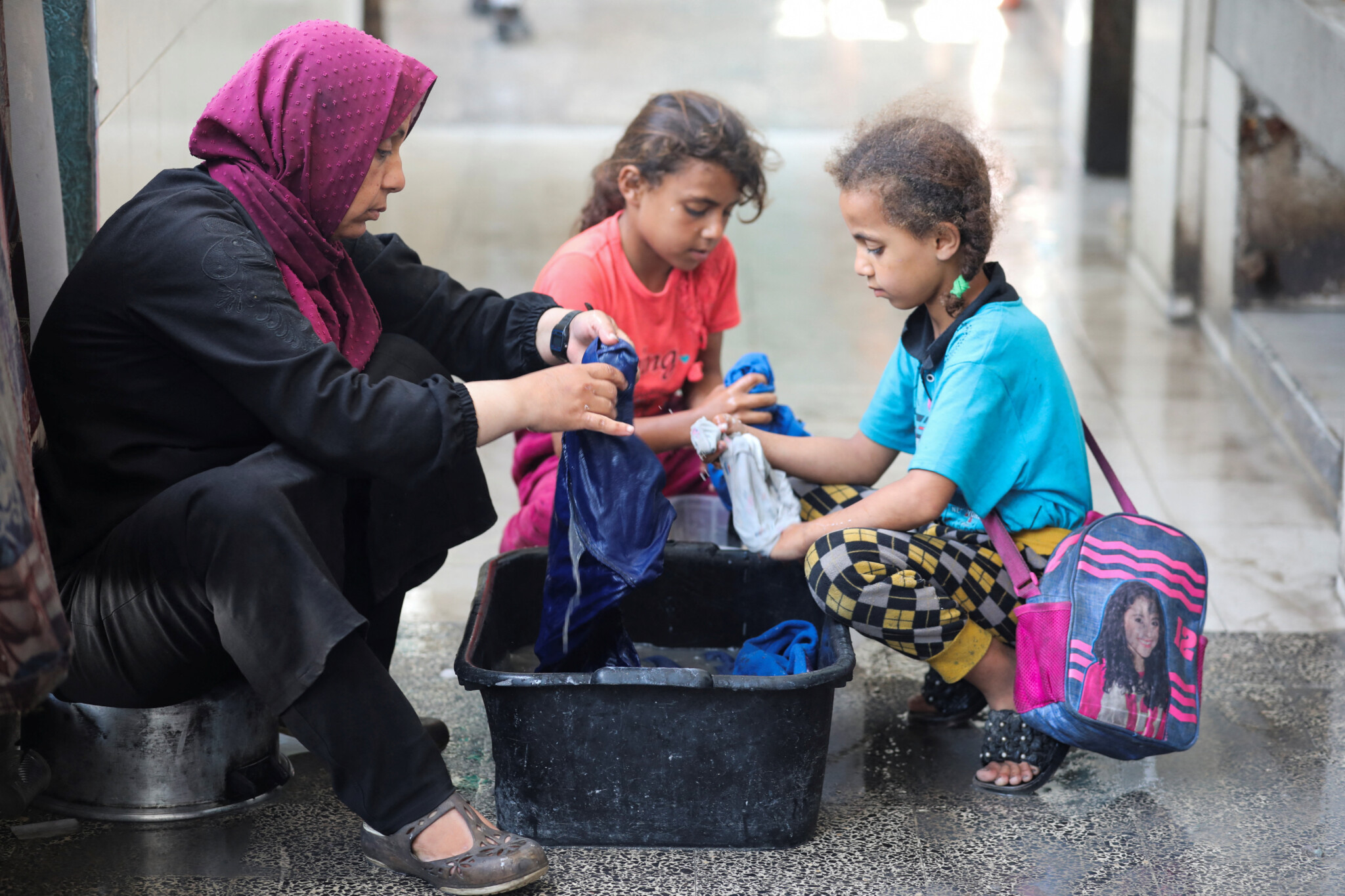
Meanwhile, conditions for Palestinian refugees outside Gaza and the West Bank remain dire. In Lebanon, they are barred from dozens of professions and denied property rights. In Jordan, many individuals who fled Gaza following the June 1967 hostilities continue to face restrictions on their civil and socio-economic rights. In Syria, displacement from the war has compounded their vulnerability. Across the region, refugee camps — originally built as temporary shelters — have become scenes of intergenerational dispossession.
Despite hosting Palestinian refugees for decades, policymakers in neighboring Arab countries have often adopted the most restrictive policies toward them. These restrictions are not merely bureaucratic; they are rooted in fears that granting rights might undermine the claim to return. While these restrictions are often framed as preserving the right of return, in practice they have deepened their exclusion. The result is a legal and political vacuum in which Palestinians are denied both the right to return and the right to belong.
And still, the international community offers little more than hand-wringing and humanitarian aid. UNRWA, the agency tasked with supporting Palestinian refugees, suffers from chronic underfunding, political hostility, and repeated attacks on its infrastructure and staff. Its very existence is treated as controversial, not because it fails to serve refugees, but because it reminds the world of a promise it has failed to keep.
Some argue that their return is impractical—that their homes are gone, the landscape changed, the decades too many. But rights are not nullified by the passage of time. Feasibility does not excuse failure. Justice is not measured in convenience. The right of return is not merely about repatriation; it is about recognition, restitution, and the restoration of dignity.
A Failure of the International System
The silencing of the Palestinian right of return is not merely a failure of will—it reflects the broader unwillingness of the international system to confront settler colonialism and its afterlives. Unlike other refugee contexts, where the cause of displacement is often war, persecution, or disaster, the Palestinian case exposes a deeper truth: that the refugee condition can be engineered and maintained by a state seeking demographic control. This is what makes the Palestinian case so politically charged—and why affirming their right of return is not just a humanitarian gesture, but a challenge to entrenched power structures.
World Refugee Day must therefore become a platform not only for empathy but for decolonial justice. If the world can rally behind refugee rights in Ukraine, Afghanistan, and Syria, it must also do so for Palestinians— not in spite of the political sensitivities, but because of them. Anything less would reinforce a hierarchy of human worth that has no place in a truly just international order.
World Refugee Day should not be an annual ritual of selective sympathy. It must be a moment to confront uncomfortable truths—including the international system’s complicity in denying Palestinians the justice they are owed. The global community has spent decades avoiding the moral and legal implications of the Palestinian right of return. That avoidance has helped entrench the status quo: permanent displacement, deepening apartheid, and endless conflict.
After decades of displacement, return is only part of the justice owed. The Palestinian people deserve not only a home—but a homeland. Any meaningful commitment to refugee rights must be paired with an unequivocal endorsement of a sovereign, viable, and independent Palestinian state—one built on the principles of justice and international law. Without this, return risks becoming symbolic: an individual right without a collective future.
This year, we must no longer accept the logic of delay; we must call things what they are. The displacement of Palestinians was not an accident of history—it was a deliberate act of forced expulsion. Their right of return is not a dream—it is a right. And the world’s failure to uphold it is not neutrality—it is neglect.
On this World Refugee Day, justice demands more than empathy. It demands political will. If the world is serious about refugee rights, it must help correct the historic injustice done to Palestinian refugees—not only by supporting their return, but by finally recognizing their right to self-determination through a Palestinian state of their own. The time to realize that right is long overdue.