The Banality of a Public Race for the Nobel Peace Prize
Donald Trump’s year-long campaign for a Nobel Peace Prize was not just impractical, unrealistic, or outrageous. It showed a clear disregard for the rules of the Nobel Foundation
On the morning of October 10, director of the Norwegian Nobel Institute Kristian Berg Harpviken called the Venezuelan activist and dissident Maria Corina Machado to inform her that she was being awarded the 2025 Nobel Peace Prize. A video recording of the call captured Machado’s voice quivering with surprise and disbelief. This is typical; laureates are not usually informed of their nominations in advance, and they are rather astounded when they receive the official notification.
But there was a man who had been expecting that call from Mr. Harpviken more than anyone else. For months, U.S. President Donald Trump had been publicly campaigning for the title, confident that he would win the award destined for Machado.
The Nobel Prize isn’t meant to be the fanciest purveyor of the element of surprise. Established in 1901 to fulfill the will of Alfred Nobel, the Swedish chemist and engineer credited with inventing dynamite, it aims to recognize “those who, during the preceding year, conferred the greatest benefit to humankind”. Its value lies in its historicity, continuity, and the originality of the idea that underpinned its foundation to honor people who, regardless of their origins or background, have served humanity.
The History of the Prize
The Nobel Prize is said to have been conceived as an atonement for Alfred Nobel’s invention of the munitions that resulted in substantial loss of life. In 1864, an explosion at his father’s armament factory took the life of his younger brother Emile Oskar Nobel and five other workers.
The creation of the first industrial-scale nitroglycerin enabled notable engineering marvels that include the Brooklyn Bridge and Panama Canal, but it also ended up in the hands of malign actors who pulled off lethal stunts such as the Haymarket Affair of May 4, 1886, where seven police officers were killed with a dynamite bomb thrown at a labor rally in Chicago.
Nobel’s invention was first used as a weapon during the Franco-Prussian War of 1870 in which 250,000 civilians were reportedly killed. On February 12, 1894, the French anarchist Émile Henry used dynamite to carry out what’s believed to have been the first act of modern terrorism when he threw a bomb at the Cafe Terminus in Paris, killing one person and wounding 19 others.
In 1888, Alfred’s older brother Ludvig died, but a French newspaper ran an obituary that mistakenly marked Alfred’s passing, calling him a “merchant of death”. For someone who had dedicated his life to improving the state of industrial activity by diversifying people’s access to minerals, this epithet wasn’t a legacy he wished to be associated with, so he brainstormed an honor that remains the most revered award known to man.
He wished for the newly-minted tribute to invoke the ideas of cooperation and innovation for the betterment of human condition, something different from explosives and demolitions.
Trump’s “Peace” Record
The day Machado received her call, Trump was anxiously waiting to be announced as the recipient of the 2025 Nobel Peace Prize on the merits of what he says are seven wars he has ended since coming to office in January, saving millions of lives.
Notwithstanding the hyperbolic surreality of the claim, Trump believed everything was in order, and that he only needed the stroke of a pen to receive the world’s most esteemed accolade. Several heads of state and government had told him in person they had nominated their U.S. counterpart for this year’s Nobel Peace Prize, including, of all people, Prime Minister of Israel Benjamin Netanyahu, as he was overseeing the carnage in Gaza.
In his latest lamentation of the loss of the opportunity, Trump said he was nominated by the prime minister of Iraq along with “about 78 countries”, and still didn’t wind up joining the hallowed list of Nobel Prize recipients, something that presumably showed how unfairly he keeps being treated.
“I’m the only one that was nominated by almost a hundred countries that didn’t get it. But that’s OK,” he told reporters during a press conference at the White House on December 2, only moments after saying he felt “it was actually amazing” that every single missile the United States fired at Iran on June 22 hit its targets, resulting in “total obliteration”.
In his rare public quest for recognition from the Norwegian Nobel Institute, Trump appeared to be missing some of the criteria. Alfred Nobel’s 1895 testamentary disposition outlined the standards for the peace prize by stipulating that it had to be given to “the person who has done the most or best to advance fellowship among nations, the abolition or reduction of standing armies, and the establishment and promotion of peace congresses”.
Far from advancing fellowship among nations or reducing standing armies, the current U.S. president has routinely gloated about his military bravado and his prospective plans for going to direct or indirect wars with nations. Of course, he uses the word “peace” in his statements frequently, but as a strategy to bait a Nobel, it hasn’t proven to cut the mustard.
Earlier this year, the White House was engaged in a rare diplomatic engagement with Tehran. Two days before the next scheduled round of talks between the representatives of the two sides in Oman, Israel launched surprise attacks on Iran on June 13. In the 12-day war that ensued, 1,062 Iranians were killed, including 132 women and 45 children. Diplomacy was torpedoed in the same fashion that Netanyahu had been imagining since Barack Obama’s presidency.
When the now-defunct nuclear deal between Iran and six world powers, including the United States, was being negotiated, Netanyahu flew to Washington, D.C., on March 3, 2015, directly heading to Capitol Hill to address the members of the Congress. He didn’t meet the head of state of the host country, in essence breaching the U.S. diplomatic protocol, and the Republican Party seemed unbothered. He insisted in his speech that the Joint Comprehensive Plan of Action was going to be a disastrous deal, and that the lawmakers had to reject it. He failed to convince them.
When the JCPOA was signed, together with the leaders of Saudi Arabia and United Arab Emirates, Netanyahu was the only government representative to openly oppose a non-proliferation agreement that would block all pathways to the development of a nuclear weapon by Iran. Ten years later, in the absence of prudence at the White House, he launched the war for which he had been gearing up for years. Trump was caught off-guard first, but then he jubilantly joined the adventure.
On the first day of the war, Trump described Israel’s unprovoked airstrikes as “excellent”, contradicting statements from his State Department, which called the Israeli military operation “unilateral” and one that the United States didn’t have anything to do with. On November 6, amid what appears to be renewed war bombast, Trump went as far as taking credit for having served as a sounding board for Israel in planning the attack in the middle of active negotiations between his top envoy Steve Witkoff and the Iranian foreign minister Abbas Araghchi.
“Israel attacked first. That attack was very, very powerful. I was very much in charge of that,” Trump told the reporters from his office. “When Israel attacked Iran first, that was a great day for Israel because that attack did more damage than the rest of them put together.”
But Iran isn’t the only contradiction in the U.S. president’s oratory about global peace. On October 23, when the death toll from the U.S. airstrikes on Venezuelan vessels allegedly trafficking drugs in the Caribbean Sea had reached 37, Trump told reporters at the White House he didn’t need Congressional authorization to declare war to carry on with the operation. “I don’t think we’re going to necessarily ask for a declaration of war. I think we’re just going to kill people that are bringing drugs into our country, OK? We’re going to kill them,” he said.
As of this writing, a total of at least 23 airstrikes across the Caribbean have killed 87 people, and without any verification of the specifics of the ongoing campaign, it is unclear if they are drug cartels that are being targeted or if the United States has the legal authority to conduct such military expeditions in international waters.
With some of the casualties being identified by name, it’s become evident that innocent civilians have also been among the victims, including Alejandro Carranza, a lifelong Colombian fisherman and Chad Joseph, a 26-year-old Trinidadian who was also a fisherman.
Meanwhile, in early November, Trump called for military action against Nigeria, where he says a “mass slaughter” of Christians is underway. In a Truth Social post, Trump warned of a “guns-a-blazing” action against Nigeria if its government fails to protect its civilians from the Boko Haram militants. He concluded with a warning: “If we attack, it will be fast, vicious, and sweet, just like the terrorist thugs attack our cherished Christians!”
Since coming to office, Trump has not been able to win hearts and minds as a peacemaker whose words, gestures, and worldview reflect those of a leader espousing harmony and justice. As a politician who has demonstrably treated human life as expendable, it’s hard to see peace as anything beyond a rhetorical device shrouding his rather unpeaceful mission.
Seeking acknowledgement as a peacemaker also doesn’t go hand in hand with the trail of destruction the U.S. president allowed to be left behind in the Gaza Strip. The war in Gaza was kicked into high gear following Trump’s inauguration, when Israel assumed, with what Marco Rubio said would be the “most pro-Israel administration in American history” coming to office, that it was automatically given a blank check to intensify its pounding of the beleaguered enclave.
Even if sophisticated commentary by savvy pundits and substandard journalism twist our understanding of the realities of the war, statistics, and judgments passed by world bodies cannot be misinterpreted. A total of nearly 20,000 children and 248 journalists killed by Israel after the October 7 attacks, famine declared in Gaza by the Integrated Food Security Phase Classification, and an arrest warrant for Benjamin Netanyahu issued by the International Criminal Court for his commission of crimes against humanity are the facts about the 23 months of conflict that will be recorded in history books.
After being condoned by his predecessor Joe Biden who failed to prevent the further inflammation of the region for over a year, deplorable humanitarian tragedies have happened on Trump’s watch. Data from a recent study by Brown University show that of the 67,075 casualties recorded in Gaza Strip between October 7, 2023, and October 3, 2025, a total of 45,553 people were killed when Joe Biden was president.
The study doesn’t specify daily death tolls, which makes it difficult to account for the first 20 days of January as the presidential transition was underway. Still, 21,522 Gaza residents were killed since the beginning of this year through October 3, when the data recording ended. The average observer may not be tracing the footsteps of “peace” in these numbers.
Not in Good Company
But even without deep involvement in unpopular war campaigns begetting civilian casualties, Trump’s public image doesn’t look like that of anyone who has ever been recognized as a Nobel Prize laureate in the past 124 years.
After Theodore Roosevelt became the first American recipient of a Nobel Peace Prize in 1906, dignitaries that received the honor have invariably been associated with contributions that are remembered fondly both at home and abroad. None of these figures are known for their infatuation with wanton violence, belittling communities, or perpetuating a rhetoric of retribution.
From Frank B. Kellogg, the former Secretary of State (1925–1929) who pioneered the landmark Briand-Kellogg Pact as one of the precursors to the establishment of the United Nations, to Jane Addams, a leading public philosopher who helped found the first settlement houses in Chicago and expanded the suffrage movement, names that constitute this history have been indispensable drivers of global peace.
A more recent example is Jody Williams, the co-founder of the International Campaign to Ban Landmines (ICBL), which was instrumental in galvanizing global support for the 1997 Ottawa Treaty, informally known as the Mine Ban Treaty. The NGO she helped launch represented more than 1,300 nonprofits across 85 countries in its early stages and convinced a large number of countries to disavow the use of landmines in conflict.
In her December 2010 TED Talk, Williams, the recipient of the 1997 peace prize, said, “we need to redefine what makes us secure in this world. It is not arming our country to the teeth. It is not getting other countries to arm themselves to the teeth with the weapons that we produce and we sell them.”
Admittedly, Trump’s clampdown on leading academics, thinkers, and even popular comedians is partly a reflection of how he views those who don’t need coordinated publicity to be remembered. But in the lineup of the outstanding peace leaders recognized with a Nobel Prize, almost every person has made sacrifices for that ideal and displayed the spirit of peace in their words and comportment.
An Award Bestowed, not Sold
Like almost every recipient of Nobel Prizes, these changemakers never requested or campaigned for an award. There is no application process involved, nor is a Nobel Prize a marketing promotion for politicians or businesspeople to boost their careers. According to the rules of the Nobel Foundation, names submitted by eligible nominators remain classified for 50 years before the nominees and their corresponding references can be publicized. The deliberation process hasn’t ever happened on social media or in press conferences. If nominators voluntarily disclose their bids, it’s mostly to build up leverage, but it doesn’t have any real effect.
Trump’s lobbying for a Nobel Prize since coming to office in January has played a role in degrading the public’s perception of the accolade. From the White House social media posting images of Trump and a Nobel medal advertising him as a merited candidate, to his press officers and secretaries actively jockeying for recognition on his behalf, the president’s push for his much-awaited plaudit was rare in its ubiquity and exaggerated in its cloyingness.
As if the Norwegian Nobel Institute should have acted like a trade partner, amenable to threats of sanctions and tariffs, the collective wisdom at the top echelons of the Trump administration was that by repeating the call for an award and insisting on its urgency, the Institute would acquiesce. To be sure, Norwegian authorities were concerned about the prospects of escalatory action by Trump or serious ruptures in U.S.-Norway relations in case he wasn’t granted the peace prize.
Ahead of the announcement, Kirsti Bergstø, a member of the Norwegian Parliament, told The Guardian, “When the president is this volatile and authoritarian, of course we have to be prepared for anything,” referring to Trump’s attack on universities, media, and his immigration crackdown. The stakes were so high for Trump that he even phoned Norway’s finance minister and former NATO Secretary-General Jens Stoltenberg in July as he was walking down an Oslo street, inquiring about the award.
In his address to the United Nations General Assembly in September, in front of tens of leaders in attendance listening to him, the world’s most powerful politician said, “Now, after ending all of these wars and also earlier negotiating the Abraham Accords, which is a very big thing for which our country received no credit, never receives credit.”
“Everyone says that I should get the Nobel Peace Prize for each one of these achievements,” he added. Before that, he had shared his grievances in more straightforward, unambiguous terms in a Truth Social post that concluded with his admission of what he believed was a foregone conclusion.
“No, I won’t get a Nobel Peace Prize no matter what I do, including Russia/Ukraine, and Israel/Iran, whatever those outcomes may be, but the people know, and that’s all that matters to me!” he wrote.
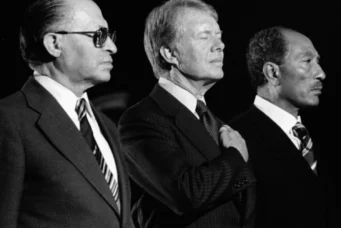
Trump’s track record could have been more palatable if he had pursued the role of a conventional politician dedicated to realpolitik, diplomacy, and the business of war and peace. This is why people like Henry Kissinger or Jimmy Carter remained revered figures until their death and respected across the political aisle, despite controversies surrounding some of their positions or debatable roles in key events.
The 47th US president is someone who was propelled to power in large part because of his unique persona as a reality star who carried an aggrandized version of his former self into the domain of statecraft. It may have been brushed aside by his avid supporters, but a leader who has continuously devised derogatory nicknames for his political opponents, mocked people with disabilities, called immigrants “animals”, and poured scorn on members of national and religious communities cannot necessarily be considered an icon of integrity.
Over the years, different sources have tried to keep track of the inventory of the insulting monikers Trump has come up with to identify his opponents or former allies. From “Cryin’ Chuck” for Senator Chuck Schumer to “Peekaboo” for the New York Attorney General Letitia James, and from “Cocaine Mitch” for Senator Mitch McConnell to Pocahontas for Senator Elizabeth Warren, the president’s rivals or estranged friends have been called names from the Oval Office and other platforms. The expectation of a Nobel Prize is out of step with a lifetime of utilizing showmanship to disparage others.
The banality of Trump’s commercial hunt for a Nobel Peace Prize was self-evident since the day it was set in motion. It became more grotesque over time as he ratcheted up his abnormally violent immigration raids and military deployments across U.S. cities, terrorizing communities while lavishing praise on his peace credentials. As ICE agents were busy dragging, shoving, and strong-arming mothers and teenagers on the streets, recreating the now-obsolete stylebook of Iran’s notorious morality police, Trump’s hustling for a Nobel Peace Prize was not just impractical. It was outrageous.
There has not been a shortage of noble leaders in the United States and world history who have unassumingly served humanity and were rightfully acknowledged for their endeavors. When the dust settles on this unsuccessful pursuit of approval from the Norwegian Nobel Institute, observers will have the chance to reflect on whether it was even a serious distraction or just a frivolous, year-long political pastime. Still, it’s quite likely that even those who supported Donald Trump on account of his opposition to “forever wars” agree that the United States needs leaders who invest in peace and deserve a peace prize, not issue threats to clasp it.