Who are Palestine’s Overlooked Refugees? Investigating Stateless Palestinians in Jordan
Stateless Palestinian refugees originally from Gaza who now live in Jordan face a precarious legal and economic situation as they lack adequate support systems. Scant attention is paid to their struggles
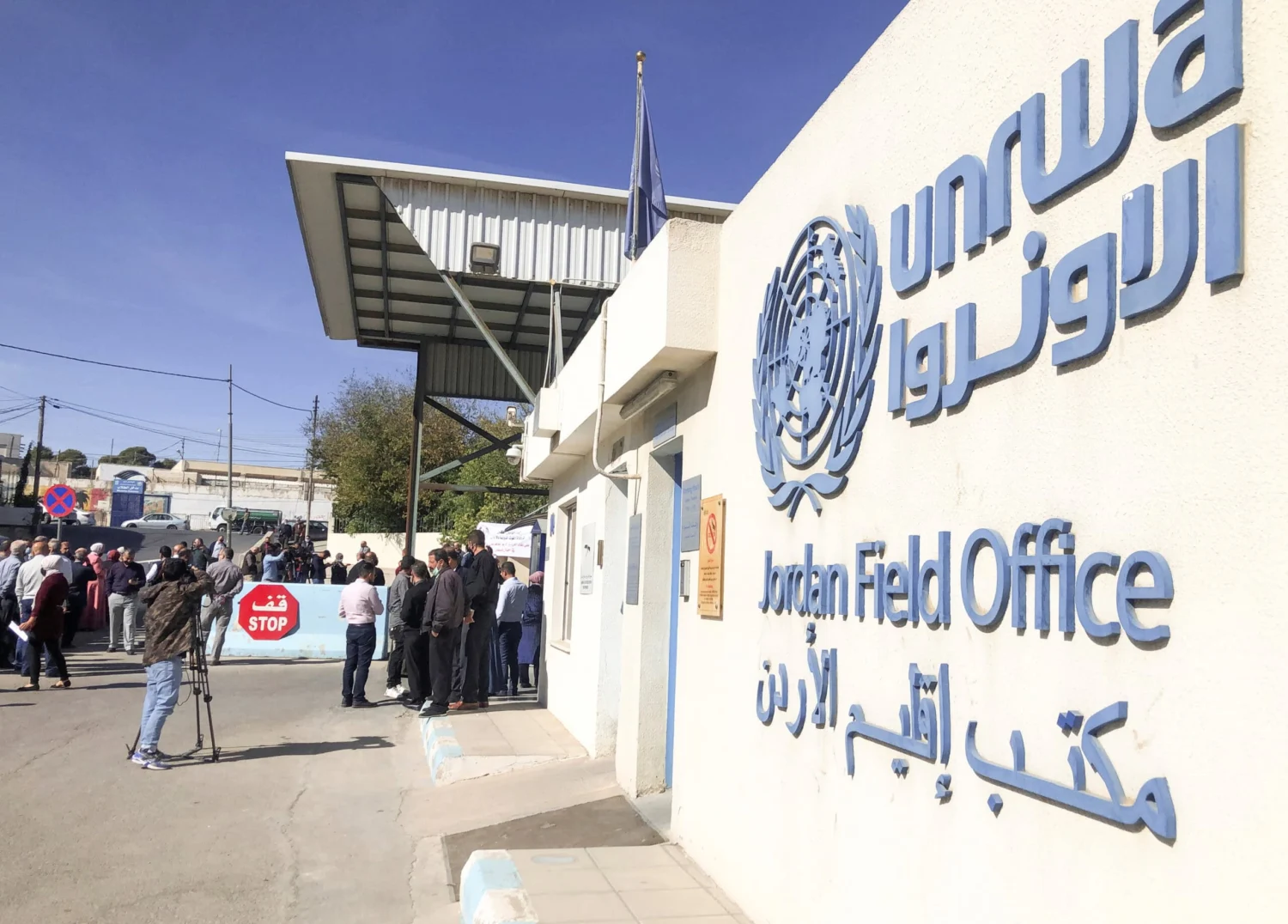
In Jordan, Palestinian refugees from Gaza continue to face a web of legal and political challenges that leave them in a vulnerable position—despite having lived in Jordan for generations. Many remain excluded from formal employment, relying on the United Nations Relief and Works Agency (UNRWA) for support. But recent funding cuts and restrictive policies have made access to these resources more difficult.
Palestinians have fled to Jordan in three main waves: the first after the 1948 Nakba, the second following the 1967 Six-Day War, and the third after the Gulf War in the early 1990s when many fled Kuwait. The first wave of refugees was largely granted Jordanian citizenship, but the situation for those who arrived in 1967 is more complicated.
Before 1967, Gaza was under Egyptian control, but its residents didn’t become Egyptian nationals, as doing so could have jeopardized the “right to return”. After Israel occupied Gaza in 1967, around 40,000 Palestinian Gazans fled to Jordan. Unlike Palestinians from the West Bank—who were granted Jordanian citizenship due to the West Bank’s prior status as part of Jordan—refugees from Gaza, sometimes called ex-Gazans, were given refugee status. They were placed in the Jerash refugee camp, known as the “Gaza camp”, because the Jordanian government viewed their stay as temporary.
Since Jordanian nationality is based on jus sanguinis, the right to inherited citizenship, and only the father can pass on his nationality, refugees face barriers to full integration. This system left generations of Palestinians from Gaza without citizenship. While naturalization is possible, it is granted only in exceptional cases. Although the 1954 UN Convention Relating to the Status of Stateless Persons provides legal protections—such as guaranteeing the right to work, and significantly reducing barriers to naturalization—for stateless individuals, ex-Gazans are excluded from these protections because Jordan has not ratified the convention.
In 1986, King Hussein issued temporary one and two-year passports to Palestinian refugees from Gaza, where they are referred to as “Children of Gaza.” But these documents lacked national ID numbers, which limits access to political rights, social security, and many job opportunities, contributing to their ongoing marginalization in Jordanian society.
“They live in a very complicated situation, because they don’t exactly belong to a certain state,” Nasser Al-Khaldy, a PhD researcher at University College London, told the Cairo Review. “Not Egypt, not the Palestinian authorities, nor Jordan.” Specializing in urban informality in Jordan’s refugee camps, he described the Palestinians in this situation as “basically stateless.”
When discussing Palestinian statelessness, it’s crucial to highlight that while Palestinians are bound together by a collective sense of belonging to a national identity, they do not belong to a sovereign nation-state with universal legal recognition. This lack of statehood means they are deprived of the legal rights, protections, and political autonomy typically granted to citizens of a nation-state. Statelessness can arise from multiple causes, such as discrimination against minority groups, gaps in nationality laws, or changes in borders that leave people unable to prove their nationality.
Since 1988, Jordan has gradually withdrawn citizenship from some of its Palestinian-origin citizens, leaving many effectively stateless. This process began when King Hussein severed “administrative and legal” ties with the West Bank in response to the first intifada, triggering the revocation of nationality for many Palestinians with ties to the region. In 2010, Human Rights Watch reported that approximately 300,000 Jordanians of Palestinian origin had their nationality status under review. Additionally, between 2004 and 2008, 2,732 individuals had their nationality revoked.
The Jordanian government justified the revocation of nationality by referencing the 1988 severance of ties with the West Bank and deference to the will of the Palestinian Liberation Organization (PLO) as the representative of the Palestinian people. However, the legal grounds for this action remain unclear, and there is no formal process for individuals to appeal, leaving many in a state of legal uncertainty.
This policy has particularly affected Palestinians who had held Jordanian citizenship since the country’s annexation of the West Bank in 1950. While those living in Jordan or abroad at the time generally retained their nationality, other measures have extended the withdrawal of citizenship to individuals who had been residing in Jordan since the severance, further complicating their legal status. This condition denies individuals fundamental rights, such as political participation, healthcare, education, and the freedom to travel or work.
UNRWA’s Role Amid Barriers to Work
Palestinian refugees from Gaza face significant barriers to securing stable employment in Jordan, as restrictions on public sector employment for non-Jordanians and high work permit fees for the private sector leave them with few options. Less than three percent of ex-Gazans living in camps are employed by the government, compared to twenty percent of other camp refugees. And those who do find work in the public sector are limited to non-permanent, low-level jobs and are excluded from unionized positions, as national ID numbers are required for membership in professional syndicates.
Though the Jordanian government temporarily waived work permit fees for ex-Gazans in 2016, the exemption was later revoked, and they are now treated as foreign workers. To obtain a work permit, these stateless Palestinians must pay high renewal fees for their temporary passports—200 Jordanian Dinars (JDs)—and provide proof of residency. Additionally, work permits themselves cost around 165-180 JDs annually. These costs are out of reach for most of this population as more than half of ex-Gazans in the Jerash refugee camp live below the national poverty line of 814 JDs per year, according to a FaFo report.
Despite some recent easing of work permit rules by the Ministry of Labor, the lack of legal status for ex-Gazans continues to limit their employment opportunities. As a result, many rely on UNRWA for support, while others seek low-wage informal work, such as seasonal jobs in agriculture.
In Jordan, around two million Palestinian refugees are registered with UNRWA, but refugees from Gaza are particularly marginalized within this system. Nadine Kaddoura, former Chief of the Operations Department at UNRWA in Jordan, explained that national staff within the UN system are typically recruited from the local population of the country where they are stationed, meaning they don’t need work permits.
“We are not obligated to assist with permits or related matters, as there is a clear distinction between international and local staff,” she told the Cairo Review.
As a result, all vacancies at UNRWA—and across the UN system—specify that local staff are recruited from the duty station. The agency upholds the principle of equality in its hiring process for national staff, treating both Palestinian refugees and Jordanian citizens the same. But the situation for ex-Gazans is more complex; although UNRWA places no restrictions on them, Jordan’s legal framework creates obstacles for securing formal employment within the agency. For example, health professionals from the ex-Gazan community must obtain a professional license from the Ministry of Health, which requires a work contract from the agency before issuing the license.
UNRWA offers both temporary (daily-paid and project-based) and fixed-term contracts. The latter are more stable and can eventually lead to permanent positions after many years of service. But due to financial pressures, particularly significant U.S. funding cuts since 2018, and a suspension of U.S. funding in January 2024 following allegations by Israel that nine UNRWA staff members were involved in the Hamas-led attack on October 7, the agency’s ability to maintain operations is under significant strain. According to the latest data from UNRWA, the Programme Cash Budget shows a funding gap of 101 million U.S. dollars for 2022 and 110 million dollars for 2023. As a result, UNRWA has increasingly shifted toward more temporary positions. While daily-paid workers represented 7.5 percent of the workforce before 2018, they now account for fifteen percent, according to an analysis by the International Institute for Strategic Studies.
As non-staff personnel, daily-paid workers are not entitled to basic benefits such as health insurance, end-of-service entitlements, or other perks. Kaddoura pointed out that due to the temporary nature of these contracts, they can be terminated at any time. Additionally, they do not give access to UNRWA’s administrative justice system, leaving employees with limited options in cases of misconduct or harassment. The use of daily-paid workers is a common practice across the UN system.
“I think the use of daily paid is highly abusive for core functions,” she said. “[They] should be completely wiped out,” suggesting alternatives like contracting external companies for short-term needs. While more costly, this approach would offer greater stability and better protections for workers.
Contract types in the UN system vary depending on the role. Teachers are usually hired on fixed-term contracts, while sanitation and construction workers are more commonly employed on daily or project-based contracts. At UNRWA, funding shortages have especially affected teachers, who are now hired on daily-paid contracts to fill immediate gaps, such as covering for absent fixed-term staff. Teaching positions at UNRWA are especially appealing to ex-Gazans because they face fewer government restrictions, allowing them to be directly hired by the agency without requiring approval from the Ministry of Education.
At the start of each academic year, the agency estimates how many students will enroll in their schools and determines how many teachers are needed, according to Kaddoura. If additional teachers are required, they turn to daily-paid workers. “We would refer to a roster of daily-paid teachers and say, ‘Come to work today’,” she explained. If the first person on the list wasn’t available, they would simply move down the list until they found someone who could fill the role.
But many of these daily-paid teachers end up working for entire semesters or even the whole academic year, essentially performing the same duties as fixed-term teachers, but without the benefits that come with such contracts such as paid leave during school holidays. “If they’re a Gazan, they’re vulnerable, so they’ll accept working for peanuts,” Kaddoura said.
For instance, Murad Bassam has been a daily-paid science teacher at UNRWA since 2022. He earns 29 JD per day, but he emphasized that this system doesn’t provide stable income, as the duration of assignments can vary—ranging from a week to a month or even an entire semester. “There’s no clear pattern,” he told the Cairo Review.
Kaddoura also suggests that the agency tends to hire older workers to minimize long-term pension liabilities, as under Jordanian law, teachers must complete ten years of service to qualify for pensions. By hiring older staff, UNRWA reduces the number of employees who would reach this threshold, thereby lowering pension costs. Among these individuals are retired Jordanian teachers, competing with refugees from Gaza in UNRWA’s open calls for positions. If the former are deemed more qualified for a role, they are given hiring priority. This phenomenon has increased competition for jobs, making it even harder for ex-Gazans to secure stable employment.
“How is it fair when someone with over 20 years of experience in the field is put on the same list as a fresh graduate with no experience?” Bassam said. “They say it’s about equality, but it’s not equal because the people in the camp don’t have the same opportunities.”
When he doesn’t work as a teacher, Bassam is involved in the informal sector, engaging in various commercial activities. He used to informally work with various NGOs, but due to the government’s increased enforcement of work permit controls for non-Jordanians in recent years, he left those positions and sought employment with the UN agency.
“I’ve been turned down for so many [formal] jobs just because I don’t have a national ID, which is really frustrating,” he said.
Since 2020, there has been an increase in crackdowns on informal labor, according to Shaddin AlMasri, a researcher at Danube University Krems and an expert in refugee labor integration in Jordan. Inspectors now regularly visit job sites to check work permits as part of a “Jordanization” initiative, which aims to prioritize employment for unemployed Jordanians, who make up twenty-one percent of the population, according to the Department of Statistics.
Because Jordan has not implemented domestic legislation for refugees, the country relies on nationality-based policies to determine access to services, AlMasri explained. And as stateless individuals, ex-Gazans are in a particularly precarious position—“an interesting gray area, legally speaking”, according to the researcher. In 2017, a legislative proposal was put forward to create a separate legal framework for individuals from the Jerash ‘Gaza’ camp who do not have a national ID number, allowing them to work without a permit. But the proposal was rejected by the House of Representatives.
Minister of Labor Khaled Bakkaar recently announced a new measure allowing this population to use their ‘white cards’—the identification documents for Gazans in Jordan—instead of temporary passports to obtain work permits for just 2 JDs, along with a health certificate costing 85 JDs. However, Zain Al-Jawhari, communications and international relations coordinator at the Amman Center for Human Rights Studies who’s worked extensively in the Gaza camp, pointed out that the law is not effective for many people in the camp.
“For smaller jobs, it’s practically useless,” she said. “Many people juggle multiple informal jobs at once, and it’s not feasible to secure a work permit for each one.” Al-Jawhari also highlighted challenges for unionized jobs. While former Gazans are technically eligible for work permits, they still face significant barriers as they need approval from the relevant syndicate. However, the latter won’t approve their applications as they are stateless, placing them in an especially challenging situation compared to other refugees.
“There’s no syndicate in Palestine that can represent them,” she said.
What Happens Now?
Israel’s recent decision to dismantle UNRWA’s operations in the West Bank and East Jerusalem has drawn worldwide condemnation. Approved on October 28, 2024, the new laws bar Israeli authorities from engaging with the agency in the occupied Palestinian territories (OPT) and prohibit its activities within Israel, leading to the closure of its East Jerusalem office on January 30, 2025.
This decision is expected to disrupt UNRWA’s operations across the OPT in Gaza, the West Bank, and East Jerusalem, further complicating an already volatile humanitarian situation. “From the move in Jerusalem, everything has shifted,” Kaddoura explained. The immediate impact will be the denial of visas to UNRWA’s international staff, leaving the agency to rely solely on local employees, which will undermine its operational capacity. Additionally, the no-contact policy will block essential imports, including medical and educational supplies, as Israeli authorities control the necessary customs coordination, crippling UNRWA’s ability to provide critical services.
The passage of these laws has effectively led to a deadlock, with Israel rejecting calls to amend or reverse the legislation, while the United Nations has signaled that there are no alternative mechanisms to replace UNRWA’s services. If the agency’s operations collapse, the situation will only deepen the humanitarian crisis across the Palestinian territories.
The implications of this move extend beyond the immediate areas targeted by the ban. Ex-Gazans are particularly vulnerable to the cascading effects of these decisions. As UNRWA’s services face increasing threats, the agency is likely to rely more heavily on Jordanian funding, which already contributes one billion dollars toward infrastructure and services. Proposals like U.S. President Donald Trump’s suggestion to resettle refugees in Egypt and Jordan have been met with strong opposition from King Abdullah II and Minister of Foreign Affairs Ayman Safadi, who stated, “Jordan is for Jordanians, and Palestine is for Palestinians.”
With tensions rising over the status of Palestinian refugees, there is growing concern that the Palestinian refugee issue could become a source of regional instability, further complicating efforts for peace. Ex-Gazans are likely to be overlooked in the geostrategic game played by powerful states, yet their struggles and their suffering, promised to be further compounded by Israel’s move against UNRWA and Trump’s transactional approach to conflict resolution, are no less worthy of attention.