
Independence and Self-Determination as Settler-Colonial Ideologies
A study of the last 1,000 years of conflict reveals a need to unveil the true meaning of independence and self-determination as “ruses for settler colonialism”, argues Visiting Professor Joseph Massad.
Historian David Armitage writes in The Declaration of Independence: A Global History (2007) that the declaration “came to be seen as marking the beginning of a history separate from other national or imperial histories.” In line with Armitage, common historical narratives dictate that American independence inspired populations around the globe to revolt against the shackles of imperialism and create their own declarations of independence. Armitage draws on words written by the third U.S. President Thomas Jefferson—and one of the declaration’s signatories—shortly before his death, that American independence “was the signal of arousing men to burst the chains” to assume “the blessings and security of self-government”.
Armitage defines independence as “political separation of the kind that the representatives of the United States asserted against King George III. More broadly, independence implies national distinctiveness and difference”. This “Age of Independence” would later bring about the notion of self-determination, which was popularized by Woodrow Wilson at the League of Nations in 1919, where he described the concept as “the right of every people to choose the sovereign under which they live, to be free of alien masters, and not to be handed about from sovereign to sovereign as if they were property”.
But the notions of independence and self-determination may actually be deeply rooted in settler-colonial logic, argues Joseph Massad, visiting professor at the American University in Cairo.
During a lecture at AUC, Massad challenged Armitage’s historical narrative: “Genealogy of independence is entirely inseparable from the 18th-century ideology of white supremacy and settler colonialism,” he says, adding that this is often dismissed by Western liberal theorists and historians.
He duly notes that independence and self-determination were “marketed as a political good,” and are still considered as such today, despite the subjugation of countless native populations. In the post-WWII era, these notions were “gratified by international law, and the global forum,” namely by the United Nations. Articles I and II of the U.N. Charter mention the “pursuit of self-determination of people” and the “protection of political independence” respectively.
Through his thesis, Massad elucidates how these concepts arose in philosophy and in literature, later being deployed by settler-colonial movements as mechanisms to continue their power over native populations. Ultimately, independence and subsidiary concepts like self-determination perpetuated and legitimized settler colonialism. Moreover, Indigenous populations sought autonomy from their colonial oppressors, but the independence and self-determination that they obtained were extremely limited and non-substantive. This is manifested in the case of South Africa, where, in 1994, non-whites were granted political self-determination with the end of apartheid rule. However, Massad illustrated how economic self-determination was limited as “economic decisions related to property remained in the hands of the white colonial settlement population, the International Monetary Fund, and the World Bank”. Today, restrictions persist— one example is the Trump administration’s imposition of sanctions against South Africa for alleged discrimination against whites for crimes and unlawful land seizures.
Settler-Colonial Background of the Term “Independence”
Emer de Vattel, a Swiss philosopher and jurist who published Law of Nations in 1758, used independence as a technical and legal term to describe the independence of the state. Specifically, he mentions the state’s independence from the church and religious authority. Vattel also believed that foreign states had no right to interfere in the affairs of an independent state, and that the latter had the right to rule as it wished.
However, Vattel justifies the establishment of “independence” through settler colonialism by arguing natives were nomadic by nature and unable to cultivate their lands. Vattel states that those who pursue “idle mode(s) of life” should have “no reason to complain, if other nations, more industrious and too closely confined, come to take possession of a part of those lands.” He goes on to describe the establishment of colonies in North America as “extremely lawful.”
Additionally, Vattel equated the “savages of North America,” who had “no right to appropriate all that vast continent to themselves,” with the pastoral Arabs who might require less space given they could cultivate the land. This would, of course, be the same ideology embedded in the Zionist settler-colonial conquest of Palestine. As Zionist leader Chaim Weizmann stated in his autobiography Trial and Error (1949), the Jewish settlers were tasked with “hardships of an outdoor life in a barren land whose soil was exhausted by centuries of misrule”. In both Vattel’s and Weizmann’s view, settler colonialism and the establishment of a nation in inhabited land is justified through the native’s lack of agricultural capability, an issue that could only be resolved by the European white settlers. This illustrates the settler-colonial rationale of independence movements but also their relative similarities in their derogatory views towards the native population.
American Independence
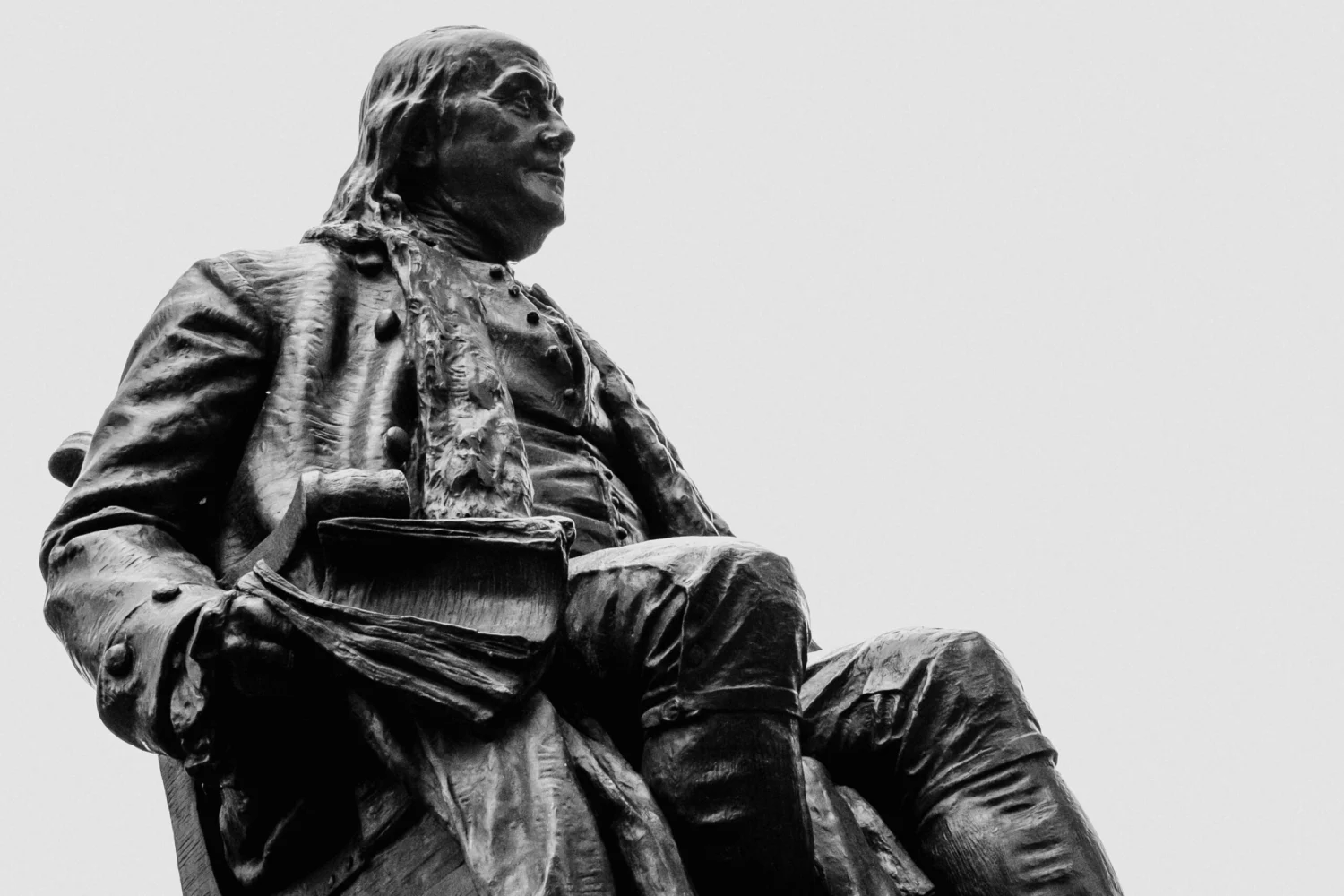
The influence of Vattel’s settler-colonial ideology directly influenced the establishment of American independence in North America. Massad illustrated that “a Swiss publisher in Amsterdam sent three copies of a new French edition of Vattel’s book to Benjamin Franklin in 1775”. Franklin noted that the “book has been continuously in the hands of our Congress now sitting”. According to Massad, Vattel’s book would become a staple in American colleges and the “authority of American theory in international law”.
In the North American colonies, settler colonialism would be legitimized through notions of independence and national identity. Massad detailed how the term “American” replaced the previously used “colonists,” which effectively “indigenized” the colonists. Massad continued by explaining that notions like liberty, freedom, and independence were terms stressed by Protestant white colonists that meant “little more than safeguarding their property, including their slaves, of course, from the encroachment of British taxation”. Independence, then, for settlers of North America, was primarily economic. However, this independence, which entailed the safeguarding of economic assets and rights, only applied to white Protestants. Massad elucidated how two decades after American independence, the “black and colored peoples of Haiti overthrew colonial slavery, but were subjected to an economic siege by the U.S. and Europe, and forced to pay indemnities to France until World War II”. Similar to Haiti’s burden of economic indebtedness, Massad noted that the inception of the independent states in the Spanish Americas led to the British economic “saddle” on the non-white population. Historian of Latin America, Karen Rancine, notes how “British influence permeated all public arenas during the Spanish American independence era”, including the financial sector, but that this spelled “disastrous” outcomes in the long term.
Independence as a Colonial Ideal through English Literature
The settler-colonial origins of independence can be traced to the first English novel when Daniel Defoe published Robinson Crusoe (1719). The novel details a European colonist who attempts to find freedom for himself on a non-European island. Edward Said notes in his 1993 publication Culture and Imperialism that the novel includes a “protagonist (who) is the founder of a new world, which he rules and reclaims for Christianity and England”. Moreover, Crusoe’s voyage is propelled by a notion of “overseas expansion” which is “directly connected in style and form to the narratives of sixteenth and seventeenth-century exploration voyages that laid the foundations of the great colonial empires.”
In a similar light, William Shakespeare’s The Tempest illustrates an allegory for European colonialism where the main Milanese character Prospero usurps the island and enslaves its natives. One of the natives is Caliban, whose name, according to Massad, “is most likely an alteration of ‘cannibal’”.
As seen through The Tempest and Robinson Crusoe, settler colonialism was intrinsic to ideals of freedom and independence. Settlers believed that their discovery of new land, where they could claim independence, did not have to acknowledge the native population. Derogatory settler views toward natives rendered them invisible, leaving them excluded from white national independence movements. This same doctrine of independence would be espoused and carried out through the 19th and the 20th centuries. After WWII, colonized peoples would begin independent movements of their own, which would be achieved by the concept known as “self-determination”. However, this concept would serve to limit the rights of native populations.
Self-Determination as Essentialism
The historical narrative that has dominated in the post-colonial era posits that self-determination is essential to anti-colonial movements as it leads to the independence of native populations. Massad explained that this narrative entails not only that “anti-colonialism and self-determination emerged around the same historical juncture, but that the colonial recognition of one automatically leads to the colonial recognition of the other.” However, Massad explains that “upon closer inspection, this seems to be a misleading narrative”.
He cited the rise of anti-colonial nationalism after WWI, when European settlers sought separation from their colonial mother country in order to continue the subjugation of native populations and maintain control over conquered lands. In South Africa, for example, Boer settlers proclaimed Transvaal a republic in the late 1850s.
However, the spread of national movements among native populations worldwide meant that a new method of control was required. Thus, self-determination was used as a means to control anti-colonial resistance. In other words, tangible political and economic independence was denied by allotting non-substantive rights to the natives, thereby allowing European control of usurped land to continue.
Massad noted that self-determination as a technical term was first a socialist principle that arose in the late 1890s, where Lenin and Russian revolutionaries attempted to apply the concept to non-Russian subjects of the former Russian Empire. Lenin believed in promoting “the self-determination of the proletariat in each nationality rather than that of peoples or nations”. Massad stated that “Woodrow Wilson hijacked the socialist concept and deployed it at the Paris Peace Conference and used the term as a ‘mask for the right of conquest”. A clear demonstration of this was the formation of colonial mandate rule by the League of Nations. Article 22 of the Covenant of the League of Nations stated that the Mandate system would aid countries “inhabited by peoples not yet able to stand by themselves”. In other words, native populations would be granted self-determination and sovereignty only when colonists deemed them fit to join the world order.
The Post-WWII Era
The colonial strategy of self-determination crystallized after WWII. Rights to self-determination were separated between Jus Sanguinis (right of blood) and Jus Soli (right of land). In short, if you were born on the land, you had Jus Soli, which determined nationality, and if you were a descendant of the land, then you had Jus Sanguinis. Massad explained that the strategy of white settlers was to recognize both Jus Sanguinis and Jus Soli for all colonial settlers to ensure their control, and continued control, of all the land they stole, yet at the same time concede that the indigenous are nations in the limited sense of Jus Sanguinis, as they are descendants of indigenous people, which would grant them no more than national, cultural, and identity rights.
Self-determination as a settler-colonial means of continued domination would become ratified through international law. In 2007, the United Nations Declaration on the Rights of Indigenous Peoples (UNDRIP) was established, which states that “nothing in this Declaration may be used to deny any peoples their right to self-determination, exercised in conformity with international law”. Self-determination restricted indigenous rights to merely self-governance and participation within the sovereign states of the colonizer, and international law has prevented any legal basis for the establishment of independence for native peoples.
Denying indigenous persons Jus Soli rights would be a strategy used in Zimbabwe. Following the dissolution of Rhodesia, the Lancaster Agreement (1979), which ended formal colonial rule, enabled the continuation of settler colonialism vis-à-vis self-determination by implementing the “willing-seller, willing-buyer principle”. Essentially, this preserved colonist land rights as white farmers would sell their lands to the government, which would buy the land through British funds; all the while land seizures from white farmers were prohibited. When Robert Mugabe attempted to initiate forced land seizures through the Fast Track Land Reform Program (FTLRP) in 2000, global powers instituted economic sanctions on Zimbabwe.
Historicizing concepts, including independence and self-determination, unravel narratives that label national movements during the post-colonial era as positive political outcomes. This places colonial and settler-colonial perpetrators as benefactors of freedom and independence and native populations as their beneficiaries. In reality, independence and self-determination, while painted as a means through which indigenous persons could achieve freedom, are rooted in white supremacy and violence, both etymologically and pragmatically. Massad closed by noting that we need to unveil the true meaning of independence and self-determination, as “ruses for settler colonialism”.