The Rise of a New Geopolitical Cosmos between Iran, Russia, and the United States
The three countries are more alike than they would like to admit, and each is on a slippery slope toward corporate authoritarianism
There are many theories that explain the configuration of relationships between Iran, Russia and the United States, and have their own limitations.
First, the choice of analytical paradigm is inevitably subjective, regardless of supporting evidence or examples. Second, the study of phenomena relies on the assumption that future outcomes are predictable—a premise that introduces distinct limitations researchers must acknowledge in their analysis.
Keeping those limitations in mind, I argue that there are important trends that can shed light on how the relationships between these three countries have changed in recent decades. Firstly, there is a clear “deideologization” of international relationships as foreign policy appears to be less driven by ideology and increasingly by pragmatism.
Secondly, there is an absence of clearly defined allies and enemies; in one context a country could be an enemy, in another a friend, and in yet another entirely irrelevant.
The absence of clearly defined positions in the global order predicated a sort of ‘quantum’ foreign policy; in other words, a policy which understands that the global order is in flux, unpredictable, and in fact may change positions merely by being observed.
Within these two shifts, both Russia and the United States have indicated a trend toward authoritarianism. At the same time, both have experienced relative or absolute decline with regard to their international station; this ultimately influences their approach to Iran.
Trumpism: Decline and Ideological Striptease
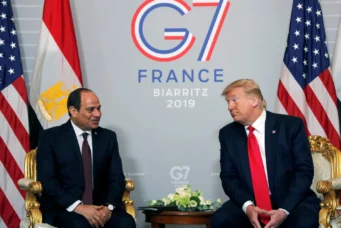
When dealing with global dynamics, one should begin with the United States, which is still a global hegemon, albeit in clear decline. Trump’s emergence is important here—the very fact that he was elected twice indicates that his emergence was not accidental, but an indication of deep-seated issues in American society. His idiosyncratic features, despisal of the formalities of the law (even the Constitution), disregard for Congress, and his personal behavior (which many consider absolutely unacceptable for someone who holds such high office) are symptoms of societal problems. While several historical analogies could be useful here, the last decade of the Roman Republic (37-31 BC) is the most instructive.
The glue that cemented the Roman Republic was not a sense of ethnic homogeneity, religious affiliation, nor fear of the state. It was rather Roman law and its traditions; they were internalized as religious dogma. This informed the public’s respect for republican institutions, primarily the Senate. At the same time, this implied a certain behavioristic model of the elite: austerity, sense of duty, and readiness to sacrifice for the state. All of these principles were in steep decline by the end of the Republic, as demonstrated in the Jugurthine War (111–105 BC).
Jugurtha was the king of a small kingdom and should have been easily defeated by the Romans. However, upon his arrival in Rome, where he was to formally capitulate, he was able to bribe Senators and avoid any representation of his defeat. If one is to believe historical legend, Jugurtha proclaimed after leaving Rome: “O corrupted city, you would be bought as soon as you will find the buyers.”
When law retreated, the vacuum was filled with force. One can see a similar process occurring in the United States, as the importance of the rule of law is starting to erode. This erosion has implicated all aspects of American life, whether political, economic, or academic. Extrajudicial actions and force have become more frequent than before. Trump has demonstrated clear intentions to ignore elections, as seen on January 6, 2021, when he encouraged his supporters to “stop the steal”, followed by a crowd of his supporters storming the Capitol.
Similar demonstrations are not accidental, and they indicate a continuous slide into an American variation of Caesarism where, as was the case with Rome, the increasing power of the executive branch can coexist with the preservation of the rest of the republican institutions. For instance, in the same way that Trump’s growing power can technically coexist with Congress and the Supreme Court, so too did the Roman emperor coexist with the Senate for centuries. While the rise of Imperial Rome can be compared with the authoritarian push in the United States—in both countries the processes are not linear and a return to old republican “normality” is expected (as many see Trump as an aberration)—the differences are palpable.
Early Imperial Rome was a golden age of the Roman State, where it achieved the peak of its economic and military might. In contrast, the case of American Caesarism shows clear signs of economic decline that originated several generations before Trump, marked by continuous deindustrialization, a rise in national debt, and high inflation—much higher than official numbers report. All of this has direct implications for the recent war and general conditions of the American army.
The recent wars in Iraq and Afghanistan were sheer disasters, especially in the latter. Defeat in Afghanistan was not caused purely by military problems: the U.S. military was not defeated on the battlefield, and personnel losses did not instigate its withdrawal. Instead, the defeat was caused by economic issues precipitated by the fact that the U.S. Army, like all other segments of American society, is a huge, wasteful behemoth, and each day of the war cost several hundred million dollars. Total expenses reached eight trillion dollars, and Washington could no longer afford this.
Economic woes also impacted recruitment. Some observers concluded that low recruitment was due to the spread of leftist “woke” ideology among American youth. This, however, is not the case. The economy remains a major driver behind this. Salaries provided by the army became marginal, and benefits, such as medical insurance, were inadequate. Consequently, there was little desire to enlist, fight, and die for “patria”. All of this existed alongside the United States and its allies’ attachment to old, fixed systems of alliances that were wrapped into cliched political slogans, chasing neoconservative goals of advancing American power through military and economic force under the banners of defending “democracy” or fighting “tyranny”.
The ideological fig leaf, only loosely covering the “private parts” of American foreign policy already during the neoconservative rule, fell completely when Trump entered office. Trump’s foreign policy became largely transactional and ideology-free. The “America First” theory implied not just the notion that once permanent alliances were now obsolete, but that recent allies could be targets.
Indeed, Trump announced that he planned to annex Canada and Greenland, regardless of the fact that this would lead to direct NATO confrontation. Trump’s bizarre and often unpredictable behavior was also clearly connected to his demand that Europe invest more in defense.
At the same time, Trump does not exclude close ties with Russia, and even with Iran; a case in point is when he proposed to Tehran a peculiar geopolitical condominium that would entail mutual control over the Strait of Hormuz.
The social and economic implications of Trump’s approach to the military have also guided his Iranian venture. At least presently, it is not based on sending troops on the ground, but uses remote warfare through missiles and air power. The assumption was that strikes would decapitate Iranian leadership and demoralize the rest of the army and security operatives. The populace, who recently suffered a bloody crackdown, would rise. The regime or country would collapse.
This, however, did not happen, leaving Washington with few choices. The first: proclaim victory and depart. This would put a large question mark on Washington’s reliability and would certainly implicate the desire of Gulf States and Saudi Arabia to use the U.S. dollar as the only foreign currency and buy U.S. Treasury bills. The second option was full-scale or partial invasion of Iran and, consequently, a long war that would increase stress on the economy, army, and country’s entire sociopolitical structure. The consequences of these paths are unpredictable.
Overlap in Washington and the Kremlin
While those in Washington are just now realizing that the venture into Iran was not the wisest decision, the Kremlin is most likely pleased with the American predicament for a variety of reasons. One reason is that Washington is now engaged in a war similar to Moscow’s venture into Ukraine—both conflicts serve as resource black holes, where money is poured in with little effect. Both utilize asymmetric proxy warfare, and both have become direct theaters of operation that trap a superpower in a prolonged war of attrition. This, and rising energy prices, make the United States less willing to focus on Europe. Ironically, rising energy prices are good for Russia’s sales.
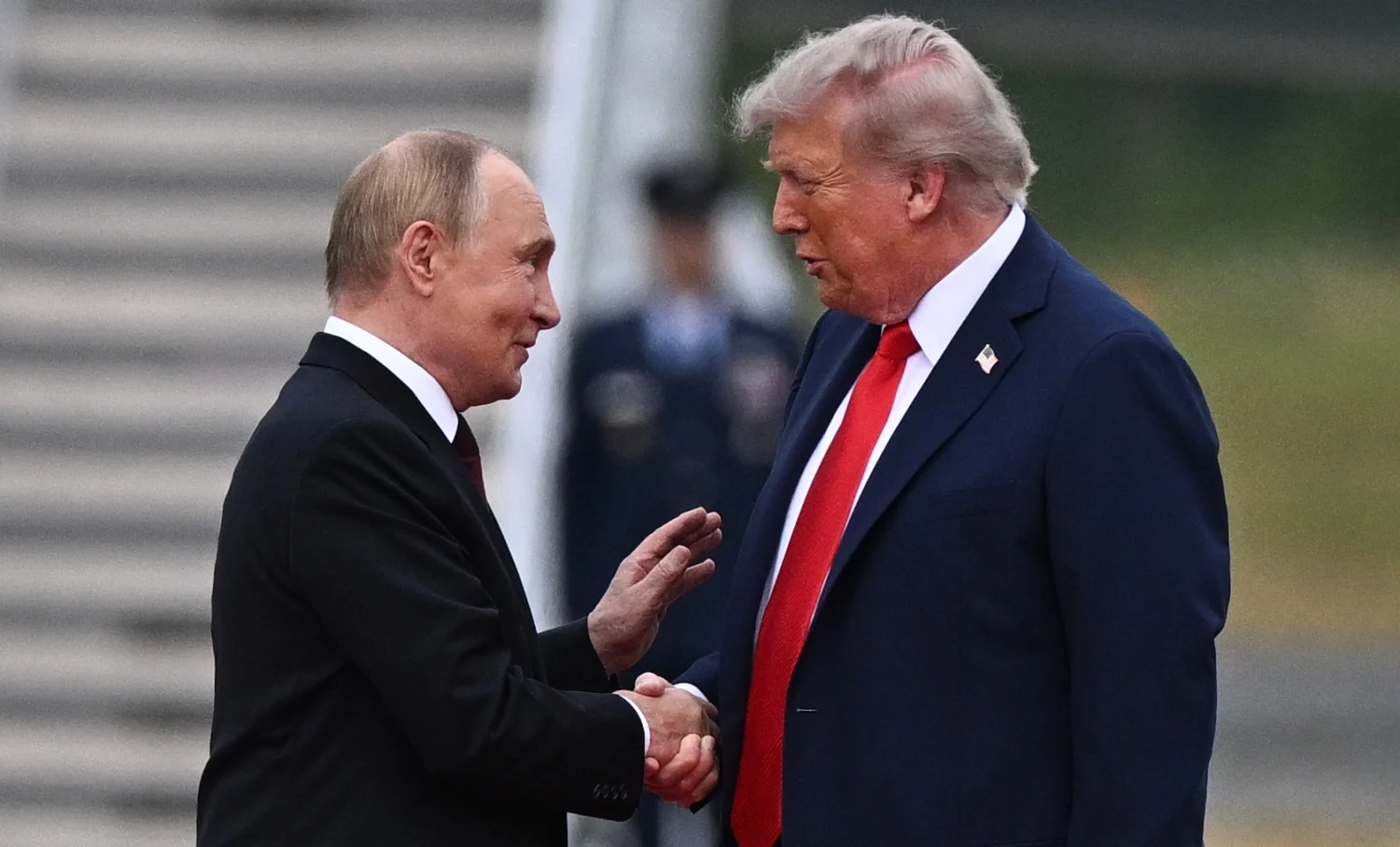
Moscow’s approach to Iran is cautious and pragmatic. Those who analyze Putin’s Russia and juxtapose it with the United States, or the West in general, often see the United States and Putin’s Russia as directly opposed. This is an illusion. Both are run by an oligarchic economic and political elite, and both are in economic and geopolitical decline, although one could argue over which country is declining more quickly.
Similar to the United States, Russia has its own “neocons” who preach “pre-emptive wars” and who have been excited by perceived Russian success in several wars: primarily Georgia in 2008 and Syria in 2015. Similar to those in Washington, those in the Kremlin believed in the efficacy of blitzkrieg wars (characterized by speed, surprise, and force), prompting them to invade Ukraine.
Additionally, both those in Washington and the Kremlin do not have a fixed ideological framework. Despite their preaching of “traditional values”, both countries’ foreign policy is quite mercurial. In the beginning of the post-Soviet era, the Kremlin often preached “Eurasianism”, an ideological construction born in the 1920s among Russian emigres. Eurasianists believed that Russia is a unique civilization based on the symbiosis of historically Orthodox Russians and Asian minorities. This ideology implied that Russia’s allies are mostly in Asia.
The original anti-European emphasis has been modified: in rediscovered geopolitics (during the 1990s), European states were mostly seen as benign “continental” powers, which could be Russian allies. At the same time, the United States emerged as the sole enemy.
Yet, the Russian elite continued to be mostly pro-West, as seen in their continuous desire to travel West, and its barb against the United States, and later Europe, was almost Freudian: They hated the West because they desired to become it, as seen in their adoption of Western fashion and lifestyle, despite geopolitical conflicts. The pro-West orientation based on this love-hate relationship explains Russia’s approach to Asian countries, including Iran.
Russia’s Approach to Iran
In the early post-Soviet Era, Moscow’s approach to Tehran was based on the fact that
Iran was among the very few countries that relied on Russian weapons and needed Russian experts. The relationship seemed to be well placed in the Eurasian paradigm.
Still, even at that time, Moscow never forgot about its true “love”—the West. For this reason, the delivery of advanced Russian S-300 air defense missiles to Iran was delayed, as Russia attempted to use strategic arms sales as structural leverage in its great-power diplomacy and dynamic with Europe and the West.
This pattern of keeping a safe diplomatic distance was also the case with Russia’s construction of the Bushehr Nuclear Plant in Iran. Just before the present-day conflict, Moscow and Tehran signed the Comprehensive Strategic Partnership Treaty regarding strategic cooperation. However, this was more of a minimally integrated alliance of convenience, and not a mutual defense pact. Ultimately, neither country had any intention of crossing the line into direct co-belligerence; Iran did not send troops to assist in Ukraine, nor did Russia send troops to Iran.
At the same time, Moscow is clearly benefiting from the present-day U.S.-Iran conflict. Firstly, it has diverted Washington’s attention from Russia’s war with Ukraine. Washington has also had to use weapons in Iran that could have otherwise been sent to Ukraine. Most importantly, the rise of oil prices has helped Moscow replenish its treasury. Moscow’s approach to war is opportunistic, as it sits on the bench watching events unfold and considering how it could benefit most from the outcome. Still, as is the case in Washington, Moscow does not want a major crisis that would require a dramatic change in socioeconomic policy, or that would trigger the disintegration of the state.
Consequences for the United States: Anarchy or Totalitarianism
For the United States, the possible crisis caused by the war in Iran could lead to a dramatic transformation that has not been visualized by Western institutional pundits. If the crisis proves severe enough to exhaust the standard elite strategy of managing disruptions through superficial reforms—”changing things just enough to keep them the same”—the current status quo will collapse. In oversimplistic terms, two alternative world orders could emerge.
The first form would be driven by forces of entropy, the loosening of the social body and, in some cases, eventual anarchy and total collapse of the state. While this scenario has been widely discussed as a potential outcome for Russia, it is not widely circulated as a potential outcome for the United States. Western strategic thinking has always suffered from a form of institutional exceptionalism; it readily projects state collapse onto adversaries like Moscow (and enemies like Iran), yet remains blind to the idea that the very same forces of domestic polarization, economic strain, and social decay could trigger a similar systemic rupture within their own countries.
Still, this scenario is clearly present in the public’s subconscious, especially during times of crisis, such as the 2008 Great Recession. At the time, American media pushed out movies and shows with apocalyptic premises such as “one year after humanity’s disappearance”. Some of these shows presented Earth not just without humans, but with no traces of humanity at all. Years before the COVID-19 pandemic, the movie Contagion (2011) dealt with a disease that ultimately led to the collapse of the country. Other crises depicted in movies could be centered around a dramatic surge in state power. In this scenario, a true totalitarian transformation—engineered to manage severe economic crises and the resulting social strife—would steer the nation toward either systemic disintegration or a rigidly authoritarian regime.
Consequences for Iran: Goulash Totalitarianism
It is a common assumption that Iran is a totalitarian or, at least, a harsh authoritarian state. The evidence of this seems clear: the strict dress code for women, severe punishment for extramarital love affairs, and bans on the consumption of alcohol. Post-1979, Iran looks like a highly regimented, Orwellian society. Still, beneath this external Orwellianism exists a mostly capitalist society, not so different from the United States or Russia.
While the Iranian oil industry is nationalized, the rest of the economy works without much government involvement. Food rationing has not been introduced, and price control is not in place, leading to recent price hikes triggered by the market. All of this creates a sort of “goulash” totalitarianism.
Goulash is a popular Eastern European food that is based on a mixture of meats and vegetables, with neither ingredient dominating the dish entirely. The term “goulash socialism” was applied to post-1956 Hungary, under the regime of János Kádár. While Kádár was installed by Soviet troops, he tried to appease the public by introducing elements of capitalism, and reducing state control over societal life in general, and significantly improving living standards. In Iran, one can observe a peculiar replay of the Hungarian scenario, although the more accurate description would be “goulash totalitarianism”. While the government controls much of the economy, small businesses, retail shops, farms, and construction are all in the private sector.
Still, it is not “goulash socialism” but “goulash totalitarianism”, where some elements of the totalitarian arrangement also use capitalist socioeconomic frameworks. As in the case with the United States and Russia, this arrangement may not survive continuous pressure and, barring the country’s disintegration, the state would become more rigid and move to a truly totalitarian arrangement.
This process seems to already be in progress in the form of a power transition from the once powerful clergy to the military, with the Islamic Revolutionary Guard Corps (IRGC) as the major force of control and stability. The IRGC has exerted heavy influence over state affairs, effectively reducing the traditional power of the clergy, like the Assembly of Experts. Though these new military-aligned leaders may not be concerned with dress code, love lives, or drinking habits, they would increase control over socioeconomic life, limiting—or possibly abolishing—the market force.
It is tempting, but not always advisable, to explain the present by appealing to the past. Each sociopolitical cosmos is unique.
The present day is clearly characterized by the deideologization of major global players. Some of them, such as Trump’s America, do not even have an ideological fig leaf. Instead, Washington operates on a transaction-driven doctrine of unbridled national interest, a shift mirrored in Tehran’s pragmatic survival strategies and Beijing’s cold calculations of economic dominance. Foreign policy is becoming increasingly mercurial without clear-cut divisions between foes and friends, making “geopolitical marriage” absolutely unpredictable and unstable. Alliances which once thrived now falter as they are stripped of shared values and moralized frameworks and instead re-invented based on momentary leverage,
At the same time, the push for corporate authoritarianism, and even totalitarianism, could be the end result of this process. This transition occurs because the global geopolitical arena has become de-ideologized—where state power is stripped of public accountability and reoriented toward maximizing control and outcome with the least possible cost and friction. This paves the way for corporate authoritarianism—a system where the state adopts the ruthless, anti-democratic management structures of private monopolies, merging corporate surveillance technology with government coercion to control the social body, very much what is happening in superpowers today.
The traditional foundations of states begin to wither and collapse—much as they did during the waning of the Roman Empire. Civil rights are no longer protected and are being done away with, a nuisance ill-afforded by the new political paradigm of the newly entrenched, post-ideological totalitarianism.