The New Gulf Realignments: Saudi-UAE Competition and the Evolution of Regional Order
The GCC is transforming, and the relationship between Riyadh and Abu Dhabi is guiding the change.
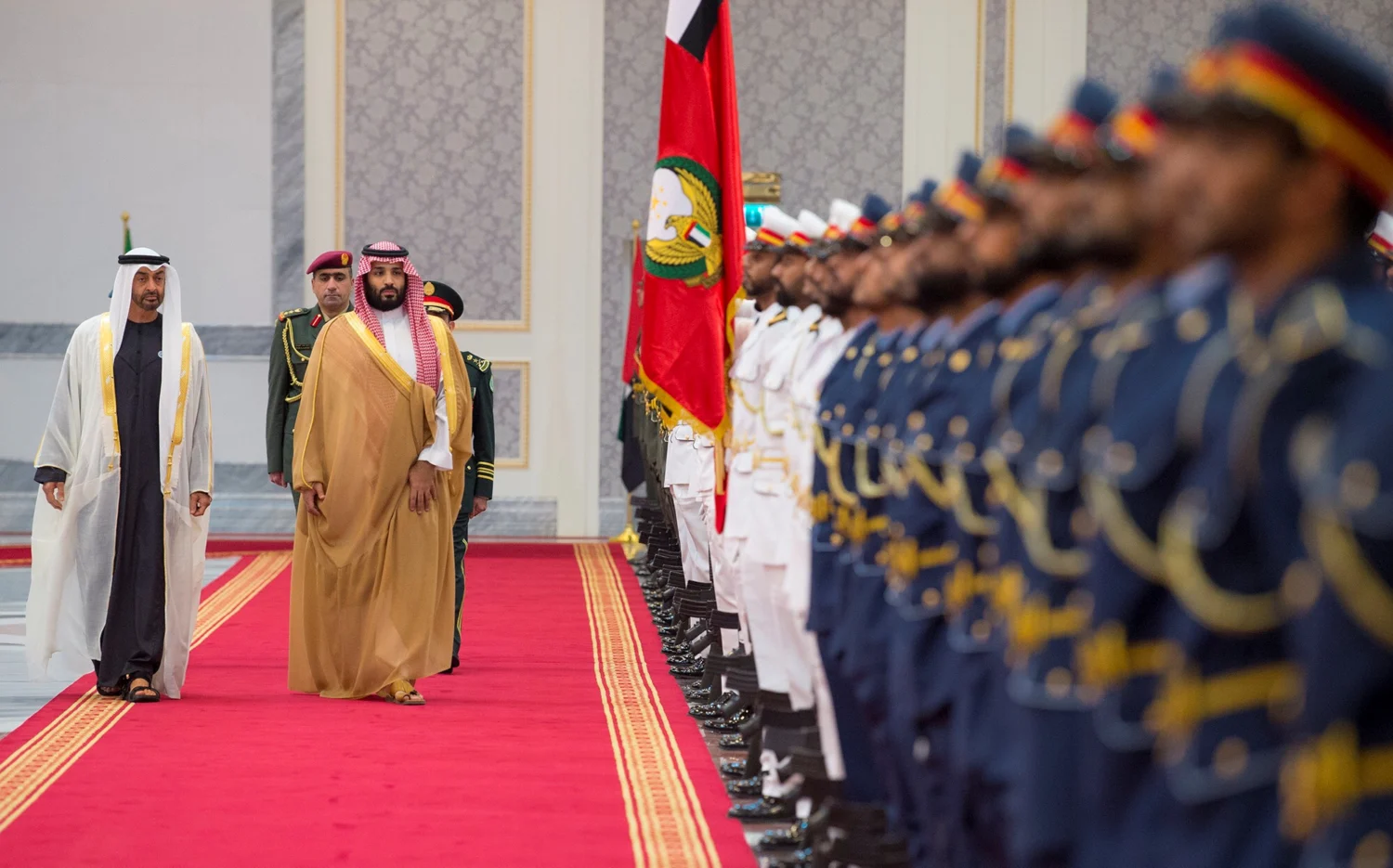
The Gulf is undergoing one of the most consequential strategic transformations since the establishment of the Gulf Cooperation Council (GCC) in 1981. What was once viewed primarily as a relatively cohesive bloc shaped by common security anxieties, energy interests, and close political coordination is gradually evolving into a more plural and competitive regional system.
While the U.S.-Israel war on Iran has had a significant impact on the GCC, its present transformation does not signify the collapse of cooperation among the Arab Gulf states. Nor does it suggest the emergence of open hostility among the region’s principal powers. Rather, it reflects the maturation of national ambitions, the diversification of strategic priorities, and the growing confidence of Gulf states in pursuing autonomous regional and international policies.
The History of the GCC
The founding of the GCC—by Saudi Arabia, the UAE, Kuwait, Qatar, Bahrain, and Oman in direct response to the upheaval of the 1979 Iranian Revolution and the outbreak of the Iran-Iraq War the following year—was a moment when six monarchies with broadly similar political systems judged that collective security and economic coordination offered better protection than acting alone.
Since then, the GCC has faced significant internal challenges, the largest of which was a 2017 diplomatic rift which pit Saudi Arabia, the UAE, and Bahrain against Qatar. The three states (and Egypt) instigated a three-year blockade against Qatar, accusing it of supporting Islamists and keeping close ties with Iran. The blockade ended in 2021 during the Al-Ula GCC Summit, although some analysts suggest few concessions were made to Qatar.
The current Saudi-UAE dynamic differs from that episode in both scale and character: where the Qatar blockade was an attempt by a coalition to isolate and discipline a smaller member, today’s competition involves the bloc’s two largest economies pursuing increasingly autonomous national strategies without seeking to isolate one another.
Saudi Arabia and the United Arab Emirates remain deeply interconnected politically, economically, and strategically, yet their visions of regional leadership and long-term geopolitical positioning are no longer fully aligned.
From Cooperation to Competition
For much of the past decade, Riyadh and Abu Dhabi appeared to operate in near strategic harmony. They coordinated closely on regional security, confronted political Islamist movements, supported parallel regional policies in several Arab arenas, and sought to reshape the political order that emerged after the upheavals of the Arab Spring. Yet, beneath this apparent alignment, important differences persisted. Over time, these differences became more visible, reflecting not merely tactical disagreements but increasingly distinct national calculations.
Both countries have long differed in domestic structure: Saudi Arabia is a unitary monarchy governed from a single center, while the UAE is a federation of seven emirates whose individual rulers, particularly in Dubai and Abu Dhabi, retain significant autonomy over foreign and economic policy. These structural differences have shaped distinct decision-making styles even during periods of close alignment. The recent shifts in the Gulf, therefore, have not so much generated new divergences as they have given pre-existing divergences more space to be expressed.
One of the earliest and most long-standing differences has been a dispute over maritime borders relating to the Treaty of Jeddah (1974). This led to the UAE decreeing Al-Yasat (a maritime territory sitting near both countries’ shores) as its own in 2005, which prompted retaliation from Saudi Arabia in the form of increased restrictions at land border crossings. The disagreement escalated in 2019 when the UAE expanded the borders of Al-Yasat, which prompted Saudi Arabia to file a complaint with the UN. The situation has not been settled, a reminder that even the most basic territorial questions between these two countries have never been fully resolved.
The two have had a number of divergences over regional politics as well. The UAE normalized relations with Israel in 2020 but Riyadh held back, calculating that its own normalization would carry a higher political cost given its custodianship of Islam’s holiest sites. Likewise, when the Qatar blockade ended in 2021, Saudi Arabia moved toward reconciliation with Doha considerably faster and more warmly than the UAE, which retained deeper reservations about Qatar’s regional alignments. These were not yet signs of rivalry, but they indicated that Riyadh and Abu Dhabi were beginning to calibrate their regional choices according to increasingly distinct national logics.
The emerging Saudi-UAE divergence we see today should therefore not be understood through the simplistic language of ‘rift’ or ‘breakdown’. The relationship remains far too important, institutionalized, and mutually beneficial for such descriptions to be accurate. Instead, the Gulf today is witnessing a process better described as competitive coordination—a system in which cooperation and rivalry coexist simultaneously.
This framing reflects necessity as much as choice. Both countries remain bound by overlapping GCC institutions, a shared dependence on the U.S. security umbrella, and deep economic interdependence—exit costs that make a genuine rupture costly for both.
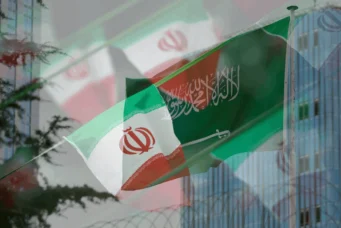
Iran’s role in this paradigm has been pivotal, though not in a straightforward way: for decades, a shared perception of the Iranian threat was the principal glue holding Saudi-UAE coordination together. As Saudi Arabia has recalibrated its approach toward Tehran—first through the 2023 China-brokered rapprochement, and more recently through its proposed non-aggression framework—that shared external pressure has loosened, removing one of the strongest incentives that had previously suppressed the two countries’ underlying differences.
Shifts in the Gulf States
All the Gulf states (not only the UAE or Saudi Arabia) have changed profoundly in recent decades. Traditional security considerations have broadened to include economic diversification agendas, demographic pressures, technological ambitions, and post-oil transition concerns as drivers of policy. All of these have encouraged a more assertive form of statecraft, shifting toward a more competitive, less collaborative posture in pursuing regional economic influence.
The causal chain runs roughly as follows: large youth populations created an urgent need to generate jobs and revenue beyond oil and the public sector, which made attracting foreign investment, tourism, and corporate headquarters a matter of strategic necessity rather than mere preference. Because the pool of available investment, tourists, and corporate relocations is finite, diversification strategies that look similar on paper—both the Emiratis and Saudies are courting the same technology firms, the same airlines’ transit traffic, the same sovereign co-investment opportunities—translate directly into competition for the same resources. Technological ambition compounds this: AI infrastructure and chip access depend on a small number of United States and Chinese partners, so positioning oneself as the preferred regional partner for these technologies has become its own arena of rivalry.
The other four GCC states have adapted to these pressures in ways that, for the most part, fall short of direct competition with either Riyadh or Abu Dhabi. Qatar, still rebuilding its footing after the 2017-2021 blockade, has prioritized restoring its mediation role and its relationships with both larger neighbors rather than competing with them directly. Kuwait and Bahrain, the bloc’s smaller economies, have generally aligned with Saudi positions on regional security while pursuing modest diversification of their own. Oman has continued its traditional posture of studied neutrality.
None of the four has the economic scale or international ambition to compete with Saudi Arabia or the UAE on the terrain that defines the Saudi-UAE rivalry, including regional headquarters, logistics, and AI investment. Their relationship to this competition is better described as adjacent, rather than as a third or fourth axis. A fuller account of how each has navigated cooperation versus competition would merit its own analysis, but for the purposes of this piece, the Saudi-UAE axis remains the primary driver of change in the Gulf’s economic and diplomatic architecture.
Economic Competition
Both Saudi Arabia and the UAE are pursuing aggressive economic diversification policies, which put them in positions of both cooperation and competition.
Saudi Arabia’s Vision 2030 is a geopolitical project to position the Kingdom as the indispensable political, economic, and diplomatic center of the Arab and Islamic worlds. In practice, this has meant an unprecedented wave of giga-projects (including NEOM, Qiddiya, Red Sea Global, and Diriyah) funded primarily through the Public Investment Fund (PIF), whose assets under management have grown to roughly $910 billion. The PIF’s international portfolio, spanning stakes in global sports, entertainment, and technology companies, functions as much as a tool of geopolitical positioning as of financial return. At the same time, economic strife in 2026 has brought a visible recalibration: NEOM in particular has undergone significant cost-cutting and project adjustments, suggesting that the financial limits of this model are becoming more apparent even as its geopolitical ambitions remain unchanged.
The United Arab Emirates, meanwhile, has developed its own model of influence rooted in logistics, finance, global connectivity, technological modernization, and strategic agility. Abu Dhabi’s regional approach has often emphasized flexibility, commercial reach, and diversified international partnerships. Concretely, this has meant building DP World (the UAE’s multinational supply chain and logistics company) into a global operator of more than 80 port terminals across roughly 40 countries, positioning Dubai’s Jebel Ali and Abu Dhabi’s Khalifa Port as critical nodes in global shipping networks well beyond the Gulf. The Emirates and Etihad airlines have similarly built outsized long-haul transit hubs relative to the UAE’s population, while sovereign vehicles such as Mubadala and ADQ pursue technology investments—including in artificial intelligence through firms such as G42—that have occasionally drawn scrutiny from Washington over their ties to Chinese technology partners.
The Red Sea, meanwhile, is emerging as one of the principal arenas of future competition between the two countries. Ports, maritime corridors, logistics infrastructure, food security chains, and access to African markets are becoming central components of Gulf strategic thinking, particularly following the closure of the Strait of Hormuz. In practice, this arena is proving more competitive than collaborative.
Saudi Arabia has invested heavily in Red Sea logistics infrastructure (most notably the new NEOM Port and an expanding Jeddah Islamic Port) to offer bypass routes around the Strait of Hormuz and as alternatives to the network of terminals the UAE’s DP World has built from Sokhna in Egypt to Berbera in Somaliland. Even where commercial interests still intersect, such as DP World’s stake in Jeddah’s southern container terminal, the broader trajectory is toward competing rather than shared infrastructure, with each country building out a Red Sea network designed to reduce its dependence on the others.
This shift reflects a broader reality: the Gulf states are no longer acting merely as reactive powers responding to external security threats. Saudi Arabia and the UAE are at the helm of this change, behaving increasingly as ambitious middle powers seeking to shape regional order according to their own national visions. This has meant pursuing competing rather than coordinated strategies: each now treats logistics, energy transit, and maritime security primarily as instruments of national strategy, and only secondarily—if at all—as areas for Gulf-wide coordination.
Diplomatic Shifts
This competition extends beyond economics as well, as nuanced differences have emerged in strategic priorities and diplomatic engagements in several regional policy areas. While both countries continue to share broad concerns regarding regional instability, their approaches to de-escalation, mediation, and political engagement have at times diverged. This divergence is not new, and it did not begin with Israel or Iran.
For much of the past decade, Riyadh and Abu Dhabi have backed rival factions within the broader anti-Houthi camp in Yemen. Saudi Arabia has supported the internationally recognized government, including its Islah-aligned components (a Sunni Islamist group which advocates for a unified Yemeni state), while the UAE has cultivated the Southern Transitional Council (a secularist group which advocates for the secession of South Yemen) and affiliated militias as a more flexible vehicle for its own influence over Yemen’s southern coastline and islands. This rivalry became openly visible in December 2025, when STC forces seized territory in Hadramout and al-Mahra provinces near the Saudi border, prompting Riyadh to strike STC-linked positions and press for an Emirati military withdrawal, a step Abu Dhabi chose to accommodate rather than escalate.
A similar pattern has unfolded in Sudan, where Saudi Arabia (and Egypt) back the Sudanese Armed Forces under General Abdel Fattah al-Burhan as the country’s legitimate authority, while the UAE has provided support to the Rapid Support Forces. The UAE drew international scrutiny for the arrangement, including a case brought by Sudan against the UAE at the International Court of Justice, dismissed in May 2025 for lack of jurisdiction. For Riyadh, the underlying concern extends beyond Sudan itself: if externally backed paramilitaries can fracture one Arab state’s sovereignty and capture its resource economy, the precedent could spread along the wider Red Sea. Saudi Arabia has worked to avoid this outcome through renewed military and diplomatic engagement with Egypt, Somalia, and other Horn of Africa states.
Yet, despite these long-running disputes over proxies and territorial influence, Riyadh and Abu Dhabi have so far kept Yemen and Sudan contained as separate policy areas, restricting them from having significant impact on the two countries’ wider relationship. On the broader security questions that matter most to both capitals, the two countries remain substantially aligned: both continue to value U.S. security guarantees in the Gulf, even as Saudi Arabia in particular has visibly moved to diversify its security arrangements rather than relying on Washington alone (a trend explored further below); both have sought to prevent any return of Muslim Brotherhood-aligned movements to positions of power in the region; and both share an interest in avoiding renewed open warfare with Iran, even if, as discussed below, their tolerance for direct engagement with Tehran now differs sharply. In other words, the Yemen and Sudan disputes illustrate competition over regional influence and resources, but not yet a divergence over the fundamental security architecture each country wants for the Gulf.
In a similar way, the aftermath of the Gaza war has opened the door for the differences between the two countries to become more visible without signifying a complete breach in cooperation, particularly with regard to the pace and structure of regional normalization and diplomatic priorities.
Riyadh appears increasingly sensitive to the broader political and symbolic dimensions of regional legitimacy, particularly in light of Saudi Arabia’s wider Arab and Islamic positioning. A jump into normalization with Israel could threaten Riyadh’s perception among regional partners. Abu Dhabi, by contrast, has maintained a more continuity-based approach rooted in the strategic logic of the Abraham Accords and in its privileged network of technological, security, and economic relations with Israel.
This has become visible in official positioning: Saudi officials, including Foreign Minister Prince Faisal bin Farhan, have repeatedly stated since October 2023 that normalization with Israel cannot proceed without a credible and irreversible pathway to Palestinian statehood. Emirati officials, by contrast, have generally treated the Abraham Accords and progress on Palestinian statehood as parallel rather than sequential tracks, arguing that disengaging from Israel would reduce Abu Dhabi’s ability to shape outcomes for Palestinians rather than advance them.
These differing calculations are not merely diplomatic nuances. They reflect two partially distinct conceptions of regional influence: one is centered on broad political legitimacy and strategic centrality, the other on flexible partnerships, economic integration, and networked geopolitical reach. Whether this amounts to competition in the strict sense is debatable. Riyadh and Abu Dhabi are not working against one another’s relationship with Israel, nor are they contesting it directly. The more accurate description is one of diverging risk tolerances: Saudi Arabia calibrates its regional posture around the domestic and pan-Arab political costs of normalization absent Palestinian progress, while the UAE treats its existing ties with Israel as a fixed strategic asset to be managed rather than renegotiated.
The restoration of Saudi-Iranian diplomatic relations under Chinese mediation in 2023 illustrated Riyadh’s growing emphasis on regional de-escalation and strategic stabilization. Saudi policymakers increasingly appear focused on reducing direct regional confrontation in order to concentrate on economic transformation, strategic diversification, and long-term development goals. One such proposal was reported on by the Financial Times (although not confirmed by Saudi officials), suggesting a Middle Eastern non-aggression pact with Iran.
While still embryonic and largely informal, this emerging approach bears some resemblance to a Middle Eastern non-aggression understanding inspired by principles historically associated with the Helsinki process: sovereignty, mutual restraint, de-escalation, confidence-building measures, and the reduction of inter-state confrontation in favor of long-term strategic stability. Riyadh increasingly appears interested in positioning itself as the principal architect of such a regional equilibrium. The UAE has similarly pursued pragmatic engagement with regional actors, including Iran and Türkiye, yet often with a stronger emphasis on economic diplomacy, technological partnerships, maritime influence, and diversified strategic balancing. While the future of any such arrangements remains to be seen, it is clear that both countries are pursuing new paths for regional stability.
The Shifting International Order
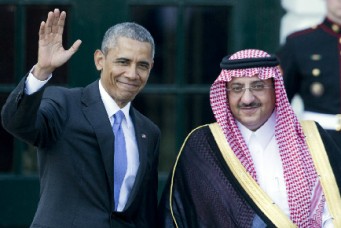
As the strategic focus of the United States shifted away from the Middle East and toward China during the Obama Administration, regional actors began to diversify their partnerships and hedge political risks. Gulf states today maintain increasingly sophisticated relations not only with Washington, but also with China, India, Russia, Europe, and emerging Asian economies. This multidirectional diplomacy represents less a departure from traditional alliances than an adaptation to a more fragmented international system.
Within this evolving environment, broader regional patterns are also beginning to emerge. Informal yet increasingly consequential understandings appear to be developing among several major regional powers (including Saudi Arabia, Egypt, Türkiye, and Pakistan) around the need to prevent regional fragmentation, contain escalation, and preserve a minimum level of strategic equilibrium.
Saudi Arabia’s Strategic Mutual Defence Agreement with Pakistan, signed in September 2025, illustrates how this is taking shape; the pact treats an attack on either signatory as an attack on both. The idea of extending a similar collective framework to Turkey and Egypt has been floated by Pakistani officials. Notably, the UAE has not been a central participant in this grouping. Its more hawkish posture toward Iran and its closer security and intelligence relationship with Israel place it at some distance from an understanding whose common denominator is de-escalation with Tehran.
The UAE’s deepening economic and strategic partnership with India (a country with long-standing tensions with Pakistan) adds a further complication to any closer alignment with a grouping anchored by the Saudi-Pakistan defense pact. Together, these factors reinforce, at the level of regional alignments, the divergence already visible in the Saudi-UAE relationship itself.
On the Road to Fracture?
For decades, Gulf politics often revolved around consensus-building under shared external pressures. Today, the region is entering a different phase, one in which strategic autonomy, economic competition, and diversified diplomacy are becoming permanent features of the regional landscape. In this context, the Saudi-UAE relationship increasingly resembles a strategic partnership between two ambitious powers whose interests overlap substantially, but not entirely. The challenge for both countries will be managing competition without allowing it to evolve into destabilizing rivalry.
So far, both Riyadh and Abu Dhabi appear aware of the high costs of fragmentation. Shared security concerns, economic interdependence, energy coordination, and common regional interests continue to provide strong incentives for cooperation. Moreover, Gulf leaders recognize that the region’s broader instability requires a minimum level of strategic coordination among major Arab powers.
The future of Gulf politics is therefore unlikely to be defined by either full unity or open division. More likely, it will be characterized by fluid alignments and managed competition among increasingly self-confident regional actors, each pursuing coalitions organized around specific priorities: economic modernization, maritime security, technological competition, regional de-escalation, and selective geopolitical balancing.
Saudi Arabia appears increasingly positioned to pursue diplomatic centrality through broad regional engagement, calibrated de-escalation with Iran, and the construction of a more stable strategic environment compatible with its economic transformation ambitions. The UAE, meanwhile, is likely to continue emphasizing networked influence through trade, finance, technology, logistics, and flexible international partnerships extending across both Western and Asian strategic spheres.
This evolution may ultimately produce a more mature Gulf order, one less dependent on ideological uniformity and more reflective of the realities of a multipolar Middle East. The Saudi-UAE relationship will remain central to this transformation.