The Global South’s Right to Industrialize—On Its Own Terms
For decades, the Global North has exclusively set the agenda for global development. It’s high time this changed
In recent years, scholars and economists have highlighted an important problem: countries in the Global South are significantly under-industrialized, restrained to a weak position within the global economy and vulnerable to exploitation by wealthier nations. Indebted to International Financial Institutions (IFIs) for decades, many developing countries have been compelled to adopt the neoliberal model, abandoning state economic planning tools such as industrial policy in favor of market-led development
Yet, there is an important contradiction here. The Global North, like the United States and Britain, successfully industrialized over two centuries ago as a direct result of state intervention. Under neoliberalism, an economic order led by the United States since the 1980s and exported to the rest of the globe through IFIs like the World Bank, the World Trade Organization, and the International Monetary Fund. The dominant academic and policy rhetoric repeated that the best industrial policy is no industrial policy; in other words, to leave industrialization to the market, not the state. “Industrial policy used to be a swear word,” says Kamal Ramburuth from the Institute for Economic Justice. This restricted many developing countries from effectively implementing industrial policies.
Now, the tides are shifting. The World Bank seems to have changed its mind by stating in a report in March 2026 that “[i]ndustrial Policy should be considered in the national policy toolkit of all countries”. This U-turn is probably not a result of an intellectual awakening or emergence of new evidence, says economist Jostein Hauge, but rather an institutional adjustment to a new political and geopolitical reality marked by great power rivalries, supply chain disruptions, and the end of the rule-based order—conditions that, from the perspective of powerful nations, demand more state intervention, he notes.
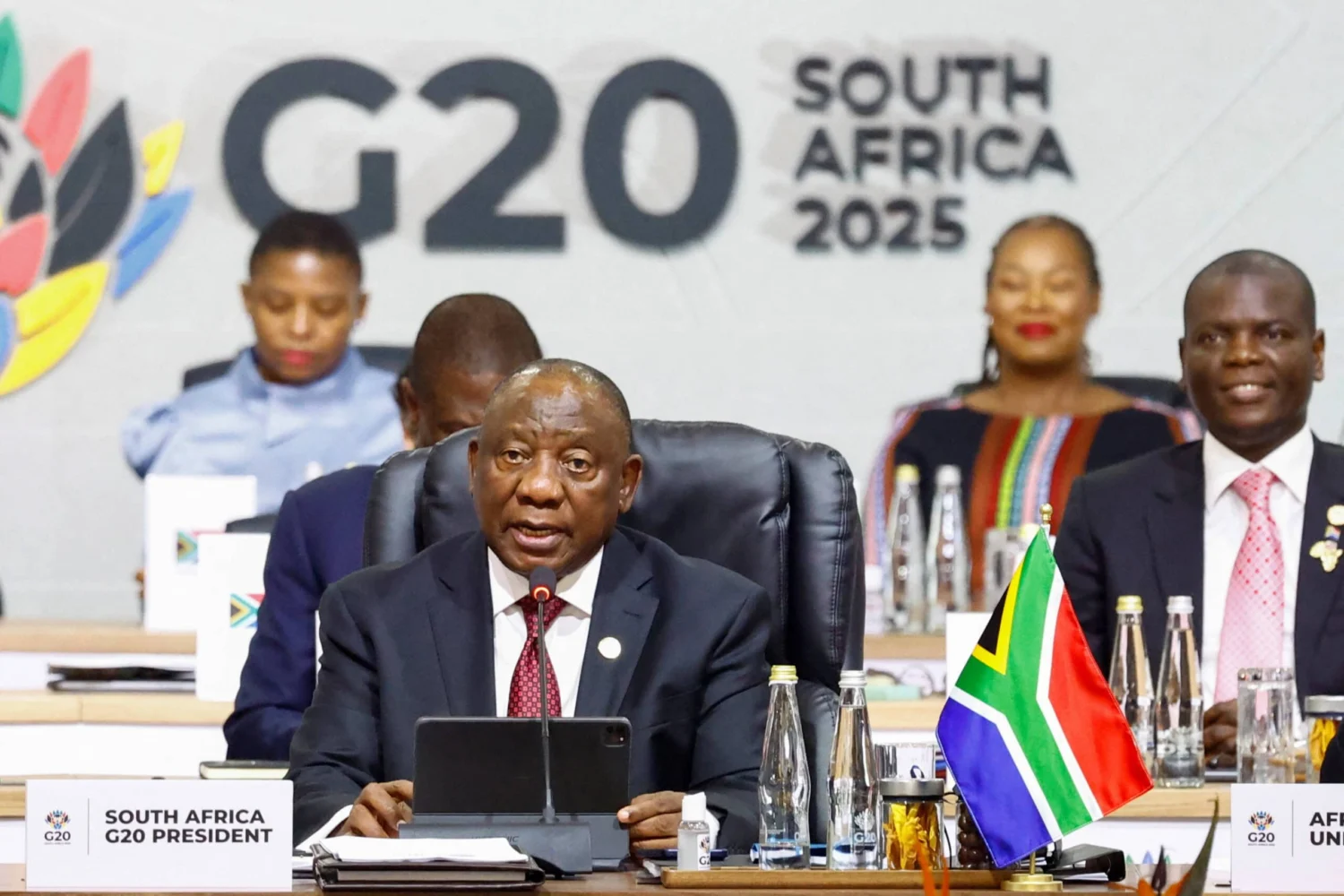
In this context, the Global South is asserting its right to industrialize on its own terms. Economic development experts like Ha-Joon Chang, Jayati Ghosh, and others launched a collective report in November 2025 as part of the G20 summit led by South Africa, demanding the removal of obstacles in the international terms of trade, intellectual property, and finance that have long delayed industrialization for developing countries. This summit also put forward in its agenda pressing issues facing African countries like critical minerals extraction, debt sustainability, and access to finance for the energy transition.
Despite the IFIs’ claim that industrial policy is a tool for all countries, Global South countries’ attempts to reset the terms with which they are integrated in the world economy and mobilize finance will not go unchallenged by those in the Global North who benefit from maintaining an asymmetric global economic order. For example, the United States boycotted the G20 summit along with other multilateral events in 2025 like “Financing for Development” and “COP30”, reflecting Washington’s disregard for the entire multilateral system and its insistence on acting unilaterally. Yet, the transition to a multi-polar world is already happening.
To engage with this rapidly changing landscape, this article reviews five essays from the “Industrial Policy in the Global South” series, authored by critical scholars from India, Brazil, Egypt, and Mexico, and published by the “Pathways Beyond Neoliberalism: Voices from MENA region” project.
Identifying Obstacles to Change
After decades of the neoliberal order, the key challenge of the Global South is to find alternative ways to develop and implement an effective industrial policy agenda. Many Global South countries such as Morocco, Mexico, India, and others seek to upgrade their position in Global Value Chains (GVCs) as a step to industrialize through exporting manufactured goods instead of raw materials. However, Julen Berasaluce Iza, professor of economics at the College of Mexico, reminds us that Global South’s integration in GVCs must be guided by the objective of improving labor conditions, creating new domestic firms, and achieving sustainable business and technological development opportunities. He further stresses on the importance of education and building a highly-skilled workforce able to cope with the domestic need for specialized workers that comes with increased automation.
In addition, one of the key challenges for formulating an industrial policy, according to Berasaluce Iza, is the high-debt servicing costs that constrains Global South governments’ fiscal space to finance industrial plans and social services. For example, Egypt paid 103 billion dollars between 2014 to 2024 in debt service only, money that could have been directed to health, education, and industrial upgrading. Another challenge is the World Trade Organization’s (WTO) restriction on Global South governments from providing targeted subsidies to protect domestic firms.
Accordingly, Berasaluce Iza calls on the Global North to remove the external constraints it imposes on the Global South’s industrialization. However, his analysis seems to be overly confident in the North’s willingness to simply remove these barriers, overlooking the ways in which the North has historically obstructed and delayed industrialization efforts in the Global South through military aggression, sanctions, and unequal exchange.
This necessitates a shift in focus from expecting external concessions to developing internal strategies. As Amir Lebdioui, associate professor of the political economy of development at the University of Oxford, puts it: “When a country from the Global South formulates a plan to implement Green Industrial Policies, it should be prepared to be punched in the mouth by advanced economies and incumbent firms, that is part of the game.”
In this sense, industrialization, understood as strengthening local productive capacities and reducing the dependence on raw materials exports, can itself be an act of decolonization. Therefore, critical scholarship on Global South industrialization should focus more on the strategies that the countries in the Global South can implement to navigate and maneuver the systemic obstacles imposed by the North.
Industrial Policy and the Middle East
The focus on external constraints to Global South industrialization should not divert attention from domestic challenges related to the capacities of governments to design, implement, monitor, and evaluate industrial policies. Amr Adly, associate professor in the department of political science at the American University in Cairo, brings the industrial policy debate to the MENA region, with a focus on Tunisia, Jordan, Egypt, and Morocco. He sheds light on the stagnant growth of these countries’ manufacturing sector as percentage of GDP and their overall commodity-dependent position in international markets. He states that none of these four MENA countries witnessed a transformative industrialization experience as rapid and radical as the one observed in East Asia from the late 1950s to the 1990s. This is, in part, due to the weak capacities of these four Arab states to mobilize resources in a concerted manner under poor institutional quality and prevalence of economic informality––broadly defined as firms, workers, and activities operating outside of the state legal and regulatory framework.
According to Adly, successful industrial policies in MENA require a level of state capacity to formulate and implement policies with autonomy from the interference of powerful actors within the state or society (including rent-seeking, corruption, and predation). He also specified a need for the state to function with autonomy from external foreign interests, either of other governments, international financial institutions, or multinational corporations. He notes that literature on industrial policy in MENA remains limited on both conceptual and empirical fronts.
What is perhaps missing in Adly’s analysis is a critical discussion of who will benefit most from industrialization on the national scale in MENA countries and how to ensure that the industrialization process raises worker’s living standards and is socially and ecologically sustainable. Furthermore, what form of government and political system is most capable of overcoming the internal and external obstacles to formulate a successful industrial leapfrogging in MENA? Finally, what pathways exist for mutually-beneficial regional economic integration among MENA countries? This last question is particularly relevant given the dominance of Gulf states (mainly the Saudi-UAE nexus), which exercise regional hegemony and pursue extractive policies at the expense of the rest of the region.
The crisis of regional geopolitics and their impact on development policy have in recent years been a fulcrum about which the MENA’s industrial frameworks pivot. For example, contemporary debates on industrial policy in MENA cannot operate in isolation from the Israeli genocide in Gaza, the persistant settler-colonial violence in Palestine and Lebanon, the Rapid Support Forces (RSF) genocide in Sudan, and the the U.S.-Israeli war on Iran. Under such conditions of deliberate human suffering, destruction, and political instability; it is highly unlikely that sustainable industrial development can happen in the region. Instead, these conditions may lead to de-development.
In addition, there is a growing gap and mistrust between citizens and states in the Arab world, a divide that is likely to deepen public skepticism regarding whether the renewed debates on industrial policy will translate into meaningful prosperity for the majority of the region’s population. These dynamics are not unique to the Arab region. Across much of the Global South, despite large disparities in political and economic structures, the erosion of social services and industrial capacity has become a common feature. India provides a particularly instructive case.
The Case for India
India offers a vital reference point for the Middle East. India’s efforts to reform its economy during their own financial crisis, including the 1991 economic crisis, through trade integration and industrial strengthening offer valuable lessons for the Middle East, especially in understanding how India’s actual and potential trajectory in reconceptualizing and reintegrating industrial policy amidst the pressures of a prevailing neoliberal global order can be applied in the region.
The liberalization process in India’s economy, which took place from 1980-1991, aimed to introduce novel market strategies to support young entrepreneurs, business owners, industries, and consumers and free them from factors such as price controls, regulatory constraints, and import and export controls. These strategies relied on ‘pro-business’ policies which focused on production, de-regulation, profit-making, and investment, particularly strengthening existing private firms.
Economic researcher Kalaiyarasan Arumugam argues in “India’s Tryst with Industrial Policy” that post-independence India, particularly in the 1960s-1970s, faced delays and infrastructural deficiencies from inefficient state-led industrialization. Initiatives such as the Bombay Plan (which aimed to balance the economy and raise living standards) and the Nehruvian socialist framework (which sought equality regardless of socioeconomic background) established foundations for the pharmaceutical and IT sectors but failed to advance other competitive industries like technology. Between 1980 and 1991, the Indian government actively implemented neoliberal reforms to “emulate the East Asian success story” and align with the Washington Consensus.
Accordingly, the IMF’s economic analysis suggests that on the macro level India benefited from neoliberal reforms, including rising exports of goods and services such as textiles, jewelry, IT, and logistics, which helped raise GDP growth compared to earlier Nehruvian policies. Exporting firms received tax incentives and, in 1986, duty-free imports of capital goods were permitted for export sectors. The industrial sector gradually diversified, though prior import-substitution policies had fostered self-sufficiency despite technological backwardness.
However, like many states in the Global South including MENA region, India’s industrial policy trajectory has been tied to adverse effects of liberalization, fostering weak and uneven market and industrial development. R. Nagaraj, a professor at Indira Gandhi Institute of Development Research (IGIDR), highlights in his piece “How to Reverse India’s Industrial Decline?” the structural shortfalls in India’s GDP growth. The industrial sector weakened as exports declined, suggesting India’s neoliberal shift contributed to premature deindustrialization while opening the economy to foreign direct investment that largely flowed into services, not manufacturing. These declines increased reliance on imports from China, widened the trade deficit, and heightened geopolitical unease between the two countries. Meanwhile, technological shifts favoring capital and skilled labor reinforced pro-business policies at the expense of labor welfare.
Accordingly, this raises serious concerns about the impact of rapid globalization and strict IFI conditionalities on India’s industrial climate, pointing to the need for a new industrial policy that secures investment, better aligns trade with industrial development, and strengthens state capacity and policy coordination through greater investment in education.
For example, industrial policy requires coordinating investments in sectors such as manufacturing and technology, where higher outputs usually leads to lower costs. Accordingly, Nagaraj urges that investments must be directed toward technological development and large-scale projects that strengthen domestic linkages. But Arumugam warns that over-priotrizing investment can make India dependent on foreign capital inflows, exposing domestic firms and workers to increased external volatility.
Both Nagaraj and Arumugam hold that contemporary industrial policy in India must integrate trade objectives to accelerate industrial development. This requires stronger coordination between the Ministry of Commerce and Industry and the Ministry of Finance so that tax, tariff, and fiscal policy operate coherently. Because post-1991 reforms failed to align trade and investment within a weak institutional and infrastructural landscape, liberalization did not yield robust industrial outcomes. Policies must thus protect productive capacities, boost exports, reduce trade deficits, and strengthen India’s position in the global value chain.
Nagaraj and Arumugam also agree that sustained investment in education and local capacity-building must be central to industrial policy, ensuring a skilled, efficient, globally competitive workforce and a more inclusive industrialization. Although India has emphasized formal education, it lacks vocational training that effectively complements general education and meets labor-market demands and employment outcomes. Closer alignment between education and industrial policy would enable institutional reform, better curricula, workforce planning, and expanded vocational and reskilling initiatives, meaningfully fostering resilient growth and equitable access across socioeconomic and occupational backgrounds.
Furthermore, addressing skill gaps within a coherent industrial policy can drive growth and job creation by investing in reskilling and upskilling programs, and attracting FDI into India’s competitive sectors. FDI-led industrialization increases firms’ capacity to create formal, well-paying jobs that absorb workers leaving agriculture, enabling progressive redistributive policies to reduce poverty. Simultaneously, these processes complement local capacity-building and vocational training, strengthening workers’ agency, technological capability, and long-term industrial sustainability alongside inclusive measures.
Both Nagaraj and Arumugam address labor in their revised industrial policy frameworks. Yet, it remains overlooked in favor of trade and investment. They emphasize the skills gap while neglecting informality, sectoral fragmentation, and gender inequality. India needs industrial policies that shift labor toward higher-productivity sectors and services to expand FDI, reduce underemployment and informality, and create productive jobs across regions and socioeconomic backgrounds.
Corruption must also be addressed for structural change to manifest. As Arumugam notes, “political entrepreneurs” thrive where financial incentives exist, undermining investment and productivity gains needed for a structural shift and a labor market that offers stable, higher-quality employment. A second concern overlooked in both Arumugam and Nagaraj’s articles is gender disparities in industrial policy, especially sectoral representations and wage gaps. Women’s labor-force participation in India remains low and many are concentrated in low-income sectors such as agriculture. To boost participation, the government must redefine inclusion in high-growth sectors, reduce wage inequities in women-dominated fields such as textiles, caregiving, and hospitality, supporting normative obligations to instill greater emphasis on gender equality, both in opportunity and outcome.
The key takeaway is that India must carefully select industrial policies to: (1) build a stronger industrial base focused on producing high-quality, value-added goods; (2) enhance competitiveness vis-a-vis neighbors such as China; and (3) align societal needs with market dynamics for inclusive growth.
Building an Alternative
As India and other countries work towards improving their industrial policies, the nature of a post-neoliberal order in the Global South comes into focus.
Marcos Nobre, professor of political philosophy at the University of Campinas in Brazil and the author of the fifth essay in the industrial policy series of the Pathways Beyond Neoliberalism Project, addresses this question by examining how the Global South can avoid a neo-exractivist trap in the post-neoliberal order amid the rise of what he describes as the “fearless” right wing.
The neo-extractivist trap, according to Nobre, is a way of understanding the structural economic, social, political, and geopolitical constraints that hinder deep and transformative development in low and middle-income countries, reinforcing persistent dependency on resource extraction—particularly as these countries attempt to pursue a just ecological transition. This trap is further characterized by sharp political division between the extreme far right and a new progressive camp. This is why Nobre urges the new progressive camp, which advocates for equality and ecological justice, to seize the current phase of global reconfiguration and build a genuine alternative political project grounded in both economic policy and theory.
Speaking of alternatives, China is often referred to as the miracle that escaped the classic Western liberalization recipe by adopting industrial policies and defining its mode of integration in the world economy. Berasaluce Iza briefly notes in his essay that the Chinese approach to international cooperation does not follow the same neoliberal and liberalization approach (meaning that it does not impose the liberalization model on other countries through conditionalities). He further suggests that China offers opportunities for other Global South countries, particularly in financing infrastructure projects.
Yet, his analysis does not sufficiently engage with the potential limitations of the Chinese model, including economic dependence and prioritization of Chinese interests over local needs. For instance, India needs to increase its regional and global visibility while strengthening its capacity to contend with China and reduce dependency on Chinese goods and services. Critics also argue that Chinese foreign direct investments, if not regulated, can cause severe environmental damage in other (smaller) Global South countries. In this context, greater responsibility falls on Global South governments to ensure that large-scale foreign investments are aligned with domestic social priorities and the country’s ecological limits.
In conclusion, at a time of fading rules-based international order, industrial policy can provide a pathway through which a post-neoliberal order can emerge in the Global South, shaped by local interests and values. This is an opportunity for Global South countries to reinforce economic models grounded in their own cultural and social dispositions. Although this process will look different in each country, key shared priorities include debt relief, sustainable industrial policy, and funding of social services such as health, education, capacity building, to name a few.
These efforts must go beyond simply advocating a return to past developmentalist state projects and national industrialization experiments, which were often authoritarian, environmentally destructive, and unequal. Nobre warns that such previous projects should not be the reference point for contemporary ambitions. Overall, the Global South needs to reclaim the space for domestic aspiration and to expand the boundaries of action available to peripheral countries—something blocked for a long time by the neoliberal order.