Prologue
This special issue is dedicated to highlighting the work of the Peacemakers.
Conflicts in the Middle East and North Africa have proven both devastating and persistent, laying waste to generations and impeding meaningful development in the region. The Pathways to Hope project launched by the School of Global Affairs and Public Policy at the American University in Cairo with support from the Ford Foundation examines the complexities of these conflicts by unpacking the different forces that shape regional mediation processes and identifying what is required to build durable peace. In that, the project’s mission statement reminds us:
“Wars and conflicts in the region have tremendous consequences that go beyond questions of institutions, authority and power dynamics. They proved to be intractably interconnected with increasing regional polarization, exposure to foreign and regional interventions, and protracted socio-economic vulnerabilities. The implications uproot societies, upend economies and leave considerable levels of destruction that take generations to rebuild, if at all. These key outcomes also intersect with questions of gender, youth and state-society dynamics, transitional justice, as well as the control over / extraction of natural resources and the costs of climate change.”
The Cairo Review of Global Affairs is partnering with the Pathways to Hope project to publish two special issues on conflict and mediation in the region. Each issue draws on the expertise of practitioners and scholars from diverse backgrounds to analyze the drivers of conflict and how mediation efforts can be enhanced to effectively resolve them. Most contributors have also participated in the project’s closed working groups, designed to allow experts to share experiences and perspectives candidly. The first issue covers the project’s four focus countries: Sudan, Syria, Libya, and Yemen.
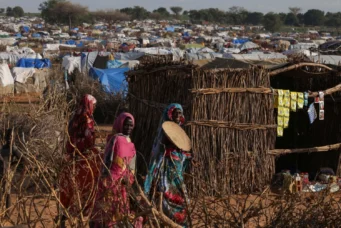
This pilot issue approaches Sudan’s civil war through two distinct lenses. Tahani Abbas, a Sudanese human rights activist directly involved in the country’s mediation process, examines how gendered violence has prevented women from being active participants in the peace process. Lama Hattow, an environmental expert at Johns Hopkins University, analyzes how water management intersects with conflict and mediation dynamics in Sudan.
Additionally, three contributors examine the dynamics and shortcomings of mediation through the lens of their own lived experience. Ambassador Ramzy Ezzeldin Ramzy reflects on his firsthand engagement in Syria, Abdussalam El Belazi draws on the Libyan case to highlight the importance of local mediators, and Assem El Essawi examines the role of the impartial negotiator.
Together, these articles offer a nuanced picture of how mediation unfolds within active conflicts and what it will take to achieve lasting peace in the region. Beyond their immediate scope, the insights generated by this issue and the Pathways to Hope project serve a broader purpose: they provide frameworks for understanding conflicts not covered by the project and a body of practical knowledge to train current and future mediators in helping communities survive war and build toward a more stable future.