The Arrogance and Limits of American Power in the Latest Gulf War
With waning confidence in American influence and power to maintain peace in the region, Arab middle powers are moving toward a security equation characterized by multi-lateralism and regional defence pacts.
In 1966, as the United States was slowly becoming entrenched in Vietnam, Senator J. William Fulbright, the chairman of the Senate Committee on Foreign Relations, wrote a book titled “The Arrogance of Power”. His critique of U.S. foreign policy focused on how American economic and military strength could prove a pitfall if equated with moral superiority. This “might makes right” ethos lends itself to Manifest Destiny, the belief that a superpower has a global mission—and therefore the obligation—to start and end wars, to regime change governments that do not conform to its microcosmic view of global affairs, and effectively police the world against threats. In the 1960s, the latter was the perceived expansion of communism.
Today, Fulbright’s warnings about U.S. missteps in changing global dynamics are as fresh as ever. The U.S.-Israel war on Iran, carried out by the strongest military in the world in alliance with the strongest military in the Middle East and North Africa region, has revealed in a practical demonstration not only what Fulbright meant but also underscored the limits of American power.
A New Dawn…of Failed Policy
A new reality is dawning on the Middle East—one in which months of back-and-forth negotiations, involving regional allies and mediators, toward a comprehensive peace agreement between Iran and the United States falter as so-called ceasefires unravel. It is poignant to mention here that it took 20 months of negotiations between the administration of former President Barack Obama and the Iranians to reach the Joint Comprehensive Plan of Action (JCPOA) on Tehran’s nuclear program in 2015, which was endorsed by UN Security Council Resolution 2231. U.S. President Donald Trump rubbished that deal during his first presidency; now, most political pundits expect that any such future deal with Iran could take years.
If the nexus conflict involving Iran, Israel and the U.S. were to be approached in isolation, there could be room for cautious optimism of a lasting agreement; Iran’s nuclear program has been a mainstay of U.S. foreign policy intervention in the region since the invasion of Iraq in 2003. However, the latest military conflict over the vital Strait of Hormuz comes on the heels of the October 7, 2023 attack by Hamas on Israel that ushered a cascade of events which is still unfolding to the present day. In just two years, the region has undergone tectonic shock from the Israeli war on Gaza and then Lebanon; the 12 days war in June 2025 in which American bombers targeted three Iranian nuclear sites; and Operation “Epic Fury”, the current conflict launched by Israel and the United States on February 28, 2026. The trajectory of these events is not promising, and only adds to the environment of apprehension and uncertainty toward the future, especially with an erratic and unpredictable U.S. president. This uncertain environment will become the new normal in the region for the foreseeable future.
The Temptation of Low-Hanging Fruit
In the past 18 months, the United States has been pursuing a foreign policy built on what it perceives to be low-risk, high-stakes action. This began with Operation Midnight Hammer in June 2025 through surgical strikes against three Iranian nuclear facilities. Since this operation lasted for only 12 days, Trump was able to declare a major victory in line with his election campaign promises not to get involved in any new endless war. This was then quickly followed with what the White House perceived as the successful apprehension of the then-President of Venezuela Nicolas Maduro and his wife in another surgical raid in January 2026.
Both operations (Iran in June 2025 and Venezuela in January 2026) were politically rewarding for the Trump administration. They also brought into focus Fulbright’s thesis of arrogance of power. Washington was flexing its muscles as it demonstrated American military and technological superiority to the rest of the world. It was also a show of force to remind rising powers, particularly China, that the U.S. could cut economic lifelines. China had relied on both Iran and Venezuela for much of its energy imports; Beijing was heavily invested in both countries. Yet, Trump’s successes in both theaters would soon prove to be his own trap. Both operations offered enough incentives for the current American administration to look for additional low hanging fruits to add to its victory roster.
By Israeli intelligence estimations, Iran’s military losses in June 2025—coupled with Israel’s punishing defeat of Hezbollah in Lebanon and the ouster of former Tehran ally Bashar Al Assad in Syria—seemed to indicate that the ruling clergy in Tehran were on the verge of collapse. The powerful popular demonstrations at the beginning of 2026 in many Iranian cities, with Tehran first and foremost, simply reinforced the perception in some circles of the Iranian regime’s vulnerability. The much-vaunted intelligence analysis at the time claimed that all that was needed to ensure the Iranian regime’s downfall was an additional push from the outside. This push, the intelligence held, would come in the form of decapitation of the regime’s religious, political and military leadership—much in line with Israel’s precision strikes against Hezbollah’s leadership (namely, neutralizing its leader Hassan Nasrallah in the previous year) to bring about the desired regime change in Tehran.
That was not only wishful thinking, but a gross miscalculation and a strategic blunder, to say the least. First off, while Hezbollah was weakened by Nasrallah’s death, it was far from losing influence in Lebanon; this is evident now as Israel continues to attack the country’s south under the pretext of neutralizing the group’s threat. But Iran is not Hezbollah. It has for decades fought war after war and prepared for the eventuality of a direct confrontation with the U.S. and Israel. Not only has the Iranian regime proved to be more resilient than originally thought, but it has also added new strength to its position by demonstrating its ability to control the strait of Hormuz and close it at will. The U.S. fleet, and airpower, based in neighboring countries, has been unable to prevent the closure of this vital global economic lifeline through which nearly a quarter of global energy supplies are transported.
Ignoring Local Power
The arrogance of power which led to this war proved it is limited in its ability to produce the desired results. But rather than take a step back and reflect on the local and regional factors—such as the failure of anticipating the closure of the Strait—Trump hunkered down and pushed through with his vision for the Gulf. Fulbright anticipated this hubris: “When a nation is very powerful but lacking self-confidence, it is likely to behave in a manner dangerous to itself and to others. Feeling the need to prove what is obvious to everyone else, it begins to confuse great power with unlimited power… It can admit of no error; it must win every argument, no matter how trivial.”
This has proven to be Trump’s Pandora’s Box. In recent days, regional allies like Jordan, Bahrain and other Gulf Cooperation Council countries are bearing the brunt of Iranian retaliatory attacks against U.S. strikes on dual-use Iranian infrastructure. With the collapse of the June 2026 Islamabad Memorandum for a ceasefire, Trump has threatened and indeed carried out attacks against vital bridges, power grids, and other transportation networks. This has only invited further attacks against countries in the region which have already incurred significant infrastructure and financial losses.
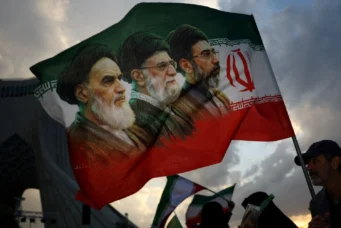
Though it is true that Iran has been humbled militarily and economically, it yet retains considerable political and strategic clout. It is true that Iran lost at least its first and maybe its second tier of leadership with the assassinations of its late Supreme Leader Ali Khamenei and then Ali Larijani, the secretary of the national security council, and the de facto second in command early in the war. However, the regime was able to rapidly replace them and maintained the chain of command and structure of the Islamic state. The Islamic Revolutionary Guard Corps (IRGC), considered the backbone of the Islamic Republic, is now more emboldened and radicalized and almost in total control of decision-making at the higher echelons of the Iranian leadership, at least for now and the medium term according to most specialists on Iran.
Following several consecutive days of high-stakes tit-for-tat military operations, both Iran and the United States appear locked in a cycle of escalation with a resolution nowhere in sight. In Iran, a more hardline and emboldened leadership style has emerged which does not bode well for the future stability of the Gulf, as demonstrated by their willingness to close the strait of Hormuz at will and whenever they deem it necessary to signal their displeasure of a certain action or position adopted by their adversaries in the region.
Benefitting from War
In the meantime, there are benefits to the escalation in the Gulf. Israel, which had for decades tried to convince previous American presidents to do what Trump has finally agreed to do against Iran, is the primary beneficiary of this war. So much so, that it is now a growing hegemonic power which does not shy from flexing its military muscles. Consider its recent history of interactions in the region: First and foremost is its genocidal war against the Palestinian people in Gaza expanding its control to nearly 70% of the enclave, coupled with its expansion of settlements in the West Bank in congruence with new levels of Israel settler violence against the civilian population living there. Israel’s politicians have become increasingly emboldened—on national networks, ultra-right wing cabinet members openly call for the wholesale ethnic cleansing of Palestinians in Gaza and the West Bank, alarming even their staunchest allies in the West.
By the same token, Israel is following through with an expansionist policy in Syria by seizing and enlarging a so-called buffer zone; escalating with Hezbollah in Lebanon by crossing some red lines in decapitating its leadership and bombing the Al Dahya southern district of Beirut and currently occupying parts of South Lebanon. Israel’s reach had no bounds even extending to Doha, Qatar—once considered a somewhat friendly state to Israel; on September 9, 2025, it carried out a decapitation strike against a Hamas delegation the Qataris were hosting as members of a mediation effort with the Israelis.
And, as if this weren’t enough, some of its far right hawks are chattering about the need to deal with Türkiye (which they have configured as the next threat) after finishing the job in Iran. It is this kind of arrogance of power which Fulbright warned about sixty years ago. While his focus at the time was on the American involvement in Vietnam, it very much resonates today as a testament to the hubris with which powerful states believe that military success equals omnipotence. As a senior statesman, Fulbright was well-versed to argue that this hubris can only lead to a disastrous sense of exceptionalism. True to his words, Israel believes that its unique historical mission or existential stakes put it above and beyond the norms and standards governing other nations. Israel, does not hesitate to use its new flexed military power when it deems it necessary, with or without American consent, knowing that their relationship with the United States can withstand any momentary disagreements.This new Israeli projection of power has alarmed many regional actors including Türkiye, Egypt and Saudi Arabia, who have to rethink their strategic position and recalibrate their future regional and international relationships, including with the United States.
Caught in the Crossfire
Since the Israeli-U.S. war on Iran, American bases in the region—which were supposed to act as deterrents against Iranian influence and protect the energy-rich Gulf States—have come under significant retaliatory attacks with a force and speed that caught Bahrain, Kuwait, Qatar and the UAE by surprise. Each U.S. or Israeli attack against Iran only invited Iranian wrath on the countries which are hosting American military facilities. The devastation was not just confined to these bases, but also civilian infrastructure such as airports, water desalination centers, oil refineries and liquified natural gas (LNG) production lines, just to mention a few. Thus, the appearance of stability and certainty—on which were built plans for turning the Arab Gulf countries to international hubs for aviation, tourism, and a safe haven location for finance and business in a turbulent region—was shattered and went up in smoke. Contrary to conventional Western wisdom necessitating the need for American military presence, the war now highlighted the Gulf States’ vulnerabilities. Suddenly, with American policy misfiring in the region, these Arab Gulf States are forced to grapple with a diminished confidence in the future.
The above mentioned events have only added to the anxiety many states feel in the region. Not only has American power—and along with it its ability to project its own influence—receded but the Arab Gulf States must now live with a new regime in Iran, one which doesn’t appear to necessarily adhere to the risk aversion policy practised under the previous leadership of Ayatollah Khamenei. In recent months, a more radicalized and confident Islamic Revolutionary Guard Corps seems to be at the helm for now at least, forcing these states to live with an Iranian threat at their doorstep.
It is no surprise, then, that the Arabs find themselves between a rock and a hard place. They are alarmed by both Israel and Iran, each for different reasons; with regional momentum indicating that there is considerable erosion of trust in American power and reliability, the Arab Gulf states and especially Saudi Arabia are left with no other options than to start hedging against this uncertain future regardless of the chances (or lack thereof) of a nuclear deal between Tehran and Washington.
Forging New Alliances
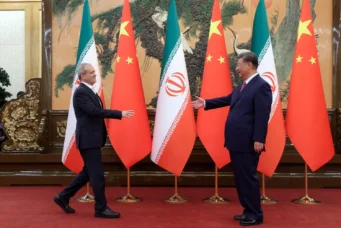
Realizing that regional instability harms global economic vitality and in particular its own trade growth in the Middle East, China mediated an agreement in March 2023 to normalize relations between Riyadh and Tehran. For reasons that we will not go into for the purpose of this essay, the promising agreement was short-lived. In recent weeks, however, a new accord or initiative between the two countries has been floated, with some media reports speculating that a new regional understanding might be in the offing. However, given the history of relations between the two powerful Gulf states, this, too, might also prove to be vulnerable and short lived.
In the meantime, in September 2025, Saudi Arabia signed a new Strategic Mutual Defense Agreement with nuclear power Pakistan: Islamabad immediately stationed 8,000 soldiers in Saudi Arabia. But a more potent hedge might be a move toward a regional alignment with both Türkiye and Egypt. The current increasing thaw in the relationship between Ankara and Cairo, which started about a year ago and culminated in joint military maneuvers of their armed forces, has surely not gone unnoticed in Tel Aviv. Both Egypt and Türkiye possess formidable militaries, equipped with advanced fighter jets, tank battalions and several hundred thousand of military personnel, according to a global defence review.
These actions have fueled speculations about a new security regime with new rising middle powers projected to compensate for the vacuum resulting from the recession in American power. The media is rife with talk of an emerging bloc between Türkiye, Egypt, Saudi Arabia and Pakistan.
As a middle power, with a long-standing tradition of diplomacy, mediation, and peace-making, Egypt has already deployed some of its forces in the UAE and other Arab Gulf countries.
But the country which will benefit mostly from this new changing strategic environment is Türkiye, with its own ambitions to become the hegemonic power of the region, raising the potential for a clash of interests and escalating tensions with Israel on spheres of influence, which may have already started in Syria and could potentially spill beyond the Levant.
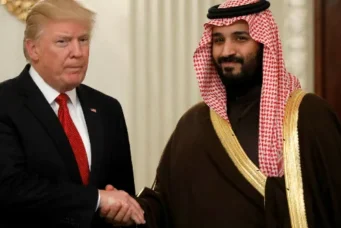
To be sure, it is a tense time. Gone are the promising days when Saudi Arabia’s military, political and economic relations with the United States amounted to a comprehensive strategic partnership. Not since the famous Yalta meetings between U.S. President Franklin Roosevelt and Saudi King Abdel Azziz Al Saud in 1945—in which the former pledged American security in exchange for the Kingdom’s oil—has this strategic relationship come under such strain. And when one relationship suffers, another has the potential to strengthen.
In December 2022, Chinese President Xi Jinping visited Saudi Arabia bringing with him his country’s growing thirst for oil as an emerging power. As a super customer, China inked several deals worth billions of dollars during and after this visit. More alarming was China’s request to pay part of its Saudi oil imports with its Yuan currency, a point not missed by Washington.