The Iran War and the Limits of Great Power
As American military power and Chinese geoeconomics fall short, regional players are searching for greater agency.
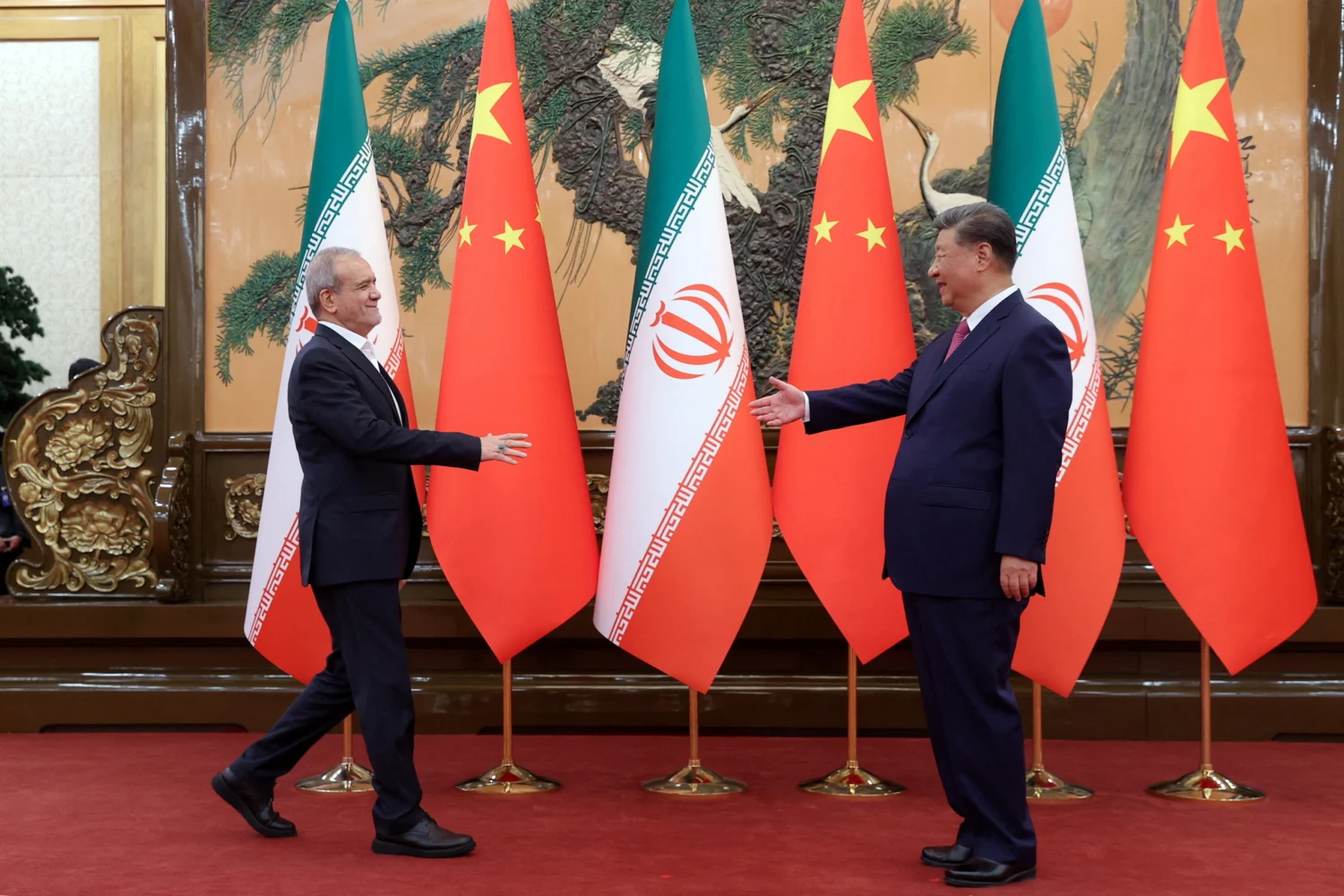
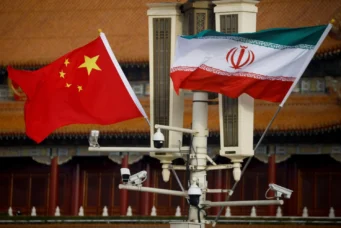
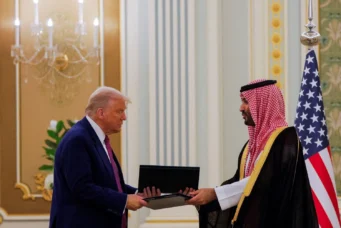
The Trump-Xi Summit in Beijing in May came at a moment of deepening global volatility: a fragile ceasefire with Iran, continued disruption around the Strait of Hormuz, an ongoing U.S.-China trade war, and broader shifts in the global order. The Middle East crisis shaped both the timing and agenda of the summit, delaying the first visit by a U.S. president to China in nearly a decade by more than a month. As the conflict enters its fifth month since the launch of the joint U.S.-Israeli operation in February, the crisis has become a great power stress test, exposing the limits of both American and Chinese strategy while reshaping how regional middle powers navigate the competition between them.
For Washington, the crisis has underscored the growing fragility of its role as the region’s trusted security guarantor. The United States remains the only superpower willing and able to bear the costs of enforcing regional security. Yet, the war has weakened the political foundations of that role. American military power can deter, but it can also escalate, creating new risks and leaving allies vulnerable. It can impose costs on Iran, but as shown by the collapse of the ceasefire in July, it has struggled to translate military superiority into a lasting regional order. Without a clear offramp, the conflict instead remains locked in a precarious balance between direct confrontation and fragile diplomatic efforts.
For Beijing, the war has created economic and diplomatic openings. China has presented itself as a voice of restraint while strengthening its already dominant position in renewable energy, infrastructure, critical minerals, and digital systems. Yet, the crisis has also revealed the limits of China’s risk-averse approach. China can gain at America’s expense, but it cannot, or will not, secure the Gulf, restrain Iran, or provide regional partners with a credible security backstop.
This is the central paradox of the war. It did not produce a post-American Middle East, nor a Chinese one. American military dominance cannot by itself deliver order while Chinese geoeconomics cannot by itself deliver security. The result is a more self-protective regional system in which middle powers seek greater agency and frameworks that can operate under stress.
The Limits of Military Power
The United States and Israel treated the war as an opportunity to reset the Iran equation. Iran’s nuclear, missile, drone, proxy, and regional infrastructure had become too dangerous to manage through deterrence alone, and a decisive campaign could degrade Iran’s capabilities and shift the regional balance of power.
The campaign did demonstrate the reach of American and Israeli military power, but the initial results were more ambiguous and revealed that strategic priorities had shifted from those initially outlined by the United States and Israel when the joint campaign was launched on February 28. The regime is intact, and the fates of its nuclear and ballistic missile programs remain subject to further negotiations.
The ceasefire was declared void on July 8, followed by nearly two weeks of consecutive U.S. strikes on Iranian military infrastructure and the resumption of the naval blockade of the Strait of Hormuz. Iran responded with drone and missile attacks on American facilities across the region, killing three American service members in Jordan. Defenders of the campaign in the United States may argue that the use of force was never meant to deliver an immediate political settlement. It was meant to buy time. Years of degraded enrichment, depleted missile stockpiles, and weakened proxies may not constitute a failure of strategy—they are the strategy.
But a damaged Iran with a functioning regime and intact intent is not a deterred Iran. Capabilities can be set back, but the will to rebuild, retaliate, and adapt may shift the threat into asymmetric arenas rather than remove it. A more vengeful Iran is more likely to rely on missiles, drones, proxy networks, cyber operations, and maritime disruption, shifting the fight into arenas where the Gulf is especially vulnerable.
This is the difference between military dominance and strategic resolution. Military power can destroy infrastructure and demonstrate reach. So far, however, it has not produced a political settlement or made the Gulf more secure.
The American Position Under Strain
The United States has historically served as the region’s security guarantor, a role built on both need and trust. The war has complicated that foundation, leaving traditional allies exposed to Iranian threats and deepening doubts about whether American interests still serve regional stability.
At the same time, the decision to use force confirmed that Washington remains the only actor able to project power at scale—a reminder that the United States remains indispensable. But its approach to peace through strength is less convincing, especially when the American security umbrella fails to keep allies dry.
American protection now carries its own risks. Washington can deter Iran, but it can also widen the battlefield and leave regional partners to absorb the retaliation and economic and political blowback. From the Gulf perspective, the 2026 Iran war only reinforced this notion. For the first time in history, Iran struck all six GCC states. More than 80 energy facilities were hit, racking up an estimated $58 billion in repairs. Qatar lost 17 percent of its LNG export capacity following strikes at Ras Laffan. The closure of the Strait of Hormuz stranded 13 million barrels per day, which reflects the largest oil disruption on record. Yet, the damage goes beyond physical infrastructure and fiscal loss. The war punctured the Gulf’s core strategic asset: its reputation as a stable haven for investment and innovation.
The problem for Gulf states is not that the United States is leaving the region; it is that Washington remains deeply present but in ways that are increasingly difficult to predict and control. If the Iran challenge is left unresolved or if Washington declares success prematurely, Gulf states will be left managing the fallout: residual threats, economic uncertainty, and the political costs of having been seen to shelter under American power. They welcomed the turn to diplomacy and the cessation of hostilities under the June memorandum. But an ambiguous deal leaves them wedged between two actors that are difficult to predict: an emboldened, undeterred regime at their doorstep and a security patron whose protection they can neither count on nor refuse.
China’s Opening and its Limits
The Iran war has allowed China to present itself as a partner in mediation, reconstruction, and regional development for the “day after” in the Middle East. Beijing does not need, nor does it want, to replace Washington to gain ground. It only needs regional partners to view American power as costly and unable to produce order.
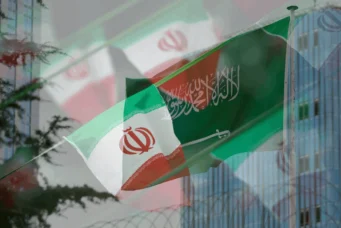
China’s model, most visible in its Belt and Road Initiative, is built around energy demand, infrastructure, ports, digital systems, and political distance from Western-led military campaigns. Beijing also signaled its expanding diplomatic ambitions in 2023, most notably in the Saudi-Iran rapprochement, although the extent of Beijing’s involvement in the direct mediation remains unclear. If American and Israeli forces do not produce a stable regional environment, China’s geoeconomic alternative becomes more attractive by comparison.
Yet, this narrative has real limits. China could not secure the Gulf, restrain Tehran, or offer a credible substitute for American hard power. At a moment when Gulf partners needed protection, Beijing’s language of restraint was not enough.
Throughout the 2026 war, Beijing’s official public posture sought to portray China as a neutral interlocutor, framing Gulf security as a matter of global concern while condemning the U.S.-Israeli operation at international forums—including in its veto of a Bahrain-led, GCC-backed UN Security Council resolution on the Strait of Hormuz in which it argued the text did not go far enough in its condemnation of the United States and Israel. Behind closed doors, Beijing applied real leverage to bring Tehran to the negotiating table; however, it sought a more ‘back door’ role in the mediation process by offloading direct mediation to Islamabad. This strategy allows Beijing to claim credit for success without owning its failure when the ceasefire collapsed.
Gulf states understand that Beijing will not replace the U.S. Fifth Fleet or provide missile defense. But since the war began, and perhaps more so than before, many Gulf states still envision their future less through military alignment than through geoeconomics and geotechnology. In that world, China remains relevant, not as a security guarantor, but as a partner in the economic and technological architecture Gulf states are trying to build.
China’s regional gains will come bilaterally and unevenly. With Iran, Beijing will try to preserve influence without owning Tehran’s risk-taking. With Saudi Arabia and the UAE, it will deepen its role in development, infrastructure, energy transition, ports, finance, and technology. None of this replaces American security, but it embeds China more deeply into the region’s economic operating systems.
At the superpower level, the crisis gives Beijing room to test American bandwidth. Washington has again been pulled into the Middle East at a time when China is focused on Taiwan, the Indo-Pacific, and technology competition. The Trump-Xi Summit should therefore be read not only as crisis diplomacy, but as strategic positioning: China has presented itself as a necessary interlocutor/actor in the Middle East, while seeking to reduce American pressure on trade, technology, and security in the Indo-Pacific. China and the U.S. appeared to agree on a framework of “constructive strategic stability” which Beijing hopes will last for at least three years.
The implication for the Indo-Pacific is not that China will immediately exploit the Iran war militarily. Beijing does not need to move dramatically if the Middle East crisis provides something more valuable: time. Even several years of reduced American pressure would allow Beijing to expand pressure around Taiwan, deepen grey-zone activity in the South China Sea, accelerate capabilities, and test alliance cohesion without crossing into open conflict. This strategic breathing room will allow Beijing to prepare for a contest in the Indo-Pacific on its own timeline.
The Superpower Trap and the Middle Power Moment
For regional middle powers—particularly the Gulf states—that have long used the U.S.-China rivalry to their advantage, the current crisis represents an emerging dilemma. These powers have tried to strike a balancing act: selling energy east while buying security from the west, keeping Huawei in their networks while negotiating American defense pacts. But amid regional instability where neither superpower’s strategy fully serves their interests, the space to play both superpowers without choosing between them will start to narrow.
Regional states still depend on the United States for security and on China for economic depth, but trust neither to prioritize regional stability. The likely response is not a dramatic pivot from one superpower to the other. It is diversification and insulation. Gulf states will deepen ties across multiple partners, including India, Japan, South Korea, Europe, and Turkey, while investing more in their own air defense, maritime security, energy transition, food systems, and industrial capacity.
Through these growing relationships, Gulf states are looking for different things from each partner. India is increasingly important for markets, energy and connectivity. Japan and South Korea bring industrial and technological capacity. Europe contributes finance and defence, while Turkey combines regional access with a growing security role that does not depend on Washington.
This pattern did not start with the war; Gulf diversification was already underway. Under Vision 2030, Saudi Arabia aims to localize 50% of military spending. Procurement deals struck with France, South Korea, and Italy can be read as building blocks for a more localized security architecture. The UAE has taken a similar approach by deepening commercial depth; its January 2026 push to double bilateral trade with India to $200 billion—coupled with a 10-year Abu Dhabi National Oil Company long-term LNG supply deal—demonstrates a growing preference for economic depth over superpower dependence.
What has changed is the logic of diversification. Before the war, it was largely about optimization and prestige: better deals, more partners, and a richer geopolitical portfolio. After the war, it is about resilience. Gulf states are no longer hedging against a future risk. They are responding to a risk already realized: that great-power guarantees may not align with regional interests when they are needed most. The June 2026 Turkey-Saudi agreement to revive the Hejaz railway is an attempt to bypass maritime chokepoints – like the Strait of Hormuz and Red Sea – and facilitate direct trade among regional powers. Another is a discussed UAE-backed route connecting Syria’s Mediterranean ports with Iraq’s Umm Qasr and the UAE’s Khalifa Port.
Regional connectivity still matters, but for different reasons than before. Corridors, ports, energy routes, and digital systems are more strategic, not less. Their purpose can no longer be understood through trade and regional normalization alone—now they are about resilience.
For example, the 2026 closure of the Strait of Hormuz and its revoked opening has reframed the India Middle East Europe Economic Corridor (IMEC) from an ambitious trade project initially designed as a U.S.-led counter to China’s Belt and Road Initiative to a potential lifeline. Trade corridors such as IMEC matter not only because they offer connectivity through a stable region, but because they can be redesigned as resilience platforms for an unstable one: energy redundancy, digital coordination, maritime security, emergency logistics, and technology partnerships.
For the Gulf, this is especially important. Saudi Arabia and the UAE are trying to transform their economies, attract global capital, build advanced technology sectors, and project influence across regions. These ambitions cannot rest on an unstable great-power bargain. They require diversified partnerships, protected infrastructure, and enough strategic autonomy to avoid being trapped by either American escalation or Chinese passivity.
Not Post-American, But Post-Dependence
The Iran war did not end American primacy in the Middle East, but it made it less convincing. It did not make China the region’s new security provider; instead, it exposed how little Beijing is willing to risk. The result is a more self-protective region.
Gulf states and other middle powers will continue to rely on American hard power, deepen economic ties with China, and expand partnerships with India, Japan, South Korea, Turkey, and Europe. But they will do so with a clearer aim: to build enough resilience and room to maneuver to avoid being trapped by any one power.
When Xi Jinping arrives in Washington in September, optics may suggest a world organized around two poles. But the more consequential story will unfold elsewhere—in Riyadh, Abu Dhabi, New Delhi and Ankara, where the question is no longer which superpower will deliver order, but how much room is left for the region to deliver on its own. The next Middle East will not be built by waiting for Washington to restore order or for Beijing to replace it. It will be built, if it is built at all, by regional middle powers responding to the limits of both to strengthen their own agency.