Europe’s Credibility Crisis in the Middle East
Europe talks about rules but follows power. When power shifts, Europe shifts with it, belatedly and uncertainly.
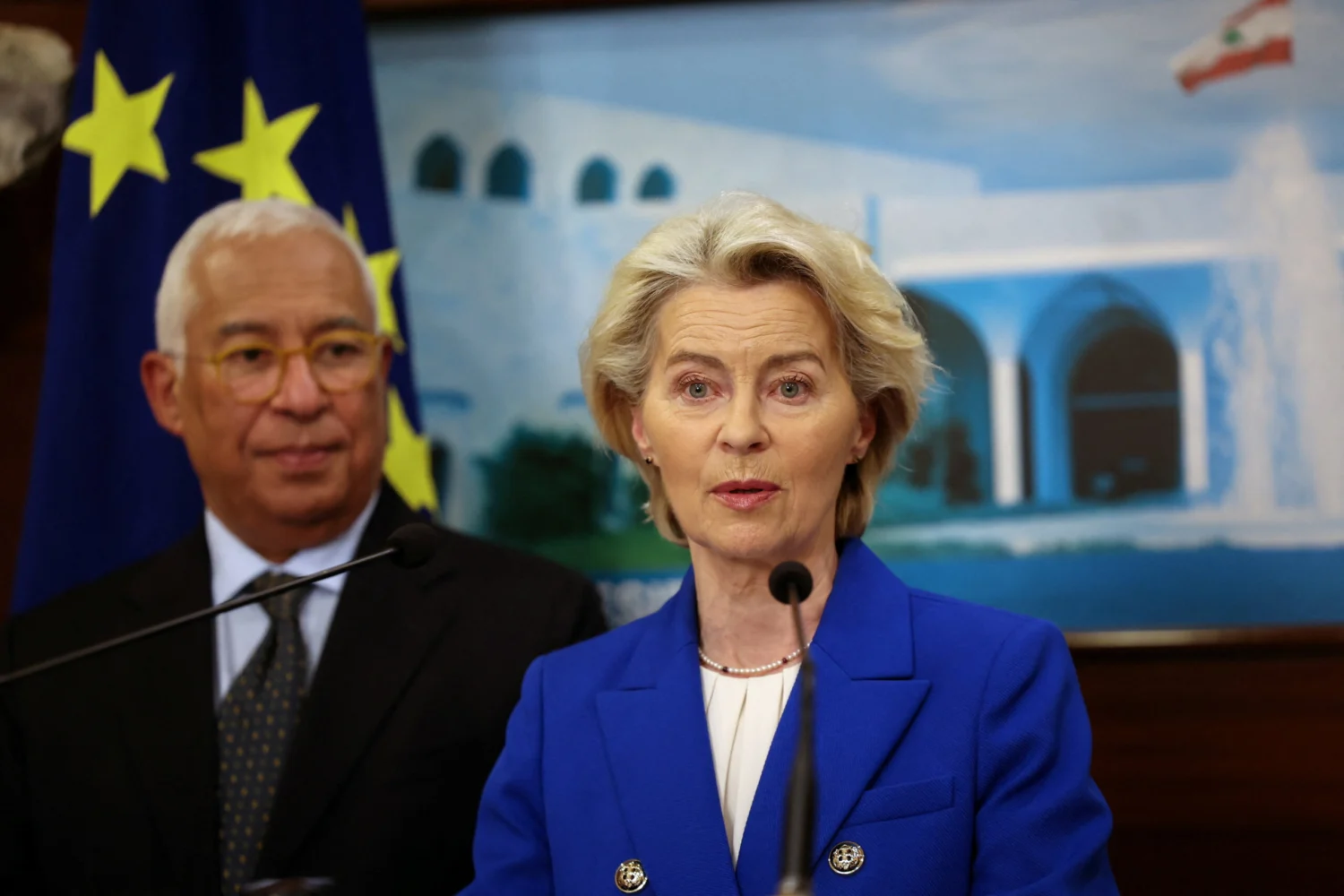
On March 1, 2026, the European Union issued a carefully worded statement on the U.S.–Israeli strikes against Iran condemning Tehran’s indiscriminate military strikes, expressing solidarity with affected regional partners, and calling for “maximum restraint”.
The statement was comprehensive in its list of grievances with the Iranian regime—nuclear ambitions, ballistic missiles, proxy networks, human rights abuses—and yet conspicuously silent on the most controversial dimension of the crisis: the question of whether the military operation itself, conducted without UN authorization and aimed at regime change, was compatible with the international law the EU claims to champion. The omission was not accidental. It was a diplomatic contortion born of deep internal division, one that captured, in a single document, everything that has gone wrong in recent years with Europe’s posture in the Middle East.
Anyone who has spent time in Brussels during a foreign policy crisis will recognize the pattern beginning with the emergency video call of foreign ministers, the agonized drafting session that strips every sentence of anything resembling a position, and, finally, the communiqué that arrives too late to matter and says too little to be noticed. The Iran crisis followed this script almost to the letter. But to treat this as just another episode of EU indecision would be to miss something more important.
The fractured, hesitant European response to the events of 2025-2026 is not an isolated failure of diplomacy but the most vivid symptom of a structural incapacity to act as a coherent geopolitical actor in the Middle East and North Africa. It is an incapacity rooted in institutional design, competing national interests, and an unresolved tension between values and dependence on Washington. The consequences not only extend far beyond the Iran dossier but also erode Europe’s credibility across the entire MENA region, from Gaza to Libya to the Gulf, and leave the EU increasingly marginal at precisely the moment when its engagement is most urgently needed.
From Architect to Bystander: The Collapse of Europe’s Iran Policy
There are few foreign policy issues where the European Union once played a genuinely central and constructive role. Iran was one of the rare exceptions. The diplomatic initiative that ultimately produced the Joint Comprehensive Plan of Action in 2015 began in 2003 as a European project, led by France, Germany, and the United Kingdom—the so-called E3—with the backing of the broader EU. Over twelve years, European diplomats overcame American resistance to engagement, built common ground with Russia and China, and secured a framework of verifiable nuclear inspections endorsed by the UN Security Council. When the deal was signed in Vienna, European leaders could legitimately claim they had given substance to the EU’s aspiration to be a credible security actor on the world stage.
That posture has now collapsed. The trajectory of its undoing is well documented in the Trump administration’s unilateral withdrawal from the JCPOA in May 2018; Europe tried to keep the agreement alive through mechanisms like the Instrument in Support of Trade Exchanges (INSTEX), but these proved largely symbolic—INSTEX took over a year to become operational, and its first transaction, in March 2020, was a shipment of medical goods worth a fraction of pre-sanctions trade. Iran’s progressive escalation of enrichment activities and the E3’s eventual decision in August 2025 to trigger the “snapback” mechanism under UN Security Council Resolution 2231, led to the reimposition of all previously lifted UN sanctions on September 27, 2025 and effectively ended what remained of the deal. By early 2026, European diplomacy on Iran had already shifted from salvage operation to damage control.
The February 28, 2026 beginning of U.S.–Israeli strikes against Iran and the subsequent killing of Supreme Leader Ali Khamenei accelerated this transformation. In a striking break with past caution, European Commission President Ursula von der Leyen publicly called for what she described as a “credible transition” in Iran reflecting the democratic aspirations of its people. EU foreign policy chief Kaja Kallas described Khamenei’s death as opening a path to a different Iran. These were not the words of a bloc neutral on regime change; they were the vocabulary of a Europe that had, at least rhetorically, moved closer to endorsing it.
Yet, this new language masks deep internal fractures. As one Council on Foreign Relations analysis observed, the U.S.–Israeli operation was launched with little to no consultation with transatlantic allies, and European leaders’ responses revealed a continent that remains profoundly divided on questions of military intervention and the use of force. France adopted a legally critical stance as President Macron warned that military action conducted outside international law risked undermining global stability and called for emergency discussions at the United Nations. The United Kingdom pursued a carefully balanced transatlantic posture, combining criticism of the Iranian regime with calls for de-escalation—an approach that satisfied no one at home and invited Washington’s ire. Germany, under Chancellor Friedrich Merz, leaned toward solidarity with the United States while carefully hedging.
The European Leadership Network captured the situation bluntly: While Iran has lost confidence in the EU as the lead implementer of the JCPOA, the new U.S. security strategy regards the EU as something closer to an adversary than an ally, and Israel will hardly turn to Brussels for strategic mediation. What was once Europe’s most significant exercise in “effective multilateralism” has become the stage on which its influence is steadily eroding.
Structural Roots: Why Europe Cannot Act
It is tempting to attribute Europe’s Iran paralysis to the particular circumstances of the moment—the shock of the strikes, the speed of events, or the difficulty of the Trump administration. But the pattern is far older and more deeply embedded than any single crisis. The EU’s inability to project coherent power in the Middle East is a structural condition, not a contingent failure.
The most obvious constraint is institutional. EU foreign policy operates under a unanimity requirement in the Council of the EU that gives every member state an effective veto on sensitive matters. This means that the gap between, say, Ireland’s willingness to champion international law and the Palestinian cause, and Hungary’s reflexive alignment with Israeli and American positions, does not produce a median position. It produces paralysis, or at best, lowest-common-denominator communiqués that list grievances without committing to action. The EU’s March 2026 statement on Iran was a textbook example as a document that catalogued every failing of the Iranian regime while carefully avoiding the central geopolitical question of the war itself.
But the unanimity problem is compounded by something harder to fix—the unresolved competition between national foreign policies and the collective European project. France, with its tradition of strategic independence and its self-image as a balancing power, pursues one logic. Germany, historically committed to deep integration into Western institutional frameworks, pursues another. The United Kingdom, no longer an EU member but still part of the E3 on Iran and a permanent member of the UN Security Council, complicates the picture further. The UK can shape the diplomatic framing while being immune to EU institutional constraints, which tends to pull the collective position in several directions at once.
And then there are the smaller states—the Czechs, the Austrians, the Irish, the Spanish—each pulling the collective position in different directions for reasons that have as much to do with domestic politics as with any coherent reading of the Middle East. As the European Council on Foreign Relations has observed, there is a profound lack of unity in Europe’s response to challenges in the MENA region, which constantly serves to undermine its efficacy. The EU’s economic ties with the region are substantial, but these links remain devoid of any accompanying strategy that would transform them into political capital.
Underneath all of this sits the most fundamental constraint: transatlantic dependency and the Iran case illuminates this most starkly. Even when Europe took an independent position on the JCPOA after 2018, the stance was, as one analysis published in this journal argued, geared toward keeping the agreement alive while hoping for a change in the U.S. position, potentially under a new president. It was a stopgap measure, not an independent contribution to shaping the regional security environment. Europe’s Iran policy was, in essence, a bet on American elections—a dependency laid bare when the bet was lost, first when the Biden administration’s 2021–22 efforts to revive the deal stalled, and decisively when Trump returned to office in 2025. The Middle East Institute made the point sharply that from Tehran’s perspective, Europe’s credibility was destroyed when the United States unilaterally exited the JCPOA in 2018. The Europeans were left wielding only the stick of sanctions, while the carrots—namely sanction relief and security guarantees—remained entirely in Washington’s hands.
The Gaza Test: A Parallel Failure
The Iran crisis did not emerge in a vacuum. It arrived against the backdrop of another failure that had already severely damaged Europe’s standing in the Arab world: its response to the Gaza war that began in October 2023.
The dynamics were painfully familiar. A Clingendael Institute analysis published in the Cairo Review documented how votes on United Nations General Assembly resolutions on Gaza split the EU member states into three irreconcilable camps. The first, the hardline pro-Israel minority, led by Austria and the Czech Republic, voted against ceasefire resolutions. The second was composed of a moderate majority which gradually moved toward supporting humanitarian pauses. And, the third, a vocal group—Spain, Ireland, Slovenia, Norway—pushed for Palestinian statehood recognition and sanctions on Israel. The EU leaders’ summit in December 2023 failed to agree on any joint statement at all. The European Parliament eventually passed a ceasefire resolution so hedged with conditions—including the dismantling of Hamas—that it effectively legitimized the continuation of the Israeli offensive.
The institutional incoherence was compounded by individual acts that contradicted the EU’s official posture. EU Commissioner Olivér Várhelyi, who oversaw relations with the EU’s neighbors, unilaterally announced the suspension of all EU development aid to the Palestinians after October 7—a solo move reversed only after pushback from the High Representative and several member states. Subsequently, with Commission President von der Leyen’s backing, Várhelyi pushed through the EU’s first-ever funding package for Israel and the Abraham Accords. The Commission, aware of the political sensitivity amid the carnage in Gaza, did not publicly announce the package.
The Clingendael analysis captured the deeper problem: the impulse among a significant segment of Europe’s political elite to align with Israel was driven by a sense of civilizational attachment and historical responsibility, as well as less openly pronounced resentments. Identity politics, the analysis concluded, had trumped both liberal, international-law-respecting foreign policy and interest-based realpolitik. This was not merely a moral failing but a strategic one. Europe’s selective application of international law—vigorous in the case of Ukraine, hesitant in the case of Gaza—did not go unnoticed in the Arab world. The double standard was not subtle; it was broadcast in real time across Arabic-language media for over a year. As the Italian Institute for International Political Studies observed, Europe’s reaction to President Trump’s Gaza plan contrasted sharply with its response to his plan for Ukraine: Europeans praised the former and avoided public criticism, while they mobilized against the latter and immediately produced a counter-plan.
The View from the Region: A Credibility Deficit
How does this diagnosis look from the other side of the Mediterranean?
The short answer is that things are worse than European policymakers seem to realize. The cumulative effect of these failures—on Iran, on Gaza, on Syria and Libya before them—has produced a credibility deficit that is not merely a problem of perception but also a material erosion of diplomatic leverage at a time when the regional order is being rewritten.
The Carnegie Endowment for International Peace described Europe’s position on the Iran war in devastating terms when it said that Brussels had slipped into a starkly paralyzed role as mere commentator on the geopolitical upheaval on its southern flank. With its overly cautious attitude and deliberate avoidance of the most controversial dimensions of the conflict, Europe risks condemning itself to the status of a permanently sidelined player. This was all the more frustrating, the analysis noted, because the crisis actually offered a genuine opportunity for ambitious diplomatic action, with the United States in search of a strategy, Arab Gulf countries desperately in need of regional security, and Iran on the verge of a lasting domestic political crisis.
Council of Europe Secretary General Alain Berset framed the stakes in starker terms: the conflict unfolding in Iran, Israel, and across the Gulf is a test of whether Europe intends to shape the emerging order or merely observe its fragmentation. Inaction, he warned, is not prudence—it is abdication.
From the perspective of MENA capitals, Europe’s behavior confirms a long-standing suspicion that the EU is, in the end, a payer rather than a player. The phrase, which has haunted European foreign policy circles for years, captures something real. Europe provides substantial humanitarian aid, development funding, and reconstruction assistance. It issues statements and sends special envoys. But when the decisive moments arrive—when military force is used, borders are redrawn, and new political facts are established on the ground—Europe is absent from the room. The Center for Global Development noted at the start of 2026 that the EU finds itself exposed, stretched, and increasingly on its own, and that many member states are retreating from international development assistance altogether, redirecting resources toward Ukraine and defense spending.
Arab states have drawn their own conclusions. A Carnegie Endowment study documented how, since late 2023, Arab diplomacy has moved from transactional normalization politics toward an assertive, public Arab posture on Gaza and the Palestinian question—a posture that increasingly bypasses Europe. The March 2025 Arab League summit in Cairo adopted an Egyptian-sponsored reconstruction plan for Gaza that was explicitly presented as an Arab alternative to external proposals. The message was clear: if Europe cannot act, the region will act without it.
Strategic Autonomy: Rhetoric Without Substance
The gap between European rhetoric and actual policy outcomes could not be sharper, and nowhere is this more visible than in the EUs embrace of the language of strategic autonomy.
The language of “strategic autonomy” has been central to EU discourse since at least the 2016 Global Strategy, and it has intensified dramatically in the wake of Trump’s return to power. At the Munich Security Conference in February 2026, Chancellor Merz positioned Europe as capable of defending itself, noting that the post–World War II rules-based order no longer exists in its original form. President Macron underscored European strategic autonomy, warning of economic and geopolitical risks stemming from U.S. policies. Josep Borrell, before leaving his post as High Representative, had urged Europeans to “relearn the language of power”.
Yet, the gap between this rhetoric and actual policy outcomes in the Middle East remains enormous. The MEIG Programme at the University of Geneva captured the paradox: Europe’s pursuit of strategic autonomy is first and foremost a matter of political independence and credibility, and strengthening European decision-making capacity would allow the EU to present coherent crisis responses that are seen as credible and consistent rather than contingent on shifts in another capital’s politics. But that is precisely what has not happened. When the Iran strikes occurred, European capitals did not produce a joint contingency plan, a unified diplomatic initiative, or even a consistent public message. They produced three or four competing national positions and a collective statement that avoided the central question.
This pattern repeats across every major MENA dossier. On Libya, EU member states backed opposing sides of the civil conflict, with France and Italy supporting different factions. On Syria, the EU confined itself to humanitarian provision while Russia and Turkey shaped the military and political outcome. On Gulf security, European states continue to compete for arms contracts and investment deals on a bilateral basis, undermining any collective posture. The European Policy Centre observed at the start of 2026 that the fundamental question facing Europe is whether its internal divisions are becoming lasting features of EU politics; not a bug to be fixed, but a defining structural characteristic.
Toward a Credible European Role
The diagnosis is severe, but it need not be terminal. Europe possesses assets that no other external actor can match in the MENA region: geographic proximity, deep economic ties, institutional relationships built over decades, and—when it chooses to exercise it—a normative authority rooted in international law that remains meaningful to many actors in the region, even those who have grown cynical about its application.
Restoring credibility, however, requires more than platitudes and passionate statements. It requires structural reform, and here one is conscious of repeating prescriptions that have been offered many times before—which is itself part of the problem. The fact that these arguments are familiar does not make them wrong; it makes the failure to act on them more damning.
The most urgent reform is institutional. The EU must accept that unanimity in foreign policy is a formula for irrelevance. The debates around qualified majority voting in the Common Foreign and Security Policy (the EU’s framework for coordinating member states’ foreign and security positions) have been underway for years; the Iran crisis should give them new urgency. A mechanism that allows a coalition of willing member states to act under the EU banner—without being vetoed by states with no material stake in the outcome—would be a transformative step. This does not require treaty change; the existing “constructive abstention” provisions in the Lisbon Treaty (2009) offer a legal basis that has been dramatically underused.
Europe must also decouple its MENA policy from the rhythms of American domestic politics. The Iran experience demonstrated that a European foreign policy premised on waiting for the right American president is not a foreign policy at all. This means building genuine economic instruments—not symbolic ones like INSTEX—that can deliver on commitments to partners independently of Washington’s posture. It means developing autonomous intelligence and diplomatic capabilities in the region rather than relying on American assessments. And it means, critically, applying international law consistently—not selectively invoking it for Ukraine while falling silent on Gaza.
Perhaps hardest of all, the EU must reimagine its relationship with MENA partners as one based on mutual interest rather than conditionality and paternalism. The ECFR’s mapping of European leverage in the MENA region found that many Arab officials and elites believe Europe uses two distinct lenses to determine their regional policies—migration and counter-terrorism.
A Europe that reduces its southern neighborhood to a source of threats rather than a space of shared strategic interest will continue to lose ground to China, Russia, Turkey, and the Gulf states, all of whom engage the region on its own terms.
The Cost of Incoherence
The Iran crisis of 2025–2026 has laid bare a truth that European policymakers have spent years trying to obscure: the EU is not yet a geopolitical actor in the Middle East. It is a collection of national foreign policies loosely coordinated through institutions that lack the authority, the speed, or the mandate to act decisively in high-intensity crises. The gap between Europe’s self-image as a normative power committed to international law and multilateralism, and its actual behavior-divided, reactive, dependent on Washington, and selectively principled-is now fully visible to every capital in the MENA region.
The cost of this incoherence is not abstract. It is measured in lost diplomatic influence, in partnerships that drift toward other powers, and in regional actors who no longer factor European preferences into their calculations. It is measured in the growing perception, from Cairo to Riyadh to Tehran, that Europe talks about rules but follows power—and that when power shifts, Europe shifts with it, belatedly and uncertainly. There is a particular sting in this for a continent that built its post-Cold War identity on the proposition that it had transcended power politics.
However, Europe is not doomed to irrelevance in the Middle East. Its assets are real, and the demand for a credible, law-based alternative to American unilateralism and Chinese transactionalism is genuine. But meeting that demand requires a willingness to act—not merely to comment—in a way that the EU has so far been unable to summon. The question for European leaders is no longer whether strategic autonomy is desirable but whether they are prepared to pay the political costs of achieving it. On the evidence of the Iran crisis, the answer remains uncertain.