One Alliance, Two Wars: Why Israel and America Diverge on Iran
While strategically interdependent, their ambitions and long-term mapping of Iran strategy do deviate, ultimately drawing red lines between them
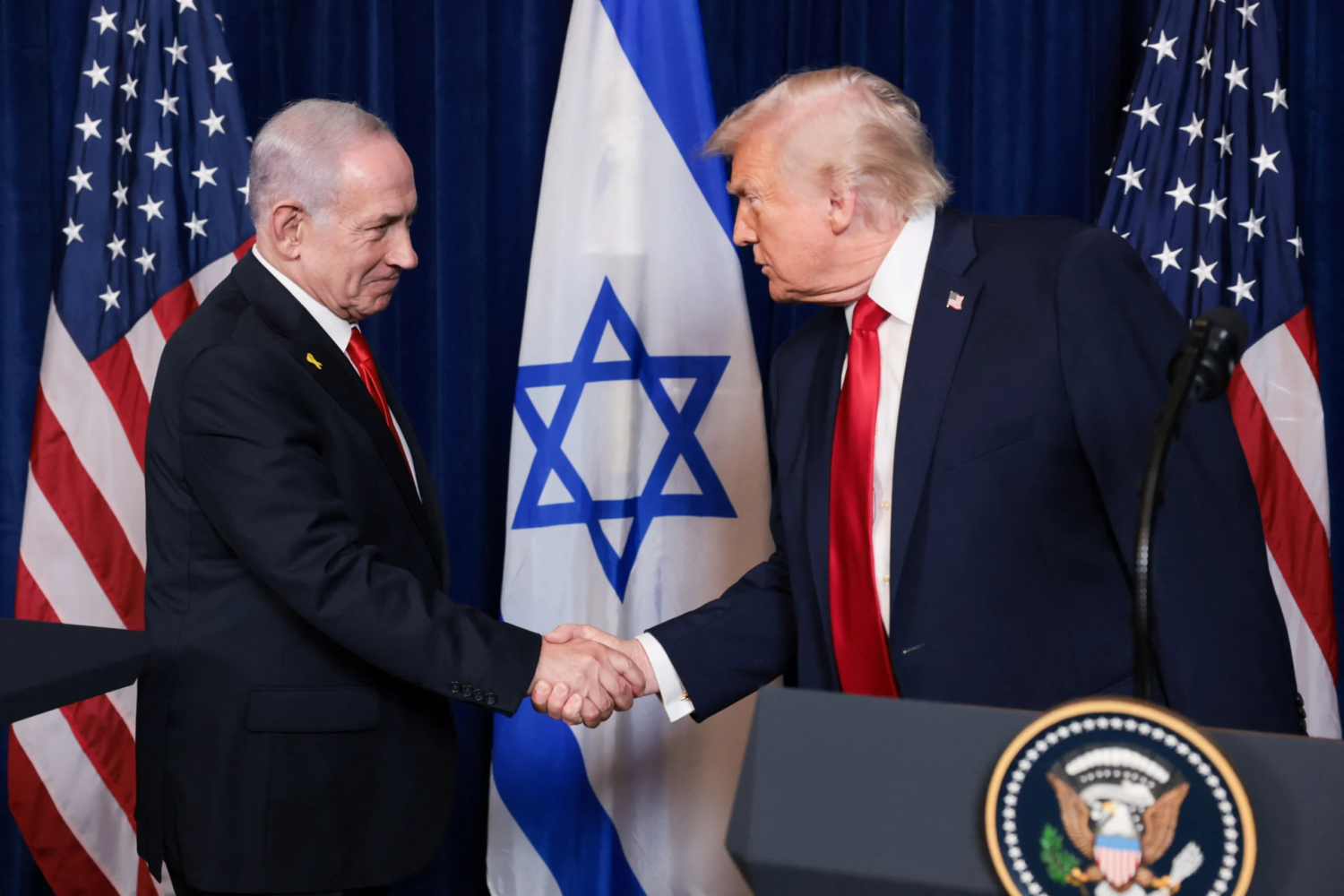
The ongoing confrontation involving Iran, Israel, and the United States has demonstrated a familiar strategic reality in alliance politics: allies may share enemies without sharing the same outlook. The two remain closely connected through intelligence cooperation, military assistance, missile defense systems, and a broad commitment to limiting Iranian regional influence. Yet, beneath that durable partnership lies an important divergence in how each side interprets the Iranian challenge.
Israel conceptualizes Iran as an immediate, geographically proximate, and multi-dimensional security challenge, manifested in missile deployments, proxy networks, cyber capabilities, and ideological hostility. Within this framework, any delay in tackling Iran is perceived as inherently risky, allowing adversarial capacities to deepen and become more difficult to reverse.
By contrast, the United States situates Iran within a broader and more complex global strategic environment. For Washington, Iran is a significant but not singular concern, competing for attention alongside great-power rivalry, alliance management, economic stability, and domestic political constraints. This wider lens encourages a more measured approach, in which policy responses are evaluated not only for their effectiveness against Iran but also for their potential costs across other theaters.
Consequently, where Israel emphasizes urgency and pre-emption, the United States often privileges containment, deterrence, and calibrated engagement. It is important to understand the complexity of these differing approaches because they may complicate the duration of the present conflict. A permanent end to the war may remain difficult to achieve so long as the two allies continue to define the Iranian problem through different strategic lenses.
Operational Priorities and Regional Risk Calculations
These differing threat perceptions translate into distinct operational preferences and regional strategies. Israel tends to view Iranian advances, particularly through proxy actors such as Hezbollah, as cumulative dangers that must be interrupted before they become unmanageable. Its strategic doctrine favors pre-emptive action and the sustained degradation of hostile capabilities, especially in theaters adjacent to its borders. For Israel, confronting Iran is inseparable from neutralizing its regional network, with particular emphasis on proximate threats that can directly affect national security.
The United States, however, approaches these same dynamics through a broader regional and systemic perspective. Escalation involving Iran and its proxies is assessed in terms of potential spillover effects, including state fragility, humanitarian crises, and disruptions to global trade and energy flows. For instance, tensions in critical maritime corridors such as the Strait of Hormuz are viewed not merely as localized flashpoints but as risks to the global economic system. This orientation often leads Washington to balance support for Israeli security objectives with efforts to limit escalation and preserve regional stability. Thus, while Israel prioritizes the neutralization of immediate threats, the United States emphasizes crisis management and the prevention of wider systemic disruption.
This divergence is especially visible in relation to Iran’s regional network. For Israel, Iranian influence is measured through rockets, tunnels, drones, intelligence cells, and armed actors positioned close to Israeli territory. The most immediate example remains Hezbollah in Lebanon. Israeli security doctrine has long viewed Hezbollah’s arsenal as one of the gravest conventional threats facing the state. Any confrontation with Iran is therefore inseparable from Israel’s northern front. Degrading Hezbollah’s capabilities is often seen as central to weakening Tehran’s deterrent architecture.
In contrast, the United States considers Lebanon through the lens of broader regional dynamics. A large-scale Israel-Hezbollah war risks state collapse in Lebanon, humanitarian fallout, refugee movements, disruption in the eastern Mediterranean, and wider escalation involving multiple actors. Washington’s instinct has therefore often been to support Israel’s security needs while simultaneously pressing for restraint and crisis management. Israel’s strategic logic emphasizes neutralizing proximate danger, whereas America’s logic emphasizes preventing wider spillover. The recent back-and-forth on whether Lebanon was part of the temporary ceasefire is a case in point, with Israel insisting that Lebanon should be kept out of the ceasefire agreement.
The same pattern is evident in the Strait of Hormuz. For the United States, Hormuz is not merely a regional flashpoint. It is a central artery of global trade and energy flows. Any sustained disruption affects oil prices, inflation, insurance markets, maritime confidence, and allied economies from Europe to Asia. It also tests U.S. naval credibility as a guarantor of maritime access. For Washington, therefore, the management of Hormuz is tied directly to the wider global order.
Israel also monitors Hormuz closely, but from a narrower strategic point of view. It is concerned less with global shipping governance and more with how Iran might use Hormuz leverage to extract concessions, distract attention, or strengthen its bargaining position elsewhere. Israel’s principal concern remains whether Iranian coercive capacity is rising or falling. The American concern is whether the broader economic system can absorb another shock. Thus, Washington can prioritize de-escalation to preserve shipping stability, while Israel may support sharper coercive pressure if it weakens Iran’s regional posture.
Structural Constraints and the Persistence of Strategic Divergence
The divergence between American and Israeli approaches is further shaped by structural factors, including geography, global commitments, and domestic political environments. Israel’s tolerance threshold is lower because its strategic depth is limited and its sense of vulnerability is acute. In Israeli thinking, even a near-nuclear Iran can transform regional psychology, embolden proxies, constrain Israeli operational freedom, and erode deterrence. The United States has historically been more willing to test diplomatic timelines, inspection mechanisms, sanctions bargains, and phased rollback arrangements. American power and geography provide greater room to manage ambiguity while Israel regards any ambiguity concerning Iran as dangerous. Washington globalizes the Iran war, while Israel regionalizes it. Moreover, Washington must continuously integrate Middle Eastern policy within a wider matrix that includes relations with other major powers such as China and Russia, as well as complex partnerships with states like Pakistan.
Israeli perceptions of Pakistan have often been shaped by security concerns such as its nuclear status, domestic anti-Israel political currents, military links across the Muslim world, and the possibility of strategic alignment with anti-Israel actors. Meanwhile, the United States sees Pakistan through a more mixed framework. It can be frustrating or unreliable, yet still useful as a diplomatic intermediary, intelligence partner, logistical channel, or crisis messenger in moments when direct communication is constrained. Washington is more likely to consider Pakistan as a variable to be managed, whereas Israel is more likely to view it through a risk-based lens.
China presents a still larger divergence. For Washington, every Middle Eastern crisis now intersects with long-term competition with Beijing. A prolonged conflict that drains U.S. resources while China continues importing Gulf energy, expands economic influence, and avoids military burdens can appear strategically disadvantageous. American planners, therefore, ask whether another Middle East crisis distracts from the Indo-Pacific balance. Israel, by contrast, tends to treat China more selectively. Beijing matters in technology, infrastructure screening, diplomatic positioning, and its relationship with Tehran, but China is rarely perceived in Israel as more urgent than Iran’s immediate threat network.
Russia is also viewed through different criteria. The United States increasingly interprets Moscow’s ties with Tehran as part of a broader anti-Western alignment. Military cooperation, sanctions evasion, diplomatic shielding, and transactional coordination all reinforce that perspective. Israel’s approach has historically been more calibrated because of Russia’s presence in Syria, deconfliction requirements, diaspora linkages, and the practical need to manage military realities in Israel’s near theater. This does not imply trust, but it does create a different style of statecraft.
Domestic politics reinforce these contrasting outlooks. Israeli governments operate under intense public expectations regarding immediate security. Rocket fire, border incidents, hostage crises, coalition fragility, and the memory of strategic surprise shorten political patience. American administrations operate under another political logic shaped by electoral cycles, congressional scrutiny, budget pressures, public aversion to new wars, and alliance consultation. Even when U.S. leaders support Israel strongly, they often seek to limit mission creep and prevent broader regional entrapment.
Enduring Partnership Amid Systemic Instability
These differences do not undermine the alliance but rather define its operational reality. The U.S.-Israel relationship remains one of the strongest strategic partnerships in contemporary international politics. Intelligence integration, technological cooperation, missile defense coordination, and diplomatic alignment across administrations provide it with unusual depth. Yet strong alliances are not defined by the absence of disagreement. They are defined by the capacity to manage disagreement without strategic rupture. The U.S.–Israel partnership remains deeply institutionalized and resilient, yet it accommodates persistent disagreement over priorities, timing, and acceptable risk.
The challenge today is that the external environment has become more complex. The United States no longer operates in a unipolar moment where Middle Eastern crises could be handled without significant opportunity costs. China’s rise, Russia’s confrontation with the West, fiscal pressures, divided domestic politics, and contested global supply chains all reduce Washington’s appetite for unlimited regional commitments. Israel, however, cannot outsource geography. It still lives in a neighborhood where proximate threats can escalate rapidly and where deterrence failures carry immediate consequences.
As a result, both countries often speak the language of unity while practicing different strategic calculations. Israel seeks a weaker Iran and a degraded proxy network. The United States seeks a constrained Iran without a region-wide war that benefits rivals or destabilizes the global economy. These objectives overlap, but they are not identical. This divergence is likely to persist. Future crises involving Iran, Lebanon, maritime security, or missile escalation will again reveal the same pattern. Washington will combine sanctions, deterrence, naval presence, and diplomacy. Israel will continue pressing for sharper red lines, faster responses, and longer-term rollback of Iranian capabilities. Neither approach is inherently contradictory but reflects a distinct national condition.
In brief, the United States adopts a globalized perspective on the Iranian challenge, seeking to constrain Tehran without triggering broader systemic instability, while Israel maintains a regionalized focus centered on immediate threat mitigation. This duality ensures continued cooperation, but also guarantees that future crises will reproduce familiar tensions, revealing an alliance characterized not by uniformity of strategy, but by the capacity to manage enduring divergence. They stand together politically and militarily yet are often seen pursuing two different strategic versions of the same war.