It All Started with “Standing with the People of Iran”
The international community must move beyond the tantalizing rhetoric of solidarity and vows of support to something actionable—an extension of pathways to global integration for Iranians
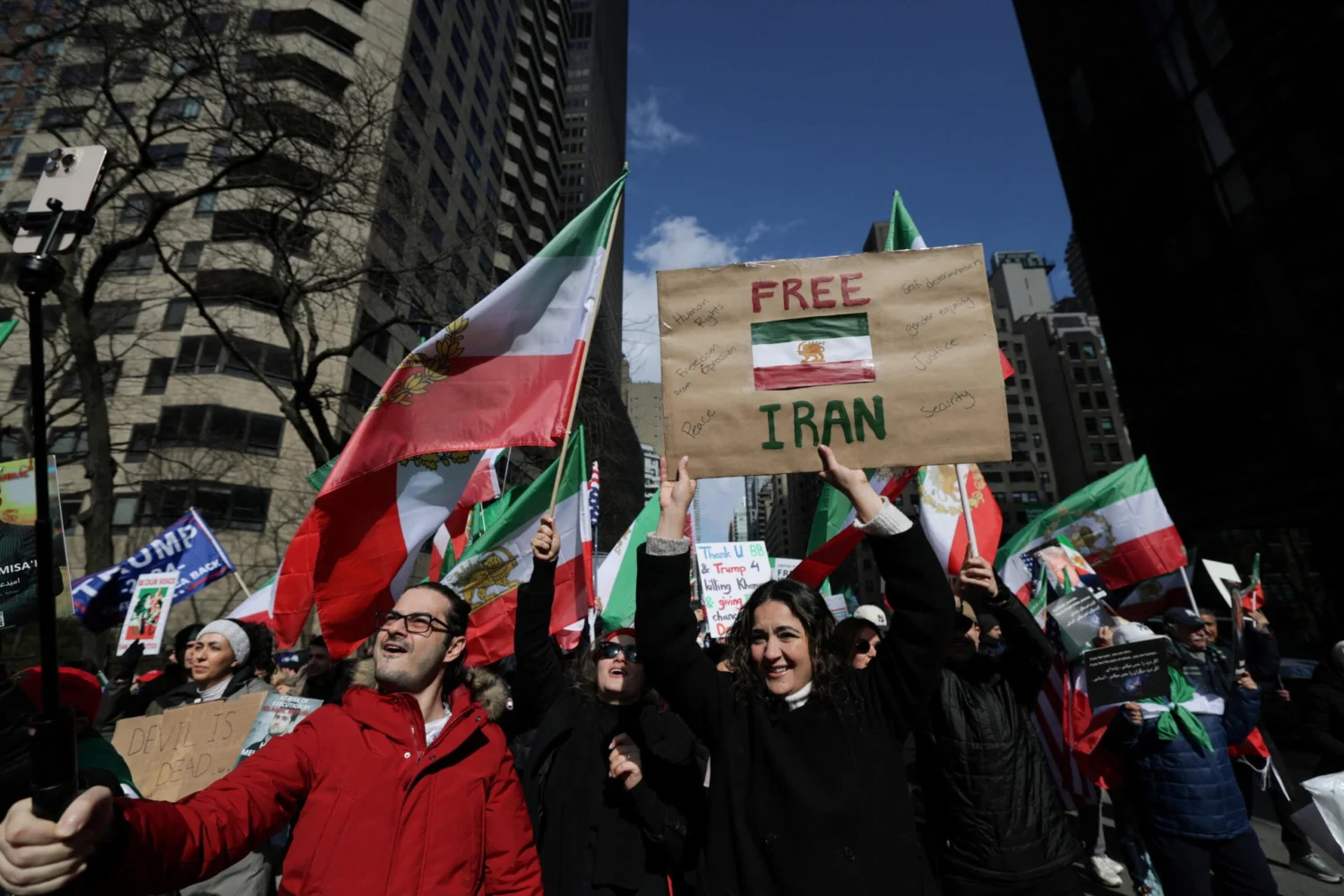
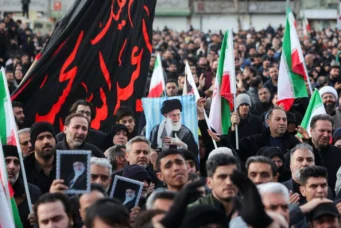
Over the past few months, a large cohort of politicians across Europe and North America have made different statements declaring “support for the Iranian people”. This wave of apparent solidarity was prompted by the scenes of protest on the streets of Iran, where thousands of people bravely defied security forces to demand fundamental change after a nationwide uprising broke out on December 28, 2025.
The fact that the resilience of Iran’s civil society has been acknowledged is welcome news since the Iranians’ compelling desire and pursuit for change—as they have been tirelessly pushing the boundaries of what is possible in a rigid theocracy—often ends up being buried under headlines unless there’s a violent flareup.
But it didn’t take long before the pledge of support to Iranians began to unravel as a myth. It turns out that a majority of the self-styled benefactors were pointing to something different when they invoked ‘support’; they were likely signalling the imminence of further economic strangulation and military escalation. And others simply wished to be part of a growing momentum around promoting democracy overseas without really meaning to stand by the people in question.
The more skeptical among Iranians may have noticed that politicians such as German Chancellor Friedrich Merz or the European Union High Commissioner for Foreign Affairs Kaja Kallas, who were among the first to express their concern for human rights in Iran during the protests, were strangely content when the Israeli regime launched surprise attacks on the country last June. The logic doesn’t appear to be consistent.
During Israel’s June 2025 aerial campaign, which killed an unprecedented number of civilians in Iran, these leaders, and many others, failed to utilize the bully pulpit and legal mechanisms at their disposal to quell Tel Aviv’s aggression. Besotted by the emerging spectacle of regime change in Tehran through militarism, the nominal guardians of international law gave a man wanted by the International Criminal Court carte blanche to complete Europe’s “dirty work”.
The UN Security Council also sidelined itself, leaving it to a Truth Social post by U.S. President Donald Trump to bring the crisis to an end on June 23. He would later claim that his intervention was one additional contribution to his Nobel Prize-worthy peacemaking portfolio. The ceasefire megaphoned by the chairman of the Board of Peace, however, didn’t endure beyond nine months when he himself volunteered to start a new conflict in Iran.
If the war last summer was launched with oblivious disregard for the decades-long sacrifices of Iranians seeking democracy at home and reconciliation abroad, the new U.S.-Israeli war that Trump declared on the morning of February 28 came on the heels of an uprising that was ruthlessly crushed by the government in Tehran.
This was not the first revolt against the repressive policies of the Iranian government. Sweeping protest movements over the past four decades have validated the credentials of Iranians as a disobedient, politically-conscious people who seize every opportunity to reject injustice and discrimination.
From the rare 1999 student protests that presented the Islamic Republic of Iran with an early test of legitimacy to the 2009 Green Movement, which showed a different face of Iran to the world, a succession of uprisings has driven home that Iranians have fought for their democratic ideals perhaps more than any other nation in a neighborhood dominated by U.S.-backed autocracies. Just a month before the war started, Iran had been rattled by a popular protest movement that was crushed by rampant government violence and repression, sleeper cell activity, and foreign involvement.
At least 3,117 people were killed in the protests as per official data, while an Iranian human rights advocacy group in Washington reported 7,007 casualties. Trump acknowledged in April that the United States had sent arms to the protesters, and Israel’s foreign intelligence service Mossad admitted that it had been involved in the uprising “on the ground.”
Reza Pahlavi, the son of Iran’s former shah, has reportedly been operating a clandestine, militant network in Iran, which he has called the “Immortal Guard”. Responding to a CBS News question in January about his responsibility for the violence, he said “this is a war and war has casualties”.
The popular protests of 2025-26 were among the most notable turning points in Iran’s decades-long social evolution centered around home-grown political change. This push for mobility should have been recognized and given some space to crystallize rather than micromanaged and exploited as a prelude to military misadventures.
The last thing Iran needed was another round of externally-imposed, state-sanctioned violence germinating as a war of choice. Although the goalposts of the Trump-Netanyahu war have been frequently shifting since it started, one of its first premises was to help the Iranian people and offer them relief.
That never happened. Wars don’t ever help anyone.
Now, with at least 3,375 Iranians killed as of this writing and 125,000 residential and civilian buildings damaged, an inevitable question to ponder is if any of the statements of solidarity with the Iranian people these past months were truthful at all.
As they count the death toll and take stock of the destruction of their homes, businesses, and collective memories, Iranians will inevitably grow more skeptical of the idea of liberation by the West, especially now that they’ve endured its wrath firsthand. But the people of Iran can’t be blamed for feeling abandoned by the world.
To make matters worse, what was touted as an operation to rescue them has visibly mutated into a zealous crusade. More than 200 complaints have been filed with the U.S.-based Military Religious Freedom Foundation by service members across different branches of armed forces, saying they have been instructed by the Trump administration that the war on Iran is a divine mission to bring about the Armageddon.
As the dust settles on the bombing campaign and Iranians reflect on rebuilding their country, many of them have already begun to question, including on social media, if their democratic aspirations have been used as a smokescreen to unleash the forces of a dormant ideological project.
The promise of support for the Iranian people may not be considered an abstraction to be contained in a wish list. Support has a definition and can be quantified. During key junctures of Iran’s modern history, the tantalizing rhetoric of solidarity has not evolved into actionable measures including extending pathways to global integration to Iranians.
Suffering Amplified
To be sure, there is no compatibility between speeches meant to feign friendship with Iranians and the decades-long economic sanctions that have drained them. What these sanctions have managed to achieve—as testified by politicians involved in devising the measures, and political scientists studying them—is the empowerment of the most hardcore elements of Iran’s ruling elite and the disenfranchisement of its urban middle class.
By severing Iran’s civilian economy from the rest of the world and imposing unnecessary obstacles on people’s access to commodities, services, and mobility, a fragile civil society has been incrementally pauperized. Consequently, Iran’s brain drain has accelerated, the agency of its young middle class has diminished, and the black-market economy—operated by the military-industrial complex—has strengthened.
In the process, Iranians have had to endure recurring hardships such as aviation accidents spawned by the inability of domestic airlines to purchase new aircraft under the sanctions regime, or the silent deaths of diabetic and epidermolysis bullosa patients precipitated by the blockade of medical imports. Even standardized English tests that international institutions used to administer in Iran have been halted. These harms have been seen as widely-accepted side effects.
At 68.9%, Iran’s inflation rate is the third highest globally in 2026 (after Venezuela and Sudan), signaling a grim economic landscape in which the basic household staples are now becoming elusive luxuries. Since 2010, when the most comprehensive UN sanctions on Iran were enacted, Iranian families never recouped the measures of relative economic stability they had enjoyed before.
After the adoption of Security Council Resolution 1929, which introduced a multi-layered sanctions architecture against Iran, the value of Gross Domestic Product (GDP) per capita almost steadily declined every year, nosediving to $3,415 this year from $9,610 in 2011, which was the second highest recorded figure since 1980 when the International Monetary Fund (IMF) began monitoring the country’s economic trends.
To put Iran’s economic landscape in perspective, neighboring Turkey with an almost comparable population may be a reliable benchmark for analogy. Despite its high inflation rate of 28.6%, Iran’s western neighbor has achieved a GDP per capita of $19,000, one of the highest in the region, even surpassing Russia.
A comprehensive study by economists Mohammad Reza Farzanegan and Nader Habibi found last year that the size of Iran’s middle class shrank to the tune of 17 percentage points yearly between 2012 and 2019 as a result of the sanctions, eroding one of the most potent engines of social and political change in the country.
Using a synthetic control method, the German and U.S.-based researchers documented that despite Iran’s prevailing patterns of flawed statecraft, its people took the worst hit due to U.S, and international sanctions compared to other civilian populations targeted by such restrictions, making Iran the most heavily-sanctioned country before the Russian invasion of Ukraine in February 2022.
These adverse impacts have even swayed people’s perception of their socioeconomic standing. The share of Iranians who identified themselves as being part of the middle-class income group, according to the World Values Surveys, dropped from 78.7% in 2005 to 63.7% in 2020, two years after Trump’s unilateral withdrawal from the Joint Comprehensive Plan of Action (JCPOA), informally known as the Iran nuclear deal.
Throughout these years, U.S. and European politicians ignored the calls by human rights groups, international law scholars, and civil society actors in Iran who had demanded that the sanctions be scrapped as a precursor to a more sustainable resolution of the world’s differences with Iran.
Even at the height of the Covid-19 pandemic when a global health emergency warranted a unified global response, the U.S. government pressured the IMF into blocking Iran’s request for a $5 billion relief loan. At that time, ultra-conservative think tanks and interest groups in Washington and abroad actively courted the first Trump administration to impede Iran’s loan application, the first such request from Tehran in decades.
This wide array of prohibitions was often rationalized through fearmongering around an Iranian nuclear scarecrow, even when it was patently clear to stakeholders that such a threat was inflated. Only two months before Trump walked away from the JCPOA, the Chief of Staff of the Israel Defense Forces Gadi Eisenkot had told the newspaper Haaretz the deal was working.
“Right now the agreement, with all its faults, is working and is putting off realization of the Iranian nuclear vision by 10 to 15 years,” he said in an interview in March 2018.
Disillusionment and Reversal of Gains
Each time engagement with Iran was given a chance, the Iranian public responded by sidelining the politicians and fractions that thrived on isolationism, rent-seeking, and corruption. Whenever Iran’s outreach to the world was snubbed, the outcome was disillusionment leading to engineered elections and reversal of democratic gains that had been achieved piecemeal.
The anointment of the hardline cleric the late President Ebrahim Raisi in 2021 is one such example, illustrating the perils of isolationism. In an electoral race designed to ensure the moderates had no chance of victory, Raisi won an easy race, in no small part due to the despair caused by the collapse of the nuclear deal and its symbolism as a totem of Iran-U.S. reconciliation. A deafening smear campaign by Raisi’s loyalists against the ‘Westernized’ reformists followed.
But withholding support while pontificating about the bravery of Iranians and the support they deserve has not just been a feature of long-term decisions. On different levels of policymaking, discriminatory practices have been ingrained in how Iranians have been treated. Otherwise, an empowered population wouldn’t be facing so many uphill battles to claim its rights, resist corruption, and challenge the policies of its leadership.
Immigration is one of the areas where numbers substantiate how prejudice toward Iranians has been formalized over time. In a January 2025 global mobility report, the London-based migration consultancy Henley & Partners found Iran one of the top 20 Asian and African countries with the highest Schengen visa rejection rates in 2023. That year, 30.3% of visa applications by Iranian nationals submitted to the consulates of 29 Schengen area countries were turned down.
European embassies in Tehran, which a large number of Iranians rely on for critical consular services, are often among the first institutions to vacate as their staff go on extended vacations during periods of political and social turmoil. While Iranians are offered charming words of solidarity by powerful foreign leaders, what they deal with in real life is how these same leaders divest from Iran’s civil society and invest in warmaking fantasies.
In fiscal year 2024, even before Trump came to power for the second time, the U.S. Department of State refused 55.54% of tourist visa applications from Iranian citizens. In the fiscal year 2025, that figure spiked to 62.44%. A report by the Boston-based educational form Shorelight revealed that at a staggering 84%, the refusal rate for student visa applications from Iran topped the list of year-over-year increases in 2025.
Academics, artists, writers, and journalists are some of the main incubators of change in Iran and they are often the ones who turn into partners for dialogue with the global community, helping with shaping a better understanding of Iranian society. Keeping them at arm’s length as undesirable elements while presenting effusive lectures about commitment to human rights in Iran doesn’t give any impression of support.
Coupled with media portrayals that are becoming increasingly nihilistic as they frame Iran and its people in broadly derogatory terms, that ‘support’ often comes off sounding like a codeword for erasure and—as Trump suggested in a dreadful social media post—the groundwork for a civilization to go extinct.
Even the MAGA Persians who had fallen for his “help is on the way” tagline couldn’t hide that they were offended when he subsequently threatened to send Iranians back into the “Stone Ages, where they belong”.
The substance of these offenses wasn’t adeptly challenged. Journalism is by definition expected to produce context on such critical matters, and corporate media could have highlighted the sophistication of Iran’s millennia-old heritage, sciences, and architecture, its rich customs and cuisines that have inspired every Middle Eastern culture, and the envied Persian literature influencing the likes of Ralph Waldo Emerson and Henry David Thoreau.
But they didn’t. Instead, the majority of these broadcasters opted for the parade of experts willing to go on air and begin their commentary with an indictment of the Iranian government, only to conclude with a villainization of a country of 90 million. The bottom line is that corporate media are growing allergic to context and addicted to cliches.
Case in point is the sweeping media broadsides launched against Iranians shortly after Israel initiated its unprovoked attacks on Iran last June in what came to be known as the 12-Day War. On the long-running ABC News talk show The View, a co-host sparked controversy by suggesting that women in Iran are uneducated and cannot own property.
Sara Haines issued an apology later after objections to her statements spiraled. It was, indeed, unusual to describe Iran’s women using that racist trope while 60% of university students and graduates are women and youth female literacy rate stands at 99%—among the highest even in the developed world.
But the sentiments that Haines echoed was only one visible thread in a subtle web of false assumptions about Iranians that have become common knowledge in the absence of factual guardrails against demonization. The current war is partly the outcome of a decades-long peddling of willful ignorance.
It is unknown when the tenuous ceasefire that has halted the war on Iran will crater. So far, it’s believed that the bombing operation has been one of the most extensive aerial warfare campaigns in American history. The United States alone carried out approximately 13,000 airstrikes while the Israeli regime conducted more than 10,000 strikes.
Beyond hospitals and schools as the now-routine casualties of wars of aggression, UNESCO World Heritage Sites, bridges, prestigious universities, bookstores, music academies, bakeries, desalination plants, churches and media offices were indiscriminately bombed. Once this tragedy is over, Iranians will most probably not walk past the sites of rubble and debris in their neighborhoods and assume that these horrors were intended to offer them support.