Deterring Iran: New Avenues for the GCC
In the span of 50 years, Iran has developed a unique threat profile—bolstered by resilient military, economic, and social structures—which now requires tailored long- and short-term deterrence interventions.
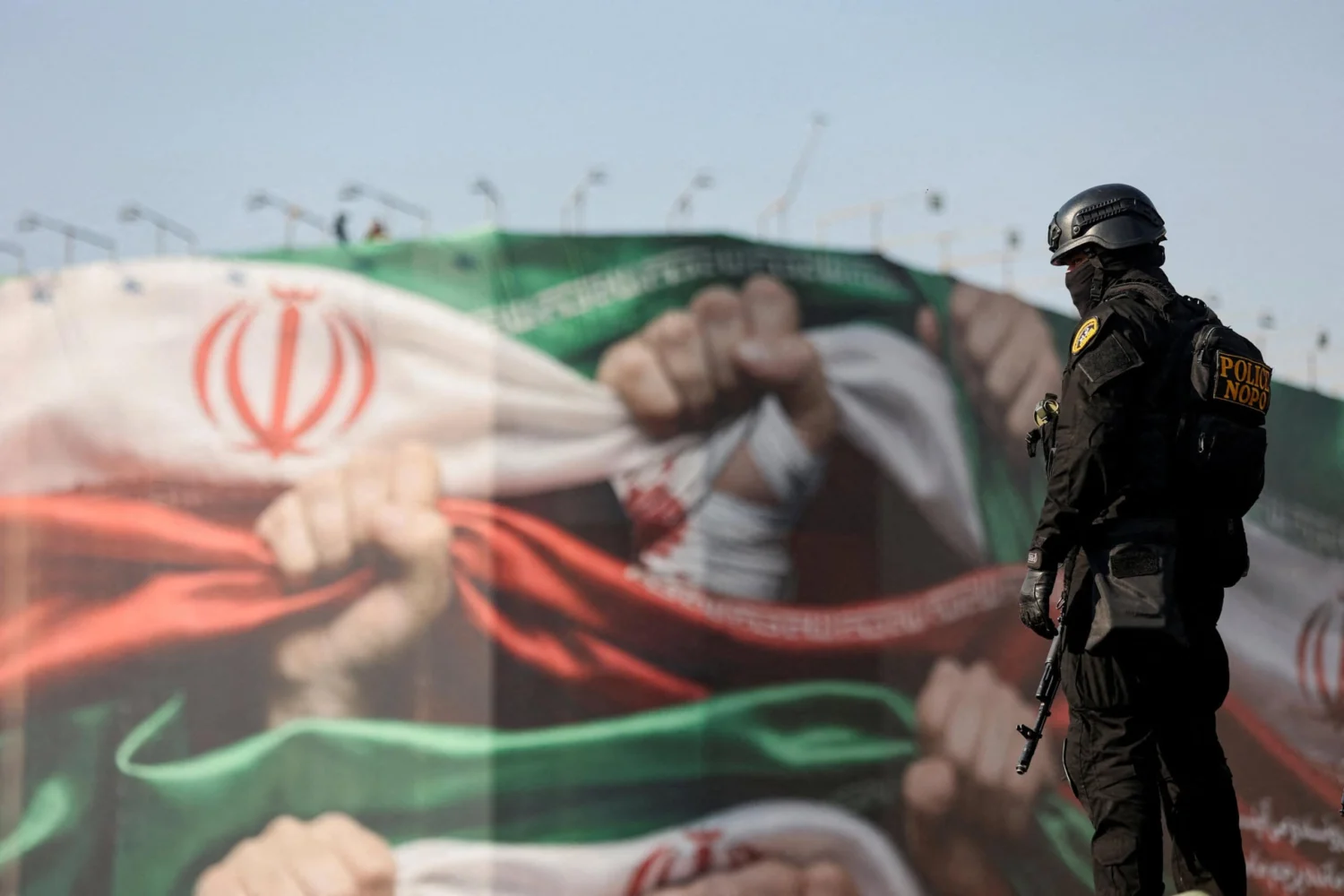
The six Arab members of the Gulf Cooperation Council (GCC) have suffered considerable losses since the February 28, 2026 U.S.-Israel attack on Iran plunged the region into crisis. In addition to the human casualties, the six states have sustained considerable damage to their infrastructure and economies.
The energy sector in particular has incurred significant damage. Over 80 facilities were hit across the GCC, causing damage that may cost up to $58 billion to repair. Trade was also significantly impaired; disruptions in the Strait of Hormuz are estimated to cost Gulf states over $50 billion.
GCC airspaces have also experienced significant closures, an especially damaging phenomenon for countries that are global air travel hubs, international tourist destinations, and homes to millions of expatriate workers.
A much graver consequence may be the future of the Strait of Hormuz, a key component of the GCC’s economy. Prior to the war, the Strait facilitated the movement of 20% of the world’s petroleum liquids, 20% of global liquefied natural gas, and roughly a third of the world’s traded fertilizer. Since February, however, the Strait has remained under de facto Iranian control, a far cry from the freedom of navigation experienced in the waterway for decades following the conclusion of the Iran-Iraq War.
Virtually all the obstruction to waterway trade and damage incurred since February 28 has been the result of Iranian military action. This suggests that the pre-crisis measures taken by the GCC to deter, or at least minimize, such fallout have been less effective than envisioned.
This essay proposes a series of novel deterrence options that may merit consideration from the GCC countries in the coming period. These avenues provide alternatives to offensive kinetic options, instead focusing on financial and commercial disruptions that are tailored to Iran’s unique, sanctions-resistant setup. These suggestions are distinct from some of the cruder and more generic economic punishments that the country has been subjected to in the past.
Iran’s Rebuilt Military Capacities
Since the end of the Iran-Iraq War in 1988, a wounded Iran has been slowly rebuilding. During the 1990s, the United States utilized dual containment to pit Iran and Iraq against each other to keep both restrained; a power vacuum emerged following the U.S. invasion of Iraq in 2003. Iran filled this vacuum by establishing a network of regional proxies throughout Lebanon, Syria, Yemen, and Iraq. In the 2010s, Iran also began creating the infrastructure to build and store more accurate short-range to intermediate-range missiles domestically, and exported these systems to its regional allies. While Iran was building its stockpiles, the GCC continued building its security partnership with the United States, including the significant procurement of defense systems.
However, given the considerable military power deployed by both Israel and the United States during the conflict—and their ostensibly limited success in inducing substantive, favorable changes in Iran’s positions regarding its nuclear program, missile systems, and regional partnerships—an emerging conclusion for the GCC countries is that a deterrence strategy centered on active (kinetic) conflict may benefit from a partial reformulation.
This view is supported by a deeper analysis of Iran’s capabilities, which reveals a highly idiosyncratic socio-economic and military profile for the Middle Eastern state. One particular issue requiring further study is Iran’s asymmetric weapons program that provides it with a significant cost advantage in kinetic confrontations. Moreover, it has engineered a social structure and sanctions-evasion system that insulate the elite ruling coalition from the challenges typically associated with widespread economic hardship.
Ultimately, deterring Iran effectively—and limiting the mutually devastating consequences of violent conflict—rests upon a thorough understanding of how Iran is structured, how it operates, and what drives its thinking, especially in light of the changes in senior leadership over the course of the last five years.
But it needs to be stressed that investing in deterrence does not imply abandoning engagement. In fact, seeking a diplomatic rapprochement is complementary to materially disincentivizing Iran from attacking the GCC countries. Once any selection of neighboring countries has established a mutual non-aggression equilibrium, the conditions become ripe for mutual commercial exchange and more evolved forms of cooperation. In this sense, deterrence can be considered the first tangible step on the path to deescalation and the resumption of constructive relations in the region.
The Theory of Military Deterrence
Before exploring potential alternatives, it is first important to understand why previous deterrents—namely military in nature—have not been effective with Iran. The simplest explanation of military deterrence is that a potential aggressor chooses not to launch an offensive action because they are made to acknowledge that the potential costs of the attack outweigh the potential benefits.
This works through two primary mechanisms. The first is deterrence by denial: convincing the aggressor that their attacks will be unsuccessful and not worth attempting. This is typically achieved through effective defenses, including high-quality fortifications, missile defense systems, cyber-preparedness, and so on.
The second is deterrence by punishment, i.e., credibly committing to retaliating following the aggressor’s attacks. This requires the target state to possess sufficient offensive capabilities, such as the ability to retaliate—strike with rockets, launch cyber attacks, and so on. By default, the retaliation mirrors the initial aggression under the umbrella of “tit-for-tat” enforcement, but heterogeneous military strengths can also spawn asymmetric responses. Crucially, deterrence requires that threats be credible, meaning that the aggressor believes both that retaliation is feasible and that the target state is politically willing to undertake it.
Underlying these two mechanisms are a series of notable assumptions about the prospective aggressor. The core premise is that the aggressor is broadly rational, valuing survival and preferring lower costs to higher ones, rendering them capable of basic cost-benefit reasoning.
Around this fundamental assumption revolve a series of important complementary considerations. These include that the aggressor is averse to economic pain, typically because economic deterioration delegitimizes the war efforts of the political elite, resulting in eroded public support. Moreover, aggressors must have a basic fear of incurring military losses, including both the physical infrastructure damage and the political losses associated with military defeat. An overarching assumption of military deterrence is that the prospective aggressor has sufficiently invested in the status quo to reject the notion that action is an existential necessity. That means that the aggressor must act without ‘backs-to-the-wall’ desperation. Consequently, any ideological commitment to revision or disruption of the status quo must play a minimal role, if at all.
India and Pakistan illustrate these dynamics well. The two have a multidimensional set of mutual grievances that include territorial disputes, allegations of state-sponsored cross-border terrorism, transboundary river management, and discord over the treatment of religious minorities, yet the conflict is largely contained. This is because both states have credible response options, including nuclear weapons, and because their respective elites value state survival more than ideological maximalism. Moreover, deterrence by denial also holds effectively because neither side realistically believes it could conquer and occupy the other at an acceptable cost.
Iran, meanwhile, fits some of the assumptions that are required to make military deterrence effective: it has a functioning, professional government that exercises a monopoly over violence, and an entrenched political elite that does not want to rock the boat domestically, especially in light of the financially lucrative nature of the prevailing power constellation from the perspective of its elite beneficiaries. However, Iran does not check every box typically needed to make deterrence a relatively straightforward endeavor.
Iran’s Idiosyncrasies
Due to Iran’s baptism of fire during the 1979 Revolution, the bloody eight-year war with Iraq, and the persistent mutual antipathy with the United States, it has evolved to become comparatively resistant to orthodox deterrence principles. A central driver is the role of religious and revolutionary ideology in its decision-making—a phenomenon that has been hardened due to several assassinations experienced by its political elites over the last decade, several at the hands of Israel.
While this does not make Iran irrational, it does distort its perception of economic hardship compared to a typical 21st-century state. In particular, rather than weakening its resolve, financial sanctions and economic warfare often convince Iran that it is taking the right course of action and that it must persevere rather than relent. Moreover, the threat of being assassinated—usually enough to make any human think twice about their actions—has limited coercive effectiveness due to the ideological commitment of Iranian officials who view their death on the job as an act of martyrdom.
Iran’s ideology also endows it with an affinity for instigating disruption and instability across borders, especially when this supports its own political stability. Indeed, Iran’s constitution since 1979 mandates the exporting of its Revolution even if this damages relations with neighboring states. For example, one factor influencing former Iraqi president Saddam Hussein’s decision to invade Iran in 1980 was the late Ayatollah Ruhollah Khomeini’s explicit call for Iraqis to launch an Islamic revolution and overthrow Iraq’s secular Baathist government.
Meanwhile, Iran’s upper ranks are composed of hardliners who frequently make inflammatory statements about the country’s long-term plans for the region, including explicit threats to violate the sovereignty of nations, even ones that Iran does not formally regard as immediate military threats.
Beyond this, the security apparatus has developed considerable domestic coercive capabilities. As a result, the country’s political leadership exhibits a diminished fear of insurgency or popular revolution—a confidence that has been borne out in surviving repeated bouts of civil unrest over the last five decades. Accordingly, while the government is obviously averse to suffering infrastructure damage stemming from a war, that distaste is comparatively decoupled from the civil anger that such destruction might stir.
In parallel, Iran has developed an effective machinery for both evading and absorbing traditional economic sanctions after being subjected to one of the most extensive and long-standing financial punishments of any country in history. The resulting asymmetry is one in which Iran can often impose disruption at a lower marginal cost to itself than to its adversaries.
Furthermore, Iran has developed a military doctrine that enables it to attack neighboring states at low material cost while simultaneously making deterrence by denial expensive and difficult to guarantee. Its investment in drones and missiles allows it to strike sensitive infrastructure—causing extraordinary damage to the defending state—with high accuracy and confidence, and using a military setup that cannot be easily degraded, let alone eliminated.
A core element of Iran’s grand strategy is the cultivation of strong relations with non-state actors, with some functioning as de facto proxies. The nation’s regional network of allied militias and armed organizations serves several critical functions simultaneously: it extends Iranian influence far beyond its borders, creates strategic depth, enables plausible deniability, imposes costs upon adversaries at relatively low direct risk to Tehran, and reinforces the domestic prestige of the Islamic Revolutionary Guard Corps (IRGC) as the guardian of the “Axis of Resistance”.
Finally, it is important to note that Iran has a comparatively low confidence in the progress of negotiations with the United States/West to yield favorable outcomes, such as securing sanctions relief or military de-escalation. Among the contributing factors are various high-profile instances of other parties reneging on long-term deals, in addition to the successful assassination of senior Iranian officials central to negotiations. Relatedly, due to the weakening of international law over the last two decades, international pressure is less effective in deterring Iran than it was in the past.
The GCC countries have developed deterrence systems for Iran that clearly reflect a knowledge of these idiosyncratic resistance measures, such as investing in countermeasures for missiles and drones. However, the current conflict has demonstrated that such systems are not sufficient to reliably deter Iranian escalation, suggesting a need to fashion alternatives. An added consideration is that the GCC countries have a built-in preference for non-military deterrence systems: Iran possesses a deeper recent history of sustained combat operations and proxy warfare, and the GCC economies are much more sensitive than Iran’s to the damage caused by violent conflict. Accordingly, the GCC countries may now wish to reappraise how to deter Iran in a manner that aligns with their own strengths and weaknesses, and with systems that operate with higher levels of effectiveness.
Long-term Capacity Degradation
Iran’s deviation from the standard international relations template means that the traditional suite of interventions seeking to degrade its long-term capacity to threaten others is unlikely to yield the desired outcomes. Instead, the GCC countries should consider forging a strategy that is tailored to Iran’s idiosyncrasies, while also being aware of the need for a horizon of 10+ years, as there are no quick solutions to the current predicament.
Any long-term strategy for constraining Iran must begin with an understanding of how the country’s ruling coalition maintains internal cohesion and political control. The country is not sustained by ideology alone. Rather, it rests upon an interlocking system that combines religious legitimacy, coercive capacity, patronage distribution, and economic control.
At the center of this architecture sits the IRGC, which functions not merely as a military organization but also as a political, economic, and security institution deeply embedded throughout Iranian society and the broader state apparatus. The IRGC also oversees a broad regional network of proxy organizations and aligned militias that extend Iran’s strategic reach while simultaneously reinforcing the institution’s domestic prestige and political influence. This is the crux of how the Iranian political system has reduced the extent to which widespread economic suffering translates into existential political pressure.
In light of this, a key conduit for long-term capacity degradation is financial and commercial disruption targeting elites. The Iranian ruling coalition depends heavily upon patronage networks, sanctions-evasion systems, semi-state commercial entities, and privileged access to economic rents; measures that gradually increase the cost and difficulty of sustaining these arrangements can impose meaningful strategic pressure over time. This includes disrupting front companies, tightening scrutiny over illicit financial flows, targeting intermediary logistics and shipping networks, exposing beneficial ownership structures, and coordinating internationally to constrain the IRGC’s access to hard currency and commercial infrastructure. The objective is not to cripple the Iranian economy in a general sense, but rather to steadily erode the efficiency, profitability, and internal cohesion of the networks that help sustain the regime’s coercive and regional capabilities.
Targeting Iran’s proxies is also an important component of any strategy seeking to constrain Iran given the significant contribution that these groups make to Iran’s offensive and defensive capabilities. Consequently, weakening these networks can gradually erode both Iran’s regional leverage and the institutional influence of the security apparatus internally.
Notably, this does not necessarily require direct military confrontation. Rather, it can include disrupting financing and procurement channels, exposing illicit commercial activities, increasing the political and economic costs borne by host governments, undermining the local legitimacy of proxy organizations, and strengthening state institutions in countries vulnerable to Iranian influence. An important conduit is working with the legitimate governments of the countries where these non-state actors operate in a manner that empowers the state and weakens the proxy. Over time, such measures can increase the financial and political burden associated with sustaining Iran’s regional architecture while simultaneously diminishing the strategic returns it generates. The overthrow of the Assad government in Syria—whether it was motivated by these considerations or otherwise—represents a dramatically effective demonstration of how to disrupt Iran’s proxy networks.
It is also important to pursue a parallel diplomatic and coalition-building track that includes maritime-security cooperation. Iran’s asymmetric strategy derives much of its effectiveness from its ability to exploit fragmentation among its adversaries while imposing geographically broad-based economic disruption upon the international system. Consequently, strengthening coordination between the GCC and major external stakeholders—including Western powers and Asian energy importers—can reduce Iran’s capacity to isolate individual states or exploit divergences in threat perception. Countries such as Japan and South Korea, for example, have suffered considerable economic damage due to the closure of the Strait of Hormuz—an act that they regard to be a violation of international law—and would therefore be willing in principle to contribute to multilateral and internationally lawful efforts at maintaining global energy security.
Building on this, maritime-security cooperation is especially important given the centrality of shipping lanes, energy exports, and commercial logistics to Gulf prosperity. Joint naval patrols between GCC states, intelligence-sharing arrangements, coordinated responses to shipping disruptions, and the institutionalization of crisis-management mechanisms can collectively raise the operational and political costs associated with maritime escalation. More broadly, durable coalition structures help transform attacks upon Gulf infrastructure or shipping from isolated bilateral disputes into broader challenges to the stability of the global economy, thereby increasing the diplomatic pressure confronting Iran during periods of escalation.
In summary, these three prongs may constitute the primary elements of a long-term, background strategy aiming to degrade Iran’s capabilities, tailored to the unique threat profile it has developed over the course of the last five decades. However, such interventions do not work as real-time deterrent levers during a hot and escalating conflict; they require a series of specific, complementary steps.
Real-Time Deterrent Levers
Arguably, the most important policy for the GCC to consider is how to fashion automatic financial retaliation packages that are designed to motivate de-escalation among Iranian elites. Systematically disclosing information about offshore assets, front companies, beneficial ownership structures, corruption, monopolistic privileges, and the overseas commercial activities of elites can gradually increase both the reputational and operational costs associated with escalation. The same method can be applied to regional groups and individuals affiliated with the IRGC to weaken their commitment to supporting Iranian attacks.
As above, the objective is not to impose maximal economic pain upon Iran as a whole. Rather, it is to increase the immediate and predictable costs borne by the networks and individuals most responsible for escalation, and exploit areas in which the Gulf states possess considerable comparative advantages, including finance, logistics, regulatory coordination, and integration into the global commercial system.
A well-designed escalation ladder targeting the sanctions-evasion infrastructure could also play a constructive role. Establishing a pre-communicated framework in which specific forms of Iranian escalation automatically trigger proportionate restrictions upon these networks could therefore strengthen deterrence by increasing the predictability and immediacy of the associated costs. Transparency is especially important because deterrence depends not merely upon the existence of retaliatory capabilities, but also upon Iranian decision-makers clearly understanding the consequences attached to particular actions.
On the defensive military side, a foregone conclusion is that the GCC countries should continue evolving their denial-based deterrent by adapting to the idiosyncratic offensive profile that Iran has developed. This may involve a detailed analysis of the Ukrainian model of countermeasures, which has proven comparatively successful in the field against Iranian-designed drones.
The key lesson from the Ukraine model is that drone defense cannot rely exclusively on expensive high-end interceptors, since that creates an unfavorable cost-exchange ratio for the defender. Instead, Ukraine’s experience points to the importance of layered, adaptive, and cost-sensitive systems that combine electronic warfare, mobile air-defense units, low-cost interceptor drones, distributed sensors, rapid tactical learning, and careful allocation of premium air-defense assets to higher-value threats such as ballistic and cruise missiles.
Critically, for the GCC countries, the relevance of the Ukrainian model lies not in copying it mechanically, but in extracting lessons about how to blunt Iran’s ability to impose disproportionate damage through low-cost aerial systems. The differences in the two theaters of war imply that the GCC countries should ultimately develop their own unique brand of defense.
Finally, a more challenging but potentially highly rewarding approach would focus on rapid multinational maritime deployments that adopt a defensive posture, representing an investment in both the denial channels of deterrence. In the terrestrial domain, this was demonstrated by Bahrain in 2011 when the GCC’s Peninsular Shield forces were deployed and contributed to the deterrence of Iranian aggression, suggesting a naval analogue would be promising.
Ultimately, the objective should not be to eliminate rivalry or permanently transform Iran’s worldview—which are unrealistic ambitions—but rather to fashion a deterrence architecture capable of reducing the frequency, scale, and appeal of aggressive action, thereby limiting the immense human and economic costs that violent conflict imposes on all parties involved.