A Region Catapulted into Desensitization
Social media platforms can double as repositories of global events, allowing for inquisition into the unfolding of critically impactful events.
Three years ago to the day, the Middle East woke to the news of a devastating Hamas assault on Israeli towns and a music festival, during which hundreds of civilians were killed, with later investigations exposing the further, tragic toll of the Israeli military’s own restrictive Hannibal Directive.
Social media quickly fell prey to conspiracy theories, a war of words, and propaganda about the horrors suffered by both Israelis and Palestinians. The digital landscape, already troubled even before the current Middle East crisis, changed forever as users were forced to navigate between the censorship of media powerhouses and the groups rallying against one another.
For students of regional history, October 7, 2023 was shrouded in the foreboding awareness that our world was about to change much in the same vein as the years following 9/11.
Prior to 2023, Gaza had already been brutally embargoed and subjected to constant Israeli military campaigns that had killed thousands. Palestine itself has been under occupation since 1967 (and earlier, some may argue). Even with this history, the Israeli military response following October 7 was unfathomable.
That such an act of brazen anschluss—openly championed and demanded in Gaza by Israeli Finance Minister Bezalel Smotrich, National Security Minister Itamar Ben Gvir, and Justice Minister Yariv Levin—could happen under the auspices of International Law was shocking enough. But that this had become a genocide—no words can ever do this horror justice.
Genocide.
Yes, a significant consensus of the world’s leading specialized experts (International Association of Genocide Scholars) and international legal commissions has formally concluded that Israel’s military actions in Gaza constitute a genocide.
Didn’t the world vow “never again” in 1945 after the Nazi dehumanization of Europe’s Jews?
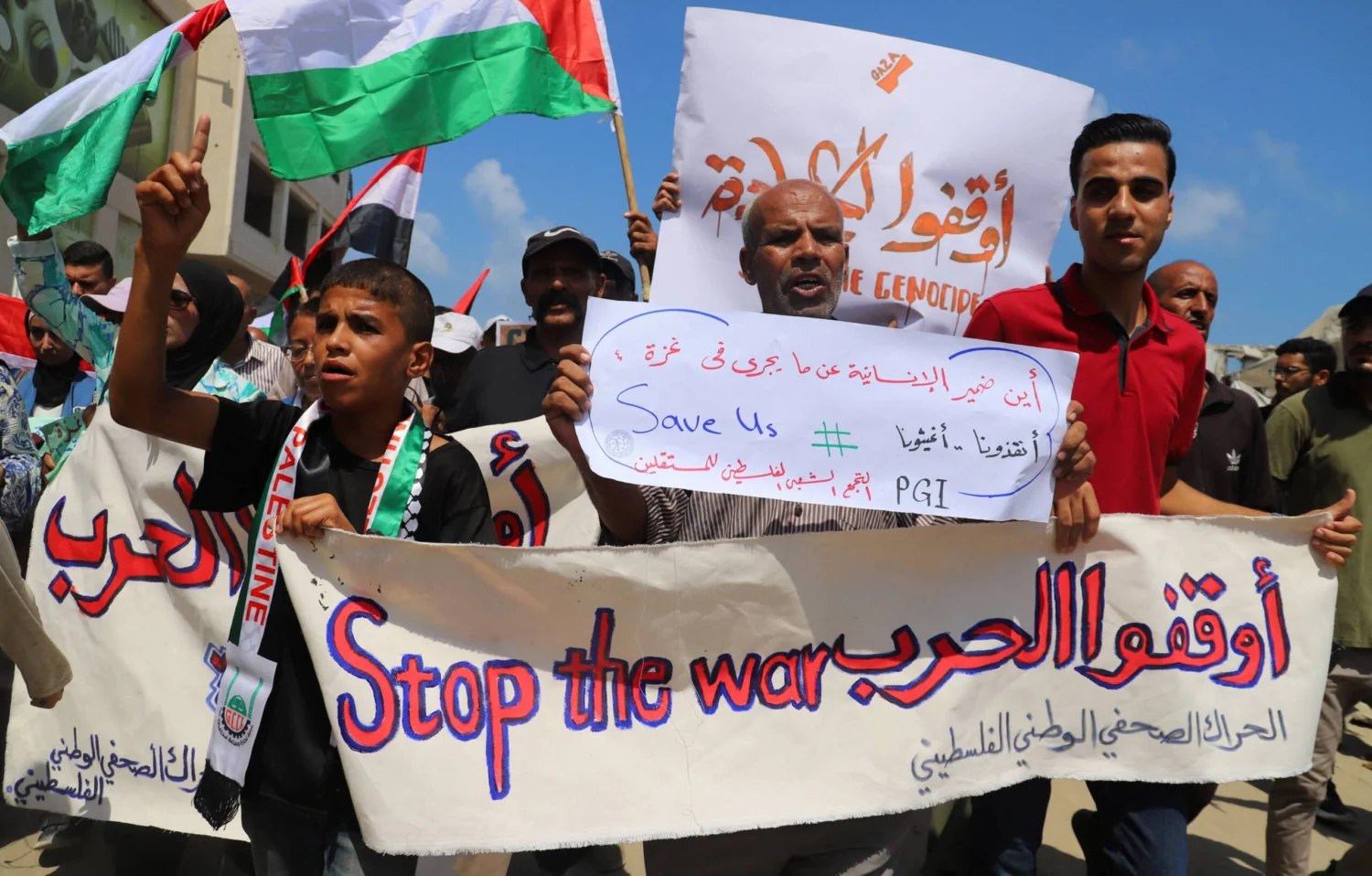
In the three years since October 7, the plight of the people of Palestine has been raised among street demonstrators, college campuses, in the halls of European and American power, and in the Spanish, Irish, and other boycott campaigns.
Palestine was recognized as an independent, sovereign state first in the summer of 2024 by Norway, Ireland, Spain, Slovenia, and Armenia, and later during the United Nations General Assembly in 2025—Canada, the UK, France, Portugal, Belgium, Luxembourg, Malta, and others.
All in all, 16 of the 27 European Union members now recognize the inalienable rights of the Palestinian people.
This is a historic diplomatic shift in the West’s treatment of the question of Palestine. It is a somber note, however, that Israelis and Palestinians paid a terrible cost for this to happen.
And yet, the veil of conditionality is ever present. The recognition of statehood carries with it the burden of reforms of governance, almost as if saying, “Behave, or your inalienable right to sovereignty is forfeit.” It sounds too… colonial.
Imagine if the concept of “never again” had not only been firmly entrenched in 1948 with the Universal Declaration of Human Rights, but also applied to all unequivocally. The world has had enough of the global political hypocrisy.
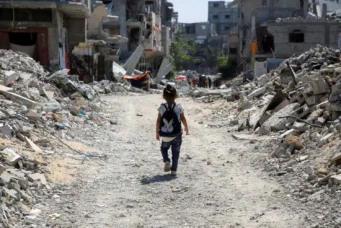
But Gaza still lies in ruins. Despite the peaceful efforts of tens of thousands of people around the world—Arabs, Europeans, North Americans, Africans, Asians, Israelis, Muslims, Jews, Christians—the destruction of Gaza is not over. The suffering and agony of the people of Gaza—and the West Bank Palestinians being ethnically cleansed by a violent settler movement—continues apace.
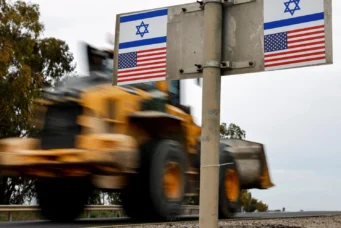
Throw the opening salvos of war between the United States, Iran, Israel, Hezbollah, and the Houthis into the mix, and it becomes all too possible to comprehend the desensitization that many in the region may feel.
While mediators, human rights groups, activists, and diplomats work tirelessly toward some semblance of peace and security in the region, there is nothing brave about this new post-October 7 world. We must find resolve in the words of those who contemplated the pitfalls of perpetual war.
Jordan’s King Abdullah II has repeatedly warned of the dangers of such conflict:
“For decades, the international community has taken the easy way out—managing this conflict with temporary stopgaps rather than resolving it. But stopgaps are illusions that only provide a veneer of security while the underlying fires continue to burn.”
Similarly, Israeli philosopher and the first president of the Israel Academy of Sciences and Humanities Martin Buber summed it up very well decades ago:
“To win a truly great life for the people of Israel, a great peace is necessary, not a fictitious peace, the dwarfish peace that is no more than a feeble intermission, but a true peace with the neighboring peoples.”
With the Israeli national parliamentary elections (the first since 2023) and U.S. midterm elections upon us, and the possibility of shifting political tides in Tel Aviv and Washington, one has no recourse but to hope that the governments (and non-state players) of the region can end the politics of aggression and occupation for just a few minutes to consider a life of coexistence, tolerance, and prosperity.
Firas Al-Atraqchi
Managing Editor, The Cairo Review