Local Mediation in Southwestern Yemen Alleviates Life Under Siege
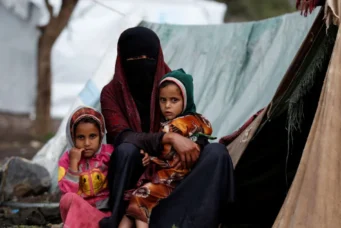
For the residents of Taiz under one of the longest military blockades in history, life became a daily struggle of days-long journeys searching for food, water, and vital medical supplies. This is the story of one Yemeni woman whose name became synonymous with bringing the warring parties together.
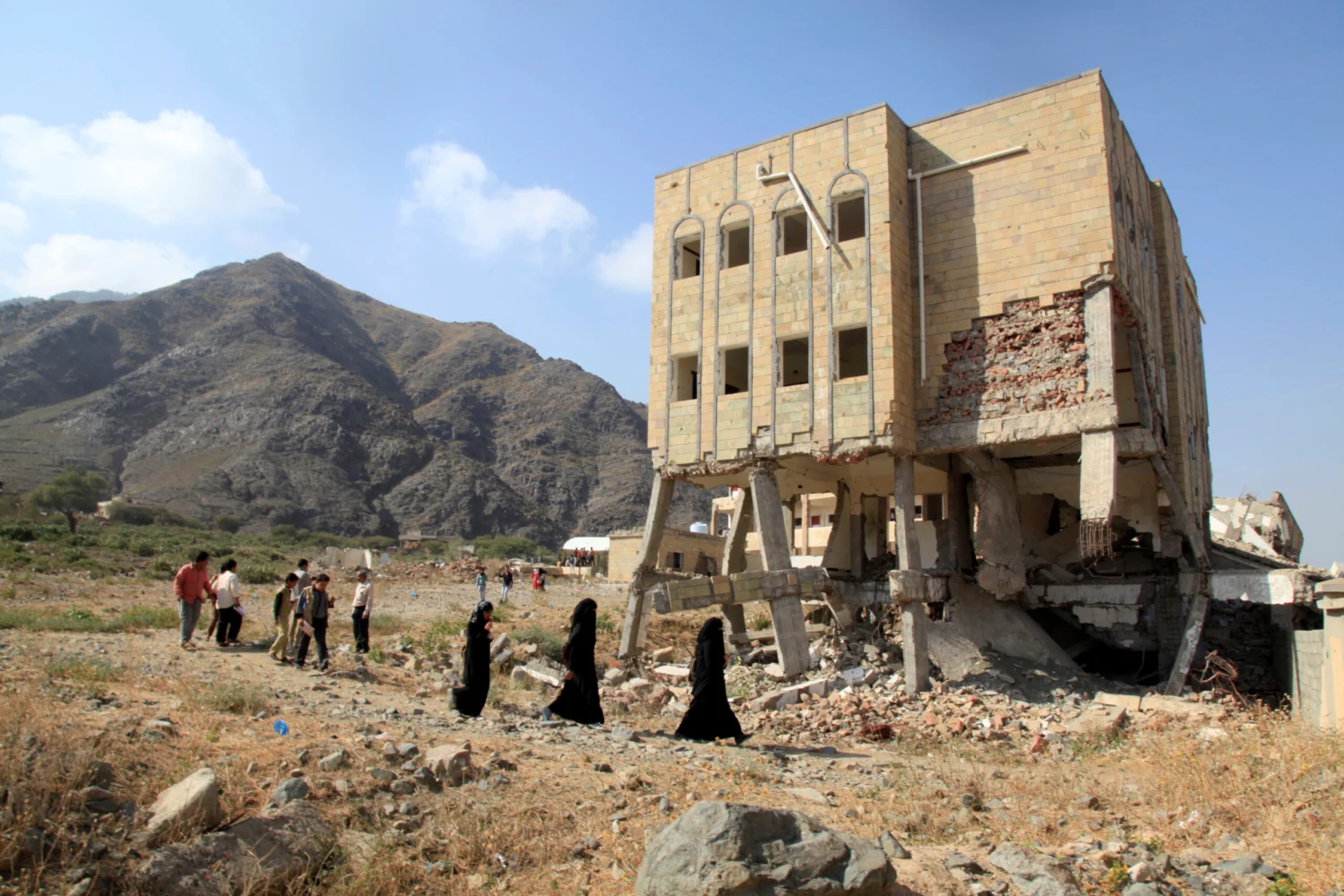
In late March 2015, at the height of the Yemeni Civil War, Houthi rebel forces in the southwest imposed a blockade on the region’s largest city of Taiz.
Taiz was a vital holding point for the government the Houthis tried to overthrow; it lay along a route bridging between northern and southern Yemen, linking the capital of Sana’a to the southern port city of Aden.
To secure the city, the Houthis realized that it would take intense and bloody street-to-street urban warfare, perhaps a cost they were not ready to pay for their military goals.
By sectioning off Taiz from the rest of the country, the Houthis were able to consolidate their chain of supply lines while splitting the territory of the internationally recognized Yemeni government. This would later prove to be a key leverage point in any future settlement.
In the meantime, life in the city ground to a halt as main and secondary roads were cut off, and movement within the city was restricted to a few dangerous routes.
Having failed to seize the city from its fighters, the Houthis chose instead to suffocate the civilian population of roughly 200,000.
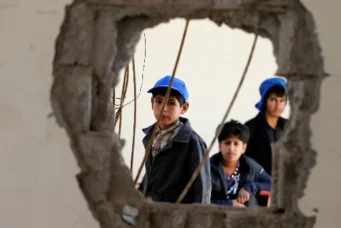
The siege was evident—charred buildings and bombed out areas extended to residential neighborhoods; clashes had overwhelmed some populated areas forcing residents to flee their homes.
With essential services quickly cut off, the civilian population’s options grew narrower day by day.
Accessing water became a grueling daily task, and sanitation facilities operated under immense pressure. The number of wounded and casualties exceeded the capacity of hospitals, and available resources were limited in the face of this reality. Power outages disrupted even the most basic life-and-death procedures. Bodies were buried hastily as burial sites outside the city were no longer available. Inside Taiz, new burial sites were established on land that was originally agricultural.
The city’s landscape changed, and the rhythm of life changed with it. Daily life became tied to the ability to adapt to a volatile reality filled with fear, where life moves within narrow confines and takes shape according to what circumstances allow.
When the Guns Briefly Silenced
During intermittent periods, some roads were opened when clashes temporarily ceased. These were brief moments when the city transformed into a flurry of activity in all directions. People emerged from within Taiz and headed out to bring back whatever supplies they could reach.
On their return, they brought with them what is light in weight but heavy in significance for the city—vegetables, fruits, and items that have been scarce due to the war.
The entry of these goods was limited to the duration of the break in fighting. Meanwhile, the markets themselves would transform between each lull: some goods appeared in small quantities, and their prices rose sharply. The price per kilo of vegetables reached unprecedented levels, yet remained available only to those who could afford it. Many families continued to rely on what could be brought in during these openings, adapting to a constant absence followed by a temporary presence.
Road openings occurred at specific times of the day, usually early in the morning, and then the roads were closed again. Consequently, a lifestyle emerged that revolved around the roads’ schedules. Everything was organized around those hours.
With the roads closed permanently, people turned to longer routes to enter or exit the city, often forced to navigate treacherous mountain passes. Traveling east of Taiz, specifically to the Al-Hoban area, now required a detour passing through the west of the governorate, then north, then south, and then back east.
A distance that used to take ten minutes stretched to ten hours. On some days, the journey took a full day, depending on road conditions. Moving between parts of the city became a daily burden, repeated with every attempt to reach a destination.
All these experiences are difficult to convey exactly as we lived them, but they paint a clear picture of what life was like inside the city during that period.
The Months Become Years
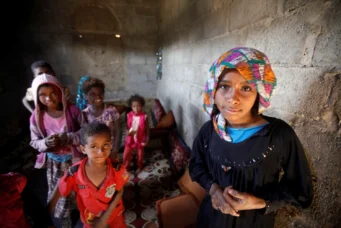
As the siege continued, with promises of reprieve dashed against the still smoking rubble of destroyed Taiz infrastructure, suffering accumulated all at once. Inside the city, the details of daily life grew harsher. Outside, many families had headed to the villages in search of some measure of safety. My family was one of those families.
The city still housed the major medical centers that patients from vast areas relied on; cancer patients needed their treatments at the Hope Center, and patients with kidney failure depended on regular appointments at the dialysis center for their survival. These people would arrive from outside the city once or twice a week, carrying exhausted bodies and heavy financial burdens. With each trip, the cost of travel doubled, and the car fare alone became a burden beyond the means of many poor families.
As I explained earlier, the journey itself was a grueling ordeal. People traversed it weighed down by exhaustion, fear, and humiliation. Young people faced various forms of abuse during the journey, and the wait stretched on amid tension and the gunfire of clashes. At times, the road would open amid ongoing clashes, with the traces of battle visible in the streets and alleys.
During one crossing, I saw bodies lying in the streets after rounds of fighting in Gharbia, and a general sense of chaos enveloping the area; at that time, I contacted the International Committee of the Red Cross (ICRC) to recover the victims.
But what I saw during those days remains hauntingly etched in my memory.
When Mediation Becomes Necessary
As a human rights activist, a public figure in close contact with people, and as a woman with long-standing relationships with various parties and leaders, I approached the challenge of peacefully resolving the conflict and lifting the seige of embattled Taiz from multiple angles simultaneously.
The nature of my work before the war had placed me in a position to communicate with many political actors; then the war came and redistributed positions and roles, and some of these individuals became military commanders on one side or the other. This network of relationships placed me and my name in a position of trust among the various parties.
I began communicating with party leaders, military commanders, and local authority leaders on both sides of Taiz. The initial idea was crystal clear and simple in its objective—to designate one or two roads that would be open for specific hours each day, from 6am to 6pm to allow people to cross, patients to reach medical care, facilitate the entry of essential supplies, and allow relief efforts to operate. Services needed to be established, and the city needed space for movement that would restore some of people’s ability to manage their lives.
This is where the first initiative I undertook in this capacity began. I entered into it out of a sense of duty, responsibility, and moral obligation toward the people, and through entirely voluntary effort, before the name that could be given to this role became clear to me later. At that moment, it was closer to a necessary response to a city searching for a lifeline through which to breathe.
These motivations stayed with me constantly, driving me to act whenever it seemed there was a door within reach, an opportunity to build upon, or someone who could listen and understand that what was happening concerned people’s lives in the most direct sense.
As the war continued, the issue of prisoners and detainees became a critical factor. But so too did the feeling that the people of Taiz would be required to solidify their ranks to ensure the city and its residents survive and rehabilitate.
At this point, the Al-Janad Forum—of which I am a part—stepped into this arena as a civil and political framework capable of shouldering part of this effort. It was composed of informal, local networks, community centers, or online platforms where veterans, active popular resistance fighters, and government soldiers congregate.
One of my colleagues suggested that we follow up on the issue of prisoners and detainees more systematically, believing that our involvement could open a serious avenue for action. So we began approaching it step by step, alongside others who were working on the same issue.
Our outreach took us directly to both sides of the conflict: the legitimate government on one side, and the Houthi Ansar Allah rebels on the other. At first, our interactions were met with a great deal of caution. The official in charge of the prisoners and detainees file on one side received our requests with some hesitation, treating us as outsiders to his usual circle. It took time before we gained the trust of all parties.
On one occasion, while communicating with the legitimate government, the response from the official in charge was clear and direct. He said that the entity he represented deals only with names known to them, and added decisively: “We know only Mu’in al-Abidi. Bring us Mu’in al-Abidi, and we will hand over the lists.”
My personal presence became a prerequisite for opening discussion, and the name became directly linked to access to information and the establishment of a more serious channel of communication regarding this file. The meetings that followed took on a different character, as the conversation shifted from introductions to delving into details related to the lists of prisoners, the names, and the possibility of moving forward on this delicate issue.
On the other side, communication was ongoing with the Houthi Ansar Allah within the same context, at a pace that gradually took shape with each meeting. This parallel communication between the two sides laid the foundation for a new phase, in which efforts moved along a clearer path, relying on direct engagement, the ability to build trust, and handling an issue that requires high precision and sensitivity at every step.
Our team expanded, and our efforts took on a more clearly collective form. Working as a group opened up a wider space for communication and created a stronger presence in our dealings with the parties. The division of roles within the team helped distribute the workload, follow up on details, and sustain a long-term process requiring sustained effort.
In this context, work on the issue of prisoners and detainees began in earnest. Communication continued with the legitimate government and the Houthi Ansar Allah, and attempts began to arrange prisoner exchange deals between the two sides. Each deal required a long time—sometimes extending to a year—before reaching the implementation stage. The process relied on the slow accumulation of trust and on the team’s ability to keep lines of communication open with all relevant parties.
The lists exchanged between the parties were highly complex. Some names were included while others were omitted; lists changed, and people were excluded from the calculations without any claims made against them. In some cases, the names submitted belonged to people who had lost their lives and been buried, yet the parties continued to include them on lists of prisoners and detainees. This added layers of complexity to the file and directly affected the course of negotiations.
Some deals were proposed in a comprehensive format, such as the “all for all” concept, and entered into lengthy discussions without reaching an agreement. In other tracks, arrangements were made in limited batches, as permitted by partial understandings, and in a manner commensurate with each party’s interests.
Breathing Life into the Roads to Bury the Dead
In addition, another issue emerged in this context: the handling of remains. Communication with the ICRC took place when bodies were found in conflict zones, and over time, a parallel track emerged, managed by other individuals, regarding the exchange of remains between the parties. This issue took on a practical and expedited nature, as both sides shared the need to recover and bury the bodies of their fighters.
At certain stages, matters reached a point of on-the-ground coordination allowing for a temporary ceasefire to retrieve the bodies and then hand them over to the other side. The exchanges took place through direct arrangements, in which the bodies were transported across the front lines and then handed over for burial. This track was among the most responsive, due to the shared need and its connection to a religious duty for all parties. All of this requires meticulous follow-up, great patience, and the ability to handle both humanitarian and political issues simultaneously.
In this context, the issue of access routes was one of the most time-consuming and labor-intensive. Every step involved lengthy follow-up, correspondence, meetings, and repeated attempts to reach a clear agreement. Often, we would obtain written consent from one party, then present it to the other, only for a new cycle of delays, evasion, and shifting positions to begin.
Negotiations on this issue took place between the legitimate government and the Houthi Ansar Allah, with each side viewing the road from a perspective that went beyond the movement of people themselves. In my view, and that of the mediators, the road was a lifeline. In the eyes of the parties, it was part of broader strategic balances related to the battlefield, and the means of maintaining influence. It was precisely here that the gap widened between the humanitarian approach that drove us and the political and military calculations governing decisions to open and close the roads.
Some initiatives reached the implementation stage and succeeded in opening the roads for a limited period. One week was enough for people to regain some mobility and for the roads to return to their original functions. But then a new round of tension would arise in the same area, and things would revert to a different state. On one occasion, the opening of the roads was followed by a sharp escalation in the surrounding areas, and when we returned to follow up on the issue again, the response was laden with suspicion and mistrust. We were told that opening the roads could be exploited to advance the front lines, and that we were nothing more than an extension of the military.
In this type of negotiation, mediation entered a highly sensitive area. The humanitarian request remains clear in its formulation, yet it is received within a mindset preoccupied with confrontation, securing positions, and interpreting every move as part of an ongoing conflict. These suspicious mindsets slowed the reopening of the roads, requiring great patience and the ability to persevere despite shifting responses and the changing political and military climate surrounding every initiative.
Within the Houthi Ansar Allah, some decisions were linked to a higher level of the chain of command, and it is sometimes noted that the issue of opening the roads or keeping them closed relates to a decision coming from their Houthi leader. This reference revealed an aspect of the complexity surrounding the issue, where the military structure overlaps with political authority, and humanitarian initiatives remain suspended between multiple decision-making circles. Despite all this, work on the roads continued as one of the issues most closely tied to daily life, but ultimately our efforts were crowned with success, and the main road connecting the city to its eastern part (Jawlat al-Qasr) was opened in June 2024.
Restoring Services
After 2021, mediation focus shifted to the services sector because of its vitality to civilian daily life. Here, the priority became to restore a modicum of normalcy, particularly in access to water, electricity, and sanitation. Within this framework, the issue of clean water took center stage, and work on it continued uninterrupted, as the city was experiencing a clear division in both geography and administration. The eastern part and a number of districts were linked to areas under the control of the Houthi Ansar Allah, while the city center and south were linked to areas affiliated with the legitimate government.
For years, Taiz had relied on wells located in the eastern regions, and these were the main source supplying the city with water. The wells remained under the control of the Houthi Ansar Allah, while the reservoirs that were supposed to receive the water and redistribute it within the city were located in areas under the control of the legitimate government. This entanglement meant that water moved through a divided landscape, with each side controlling a portion of its route.
The complexity increased within the city itself, as some reservoirs were not directly managed by the Water Authority but fell under the influence of persons with social or military clout. Not surprisingly, control over these sites became part of overlapping local power dynamics. Thus, the water issue transformed into a myriad of interconnected influences: wells on one side, reservoirs on the other, two administrative authorities, and local influence asserting itself over key junctures.
From this point, efforts began to address water as an issue requiring the integration of these divided units into a single framework, approaching each link individually, and then connecting them sequentially, so that the city could reclaim its most vital resource.
In this process, another aspect of the crisis emerged within the city itself. Part of the water infrastructure had fallen outside the institutional framework of the legitimate government, and some sites had become focal points of influence treated through the logic of power and control, and direct exploitation. Here, the work shifted toward resolving the issues one by one, through continuous mediation with military and civilian leaders, until the water reservoirs, wells located within the city, and buildings belonging to the sector were returned to the water authority. This step paved the way for resuming work on a clearer administrative basis.
Daily follow-up, engaging with decision-makers, and the ability to reconcile conflicting interests into a workable framework were all part of this process. As the issue moved into a broader institutional sphere, the Saba Youth Foundation stepped in and submitted proposed projects, and the initiative received additional support, while our role as mediators continued to secure the groundwork that would allow water to return to the city.
Water was pumped intermittently, and then the city witnessed significant milestones as water returned to neighborhoods in mid-2024. This return had a significant impact on people’s lives and restored some of the city’s daily routine. The United Nations stepped in and brokered an agreement between the Houthi Ansar Allah and the legitimate government regarding diesel fuel support and ensuring the system’s operation, following a process in which local mediation and institutions had achieved a significant degree of preparation and practical consensus.
Terrorist Designations, Covid-19, and Public Health
But all that progress was suddenly at risk of coming crashing down when the Houthis were redesignated as a terrorist group by the Biden and Trump administration in 2024 and 2025, respectively.
As a result, part of the work related to support was halted, and the delivery of diesel fuel between the Al-Hoban area and the Water Authority was disrupted, leading to the water supply being cut off once again. At this point, the issue entered a new round of mediation and the search for sustainable solutions. It is here that the idea emerged of involving a third party to finance the diesel fuel delivery needed to operate the stations and pump water to the city.
This issue moved through many layers: understandings, agreements, rejections, reservations, and the entry and exit of multiple parties at different moments. Every step required effort and patience, because water in Taiz remained tied to a complex web of decisions, administration, financing, and control over the ground, and restoring it to the people remained one of the most complex tasks and one most closely linked to the dignity of daily life.
With the COVID-19 pandemic, attention shifted to health issues, and work began on the idea of forming a team—or a joint operations room—to consolidate and coordinate health response efforts among various agencies. Preliminary discussions took place regarding this approach, and initial agreements emerged that opened the door to a more organized vision for the work. The initiative then began to approach the implementation phase, with the idea progressing step by step toward practical measures. At this point, progress began to slow down, encountering complexities that stood between initial acceptance and the ability to translate it into action on the ground.
The same pattern repeated itself with the sanitation file. The city needed to transport waste to the main designated site outside Taiz, a location situated in an area under the control of the Houthi Ansar Allah. This reality made the movement of sanitation equipment and its arrival at the designated site contingent upon opening a safe route that would ensure the passage of vehicles and the movement of work crews. From there, work on this issue began as part of public health, part of the normal functioning of life within the city, and part of a broader effort to alleviate the daily burdens on the population.
Every time this process neared a practical stage, complications would resurface. We were told that the first step is to reach an agreement on opening the route, followed by a phase of studying equipment movement and traffic mechanisms. With every step, political calculations reasserted themselves, pushing the issue into a more complex arena, where waste collection—like other service-related issues—became tied to lengthy negotiations that went beyond the immediate objective of the operation itself. Thus, resolving health and sanitation challenges continued to be navigated by way of a web of procedural and political details, requiring the same follow-up, the same patience, and the same ability to keep the door open to any viable opportunity.
The Mediator as the Vital Link
Within this landscape, the role of mediators has emerged as a powerful pivot during conflict. Some mediations operate on a small scale—within a village, between two villages, or regarding land, roads, and daily disputes—handled by local sheikhs, dignitaries, and notables due to their proximity and direct knowledge. In another vein, a different type of mediation emerged, dealing with issues involving the warring parties themselves—between the government and Ansar Allah—and highly sensitive matters such as roads, prisoners, and detainees.
Initially, this role emerged from diverse professional and social backgrounds: human rights activists, social figures, and lawyers. Over time, the circle expanded to include other figures—sheikhs, community leaders, and prominent individuals within their respective communities. Each brought their own expertise, network of contacts, and the influence they could wield in their respective communities. Thus, a network of mediators began to take shape, spanning not only Yemen’s cities of Taiz, but also Sana’a, Al-Hoban, Marib, and Al-Jawf, with efforts coordinated according to each person’s location and ability to reach others.
This network created a practical and flexible working mechanism. In some cases involving a prisoner or detainee within the city, communication would reach me due to my presence in Taiz, so I would take action to facilitate the part of the process happening here. In other cases requiring follow-up in Sana’a, east of Taiz, Marib, or Al-Jawf, coordination took place with mediators based there, transforming the work into a connected network where each mediator acted from their location, while the case file itself remained visible to all. In this way, local mediation took on a meaning that transcended individual effort and approached organized collective work, based on the distribution of roles and mutual trust among people, each of whom recognized the value of the position held by the other.
From this branched-out nascent network, the National Mediation Team was formed with the mediators, comprising twelve from diverse backgrounds, including lawyers, religious leaders, community elders, and prominent figures. This framework brought together scattered expertise in a single space, giving local mediation a clearer voice and a more organized presence in handling complex cases. Over time, some organizations joined the effort in a supportive capacity, forming teams of young people to assist mediators with logistical and organizational aspects: writing reports, organizing initiatives, conducting field follow-ups, and preparing the necessary tools for each case.
This support created a new pathway for intergenerational knowledge exchange. Young people with a natural inclination toward this type of work began attending mediation and negotiation sessions, learning how to manage dialogue, draft agreements, handle tension, and understand the rhythm of sessions between parties. From this experience, some of them went on to pursue their own paths and began coordinating other cases within Taiz, including issues related to housing, homes, and facilities that had been occupied by influential parties—whether government buildings, private property, or educational institutions.
On the latter issue, there arose a need to focus on reclaiming these facilities and restoring them to their original functions: schools, institutes, and public buildings requiring evacuation and handover. As the Presidency formed a committee tasked with returning these properties, mediation initiatives emerged to help pave the way for handover and address the logistics involved. In some cases, the issue required small solutions that paved the way for a larger resolution: limited funds to move furniture or vacate the site, or initiatives adopted by certain organizations to facilitate the transition and quietly close the case. This type of mediation achieved far-reaching results and paved the way for the smooth recovery of many facilities, restoring the site to its function, reducing friction, and providing the community with an example of how local mediation can move from the heart of war into the details of the daily reordering of life.
The presence of women was notable within local mediation, whether in direct roles or in the supportive spaces that surrounded the work and expanded its impact. A number of women were involved in follow-up, in supporting the sessions, and in providing the practical resources needed for this type of effort. Together with the supporting youth teams, a working environment was formed that was dynamic and integrated, and in which women had a clear and visible role.
However, the presence of a woman in the role of mediator posed a particular challenge within an environment fraught with weapons, hierarchies, and social and political sensitivities. Accepting a woman like me as a mediator between warring parties required more than just a momentary presence; it required a well-known name, accumulated experience, a pre-war track record, long-standing relationships with various actors, and a reputation built over years of public work and balanced engagement with everyone. These elements gave my presence a certain weight and helped me, as the parties were watching the people as much as they were watching the issues.
Touring between affected regions was part of this price. Closed roads, limited access points, and the state of open warfare all made the act of moving itself a risky undertaking. Reaching areas under the control of the Houthi Ansar Allah or areas linked to the legitimate government required significant mental fortitude and the ability to proceed with full awareness of the surrounding risks. This aspect was ever-present in daily life and constitutes part of the personal cost of mediation.
Nevertheless, the women persisted in this role and managed to carve out a space for themselves within an extremely difficult environment, relying on competence, patience, and an understanding of what it means to navigate between warring parties while carrying a public mandate concerning people and their daily lives. We, too, have been making a great effort without any guarantees of results, because that is not in our hands, but we continue to work on it.
Yemen’s Fate is Tied to the Region
The ability to bring Yemen’s Civil War to a peaceful resolution is multi-tiered and linked to a vast network local parties fighting on the ground, and regional and international parties influencing the course of the war through political, financial, and military support. This entanglement has caused the conflict to transcend its internal borders, tying its fate to calculations involving multiple decision-making centers, both within and outside Yemen.
Within this reality, the ability of local parties to reach a settlement appears more likely whenever the external factors prolonging the conflict diminish. The continued flow of money and weapons gives the war additional staying power and postpones the moment when the cost exceeds the potential gains. When this flow weakens, local parties come closer to their immediate reality and to the questions related to people, services, losses, and the possibility of coexistence after long years of attrition.
Field experience has revealed something important in this context. As local mediators engaged in humanitarian and service-related issues, a genuine need emerged among the warring parties for someone to convey messages, open channels of communication, and create a space through which a degree of trust could be built. The parties realized that certain issues could only be managed through mediators who know the terrain, understand the people, and can navigate between the two sides.
Thus, local mediation appears to be an essential part of any serious vision for peace in Yemen. It operates from within the community, deals with realities as they are, and addresses the issues created by the war in daily life—from roads and water to prisoners and detainees. This type of mediation builds small bridges at first, then accumulates impact over time, until a broader space is formed capable of fostering encounter and understanding.
I believe that Yemenis are capable of reaching a common conviction, of addressing their issues among themselves, and of arriving at a point of agreement that opens the path to peace. This possibility becomes more attainable when the factors fueling the war from abroad recede, and when local parties find themselves facing direct responsibility for the human, social, and political costs of the war they continue to wage. At that point, peace becomes more of an internal need and a choice dictated by the interests of all, rather than merely a topic on the negotiating table.