Cruel Capitalism and the Rise of the Right—with Dr. AJ Bauer and Dr. Paula Chakravartty: CR Amplified ep. 7
How did Silicon Valley’s “cool capitalism” and alternative media evolve into an engine for modern authoritarianism? Dr. AJ Bauer and Dr. Paula Chakravartty join CR Amplified to unpack the political economy, media strategies, and global impact of the new American right.
Judi Yassin (JY): Welcome to CR Amplified, the Cairo Review‘s podcast where we talk to experts and policymakers about relevant issues on the world stage. I’m Judi Yassin.
Today we’re joined by Dr. AJ Bauer and Dr. Paula Chakravartty, who will be discussing their recent forum on media and fascism. Dr. Bauer is an assistant professor in the Department of Journalism and Creative Media at the University of Alabama. His essays have appeared in outlets like The Guardian, American Journalism, and The New Inquiry.
Dr. Chakravartty is the James Weldon Johnson Associate Professor at the Gallatin School and the Department of Media, Culture, and Communication at New York University. She has written several books on media and politics and is the editor of the journal Communication, Culture, and Critique.
The forum that will be discussed in this episode was published in Communication, Culture, and Critique in June of this year and features several articles on the relationship between media and fascism in the US today.
Hello, Dr. Bauer and Dr. Chakravartty. First, I’d just like to begin by asking you to give me a bit of background on the forum itself.
Dr. Paula Chakravartty: Do you want me to start, AJ?
Dr. AJ Bauer: Yeah, you can get started since you started, and I can add.
Chakravartty: So yes, we formed a new editorial collective to guide the objectives of the journal Communication, Culture, and Critique, which was set up in September of last academic year—September 2024. From the beginning, the idea was to use forums to address more topical concerns of the day. More pressing, urgent kinds of concerns that are harder to address through the peer-review structure, which takes much longer.
One of the first things we did in the journal was—I think we’re the first journal, as far as I know, in our field that published a solidarity statement on the genocide in Gaza. That was in our first issue. We also in that first issue had a discussion thinking about comparative authoritarianism and the media, which AJ actually edited, since AJ is a scholar of media on the right in the US. That was a conversation that AJ facilitated with Srirupa Roy, who’s an editorial collective member who works on India, and Verónica Gago, who’s also an editorial collective member who works on Argentina. That was looking more at the political facet of the rise of right-wing authoritarianism and the relationship between media and right-wing populist politics.
We felt that there was a need to also talk about the political-economic dimensions of the rise of the right, specifically thinking about the election of Donald Trump this year. It feels like it’s been many years already, but in fact just this year. And so this second forum was a more focused attempt to think about the political-economic context of media and authoritarianism, the rise of the right in the US, specifically around the elections of November of 2024. So that’s the background, and we brought together an interdisciplinary range of scholars to address a range of issues, and we can talk more about that. AJ, you should add whatever I missed.
Bauer: Yeah. And so another part of the forum that we tried to do was focus on the experiences of communities who are particularly affected by the incoming, and now Trump, regime. So, we’ve got a couple of contributors that are focusing on Trump’s rhetoric and policies around transgender people, as well as immigrants, migrants, and other folks who are facing undue pressure at the moment. The journal is obviously communication and cultural studies, so there are some pieces that are kind of about media strategy as well, but we were trying to be deliberate about prioritizing populations that are feeling the brunt even more than the rest of us perhaps at the Trump administration.
JY: I did want to ask about Trump’s role in all of this because he does come up a lot in the articles in the forum. So I wanted to ask why he is such a strong representation of far-right leanings that we’re seeing almost everywhere now.
Bauer: I think one of the things that is so interesting about Trump is his willingness to push against norms and other kinds of cultural and political expectations. I think that his doing so, obviously in the US context, is undermining our democratic institutions in a way that is really problematic and probably will be irreversible or very difficult to reverse. But I think that a lot of other leaders around the world see in him a kind of a license. They can then point to him and say, “Hey, I can violate norms or institutions here too if Trump can do it,” and vice versa.
I also think that Trump has been, perhaps even more so than previous US presidents, willing to look at other examples of right-authoritarian leaders across the globe and get inspiration. A lot of what he’s been doing to crack down on universities in the United States, for example, draws really heavily from a playbook that was developed by Viktor Orbán in Hungary. A lot of his anti-migrant policies and the kind of bombing of boats off the coast of Venezuela—using warfare methods to target drug cartels, etc.—in some ways borrows from the Duterte regime in the Philippines, who is no longer in power but nevertheless is an inspiration to Trump. And so I think it kind of cuts both ways: Trump is a form of license for a lot of right-wing authoritarians across the globe, but he’s also drawing from their example as well.
Chakravartty: Yeah. And I would just add that for us, the focus is on Trump because the journal itself is a global journal, but many of us are based in the US academy. The International Communication Association, which hosts the journal, is based in the US. But I think more importantly, we have to think of the US’s role as an imperial force and think about Trump, and the rise of Trump, in the global context—not just in relation to other figures like Trump, you know, Modi or Bolsonaro, etc.
We have to think about the role of the US, which certainly under different iterations of liberalism also practiced kinds of authoritarian and extrajudicial violence in the Global South. But there is something now, when we see perhaps the decline of certain forms of American legitimacy and American imperialism in the world, you see the rawness of this overt power and overt violence, which is something that is worth noting and worth thinking through. And so the focus on Trump and the focus on the US is not just a national question, it speaks to the broader geopolitics of American imperial power, which precedes Trump and will last us post-Trump.
There are many things about the Trump regime that are exceptional, but the focus of thinking about the politics of the moment is to also situate it in longer lineages where you’ve had these contradictions between American commitments to democracy, freedom of information, and liberalism on the one hand, and yet its exercise of brute power and violence both within the US against subjugated minority communities, but also against much of the world—the global majority in Asia, Africa, Latin America, and what we call the Middle East. So that’s another reason why we focus on Trump.
JY: Can you talk to me a bit about specifically his use of alternative media, social media, new media during both of his electoral campaigns?
Bauer: Yeah. So, in some regards, this is somewhat of an older phenomenon. There’s been a long history in the US of presidents and others running for president using new and other forms of alternative media to get around the mainstream press. A good historical example of this is the Roosevelt administration during the New Deal. Most of the newspapers were opposed to the New Deal, and so Franklin Roosevelt went on the air with his famous fireside chats on the radio to speak directly to the American people.
I think that you could see Trump’s use of social media, especially Twitter, as kind of similar. Especially when he ran in 2015 into 2016, he wasn’t taken all that seriously. There were conservatives within the conservative movement who opposed him. That was the short-lived “Never Trump” phenomenon, which lingers on in The Bulwark today, which is a center-right, formerly neoconservative Weekly Standard that’s converted into a more liberal-friendly outlet. But Trump, because he was seen as unserious and volatile and a threat to American traditions and norms, had to use those kind of alternative media in order to reach his followers.
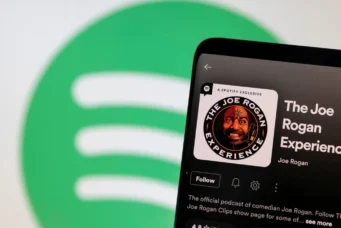
I think what you saw—and Reece Peck writes about this in our forum—is that one of the things Trump did in 2015-16 was rely heavily on podcasts and alternative right-wing influencers to get his voice across. To the point that by 2020 and 2024, when he was running for president again, he was able to go back to the well, basically. He had already developed a relationship with those podcasters, with those audiences. This partly explains why somebody like Kamala Harris, who did try to employ alternative media and podcasts in the 2024 election, didn’t quite land, according to Peck. She was relatively new to those audiences and hadn’t spent the time cultivating that relationship.
Sometimes when we think about media, we tend to think about it in a very old-fashioned, unidirectional way—a hypodermic needle model—that people simply passively consume whatever media it is. So the idea is that if Trump is on alternative media, the people listening are simply buying and consuming it. But it’s really important to think about the role of alternative media and that it creates a distinction between the media people are consuming and some other media. “Alternative” means there’s some legacy or mainstream media it’s referring to. The benefit of right-wing media that Trump capitalized on was not just that there were right-wing media outlets. It was also that there is what I call a “critical disposition” toward the mainstream press that causes those conservatives to invest in right-wing outlets, trust them more, and be skeptical of those mainstream outlets which might have been critical of Trump. You don’t have exactly that same dynamic among liberals in the United States, which is one reason why Harris didn’t have quite the same ability to leverage those newer platforms.
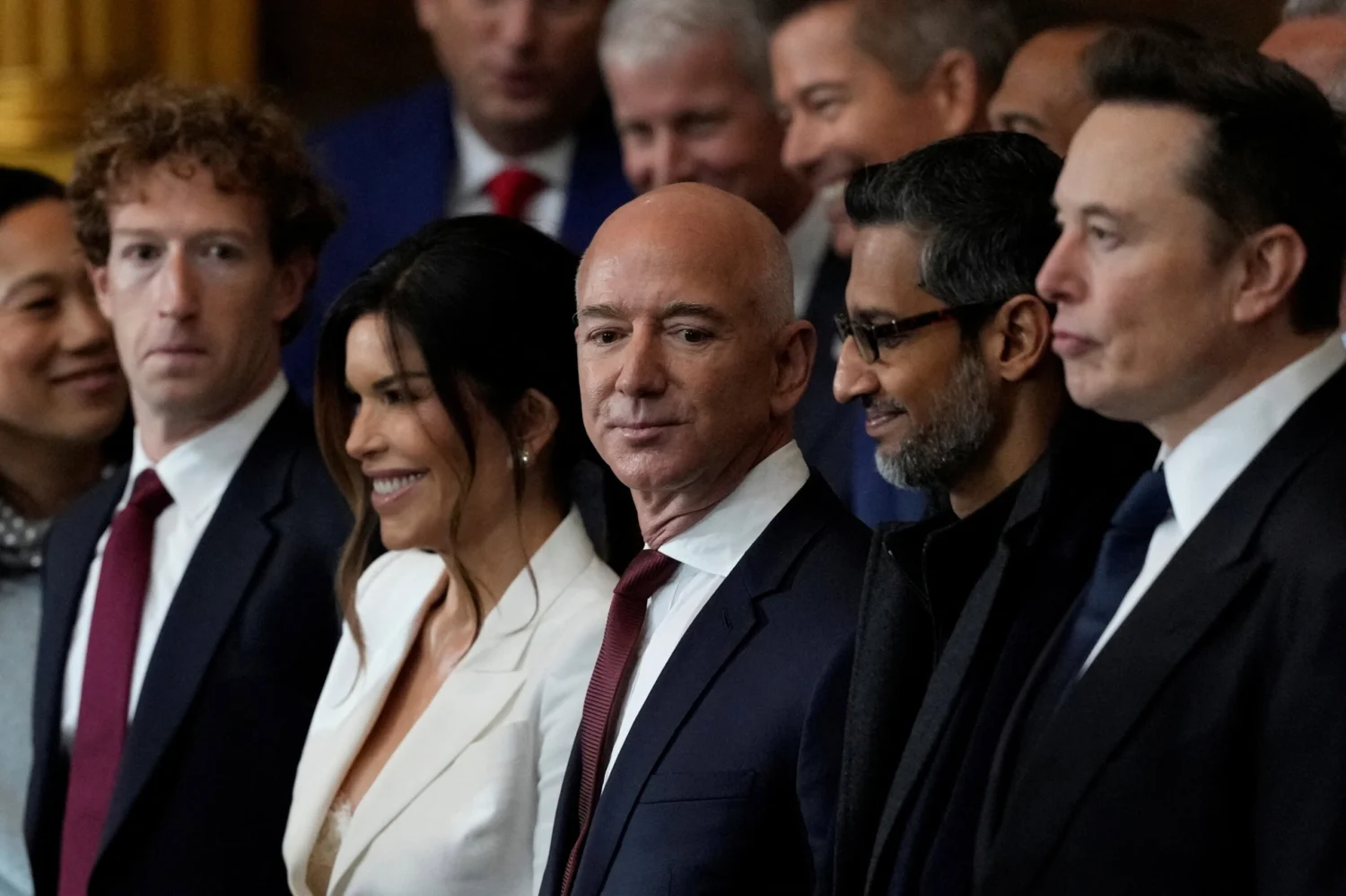
Chakravartty: Yeah. And I would just add on the alternative media: one of the other dimensions of this is, of course, the role of Big Tech in shaping the rise of the Trump agenda, especially this second time around. This is something that Johan Farkas and Aurélien Mondon address in their article called “The Roots of Reactionary Tech Oligarchy and the Need for Radical Democratic Alternatives,” and we address this a little bit in our intro essay as well.
They look at the seeming disparity between a tech industry that, through the 1990s and the first two decades of this century, has been aligned with more socially liberal causes. You’ll remember the role of many tech companies lining up after the George Floyd assassination calling for racial justice, standing up for things like abortion rights or immigration rights. Those same tech companies now transmute into a cultural right-wing, authoritarian stance. They trace how you get from one to the other, and I think this has a lot to do with the political-economic structure of the tech industry, which has been allowed to expand into all dimensions of our lives in a way that is unregulated, and very dangerous for democracy.
The agreement between a liberal order and a neoliberal tech oligarchy that seemed to hold in a reasonable way—which, of course, had a lot of inequalities and violence that we didn’t see as clearly as we see today—gave way to this neoliberal and authoritarian present that we’re in. It’s important to trace how you don’t have this exceptional turn into an authoritarian present, but increasingly from the 1990s, the lack of regulation, the lack of public say over what these tech companies can do within the US and transnationally has led us to this moment where increasingly around the world, democratic orders are threatened by Big Tech. So that’s an important part of the story to trace as well.
JY: I wanted to actually discuss that article that you’re mentioning now a bit more in depth. I mean, is that what is meant when the article says what it calls “liberal post-democracy” has given rise to this kind of authoritarian system, especially with regards to tech?
Chakravartty: We’re speaking to you at the Cairo Review, so we can think about the moment of the Arab Uprisings and Tahrir Square, and this moment in which there were wild assumptions about the role of corporate Big Tech in shaping our democratic futures. As I’m sure you know, Tahrir Square and the Arab Uprisings were often called things like the “Facebook Revolution.” In many parts of the world, not just in the Middle East but in the Global South, there is an assumption—often advertised and heightened by these corporate actors themselves—that corporate technology allows democratic freedom against state authoritarian power.
While there is some truth in terms of certain contexts like 2011 that allowed for grassroots movements, and student movements, and labor movements, to rise up and use these platforms at a certain juncture, it isn’t the technology itself or the benevolence of these tech companies that leads to democratic outcomes. As we saw in the Arab world, that period was followed by mass repression, and that repression was also accepted happily by the big tech companies who had supposedly gifted that part of the world with democracy and revolution.
What the authors argue in this paper—and something critical scholars of tech for decades have been warning us about—is that this promise of liberalism as a gift that Big Tech holds for us despite it circumvents any kind of regulatory effort and institutional checks to its power, nationally and internationally. The arguments that critics have made for decades are playing out today. You see a kind of neoliberal enclosure where one of the things you can’t democratically discuss is the regulation of tech itself. You can’t talk about our political-economic futures; those things are cordoned off. That cordoning off leads to more autocratic futures. In fact, it’s not a future anymore; it’s the present. So that’s the lineage that this article and I think other work that takes a more critical position on tech has laid out. Yeah, it seems counterintuitive in a world where, for decades, certain social actors promoted the idea that freedom is technological freedom. We have to do a lot of work to rethink the assumptions of that formulation. I am sure AJ has more to add.
Bauer: Yeah. And I think another thing these more critical approaches are doing is pulling back from the abstract and idealized ways we’ve tended to talk about the internet and social media in the last 20 years. They’re getting back to: what are the balance of forces and how does that shape the way tech functions? When we’re talking about Twitter today, we’re not talking about the same Twitter that existed in 2016 or 2011 during the Arab Spring or Occupy Wall Street. You see increasing collaboration between platforms and authoritarian governments, as well as the development of alternative internets with firewalls in places like China or Russia that block users or makes friction from these liberatory technologies.
Another thing you see, especially since Donald Trump won the presidency in 2016, is an uptick of what I call a “mis- and disinformation paradigm.” The dominant narrative was that the reason he won, the reason Brexit happened, was the circulation of disinformation tricking people into voting against their interests. As a result, tech companies like Facebook, Meta, Google, and Twitter started adding safeguards to prevent the spread of hate speech and disinformation. There was a considerable backlash to that by 2019/2020 and as we continued today. A lot of those platforms felt burned. After Biden won in 2020, there was a series of right-wing tech growths—platforms like Parler, Gettr, and Truth Social—which is the Donald Trump endorsed today . The creation of those alternative apps created additional pressure on the mainstream omnibus apps to re-platform right-wing actors and to scale back their disinformation regulations.
Especially once Trump won again, now they’re all wanting to curry favor with him. It’s important to talk about where the rubber meets the road. As Paula mentioned, the US is not effectively engaging in any regulation of the tech sector, including mergers and acquisitions. As a result, the sector is more concerned with preventing the government from regulating them, and so will line up with any politician, right or left, that’s willing to give them what they want.
JY: The opening article of the forum, the one that was written by you, mentions Elon Musk—also an interesting dimension. So can you talk to me a bit about how he plays into this environment?
Chakravartty: I feel like you have more to say probably about Elon Musk than I do, AJ, but I guess I would say that to me, the racial dimension here is important. The title of our essay is called “Cruel Capitalism,” and for me, this was a play off of the idea of “cool capitalism,” an argument made by economic sociologists Luc Boltanski and Ève Chiapello in a book called The New Spirit of Capitalism. It was tracking the way corporations went from being top-down organizations to embracing critiques of the 1960s student movements. Corporations transformed, and CEOs emerged not as button-down corporate patriarchs, but as “cool capitalists.” They reinvented their image as passionate entrepreneurs.
What we see today with the merging of a fascist politics and a tech entrepreneurial culture is the revelation that these cool capitalists are actually cruel capitalists. Underneath these socially progressive transformations of capital, you have a history where promoters of a neoliberal economic future have always embraced arguments of social Darwinism and eugenics—notions that certain people are wealthy because they are more capable, and certain people end up poor not because of social systems, but having to do with innate qualities based on repackaged notions of racial hierarchy, gender differences, and nationality.
So the fact that you have a white South African immigrant who embraces the Trump agenda and wields that “chainsaw” that we talk about—the chainsaw which is representative of cutting down the Amazonian rainforest and decimating Indigenous peoples of Brazil and Argentina—is not accidental. The settler-colonial histories of countries like Brazil, Argentina, the US, South Africa, and Israel come to the fore in the world these cruel capitalists imagine. Elon Musk, the richest man in the universe, is a great representative of that cruelty and violence we see on display every day.
Bauer: Yeah. And I think one of the fun things about putting this piece together is Paula was coming at it from the “cruel capitalism” perspective, but I was thinking about Lauren Berlant’s Cruel Optimism. I think Elon Musk sits right at the edge of these two concepts nicely, which is why we led with him. Plus, he was involved in a massive cost-cutting initiative he called DOGE, named after his favorite cryptocurrency.
Cruel Optimism is this idea that capitalism provides optimism about the benefits of meritocracy, or in Musk’s case, this science fiction utopic vision of the best and brightest coming together without government regulation to create a mission to Mars. The reason Musk had been so celebrated even among liberals was because of this utopic vision and positive outcomes for humanity. But these utopic visions also involve a valorization of hierarchy, which speaks to the racialization Paula was talking about. It posits hierarchies where the “capable” people are rewarded, and we won’t say much about the other folks.
We also wanted to emphasize that even for the people “benefiting” from the fascism promoted by Trump and Musk, the benefits are actually inhibiting their human flourishing. The government scaling back funds for healthcare and SNAP benefits, or the harassment of immigrants picked up by ICE—these authoritarian crackdowns provide a televisual experience for Trump supporters that allows them to feel pleasure at the “bad” people suffering and the “good” people thriving. But those processes, like the militarization of the US, are going to come back and bite the people celebrating them. They are also going to be victims of an authoritarian country that has the capacity to police at scale. The benefit is fleeting—it might be a salve on top of the authoritarianism that comes for us all in the end.
Chakravartty: One thing I would just add is that many of our articles also imagine more radical democratic futures. The authors in our collection are doing something the Democratic Party in this country is not doing—like Zohran Mamdani and the left side of the party—which is imagining a normative worldview that is oppositional and antithetical to this horrendous, cruel, and limiting understanding of politics.
Naomi Paik’s piece on “abolitionist sanctuary” makes an important case connecting the George Floyd uprisings to the movement for immigrant justice. The opposite to criminalizing migrants based on racist assumptions about “good” versus “bad” migrants is not to say we should be deporting immigrants who committed a minor infraction like getting a parking ticket or being late on a child support payment. The solution is not separating the good from the bad migrant or criminalizing certain groups. She makes a compelling case for an abolitionist sanctuary. We have to see this moment today as a reactionary moment that came in the aftermath of uprisings—beginning with the Arab Uprisings, which was an anti-colonial uprising, and continuing globally against racial hierarchies and economic inequality. Presenting a normative vision for a democratic vision that is more radical than the confines that we live in, I think, is also important, and several of our articles try and do that.
JY: One of the interesting things was the article discussing the underrepresentation of Christian Zionism in US media. So I wanted to ask about how that fits into this overarching theme of contemporary fascism.
Bauer: Yeah, for sure. The contribution by Gil Hochberg is pointing out that a lot of the focus on Zionism in the US and globally is focused on Israel. But a really important component of global Zionism is Christian Zionism and its support for the Israeli state, with peculiar and, one could say, antisemitic assumptions underwriting it. A lot of Christian Zionists want Jewish folks to be in control in the Middle East partly because they think that the rebuilding of a Second Temple will initiate the end of the world. It’s an idea that, in the midterm, is supportive of a Jewish state in Israel, but ultimately towards Jesus coming back and, in that philosophy, Jewish folks presumably being cast into hellfire.
Zionism as a project is promoted in advance because the state of Israel has been successful at getting funds from the United States to engage in its settler-colonial project in Palestine by convincing these Christian Zionists to support their mission.
One other unfortunate thing about how this plays out in US politics is the hyper-fixation on electoralism. Too much of the Gaza genocide has been filtered through a “vote for Democrats or vote for Republicans” lens. Which is a problem, partly because the Democratic party under Biden was full-throatedly in favor of the Gaza genocide, extremely resistant to ceasefires, basically allowing Netanyahu to do whatever he saw fit. As an outcome, you see a perverse gloating among certain corners of the Democratic party now that Trump is in power and promising to auction off Gaza. There’s a kind of, “See what you did? You should have voted blue, and that somehow would have made the Palestinians’ lives better.” We’re really stumped in the US context by a constrained discourse that can’t see atrocity committed by the US and US-supported states in any terms other than point-scoring in a domestic electoral circumstance. That, and the violent crackdowns under both Biden and Trump against activists supporting the Palestinians.
Chakravartty: I will just add one small note. Part of what Gil Hochberg—who is the chair of the Middle East Studies department at Columbia University, the site of a lot of political attention in the last few years—is doing that’s important is problematizing the way that antisemitism has been used as a cudgel to silence critics of a genocide. And also to make invisible anti-Zionist Jews who are in alliance and solidarity, certainly in the US diaspora and among younger Jewish populations, who have played an important role in calling for an end to the genocide.
As AJ is pointing out, the Democrats are the ones under whom this unprecedented repression of speech on our campuses and the horrific silence on the Gaza genocide in places like The New York Times occurred, done in the name of protecting against antisemitism. But what she’s showing is that both the liberal use and the authoritarian fascist use of this are equally problematic, as it lets off the hook the Christian fundamentalist, white supremacist Zionists who are rooted in a racist and colonial understanding of the world. Unpacking that is really important, and this piece was probably read the most out of all the pieces in our forum. Today under Trump, you have complete repression not just of activism around Gaza, but all forms of political dissent on campuses and city streets.
Bauer: And just one last thing. A stark depiction of that dynamic is lately you see right-wing Christian antisemites—people like Tucker Carlson and Marjorie Taylor Greene, with the conspiracy that Jews control a space laser—making statements nominally in favor of Palestinians or against the Israeli genocide. I’ve seen some colleagues on the left who’ve been like, “Maybe these are people we can ally with.” But Gil’s piece points out that just because they’re speaking out against the genocide doesn’t mean they’re people we need to build alliances with. As Paula mentioned, they still subscribe to racist and colonial visions that would be totally happy with the destruction of Palestinian people. They also just happen to think that Jewish folks should also be destroyed. Once you peel back the baseline assumptions of antisemitism versus Zionism, you see clearly why these subtle forms of political alliance present risks.
JY: I wanted to end by asking you guys if there’s any specific thing that you found interesting that you’d like to highlight. Maybe we should talk about Cass’s piece, and I was thinking about the two pieces on transgender issues.
Bauer: Yeah, please. One thing I mentioned earlier was after the 2016 election, there was a big emphasis on mis- and disinformation and fact-checking. The presumption is that people just have misapprehensions, and once they understand the truth, we can get back to business.
Cassius Adair’s piece pushes back against that: what does it mean for a trans person to constantly feel the need to debunk or prove their worth or their existence? It’s quite exhausting, and to expect that of folks is limiting as a political project. The critical move that piece makes is: what if, instead of constantly responding to the onslaught of bad-faith disinformation about the trans community to convince an ambiguous liberal public, we envision a trans-focused politics about trans flourishing? Carving out space to allow trans people to exist, which in the United States right now is a radical act. Finding ways to engage in a politics around gender that doesn’t put folks in a position where they’re constantly having to do politics just to survive in spite of severe state repression. It’s an engaging visioning that we see very absent in a Democratic party which at this moment is basically trying to figure out how best to throw trans people under the bus so that they can get elected.
Chakravartty: I guess I would add one thing since you asked. One of the things we’re trying to do here is to say that this is fascism. It may not feel like fascism from the 1930s and 40s for all people involved, but we are defining this as a turn to authoritarianism. We are also warning that perhaps the ways in which fascism was understood—how Europe got to fascism, answered by European intellectuals in the aftermath—is something we are questioning.
In the piece, we reference Aimé Césaire and the work of Denise Ferreira da Silva. We talk about Frantz Fanon, we talk about Antonio Gramsci—scholars for whom there was not a clear distinction between liberal democracy at home and authoritarian violence abroad in the form of colonialism, colonial extermination, and colonial genocide. To explain this moment as a moment of irrationality in a lineage of rational liberal democratic politics where the fourth estate worked great until Trump came along shockingly in 2016 is what we want to get away from. We really want to think about the colonial, capitalist, racial origins of this moment and that lineage.
JY: I think that’s a poignant point to end on. I really, really want to thank you for this discussion. Your answers were really insightful.
Bauer & Chakravartty: Thanks for having us.
JY: That concludes this episode of CR Amplified on media and fascism. I’d like to thank Dr. Bauer and Dr. Chakravartty for their thoughtful insights and for taking the time to speak with me. That’s all. Thanks for tuning in.