Internet Influencers and the Far-Right—with Dr. Scott Burnett: CR Amplified ep. 8
How did internet self-help culture and the online manosphere evolve into a pipeline for modern fascism? Dr. Scott Burnett joins CR Amplified to revisit the historical roots, neoliberal anxieties, and global impact of right-wing influencer culture.
Judi Yassin (JY): Welcome to CR Amplified, the Cairo Review‘s podcast where we talk to experts and policymakers about relevant issues on the world stage. I’m Judi Yassin. Today we’re going to be talking about gendered fascism in the contemporary world with Dr. Scott Burnett. Dr. Burnett is an assistant professor of African Studies and Women’s, Gender, and Sexuality Studies at Pennsylvania State University. He was the lead investigator and organizer of the “Birthing the Nation” seminar, which focused on gender, sex, and reproduction in ethnonationalist imaginaries. He’s produced substantial research on masculinism in the white supremacist alt-right online.
Hello, Dr. Burnett. Thank you so much for taking the time.
Dr. Scott Burnett: Thanks so much, Judy.
JY: My first question would be, in your “Birthing the Nation” project, you describe a kind of crisis of modernity that you said is “particularly felt by men”. Can you unpack what that means a bit—the crisis—and why you think it’s more felt by men in this age?
Burnett: That’s a really good question. One of the things that we’ve been exploring is how to think about the historical material basis for the rise of fascism—for when people, at least in the West, seem to hold onto their masculinity and their nation in what we might think of as a profoundly problematic or even pathological way.
One of the historical parallels between our current moment and the 1920s and 30s in Western Europe is a profound social change associated both with social progress and with economic crisis. What we know about the beginning of the 20th century is that there were the suffragette movements, women were getting the vote, and women were working more and more visible in public life. More visible in popular culture, driving cars, doing things that were breaking some of the 19th-century assumptions about what women could and couldn’t do. You then have that combined with the profound economic crisis of the late 20s, and that creates a particular situation for men and for masculinity.
Of course, Italian fascism was already in full swing from the early 20s. Mussolini was responding to a great extent to what became constructed as the feminizing influences of socialism and feminism. Mussolini was a socialist before he invented fascism and the need for a hard, masculine force to oppose those influences in society. What he was able to do was turn his former socialist comrades into the scapegoats for a feeling of national malaise—a feeling of not having done well in the First World War, being looked down upon, having lost territory, etc. All of these things he was able to give a gendered reading to.
What the early 20th-century fascists were able to do is read the economic and political climate and give it a gendered meaning. Essentially, that women were too powerful, that modernity had given us these masculinized women and feminized men. And that everything wrong in our society is because these eternal boundaries of maleness and femaleness were being violated by feminism and socialism. So we need to be strong again; we need to collect ourselves together in a way that is hard, virile, and masculine.
There’s also been quite a lot of work on proto-Nazism in Germany in the 1920s. There are very famous books by a writer named Klaus Theweleit, whose doctoral dissertation in the late 70s focused on the post-World War I vigilante commando groups that emerged in Germany. Very similar to what was going on in Italy, they were going around smashing socialists, committing terrible acts of violence, using the Weimar period in Germany as an incubation for what was to become Nazism and what Adolf Hitler was able to turn into the Third Reich.
So that crisis of modernity in the early 20th century was felt very much as a crisis of masculinity. We see almost exactly the same ideas being recycled in the present day, of course with many differences. It’s not necessarily that women are working in factories and driving cars; it’s that women of color are rising to positions of cultural and political prominence. It’s that the assumptions about race, gender, and the societal order built around white men have been undermined. They’ve lost their assumption of hegemony. That, again, is combined with economic crisis and what has happened because of globalization, neoliberal policymaking, and the erosion of the welfare state. The West again is moving into this moment of crisis.
The crisis is also different this time around because we’ve got the ecological crisis, demands for equality, and demands for a new world order coming from a multipolar world system. So a lot is different, but there are a lot of things in common between this early 21st century and the early 20th century.
JY: You mentioned the economic crisis and the political climate that this gendered fascism thrives in. Do you think that gendered fascism is generally, historically and today, a feature of certain economic and political circumstances?
Burnett: I think it can be read in that way. I don’t think it’s necessarily so predictable; it’s not that we know exactly what is going to cause this. Of course, these ideas never really went away. And they didn’t necessarily start in the early 20th century. One of the things we were exploring with scholars at our recent conference were the 17th-century roots of some of these ideas. One of our speakers talked about the idea of the nation as a kind of body, and of the marriage bed as where the nation is produced.
The regulation of reproduction as being central to national development even existed in supposedly a pre-national age, before the big age of nationalism in the 19th century. There were early liberal thinkers, people like John Locke, republican thinkers who were trying to think about what a country should look like if it’s not monarchical.
From the earliest days, some of those ideas were using gendered relationships as the foundational building blocks for what the nation should be in a proto-nationalist way. The idea that you should have racially pure or, you know, English women and English men creating English children, and that that is the foundation for Englishness, goes back hundreds of years. Or German women and German men. Even before there was a Germany—Prussian women and Prussian men.
So it’s something that’s been there in these European—and of course then more broadly in the settler-colonial—worlds where white nations have taken root on stolen land. It becomes fascist because it becomes about reproducing the race, enforcing that through violence, and denying democratic processes whenever they threaten to change that very fragile unity of the identical heterosexual couple creating the nation from the marriage bed.
JY: And to that point, I think you highlight the way that fascist and ethnonationalist imaginaries often center around this idea of controlling women’s bodies, to put it simply. Can you elaborate a bit on that point?
Burnett: I’ll go to the early 20th century because there’s some interesting stuff that goes on there. Some of the earliest fascists in the UK, Sweden, the Netherlands, and Italy—and of course the word “fascist” was from Italy, though people were taking inspiration elsewhere like Spain—some of the earliest people that got involved were women, and some of the early suffragettes even got involved. Which is one of the interesting paradoxes of the supposed crisis of masculinity: in the early days, women were just as convinced that there was a gendered crisis.
Some of those women had been fighting for women’s rights. What they were getting out of fascism, as a number of researchers have shown, was increased access to reproductive healthcare, including child care, better postpartum care, and a number of social programs that were implemented, for example, in Italy. Fascism is always balancing this pro-natal idea—that you should be supported in having children, which takes women’s work very seriously—with the obverse of that, which is that women need to be controlled. They can’t be having sex with “the others” because then they’re not going to have racially pure children.
That control of women’s bodies is sometimes also conflated into a proud and ardent motherliness, which some women throughout history have found very attractive. We see that in the various women’s brigades of fascism and the important leadership role many early fascist women played.
And we see it today in the “Tradwives.” We see it in the way that, for example, in the MAGA movement, you’ve got prominent female leaders playing a role of saying, “As a woman, I know what my role is.” Whether that role is to be aggressively motherly—a grizzly bear mom with a rifle—ultimately it’s still about a particular kind of control of what motherhood should be.
Within fascist imaginaries, you get both the ardent, passionate protector of children and the home sphere, and then you get the very soft, feminine TradWife where everything is lace and flouncy blouses. My colleague Cat Tibaldi has written extensively about the way that side makes itself soft; everything has to be articulated around an aesthetic of softness. Whereas the more martial, grizzly, motherly figures are also present within fascist and ethnonational imaginaries.
JY: Understanding this modern gendered fascism as a recurring pattern in history, there’s a very clear difference between fascism in the 20th century and now, which is new media and the internet. That seems to be a central feature of the modern version of this phenomenon. How do you see new media shaping contemporary far-right or fascist movements?
Burnett: One of the members of our seminar who has explored this extensively is Professor Ico Maly at Tilburg University in the Netherlands, and he presented recently at our conference. So what I’m going to say is to a large extent the version that Ico has been studying.
The internet was an absolute godsend for the right. It has provided exactly the kinds of media affordances and business models the right can use to gain the social prominence it now has. That’s not to say the internet is essentially right-wing; it just means they’ve been good at exploiting the full power of the internet.
After that period of social change that climaxed around 1968 with the student revolts in Western Europe, there was a sense that the right had lost. They’d lost youth culture and the mainstream — they’ve lost the arguments. A group of intellectuals on the French New Right, including Alain de Benoist and Guillaume Faye, started thinking of a way to bring the right back to prominence not necessarily through politics, but what they called metapolitics. The idea was that we need to influence culture; we need to become the edgy people who can capture the attention of the intellectuals.
De Benoist was convinced they should focus only on high art and philosophy. And that they should put all their energy into that sort of high-minded pursuits, whereas Faye was a lot more tactical and willing to exploit whichever trend there was; it didn’t need to be super intellectual. It was ultimately Guillaume Faye’s approach that has been taken up by so many right-wing influencers in Europe and the US. The idea is that you need to do anything to capture the attention of taste-makers and opinion-makers. It’s less about ideological purity and more about the spectacle of a right-wing culture that is unafraid to say exactly what it thinks—to be racist, to be sexist, to be funny, to be ridiculous, to put itself on display in ways that perhaps traditional political movements would not do.
They’ve been extremely effective at advancing an ideological spectacle online—on YouTube, Twitter, Gab, and Parler—that gets people angry and gets their attention. That’s why some of them call themselves “edgelords.” Even when they’re testing the limits of what is sayable, they don’t really care whether or not they’re being ideologically pure; they care about getting us angry, getting us to pay attention, getting more clicks, likes, and views.
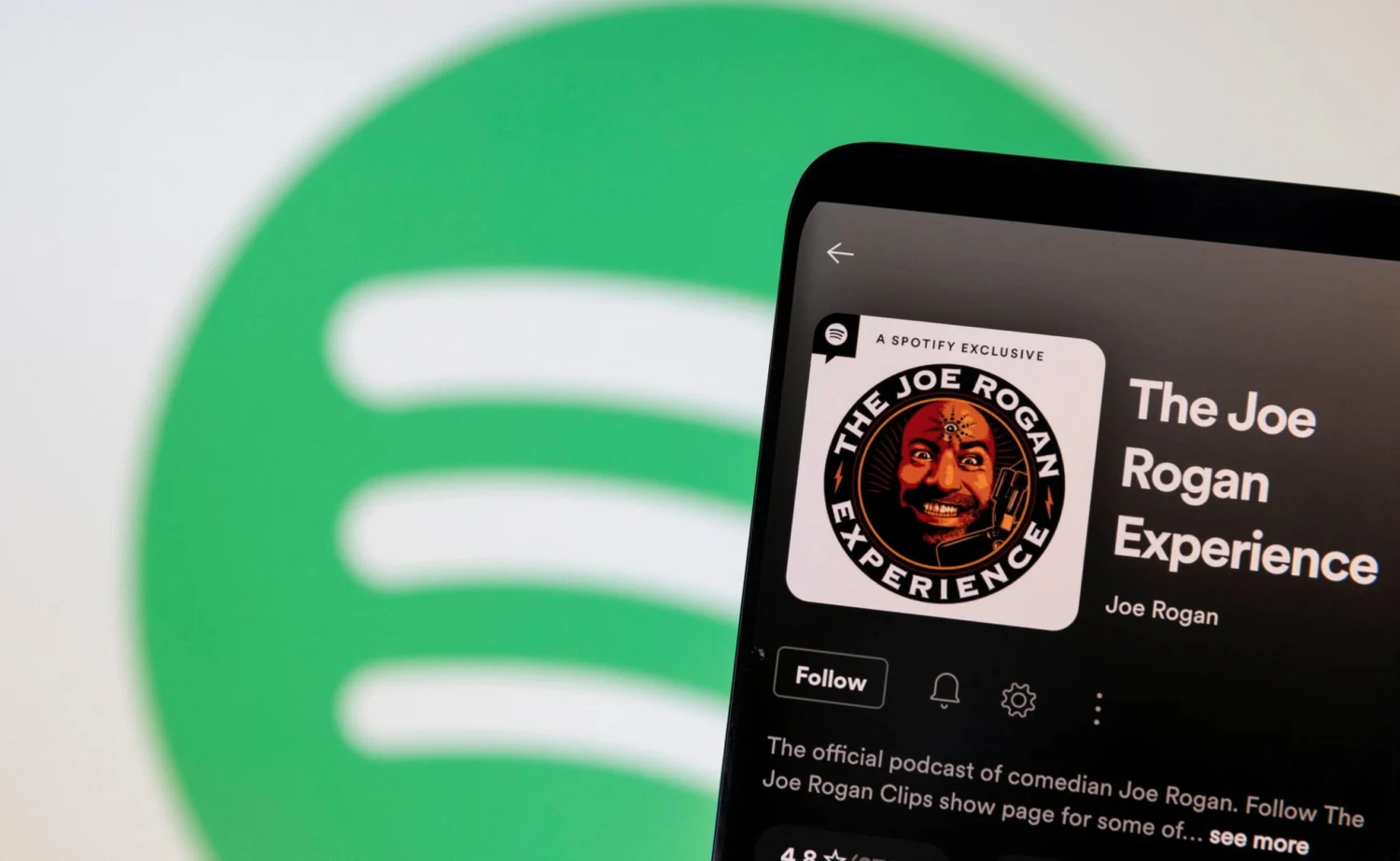
People in the public sphere that we now take for granted—from Stefan Molyneux to Jordan B. Peterson to The Golden One, to slightly more centrist guys like Joe Rogan—all of them are part of a similar media ecology. A particular model of the influencer comes to prominence, they build their own media brands, and they are completely supported in that through platform capitalism. They’re able to make money out of their ideological work.
Essentially, De Benoist and Guillaume Faye have been proven right. Acolytes in Generation Identity and ultimately the Steve Bannons and Richard Spencers of this world imbibed those ideas and they make them relevant to the local concept. They’ve been proven right that if you can achieve a cultural shift, it will translate into a political shift. People will start to think differently, vote differently, act differently if you can shift the culture. And arguably, the response of the democratic establishment to these movements has not been very effective in actually understanding their strategies and working to fight them.
JY: Can you talk to me a bit about what kinds of ethos and narratives these figures actually spread, and what effects are observed in real-life society out of these narratives?
Burnett: A key idea—and I want to cite a colleague who’s currently in Berlin who just moved from Colombia , Aya Labanieh, who just wrote a fantastic paper about self-help—is the centrality of neoliberal discourses of personal development to what is happening in these gendered spaces. One of the really clever things in the world of online influence is that right-wing influencers appeal to our anxieties about being people, being strong men, successful men, good women, good mothers, whatever it might be.
They use the neoliberal atomization of society. Neoliberal thinking, which gained institutional heft in the 1970s, sees the sovereign individual as being at the core of a model of what the world could look like. They don’t really believe in society, social bonds, solidarity, or social structure. They’re all about individuals competing with each other on markets.
So the principle of neoliberalism separates people out and undercuts any notion of a structural argument. Under this logic, it’s not good enough to say, “I am a working-class person and I am being exploited by capitalists.” That doesn’t make sense to them. You must just work harder. The reason you don’t earn a salary is because you’re not grinding enough. You need to work harder, you need to get XY and Z. Critique at the level of social structure is completely invalidated. As motivational speakers like to say, the bad news is it’s your fault, and the good news is that it’s your fault—because if it’s your fault, you can do something about it. So neoliberalism appeal so the sense that you are individual in competition with other individuals and your future is in your hands now goo and make yourself a success.
Neoliberalism channels any kind of social critique we might have about gender, racial, or class inequality into this narrow idea of “it’s your fault, you do something about it.” So, guys, go and work out in the gym. You might feel out of control of your life but it’s okay you can be strong. You can achieve your financial goals, invest in crypto, and start your own business. And you can become a crypto billionaire overnight like me. And you can do it if you follow my advice. That’s the paradox of self-help: I am thinking of myself as an individual who is totally in control of my life, while relying on you to tell me what to do.
It is this very interesting kind of tension where you get given this recipe for how to be a real man or a real woman. It typically involves what to eat, what to say, your posture, how much to work out, which books to read. They’re all about these lists of things that you absolutely have to do. And one of those things is that you’re supposed to abstain from masturbation; you’re not supposed to watch porn. Not all of them follow this. But the whole idea is, if you can get a whole generation of young people online following your instructions, you are creating your own political force and ideological center around these essentialistic, individualistic, and violent notions of what men and women should be.
JY: Do you think that attracting specifically young men is particularly important for these figures, and why do you think these online environments can be so effective at doing so?
Burnett: Because in a neoliberal world where we’re constantly looking for ways to overcome the anxieties we have around succeeding as atomized individuals, we will go to the internet for advice and help you wouldn’t necessarily ask a friend . When bonds of family, class solidarity, or social justice are eroded, we go to the internet to find ways of dealing with our anxiety without necessarily making ourselves vulnerable to other people—except the influencer whose advice you’re going to take.
Adolescence is a time of anxiety. It’s a time of coming into yourself, thinking about what you want to be. It’s also a time when your body is changing. In so many cultures, we have these very strong normative notions of what our bodies should look like, how much sex we should be having or not having, how much we should be masturbating, what our genitalia should look like, or hair should look like, or what our body structure should look like. Or whatever it is, but we’ve got these very very strong normative notions of what the gendered body looks like that can be very difficult to deal with as an adolescent.
So I think young men are absolutely crucial to this movement. That’s why you find that some of the guys who are into Andrew Tate are 11 or 12 years old. It’s a time of immense anxiety, and you’re enjoying this idea that there is this guy out there who presents himself as super wealthy, super strong [totally bizzare], who understands your anxiety and is looking out for you. He’s going to tell you how to become rich, how to not let women control you, how to drive that sports car and not give a damn about anybody else.
Young men, their anxiety but also their energy and idealism. Young people are passionate about political questions and get involved in movements to drive social change. They drive new ideas. They might not care about voting or stuff like that but they will go out there and they will make ideas happe.They will live their politics. And the other side of these things is that politics starts to live you. If you’re following a recipe for practices—eating the food, working out in the way you’re told—your practices become the ideology that you are putting out into the world and reproducing, as my colleague Melody Dev presented at the conference. You not only believe it cognitively, but you embody it completely.
JY: From what you’re saying, it seems like the idea of worship figures or role models is a big part of this contemporary gendered fascism scope. I did want to ask about the obsessive fixation on sexual frustration and abstaining from masturbation. What effect do these ideas have psychologically on the people exposed to them?
Burnett: Well, there are significant downsides to always believing that it is your fault and your behavior that lies at the root of your inability to achieve. There’s been some research done by Dr. Nicole Prause in California on NoFap forums. She did a survey I think. She found that a relapse event—when you start masturbating again—is often associated with very bad affect, like suicidal ideation, self-blame, thinking of self-harm.
I’m not a psychologist, but I do think there is a real danger in constantly looking for the reasons for your individual success or failure only within yourself. We are fundamentally social creatures; human civilization is about collectives working together. Not everything is in your control. Believing that you can be this Übermensch figure totally in charge of your sex life and financial life is the path to depression and disappointment. It’s not a sustainable way to live your life. And it’s also very alienating, because we’re only appreciating other people as points of likeness or unlikeness to an essential notion of gender.
“Are you a real man? I don’t want to be a beta cuck. I don’t want to be a ‘coomer'”—which is a word they use to describe somebody who is weak, sitting behind their computer ejaculating too much. The idea is you’re losing all of your masculine energy to these nebulous forces on the internet, all of these fake girls, watching the woman you want to have real sex with having sex with someone else or more than one person, or black people, often a racial other. Your personal failure is wound up in your inability to have sex with that particular porn star.
It taps into a very real thing, because people are sitting behind their computer screens masturbating. So it’s true, that does happen. What’s clever about NoFap is that it takes a real issue—where people feel down on themselves because they haven’t left the house all day, in the dark just watching porn or whatever—and turns it into a political motivation. It turns into a story about how they want you to be weak. They want you to not want you to have sex with real women. It’s given a fascist interpretation, a racist interpretation, and in certain instances an antisemitic interpretation where the idea is that Jewish people control the porn companies and mainstream media, they control or degenerate culture and they want you behind the computer screen weak and not having real sex that would result in white men so you don’t produce white babies.
But there are versions of this that have nothing to do with whiteness. There are versions in African-American grind culture, in Persian men’s forums, in the Arabic world versions of this. Everybody has their own ideological articulation of why it’s important that you not waste your sexual energy on masturbation and porn because some dark social force wants you to do that. What you instead need to do is go outside and have real sex with real women.
JY: That was actually going to be my next question about how scholars have described the online manosphere diversifying with the participation of people of color as well. How does that intersectionality complicate the narrative?
Burnett: From the earliest days I started looking at NoFap, it’s always been multiracial. It was never only about white men. It’s more fundamentally about grind culture, personal improvement, and being all the man that you can be. I even found women on NoFap, and broadly queer, and sex workers publishing erotic content who think NoFap helps them meet their personal goals. Some of these ideas have a very broad application.
Where it gets to the specifically racist and fascist sides of things, we know that’s not only the preserve of Western European white people. In the context of India, there is a thriving, muscular Hindu nationalism—a real-world political phenomenon in Hindutva—that is fascist. It is about breaking opposition, opposing democracy, and opposing a racial other in terms of the Muslim, as constructed in BJP propaganda. Colleagues of mine at Penn State, Aparna Parikh and Hazel Velasco Palacios, have been working on these ideas.
It is not necessarily white people. The interesting thing about Hindutva is they are using the imperial structure of the British state and historical distinctions between fair and darker skin, including caste-based hatred, as a means to implement their racialized view of the world. Another colleague, Samrat Sharma, showed that there are some Hijra people in India who use their performance of a particular Hindu national feeling as a way to achieve social advancement. It’s built like fascism and looks like Western fascism, except it’s got its own local peculiarities.
So it doesn’t always have to be about whiteness, although to a certain extent, whiteness is the pattern being followed. The colonial domination of the planet during the colonial era gave white people an unprecedented opportunity to model these forms of repressive politics. But it’s definitely not all about white nations.
JY: Dr. Burnett, you are from South Africa. You grew up there during the latter stages of the apartheid era. I wanted to ask how that experience affects the way you view modern gendered fascism, or modern fascism in general.
Burnett: I think so. When I started my doctoral work in 2015 at the University of the Witwatersrand in Johannesburg, I was looking at environmental discourses from a critical whiteness studies perspective. Growing up in the transition under the first democratic administration from 1994, I was always anti-racist. But I’ve only really come to appreciate 10 years later the extent to which what we had in South Africa is just one instantiation of a much bigger problem around the world.
The problem is based on a particular model of where value comes from: turning nature into a commodity and turning other people into commodities. The logic of capitalism starts treating the energy you get from another person to do work for you as your right to exploit—whether through chattel slavery, indentured labor, or industrial capitalism in the factories. The people who can do that supposedly earned the right to live wonderful lives because they are “more rational” or “more moral.” And anybody unable to achieve that is supposedly lacking innate ability or not trying hard enough.
It’s these overlapping systems of colonialism, capitalism, and hierarchizing humanity through race or gender. What we’ve seen in the United States is that gains in racial equity and gender equity are at the surface level; they can be so easily undone. There is so much popular sentiment in a country like this—still a white-majority country—that would just happily sweep all of that away.
I’m busy writing a paper about white liberals in South Africa. When someone’s a white liberal there, it doesn’t mean they are left-wing; it just means they hold liberal values. You see deep ideologies of, “I’ve earned my wealth, I’ve earned my property, I’ve earned my position in society. And anybody who tries to tell me I haven’t earned that is dangerous, violent, stupid.” Every bad thing a person could be is attributed to the person who tells me I haven’t earned my social standing as a white person.
JY: That’s all the questions I have for you today, Dr. Burnett. I’m very pleased with our conversation. Thank you so much for taking the time to speak with me.
Burnett: Of course. It’s my great pleasure. It’s lovely speaking to you, Judy. Thank you, and best of luck putting this together.
JY: That concludes this episode of CR Amplified on gendered fascism in the contemporary world. I’d like to thank Dr. Burnett for his thoughtful insights and for taking the time to speak with me.
That’s all. Thanks for tuning in.